












Search interest in Tuscan kitchens has been climbing steadily for two years, which is not what anyone would have predicted in 2015. For most of the last decade the Tuscan kitchen was shorthand for a particular kind of mistake — the rag-rolled ochre walls, the grape motifs on the tile, the granite that looked like a cross-section of a distant planet. It was the style people renovated out of houses, quietly, and did not mention at dinner.
Something has changed. It is worth being precise about what, because the thing coming back is not the thing that left.
Two different kitchens, one name
The Tuscan kitchen of 2004 was a theme. It took a handful of signifiers — warm colour, arches, heavy wood, ornament borrowed loosely from somewhere south of Florence — and applied them to an American kitchen layout. The result was legible from across the room, which was the point, and it aged badly for exactly the same reason. Themes date. They are a costume worn by a room.
What is returning under the same name is a material palette rather than a theme: plaster, stone, wood, terracotta, and almost nothing else. It is much closer to what Tuscan houses have actually always looked like, which is to say quieter, rougher, and considerably less decorated. The same shift is happening across the rest of the house too — we wrote about it at length in our guide to the Tuscan revival shaping contemporary homes, and the kitchen is simply where it shows most clearly, because the kitchen is where the materials have to work.
What is not coming back
Worth saying plainly, because a great deal of the search traffic on this subject is people checking whether they have to like the old version. They do not.
- Faux-finished walls. Sponged, rag-rolled, colour-washed to imitate age. The new version uses a material that is genuinely textured rather than a paint effect that imitates one.
- Carved corbels and turned island legs. The ornament was always the most obviously applied element, and it is the first thing to go.
- Tumbled travertine backsplash set on the diagonal, usually with a decorative medallion behind the range. Travertine itself is back. The diagonal medallion is not.
- High-movement speckled granite. Replaced almost entirely by quieter stone with a matte or honed finish.
- Wrought-iron scrollwork on pot racks, light fittings and cabinet hardware.
- Heavy red-stained cherry cabinetry running floor to ceiling on every wall.
What is coming back
Plaster instead of paint
The single most consequential change. Lime plaster, tadelakt and the various marmorino finishes give a wall depth that paint cannot, because the colour sits in the material rather than on top of it. Light moves across it during the day. In a kitchen this matters more than in most rooms: kitchens are lit from several directions at once, and a flat wall reads as flat under all of them.
It is also the finish that makes the difference between a room that looks warm and a room that looks beige, which is the failure mode this whole style is prone to.
Stone that looks quarried rather than polished
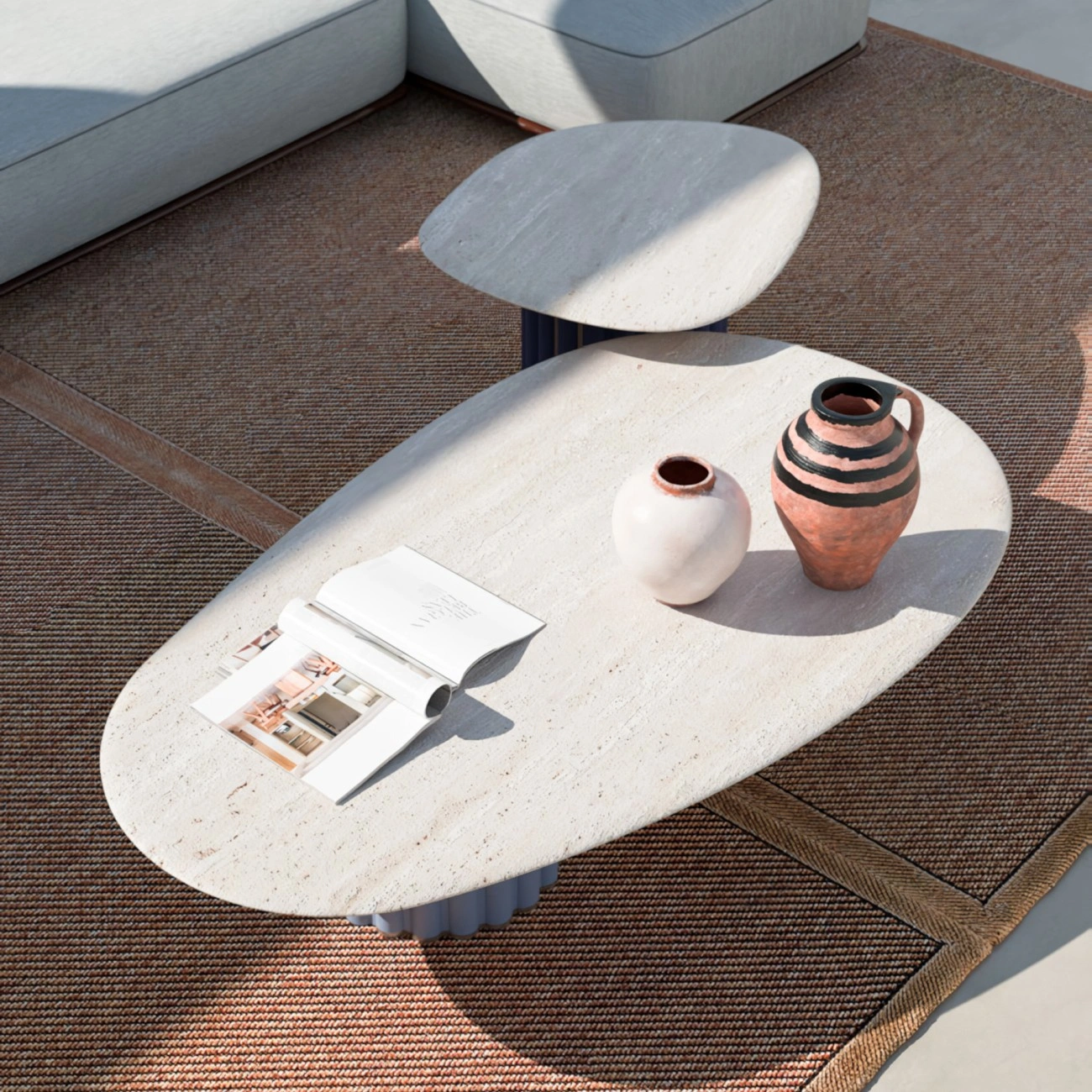
Honed limestone, travertine with the pores left open, unfilled marble, pietra serena. The common thread is a matte surface and a visible geological history. Polished stone reflects the room back at you; honed stone absorbs light and shows its own structure.
The practical objection — that open-pore travertine stains — is real and mostly beside the point. It does stain. That is what people now want. The whole argument of this style is that a surface improves as it records use, which is why it sits so comfortably alongside the broader move toward materials that age visibly.
Cotto, the terracotta floor
Handmade terracotta tile, laid in a simple grid or a running bond, sealed but not glazed. It is warm underfoot, it is forgiving of dropped things, and its colour varies tile to tile in a way that machine-made porcelain has never convincingly faked. Cotto is the element that most reliably signals this style without any ornament at all.
Wood with the grain left visible
Oak, walnut and chestnut, oiled rather than lacquered, in a finish close to the timber’s own colour. The 2004 kitchen stained wood dark to imply age. The current one leaves it pale and lets it darken on its own schedule.
Unlacquered brass and blackened iron
Unlacquered brass tarnishes. Taps go from yellow to brown to something almost bronze over a couple of years, faster around the handles where hands touch them. This is the same principle as the stone: a surface that keeps a record.
The colours are narrower than you think
The old Tuscan kitchen used a wide, saturated range: ochre, terracotta, olive, wine, gold, all at once. The current one uses a much tighter set, and takes most of its colour from the materials themselves rather than from paint.
In practice that means a plaster in one of the warm off-whites, floors and stone supplying the earth tones, wood supplying the mid-browns, and a single deeper accent — usually an olive, a rust or a deep brown-black — on cabinetry or joinery. Three material colours and one decision. That is the whole scheme.
It sits directly on top of where interior colour is heading more generally: the warm, earth-derived families we set out in the 2027 interior colour palettes guide are the same ones a Tuscan kitchen has always used, which is a large part of why the style has become legible again. If you are choosing colours for a kitchen that has to talk to the rooms either side of it, our notes on building a cohesive palette across a whole house are the more useful starting point.
What makes it modern
The materials are old. Almost everything else is not, and the gap between the two is where this style either works or collapses into pastiche.
- Far less upper cabinetry. Usually none on at least one wall, replaced by a single long shelf or nothing at all. This is the change that most separates a current Tuscan kitchen from a 2004 one at a glance.
- Integrated appliances, or frankly industrial ones. Either fully concealed behind joinery or a deliberate stainless range left entirely unhidden. The half-measure — a panelled fridge with an ornate surround — is what dates.
- Flat, generous work surfaces with square or lightly eased edges rather than ogee profiles.
- Lighting treated as furniture. Two or three considered fittings rather than a grid of recessed downlights, which flatten plaster and defeat the entire point of using it.
- One large table doing the work an island used to do. More on this below.
Three ways it goes wrong
Everything warm, nothing dark. Without a genuinely dark element the room has no floor to it and reads as sepia. One deep tone — a blackened metal, a dark stone, an olive joinery run — holds the rest in place.
Texture applied only to the walls. Plaster on its own, surrounded by lacquered cabinetry and polished stone, looks like a decorating decision rather than a construction one. The texture has to run through the room — the floor, the joinery, the textiles — which is the broader argument we made about designing for touch rather than for the photograph.
Reaching for the signifiers. Arched doorways, a stone hood, an olive tree in a pot by the window. Any one of these is fine. All three together turn the room back into a theme, and the theme is what people spent fifteen years removing.
Start with the table
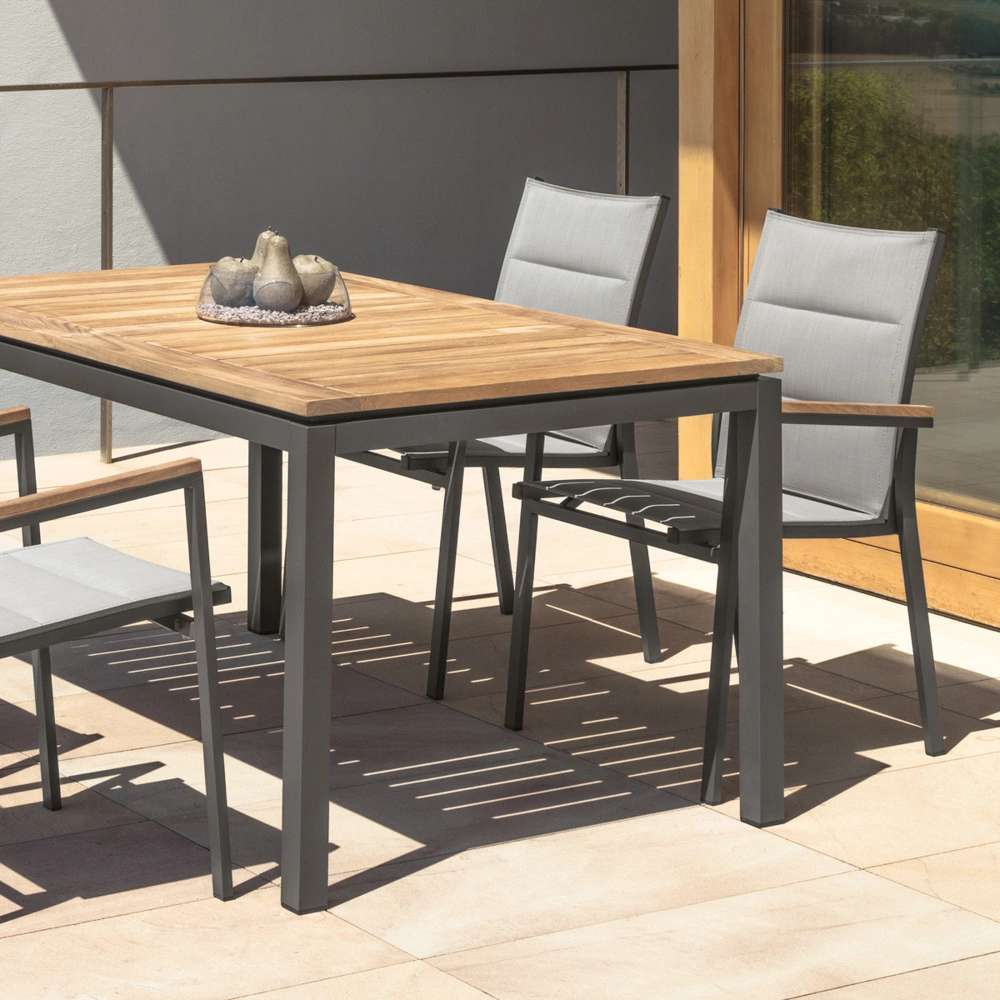
If there is one practical instruction in all of this, it is that the modern Tuscan kitchen is organised around a table rather than an island. The island won the last twenty years because it suited a particular way of living — quick, standing, adjacent to a screen. The table is winning some of that ground back, and it is not really a kitchen trend so much as a dining one, which we covered in more depth in our look at where dining rooms are heading in 2027.
The table should be too big for the room by roughly ten percent, in a material that will mark, and low enough to eat at rather than perch at. Everything else in the kitchen can be decided afterwards.
So is Tuscan style actually coming back?
Yes, though the honest answer is that the name has been reattached to something else. What is returning is a preference for warm, imperfect, unlacquered materials that record use — a preference that Tuscan building happened to have codified several centuries ago, and that the 2004 revival mostly missed while it was busy with the ornament.
The kitchen is the first room where it becomes obvious, because a kitchen cannot hide behind styling. If you want the wider picture — how this moves through living rooms, bedrooms and the pieces that carry it — start with our full guide to the Tuscan revival and the warm design comeback, and read it alongside the organic modern movement it overlaps with almost entirely.