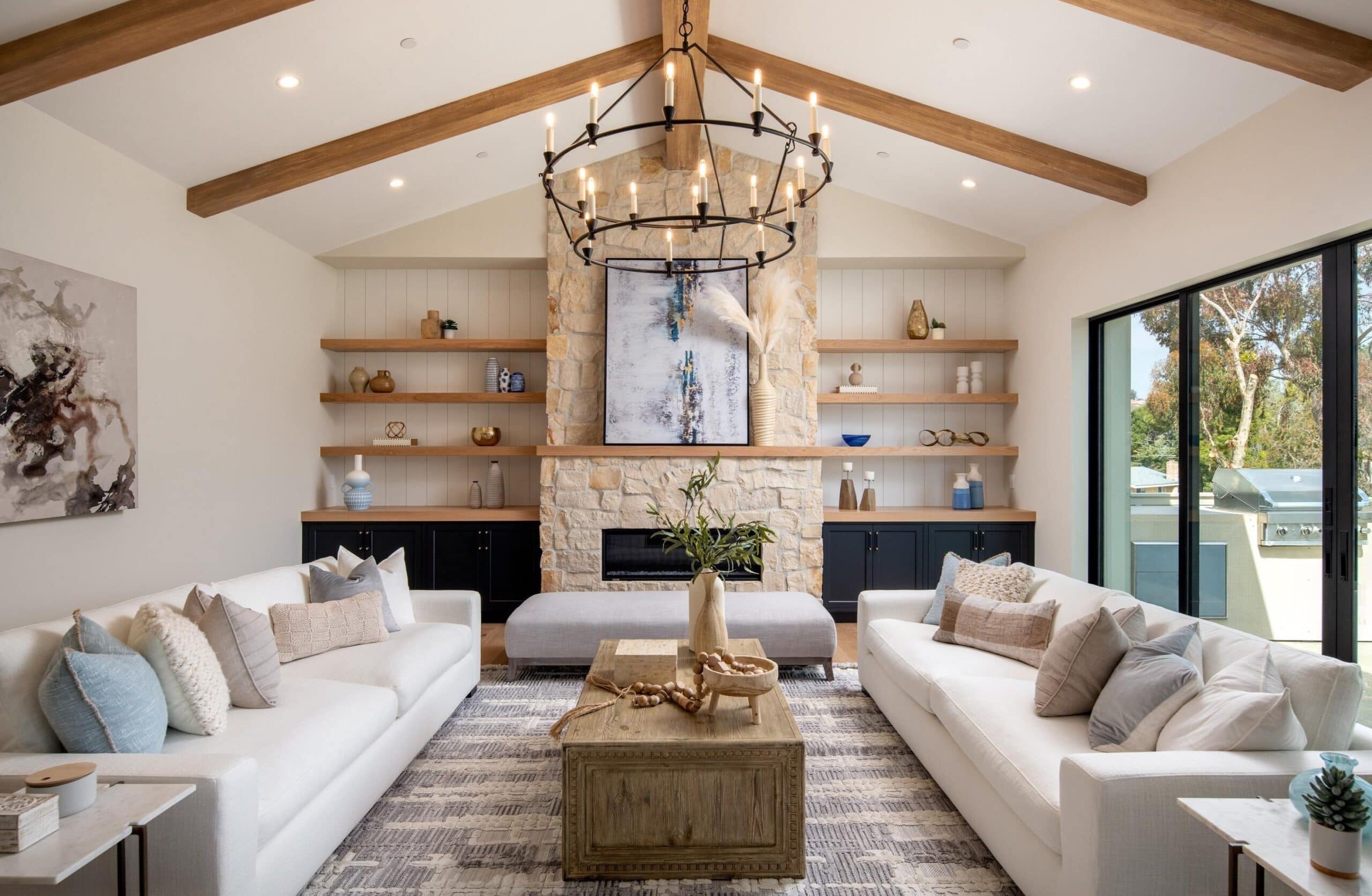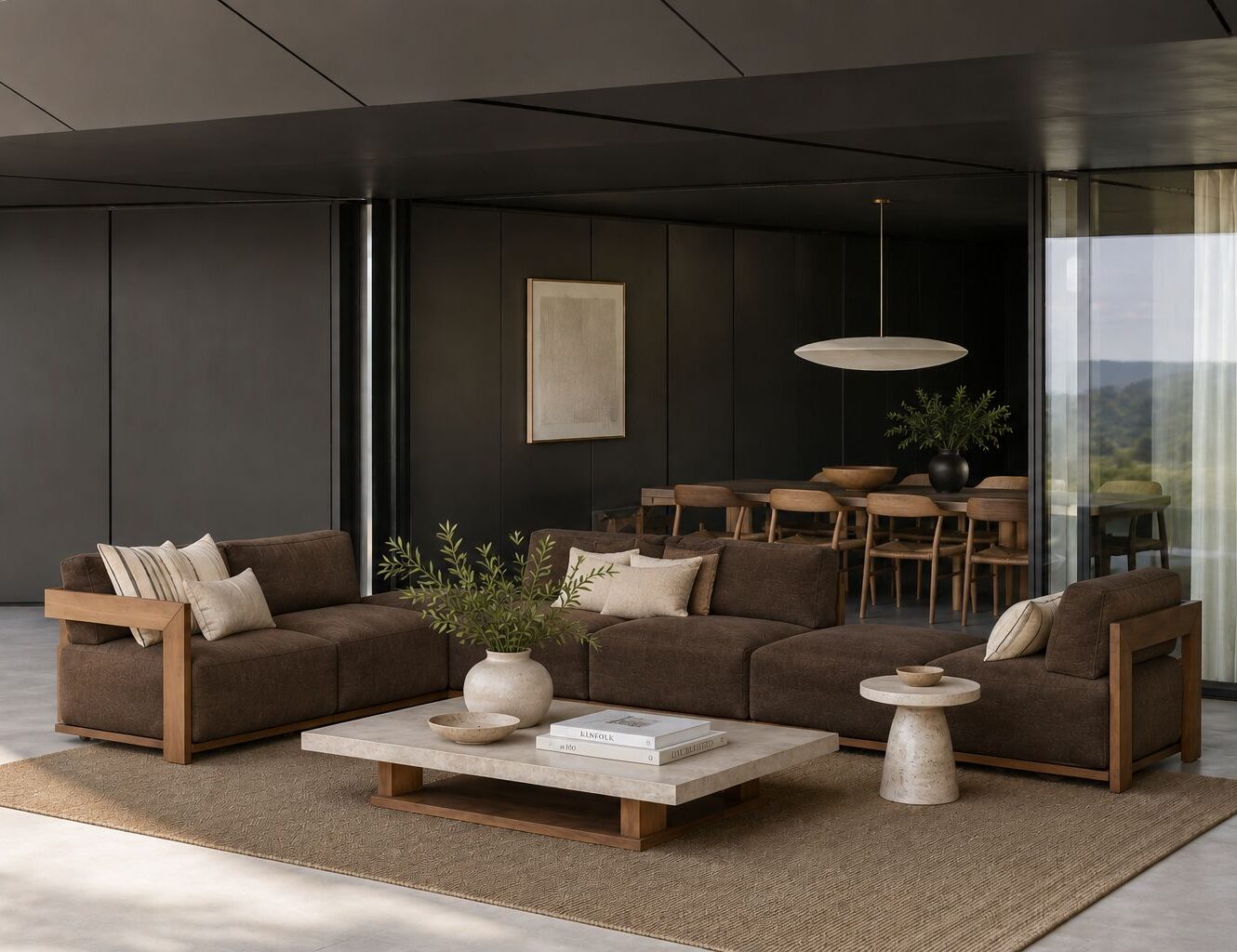

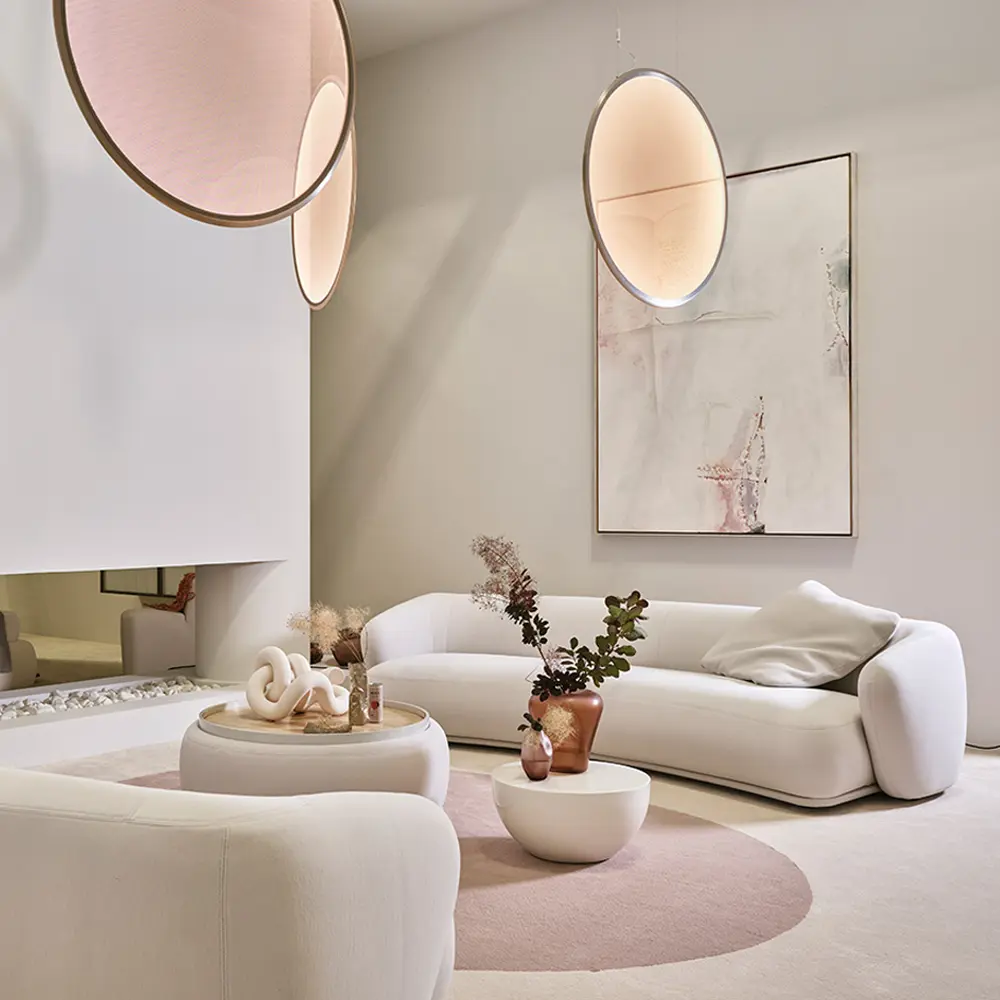
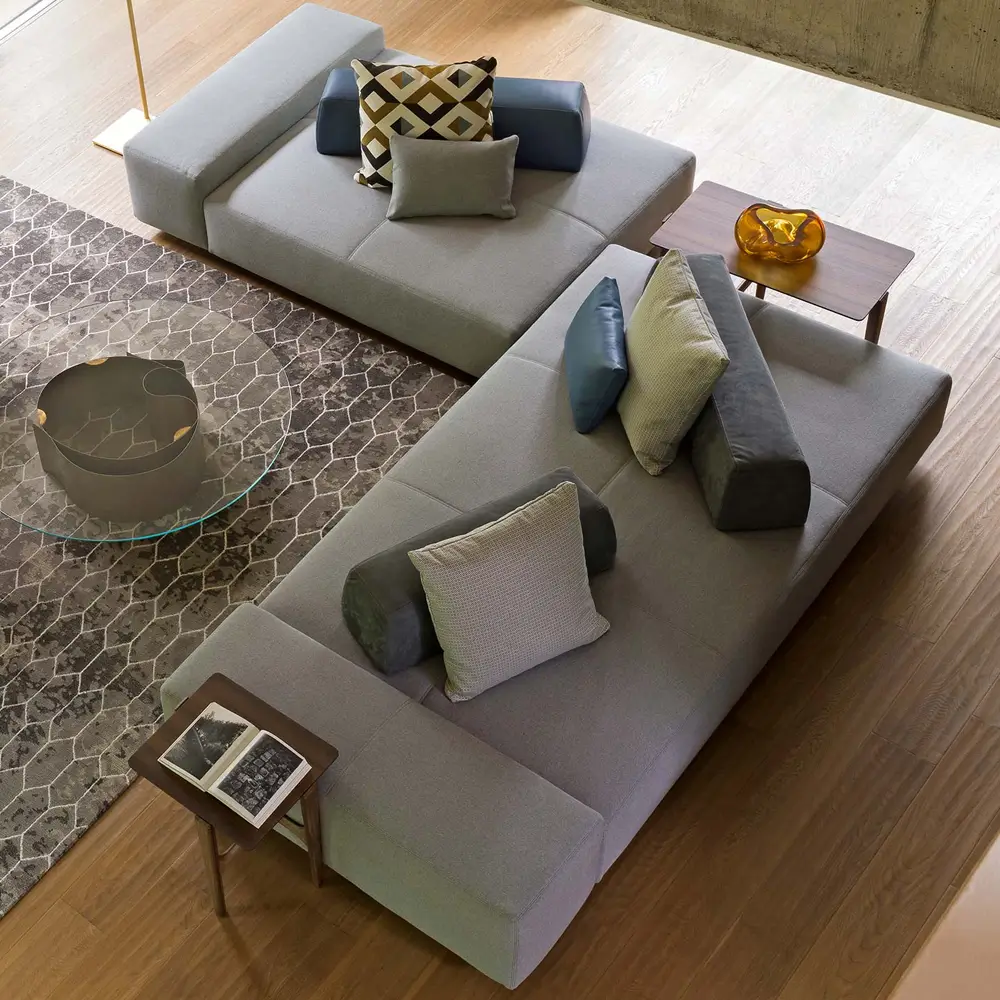










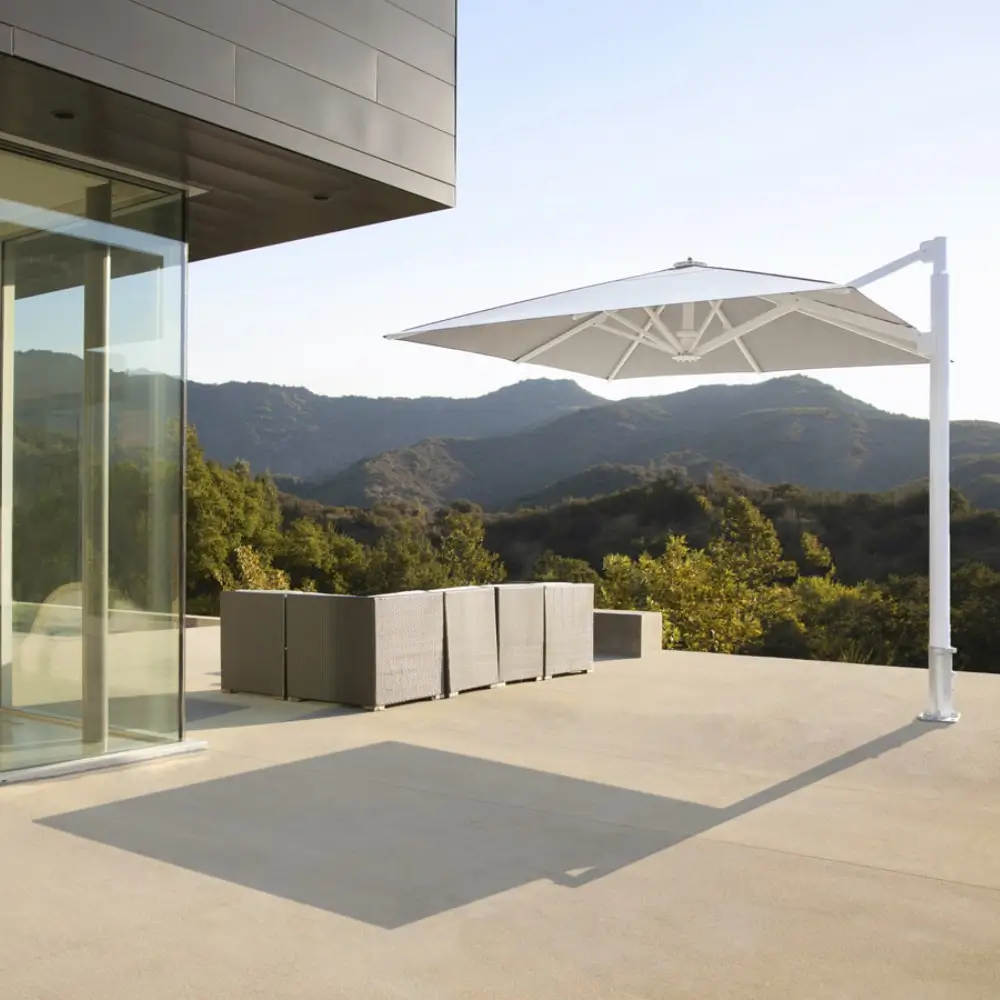


Most people buy an outdoor sofa the way they buy an indoor one: by looking at it. Outdoors that goes wrong more often, because the things that decide whether a sofa gets used are mostly numbers — how deep the seat is, how low it sits, what the frame is made of, and what happens to the cushions after it rains.
Here is what to check before you choose.
Seat depth
Outdoor lounge sofas are usually deeper than indoor ones. An overall depth of 90 to 100 cm (35 to 39″) is normal, against 85 to 95 cm for a typical living-room sofa. The extra depth is what lets you sit sideways, tuck your feet up or lie down in the afternoon.
The trade-off is upright sitting. On a very deep seat, most people end up leaning back with their feet off the ground unless there are enough back cushions to bring the backrest forward. If the sofa will mostly be used for conversation and drinks, look for one where the back cushions are generous or where loose bolsters can be moved to where they are needed.
Seat height
Indoor sofas usually sit at 43 to 46 cm (17 to 18″). Outdoor lounge seating often goes lower: our Frame sofas sit at 41 cm, and the Majlis platforms at 38 cm. Lower seating looks calmer and more architectural, and it feels more like lounging than sitting.
It is also harder to get up from. If older relatives or guests with bad knees will use the sofa often, keep the seat closer to 42 cm and make sure there is a firm arm to push up from.
The frame
This is what decides how long the sofa lasts. The four materials worth considering:
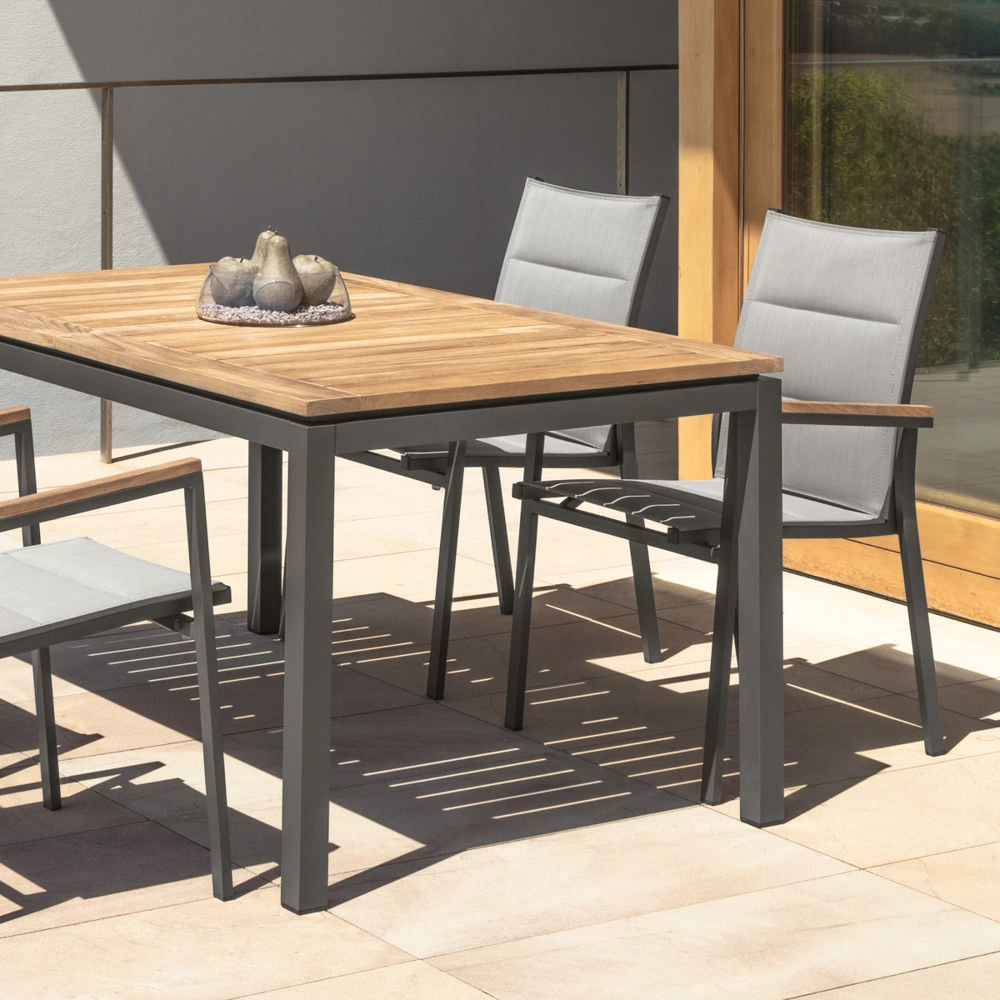
- Solid teak. Dense, oily heartwood that does not rot. Left alone it weathers to silver-grey; oiled or sealed it keeps a warm golden colour. Grade A teak is the heartwood grade and is the one to ask for.
- Powder-coated aluminium. Light, does not rust, needs almost no care. The finish quality matters more than the metal: ask about the coating.
- Woven synthetic cord over aluminium. The look of wicker or rope on a frame that will not rot. Good cord is UV-stabilised and colour-fast.
- Natural rattan. Beautiful, but for covered terraces and sunrooms only. Rain and direct sun will damage it.
We compared the first two in more detail in aluminium vs teak under the Southern California sun.
Cushions
An outdoor cushion needs two things: a fabric that will not fade and a foam that dries out. Solution-dyed performance fabrics hold their colour because the pigment runs through the fibre rather than sitting on the surface. Quick-dry, open-cell foam lets rain run straight through instead of soaking in, so the cushion is dry again within hours rather than days and does not grow mould.
Also check that covers zip off for cleaning, and think about where the cushions will go in the rainy months. Even the best outdoor cushions last longer stored.
Size and layout
Measure the space before you look at sofas, and allow for the space around them:
- About 45 cm (18″) between the sofa and the coffee table.
- At least 90 cm (36″) for any path people walk through.
- Around 60 cm (24″) of seat width per person on a sofa you expect to fill.
For larger terraces, a modular or U-shaped sofa is often better than several separate pieces: it closes off the seating area and turns an open terrace into something that feels like a room. If you are weighing the two, our modular vs sectional guide covers the differences.
Made to order
Every Melaaura sofa is made to order, so depth, length, fabric and finish can be set to fit the space rather than the other way round. If you are planning a terrace and want a second opinion on the layout, send us the measurements. For more on planning the whole space, see the outdoor room.