













There is a moment in most well-meaning rooms when the eye gives up. It tends to arrive somewhere between the third occasional chair and the second console, and it happens for a simple reason: nothing has asked to be looked at first. Everything is agreeable. Nothing leads.
The remedy is rarely more furniture. More often it is a single piece given the authority to carry the room — and the restraint, everywhere else, to let it.
Start with the thing you actually love
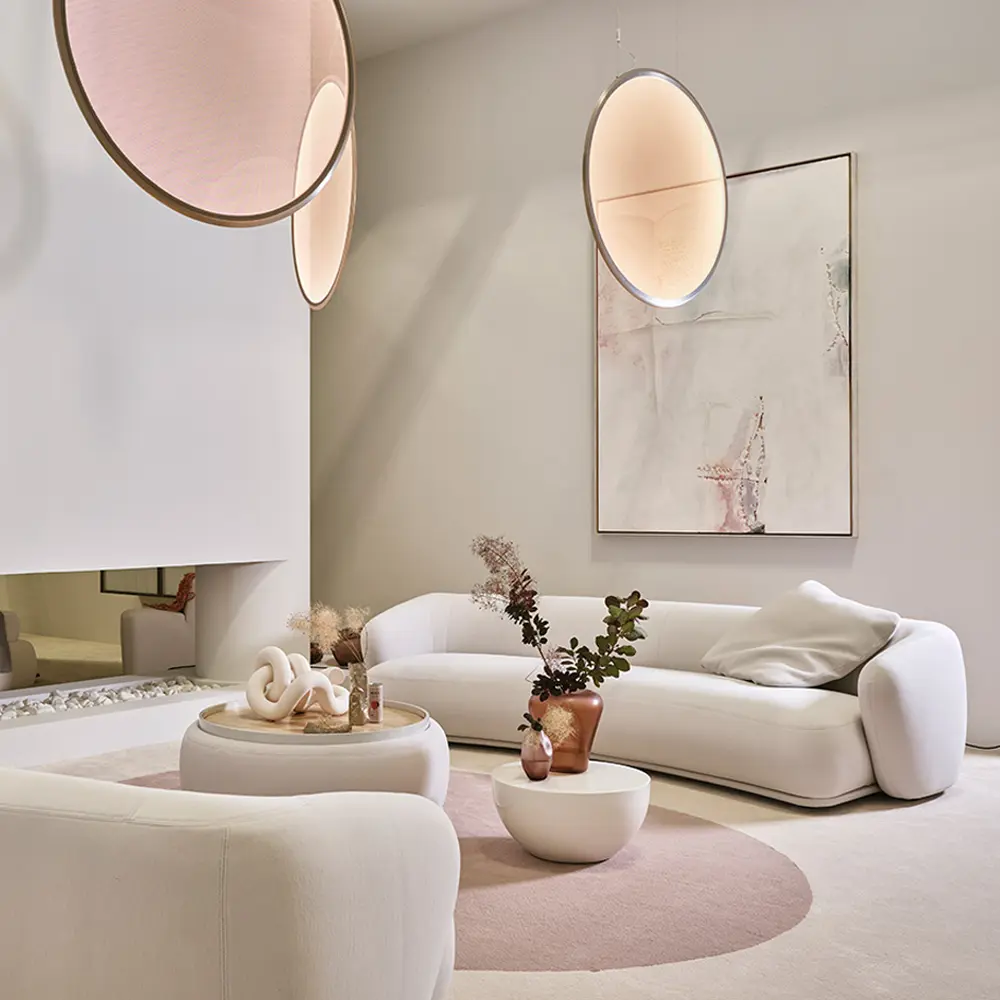
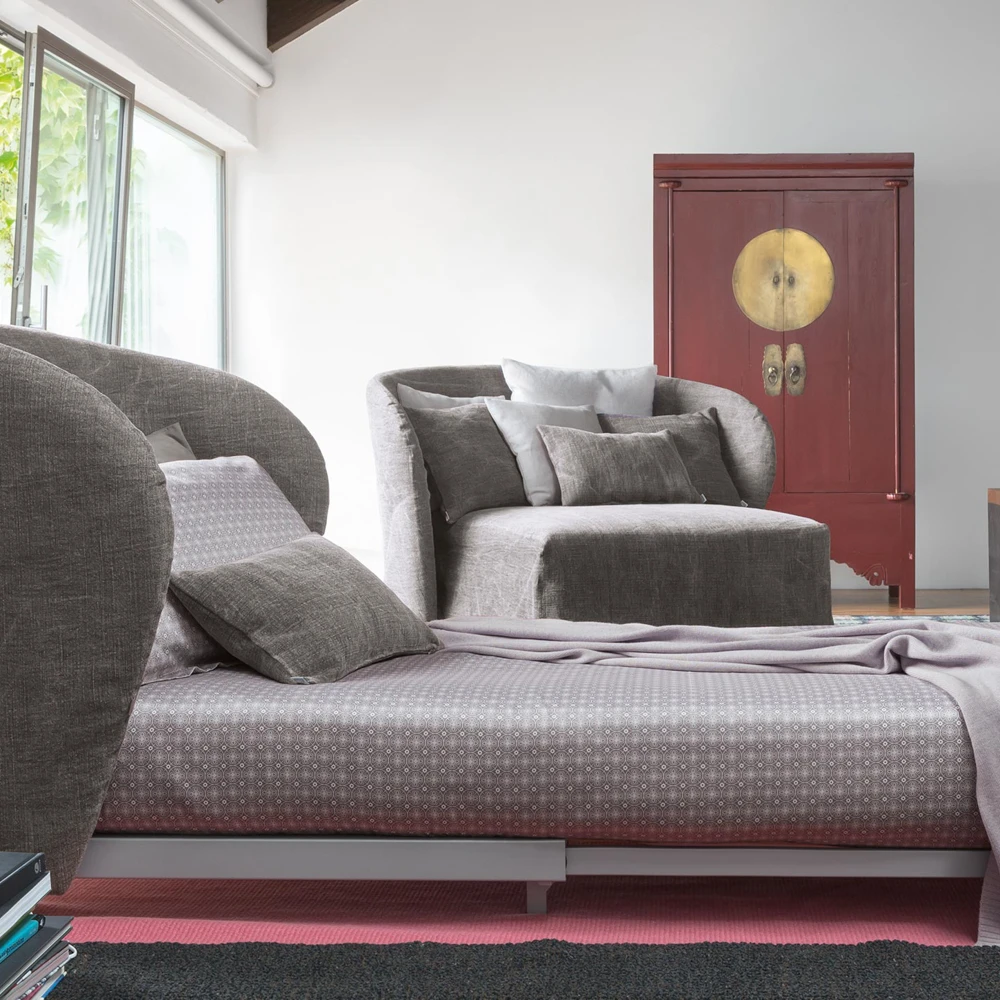
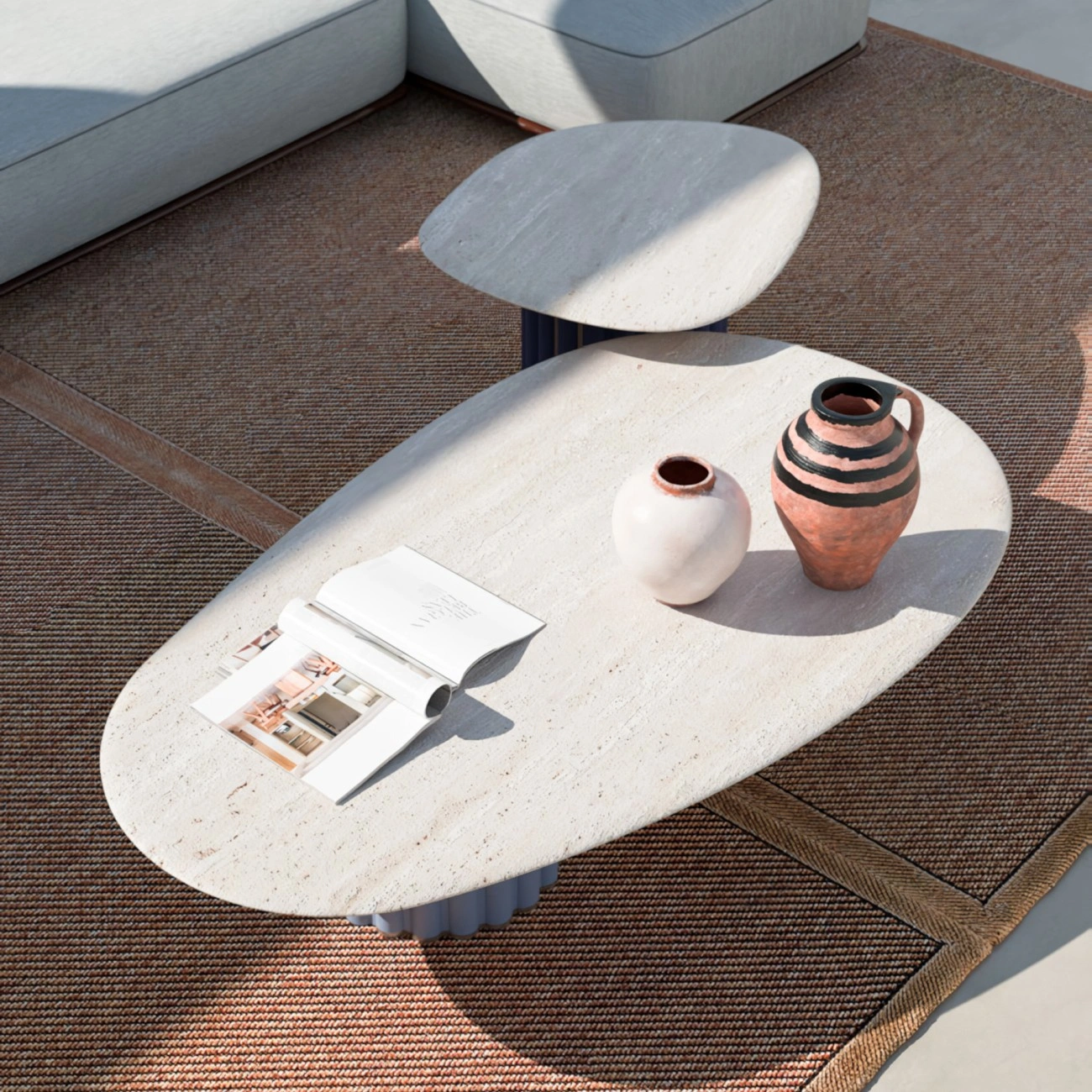
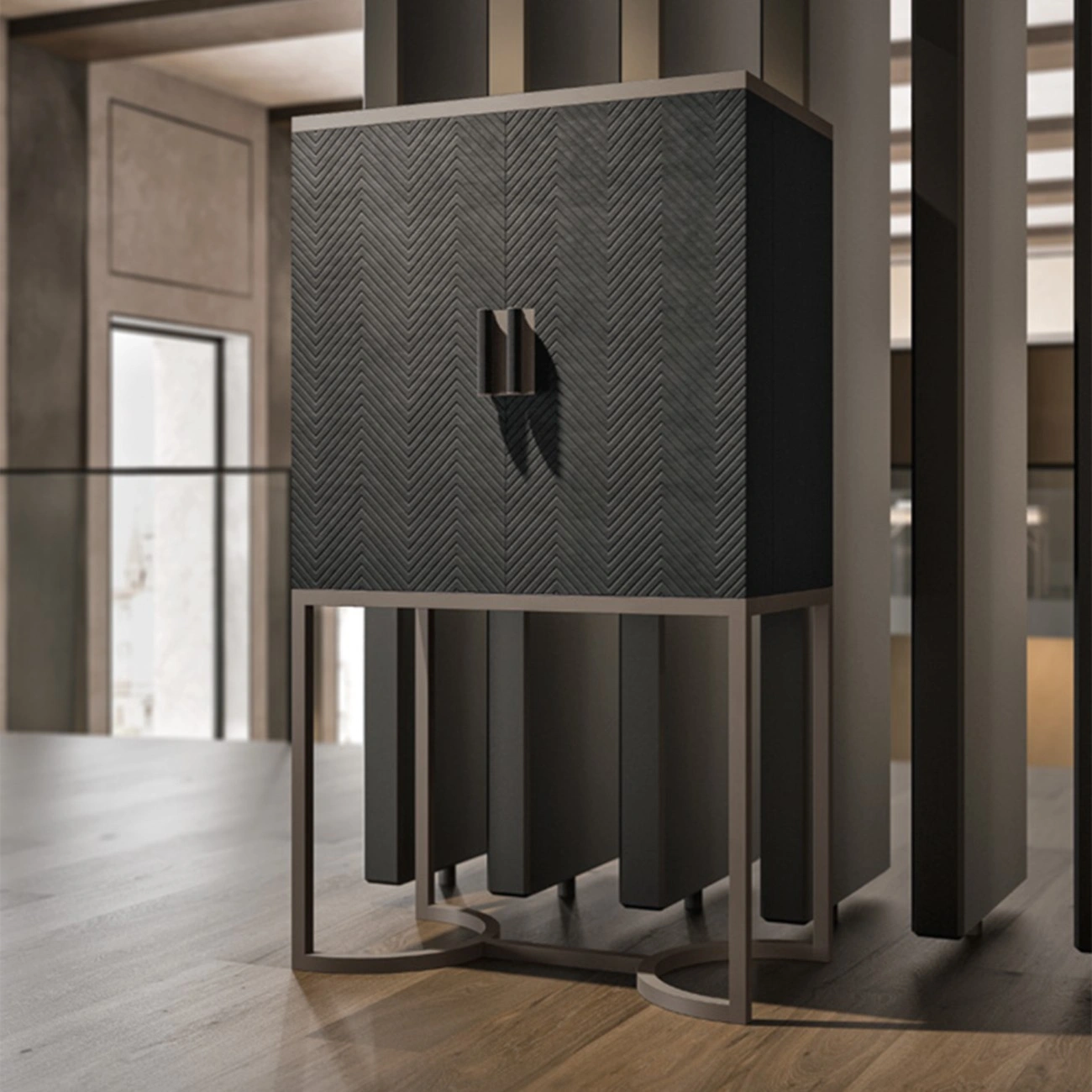
Designers talk about anchors and focal points, which makes the whole business sound technical. It isn’t. The anchor is the piece you would save first: a low marble table with a top that looks poured rather than cut, a curved sofa that turns a corner like a sentence finding its end, a cabinet whose grain you could read for an hour. You know it by the way you resent the idea of compromising on it.
Choose that first. Let it be slightly too good for the room as the room currently stands. The rest of the space will rise to meet it.
Give it room to be seen
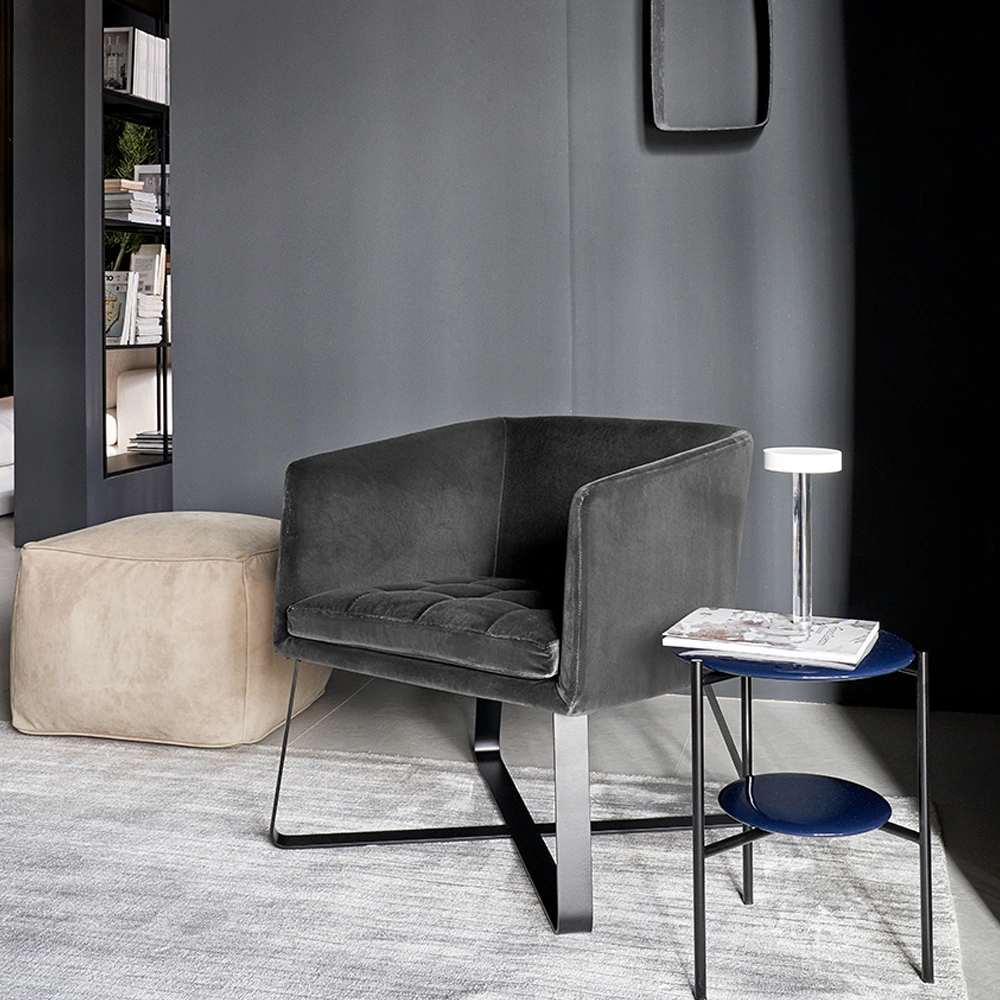
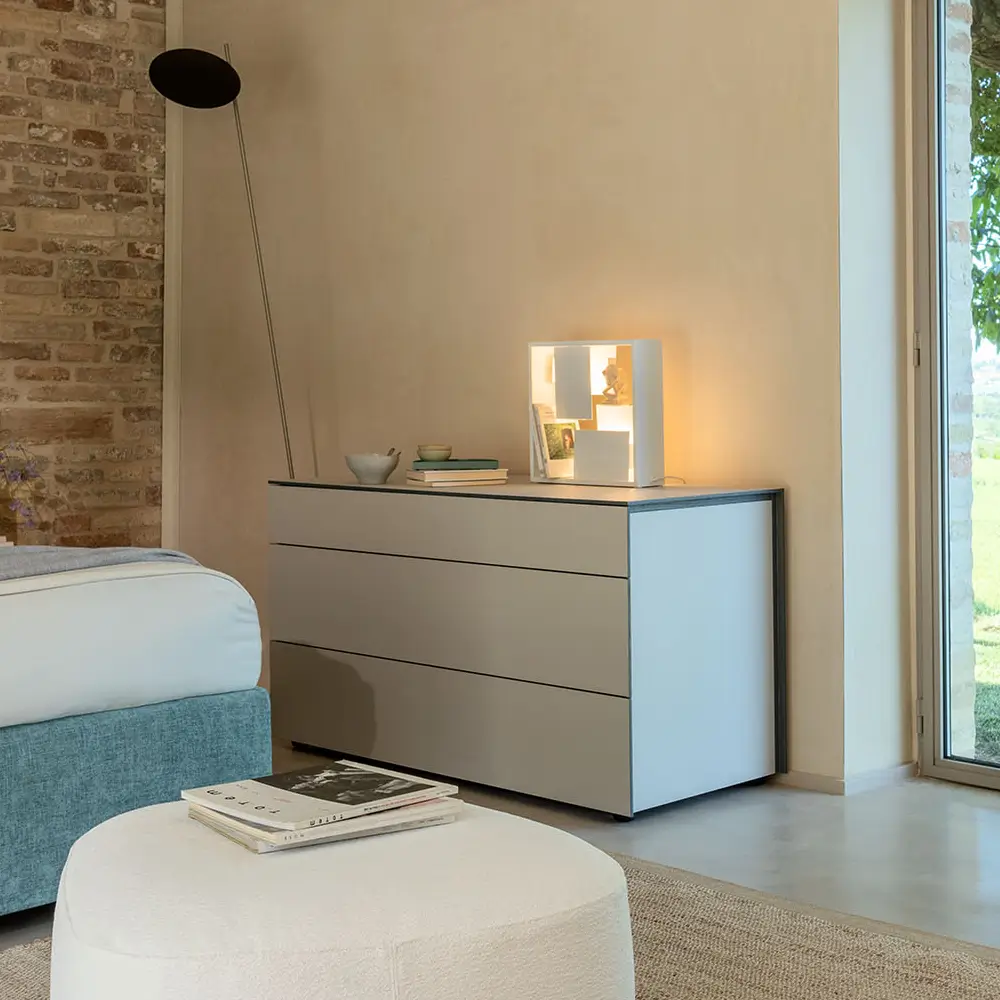
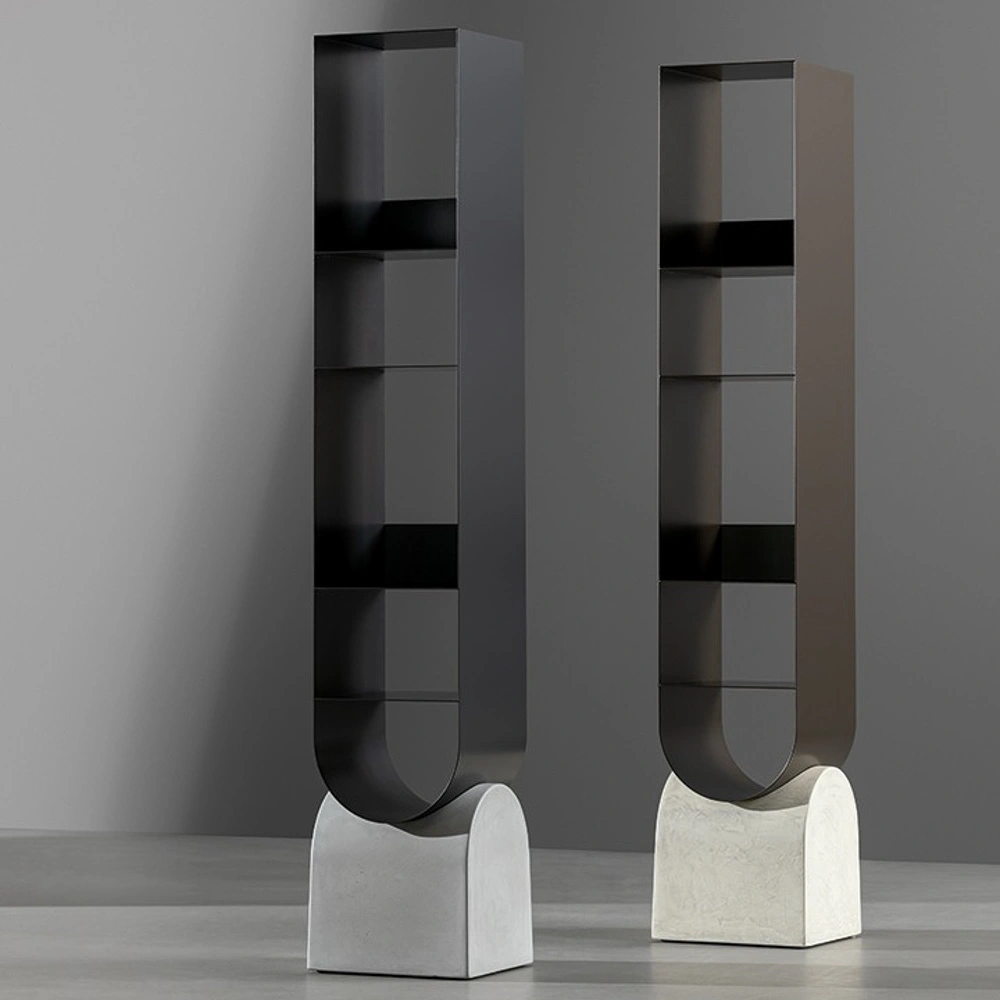
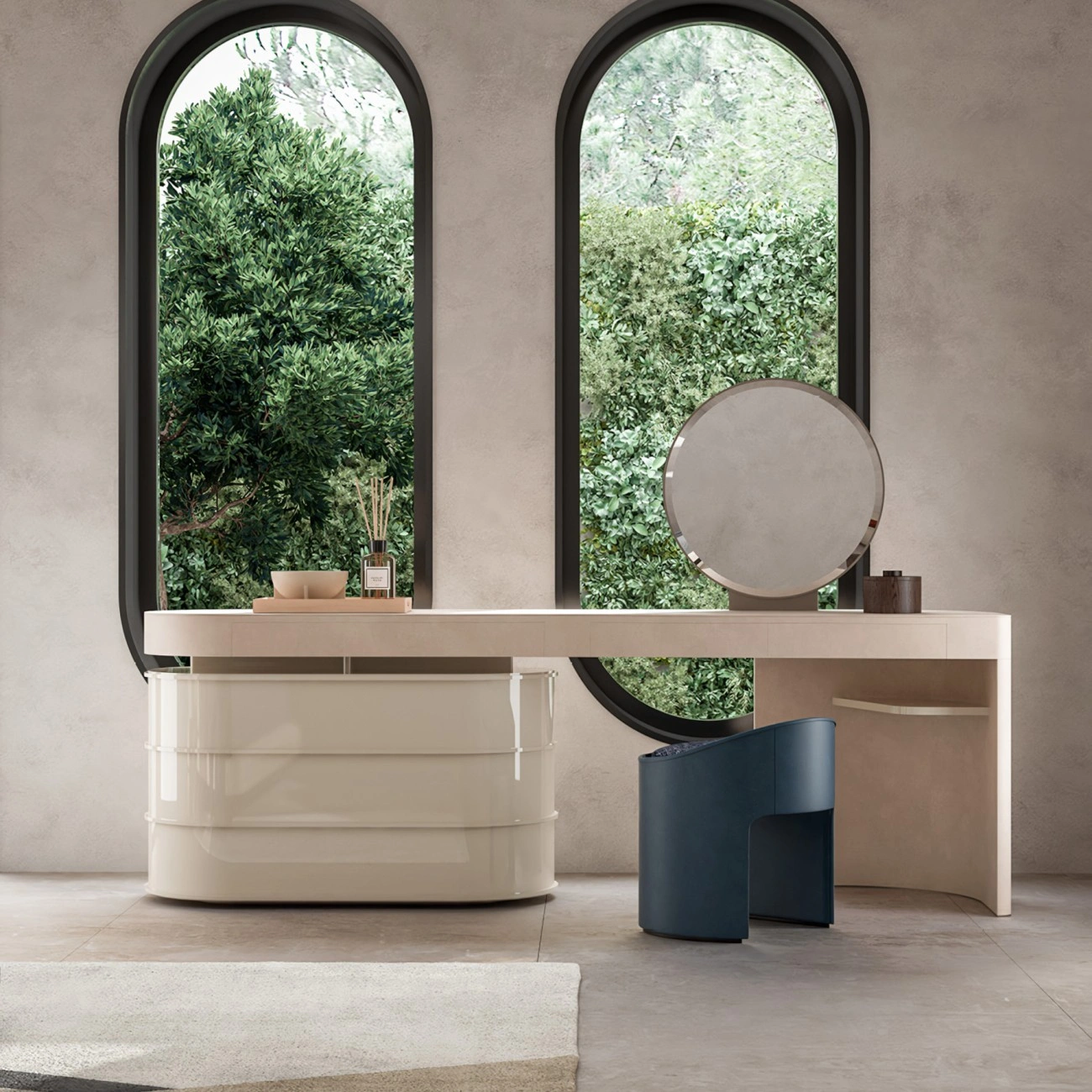
An anchor needs quiet around it the way a voice needs a pause. This is the part most of us get wrong, because empty space feels like an unfinished thought and we hurry to fill it. Resist. A sculptural lounge chair set against a bare wall reads as intention; the same chair crowded by a side table, a lamp, a stack of books and a folded throw reads as storage.
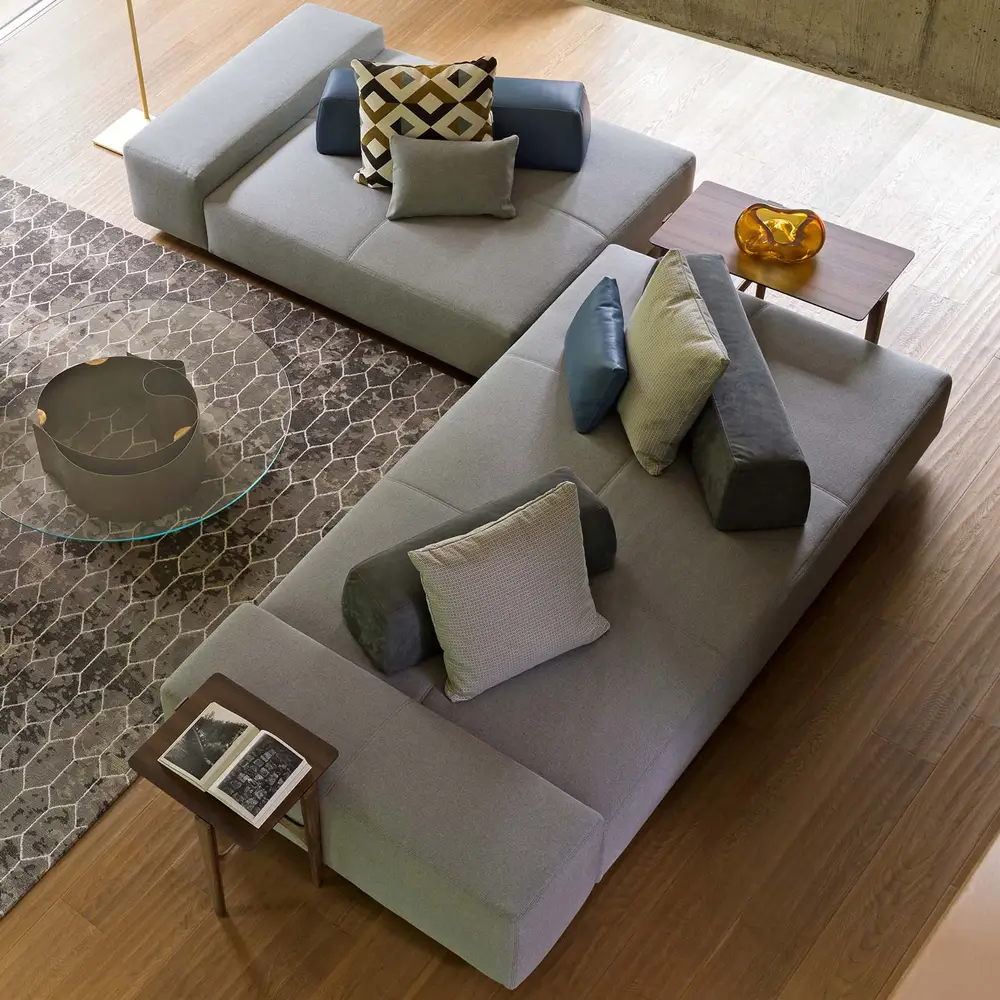
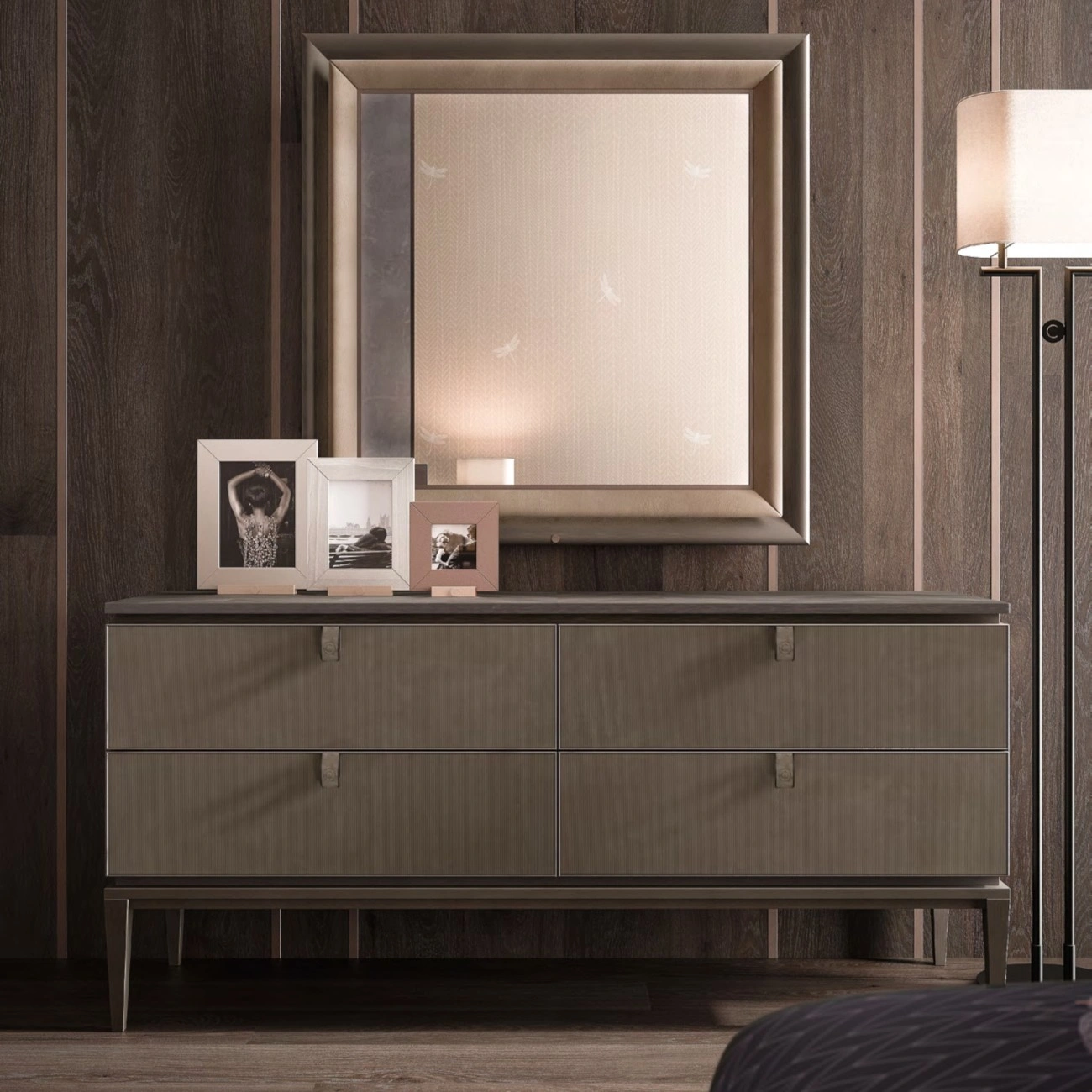
Pull the supporting cast back. Lower it, calm it, strip its colour. If the sofa is the event, the coffee table should be a good listener — present, useful, in no hurry to compete.
A room with one clear voice feels considered. A room with six feels like a meeting.
Mind the scale, and the courage of a big gesture
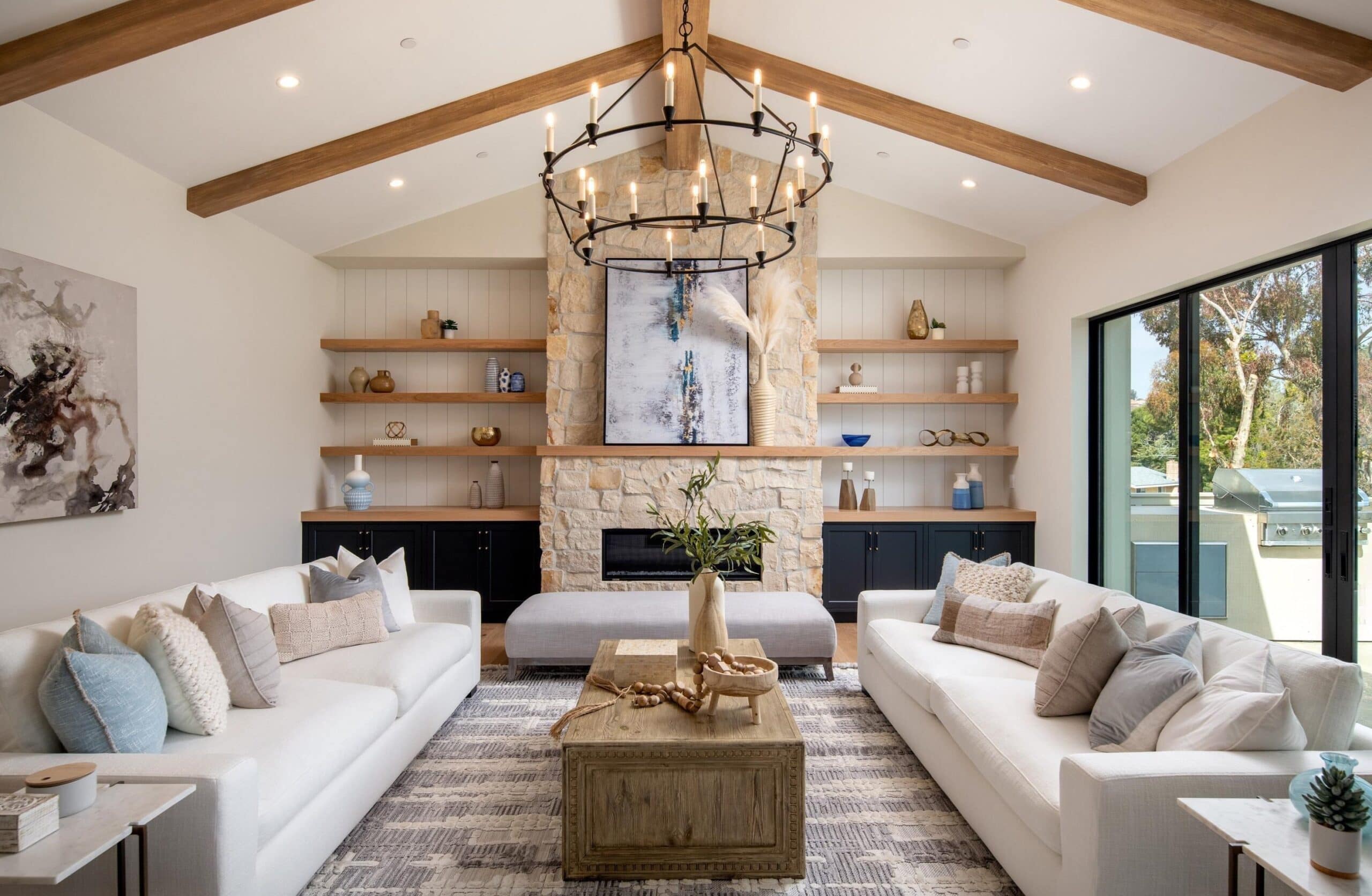
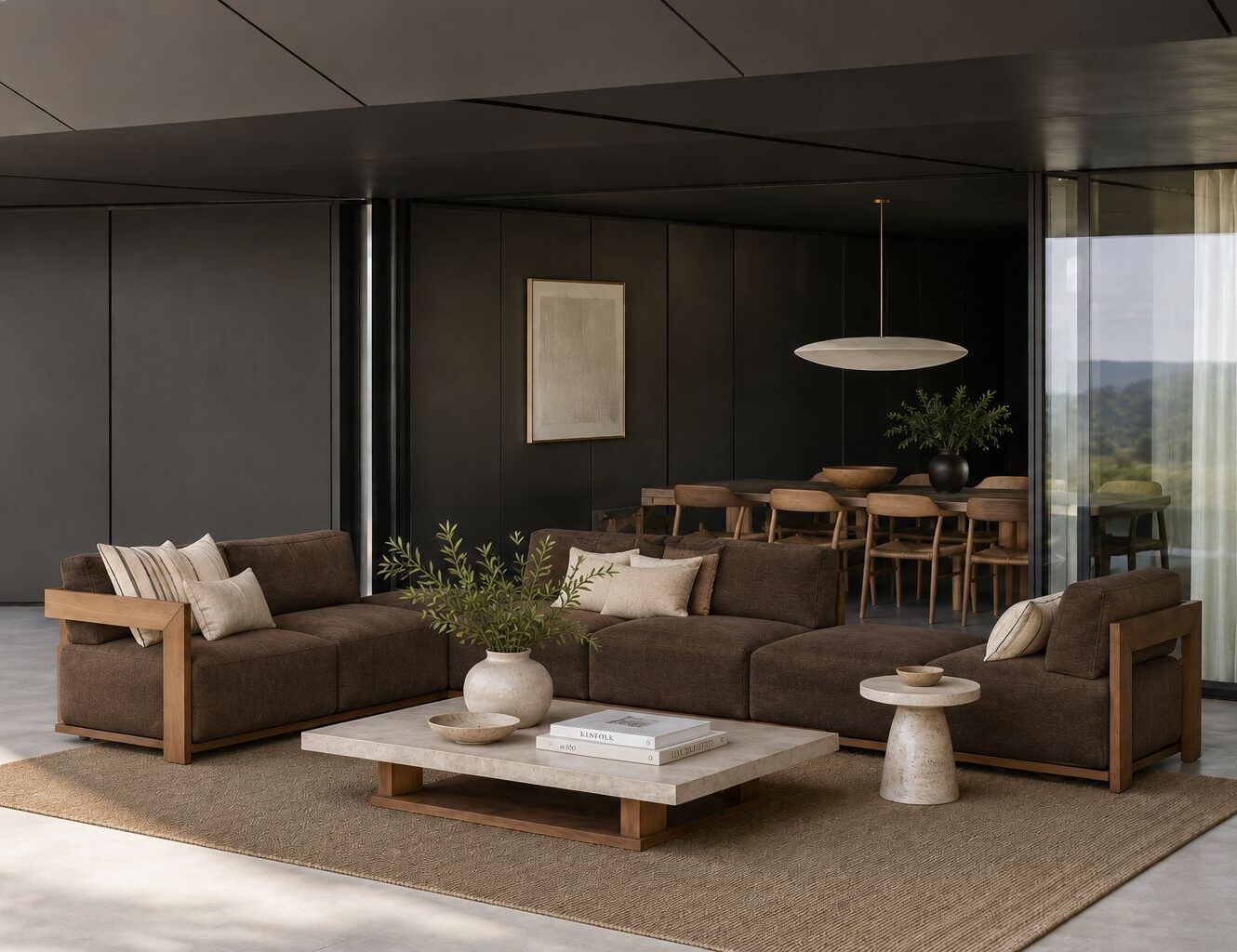
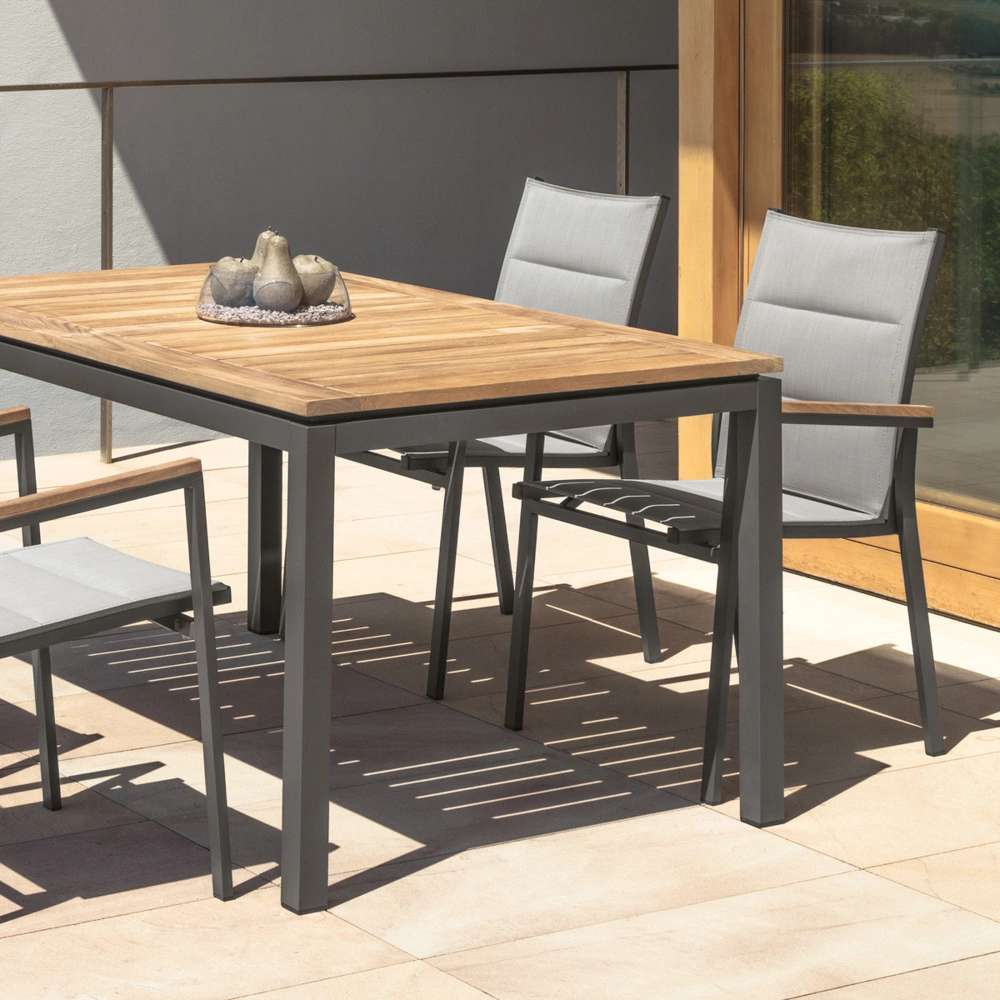
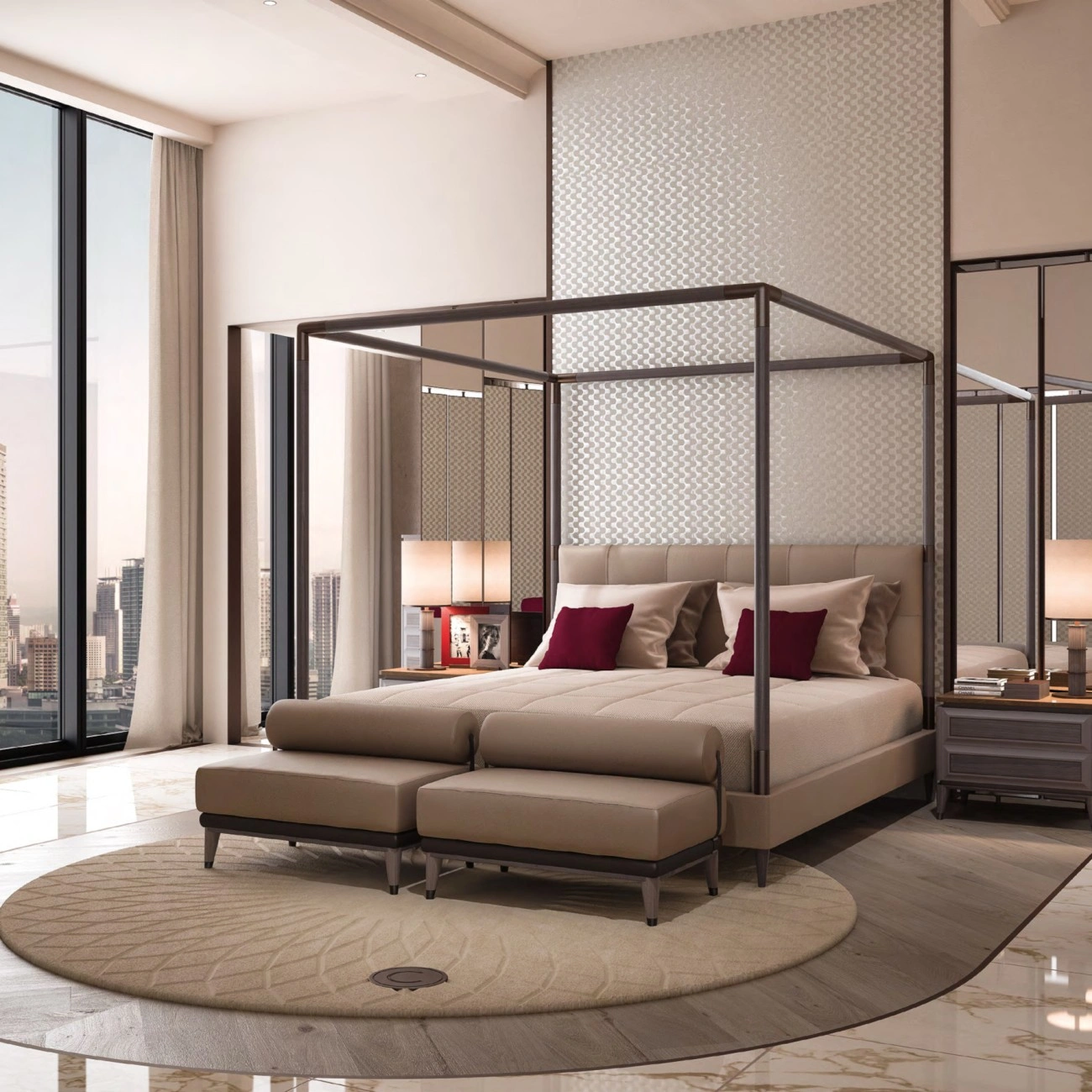
The most common mistake in a generous room is timidity — a sofa bought for an apartment, marooned in a space built for more. A single large piece, properly scaled, will always look more resolved than several medium ones hedging their bets. One long sectional. One oversized pendant. One table that seats ten and means it.
Scale is also how you make a modest room feel deliberate. A single bold piece in a small space is confident. Four cautious ones are merely crowded.
Let the material reward a long look
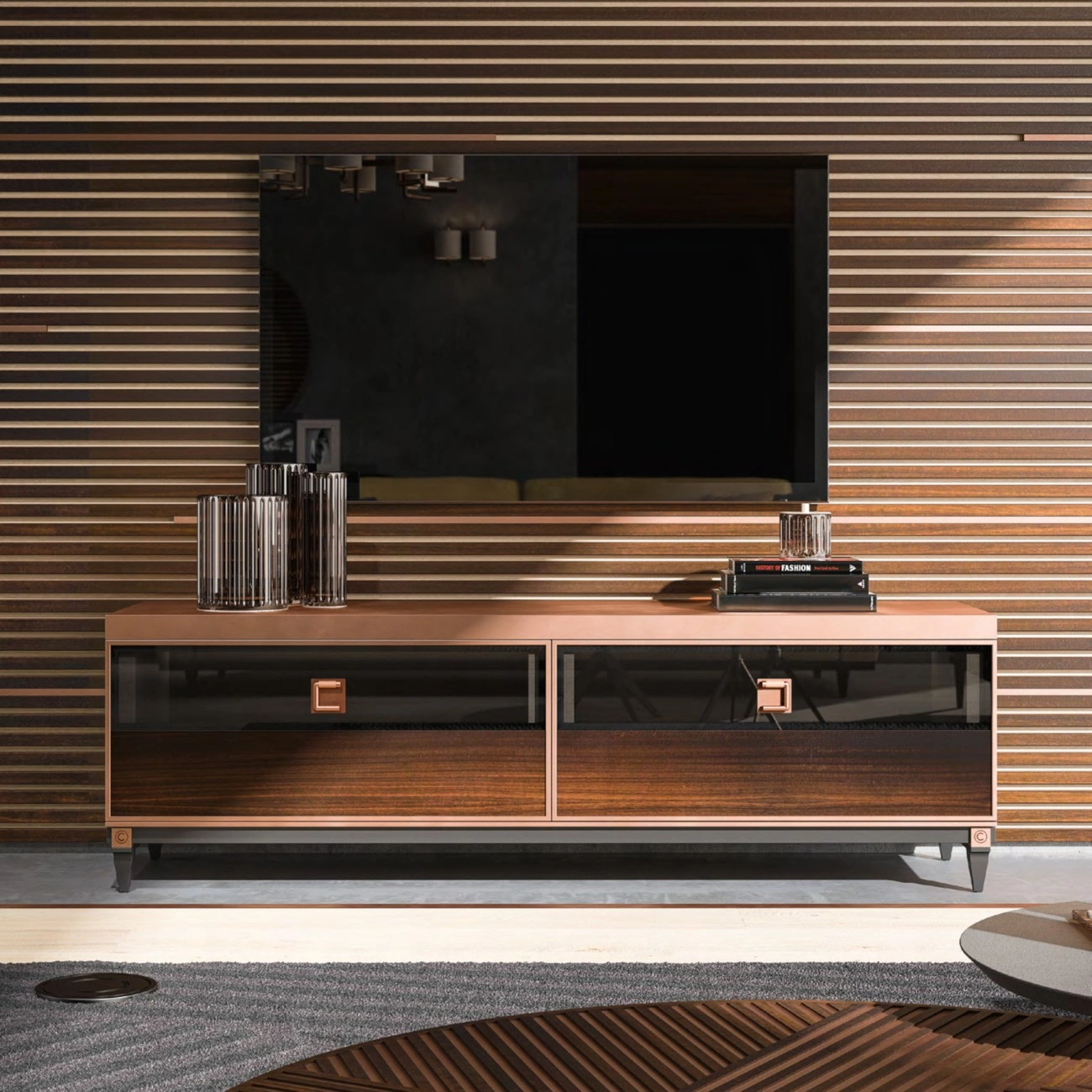
When a room rests on one object, that object has to hold up under attention. This is where material earns its keep: the cool weight of lava stone, the slubbed honesty of a linen weave, walnut finished with oil rather than lacquer so the grain stays open to the light. A statement piece in a flat, faultless surface is a billboard. The same shape in a material with depth becomes something you want to touch on the way past.
A quick test before you commit
Stand in the room and picture the piece gone. If the space collapses into pleasant nothingness, you have found your anchor. If you barely notice its absence, it was never doing the work — and no amount of styling around it will change that.
Most of the rooms we help put together at Melaaura begin with one decision and unfold from there. A client falls for a particular curved sofa, or a dining table cut from a single slab, and that piece quietly sets the terms: the palette, the proportions, the restraint. Everything after it is editing. If there is a piece you keep returning to, start there, build outward slowly, and trust the one thing you love to hold the room together. It usually does.