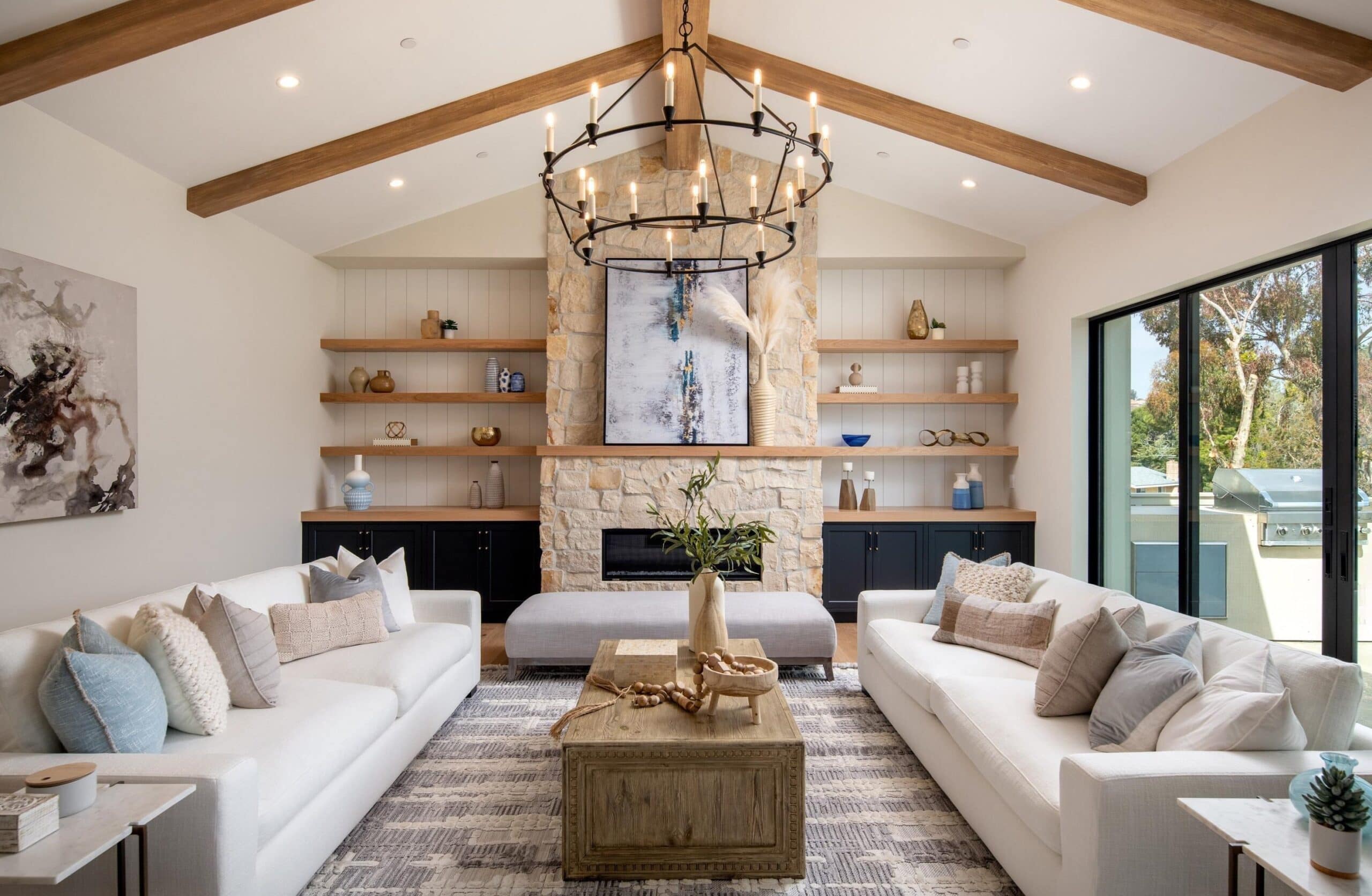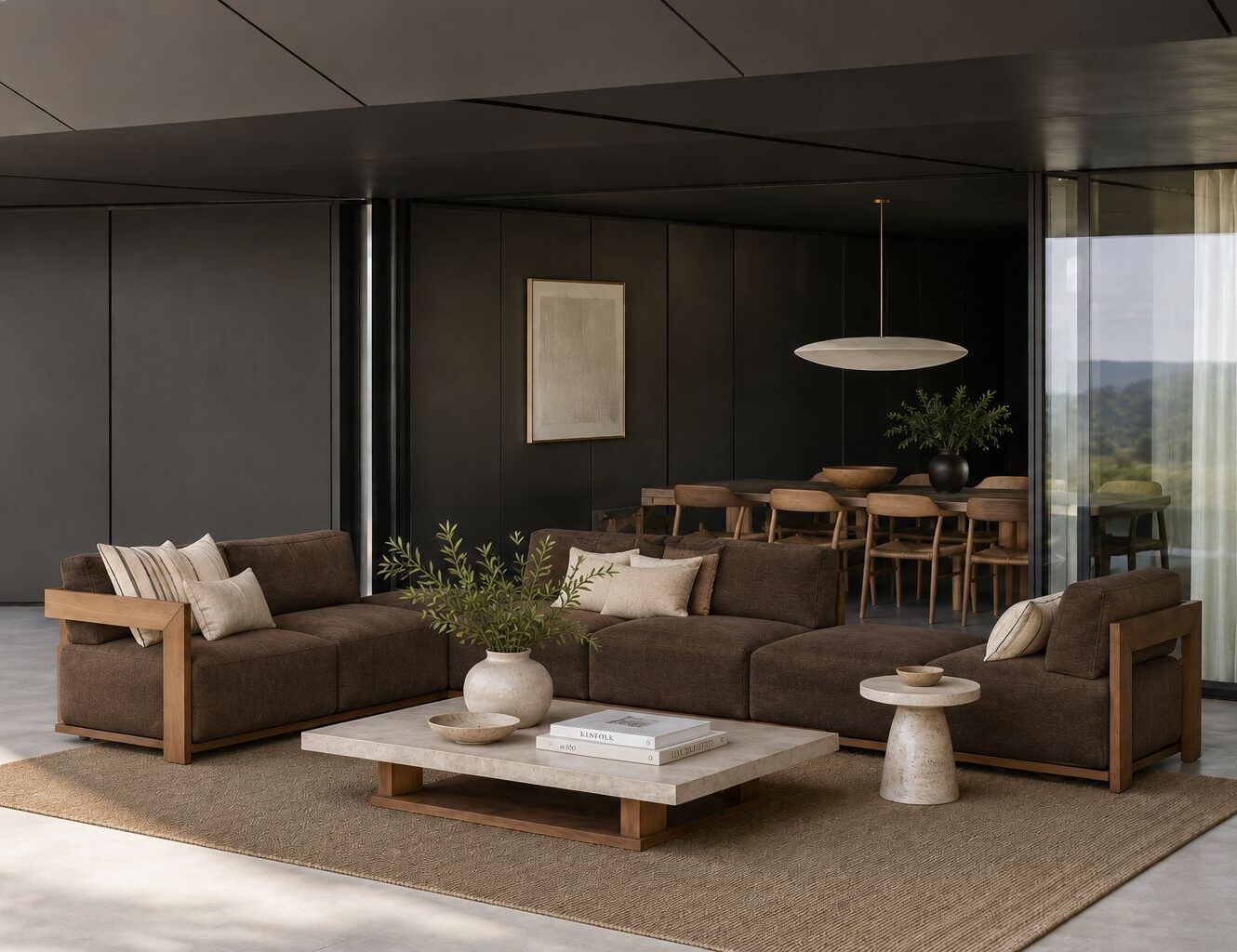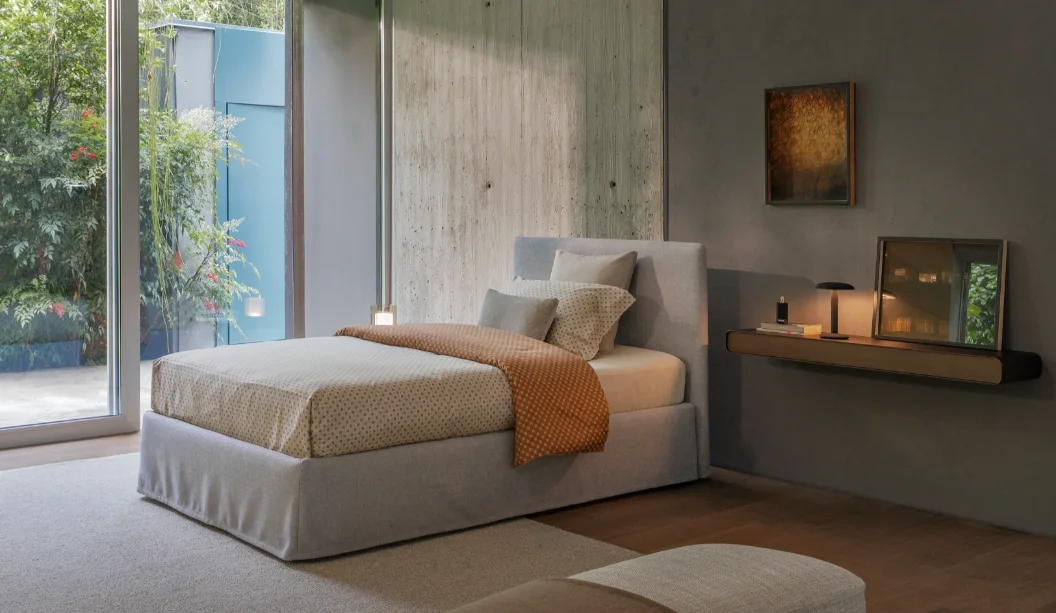

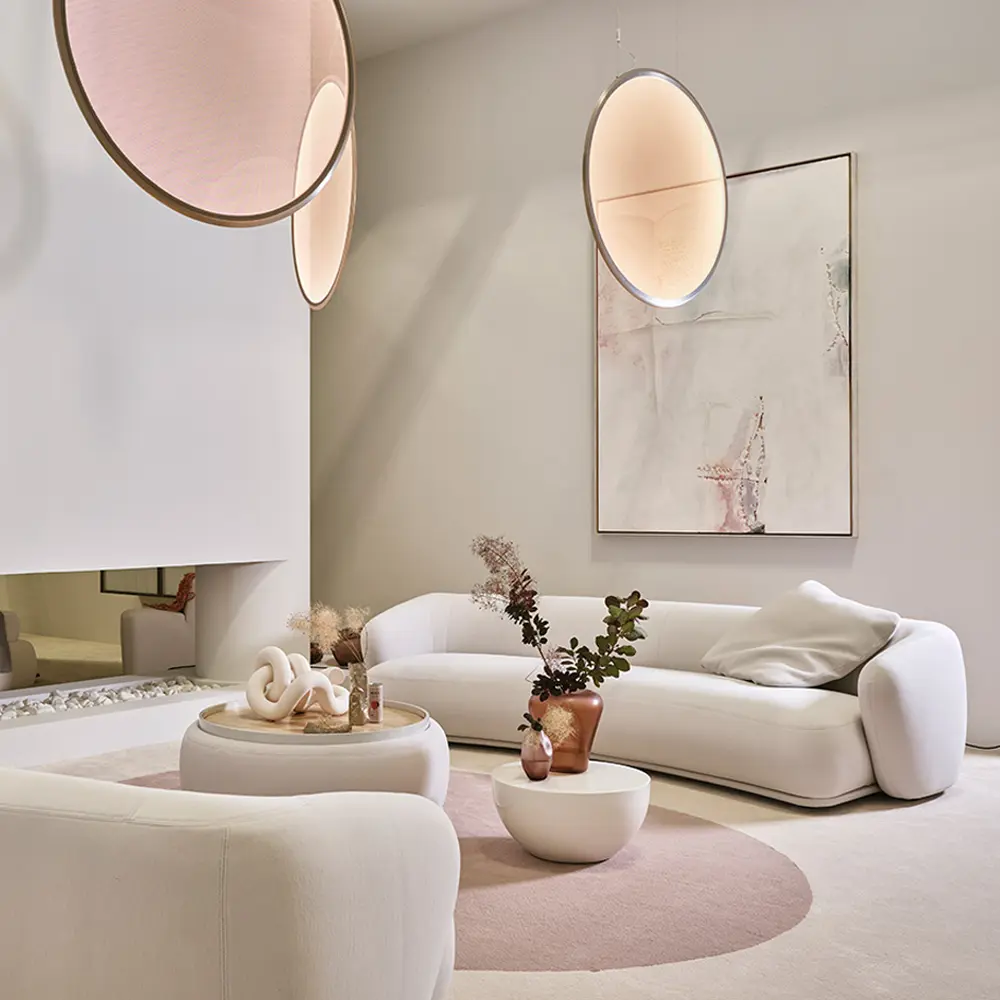
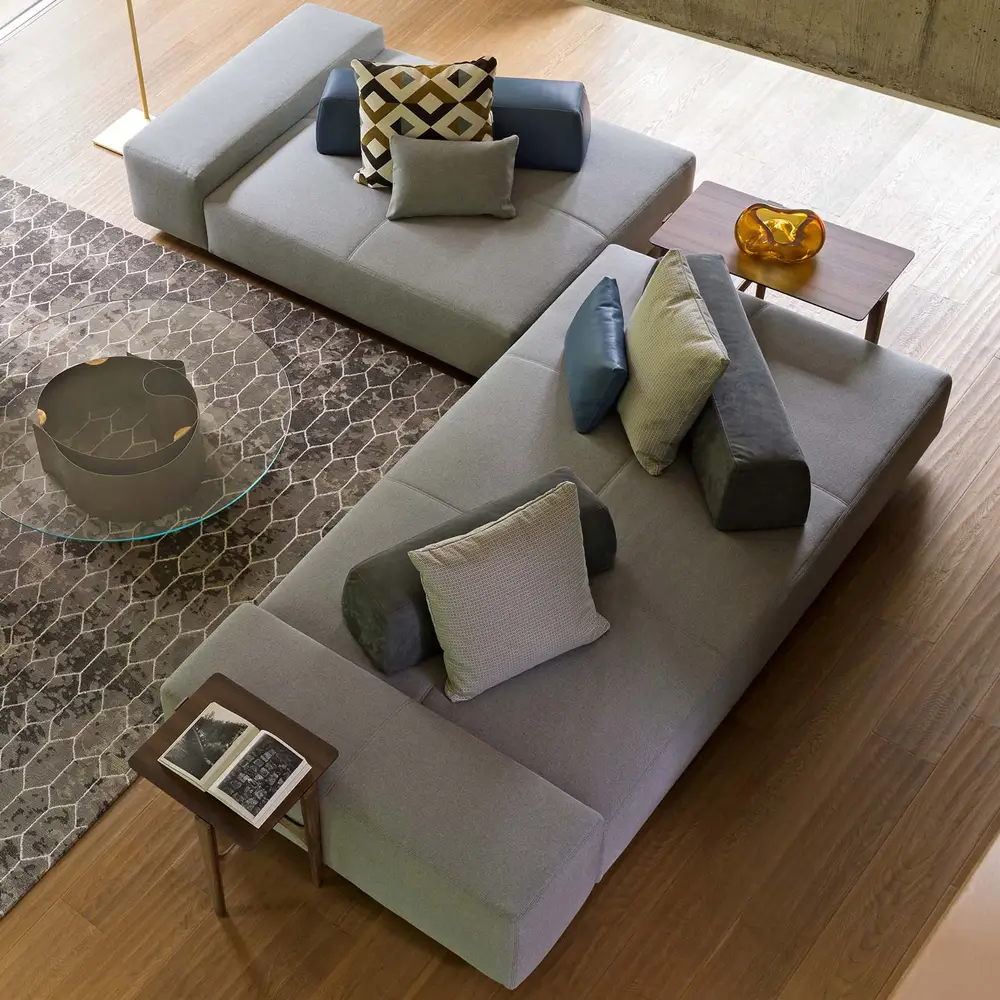
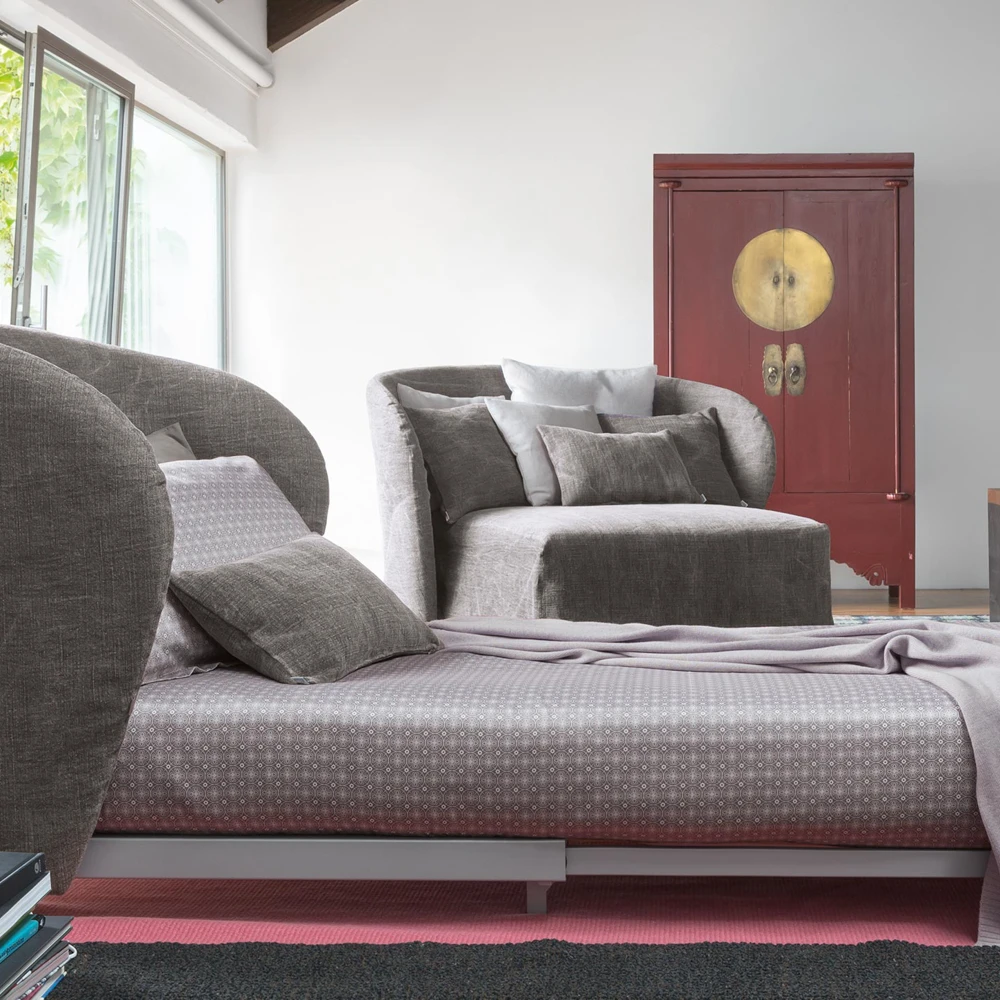
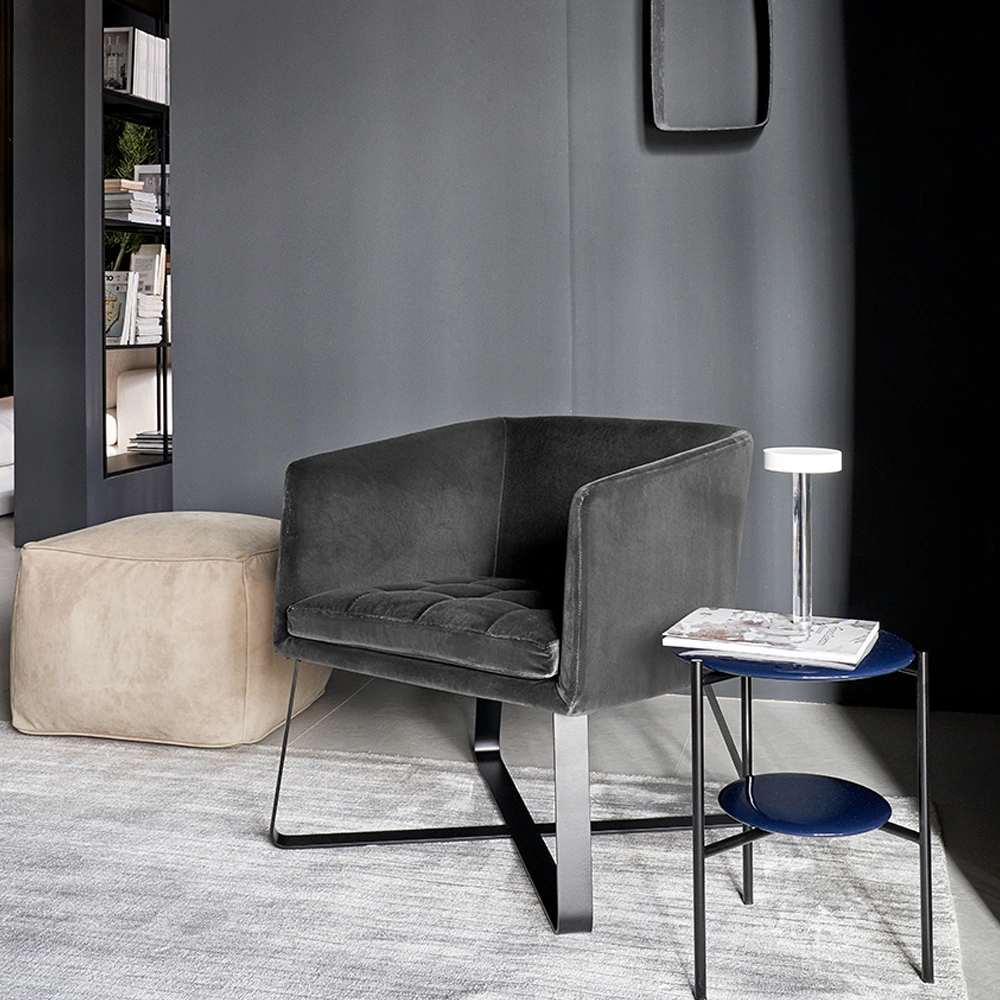


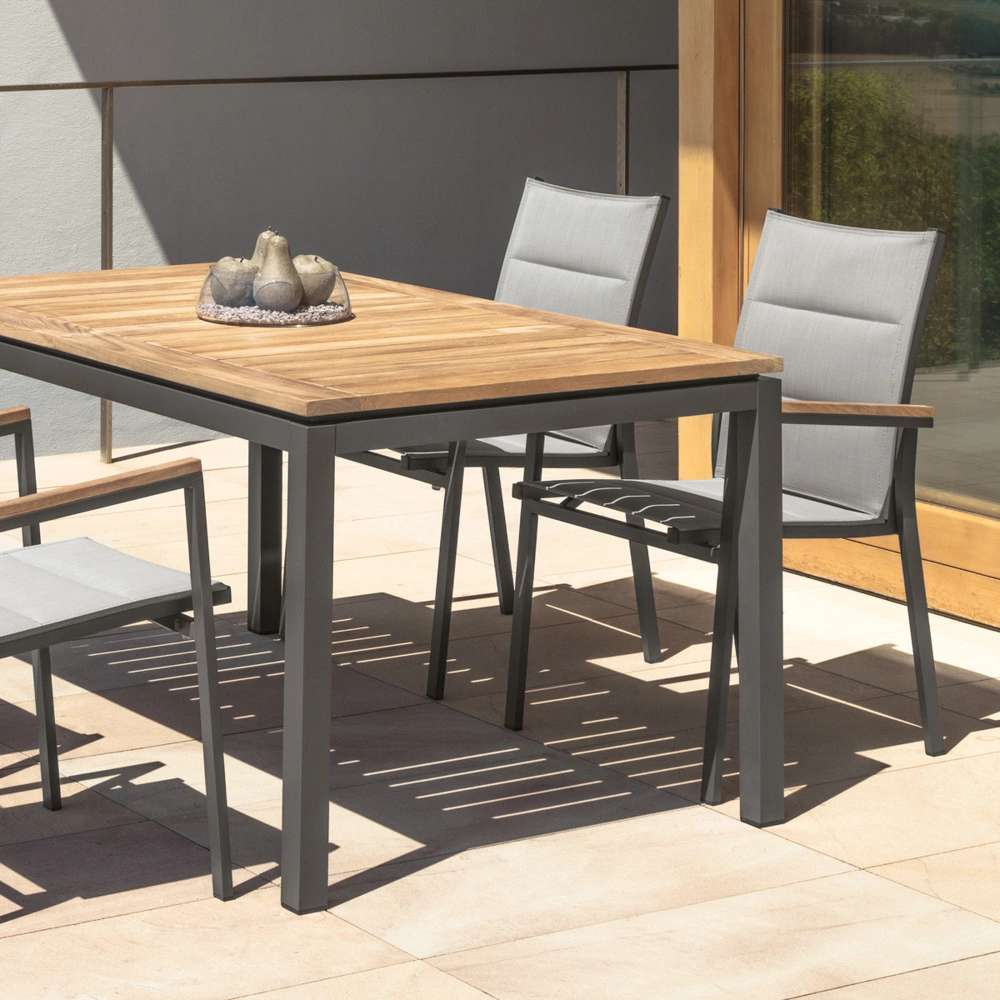
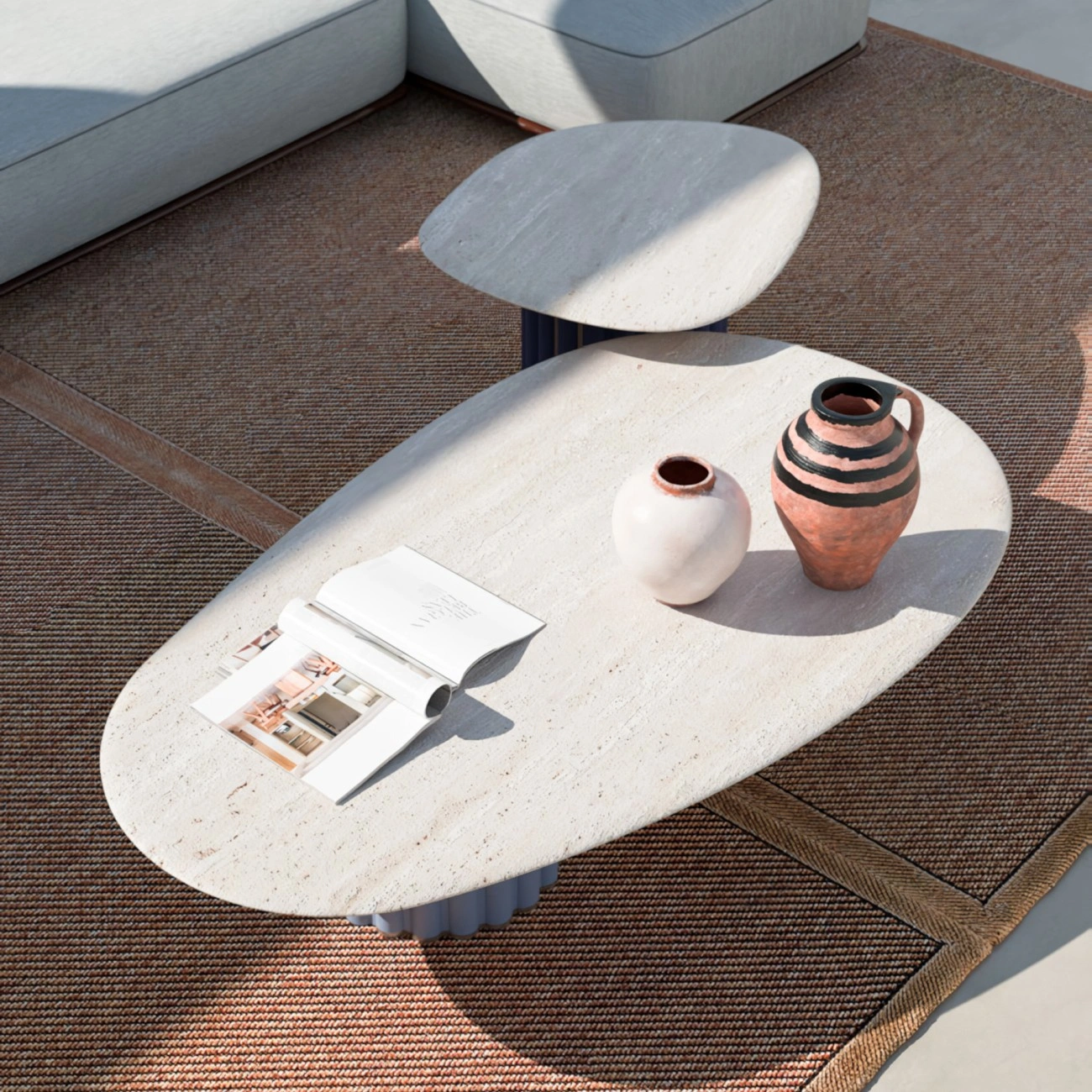


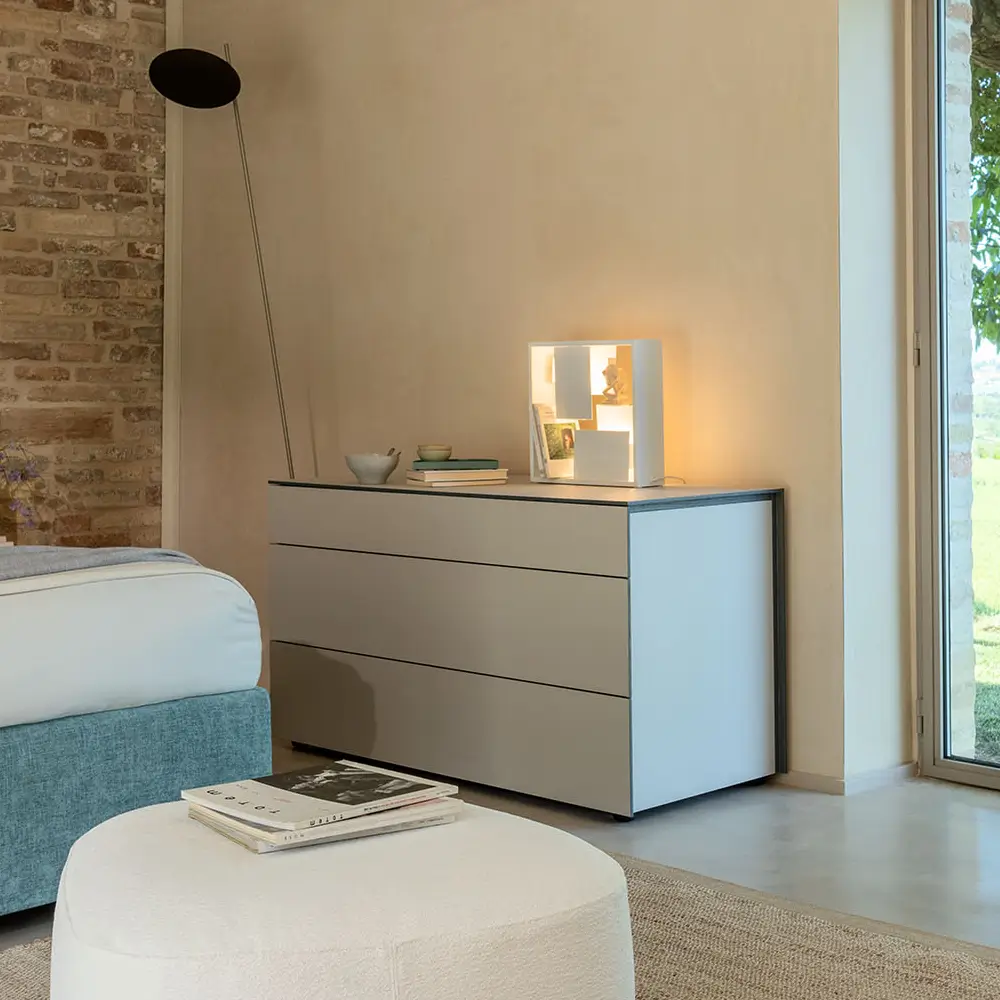
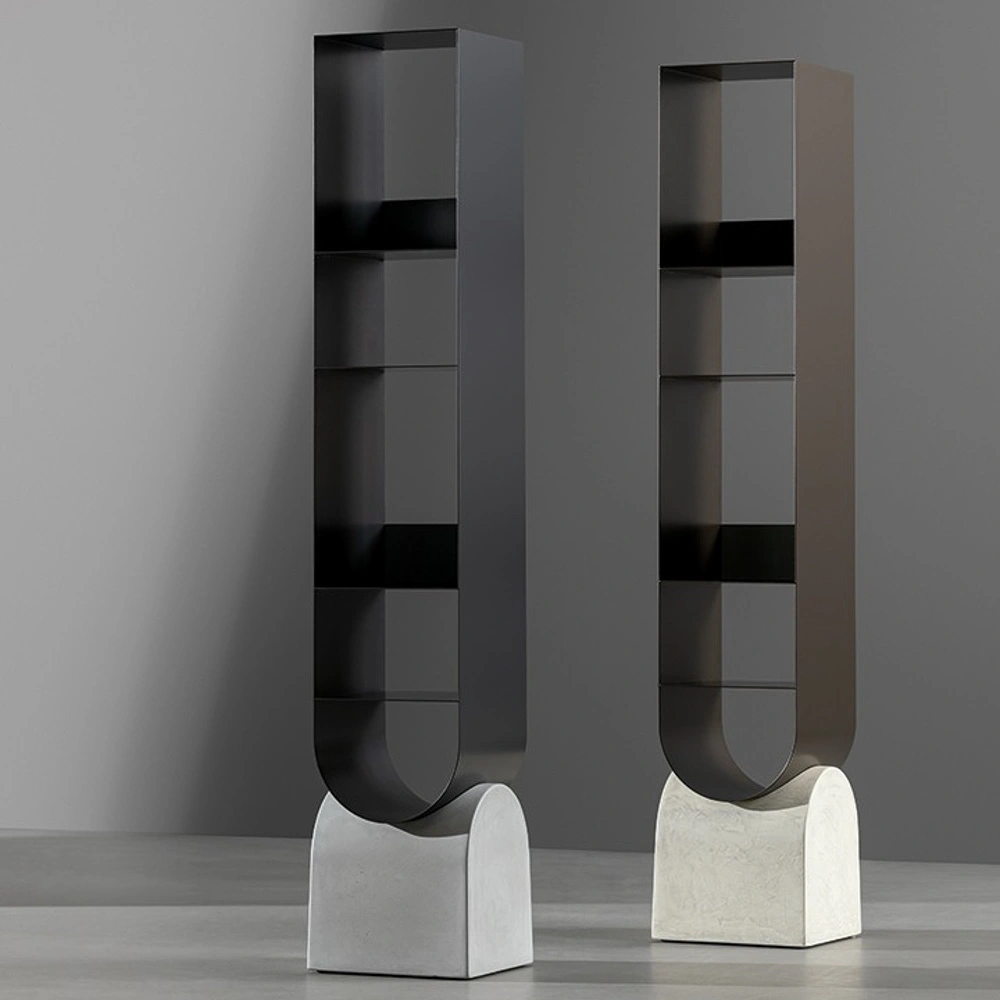
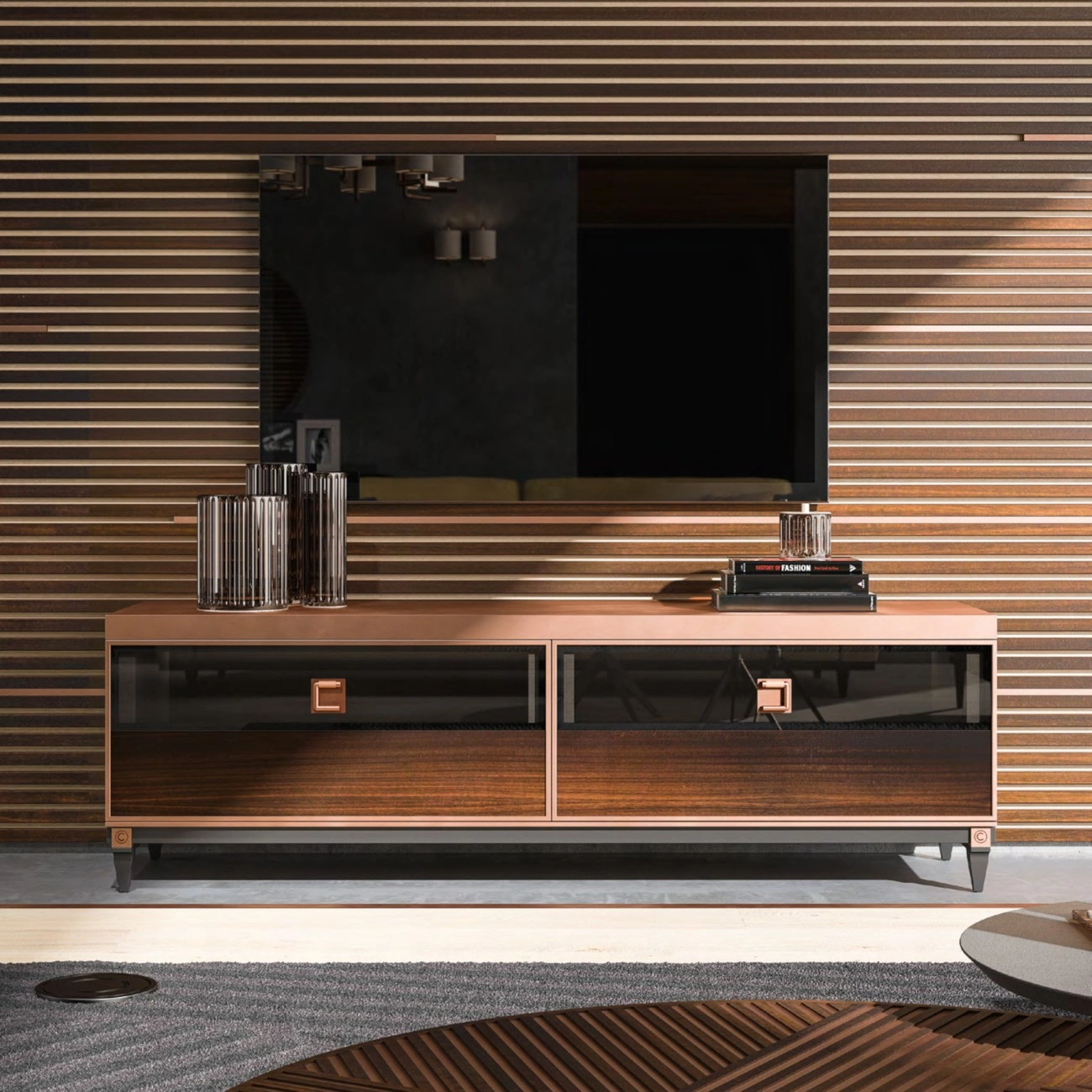
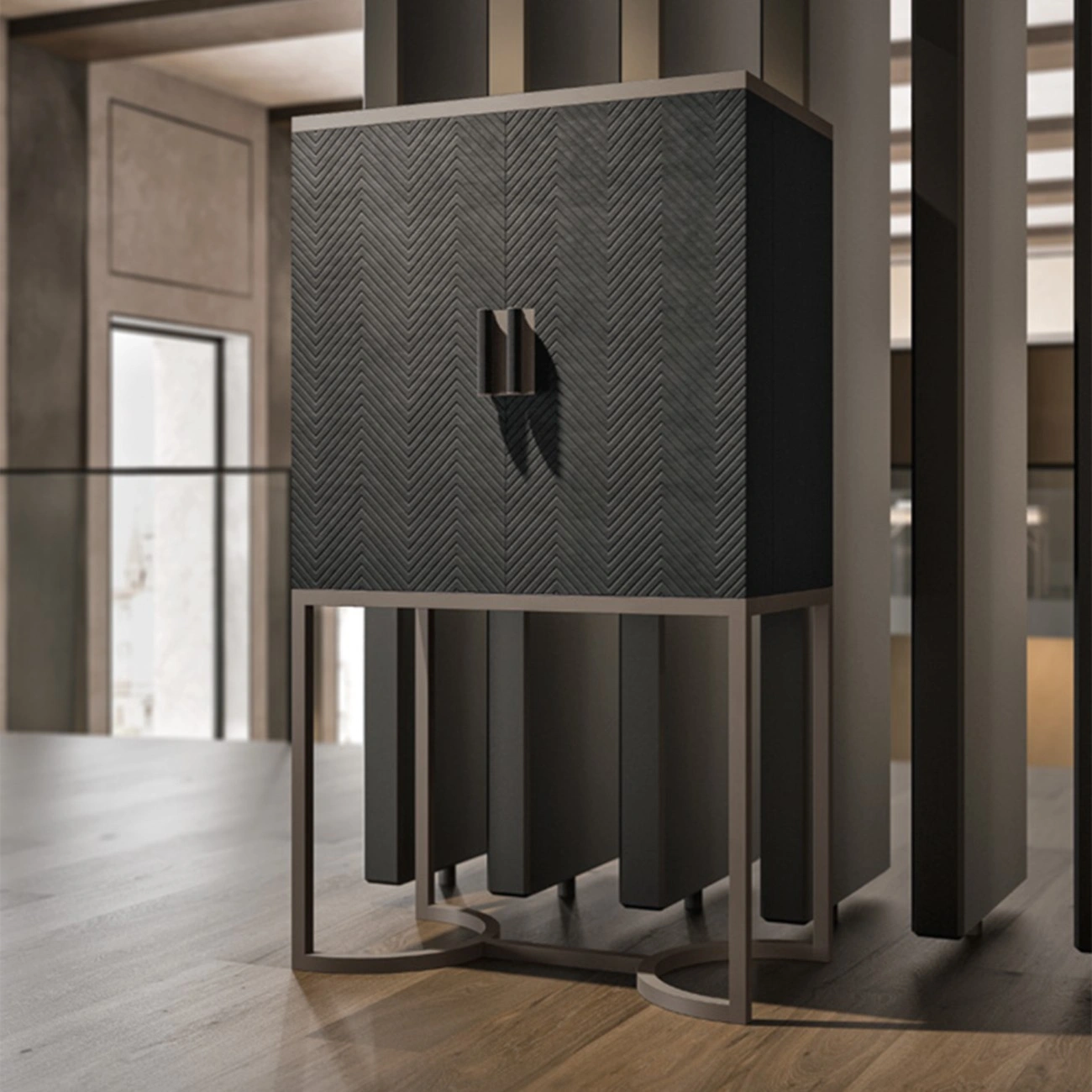

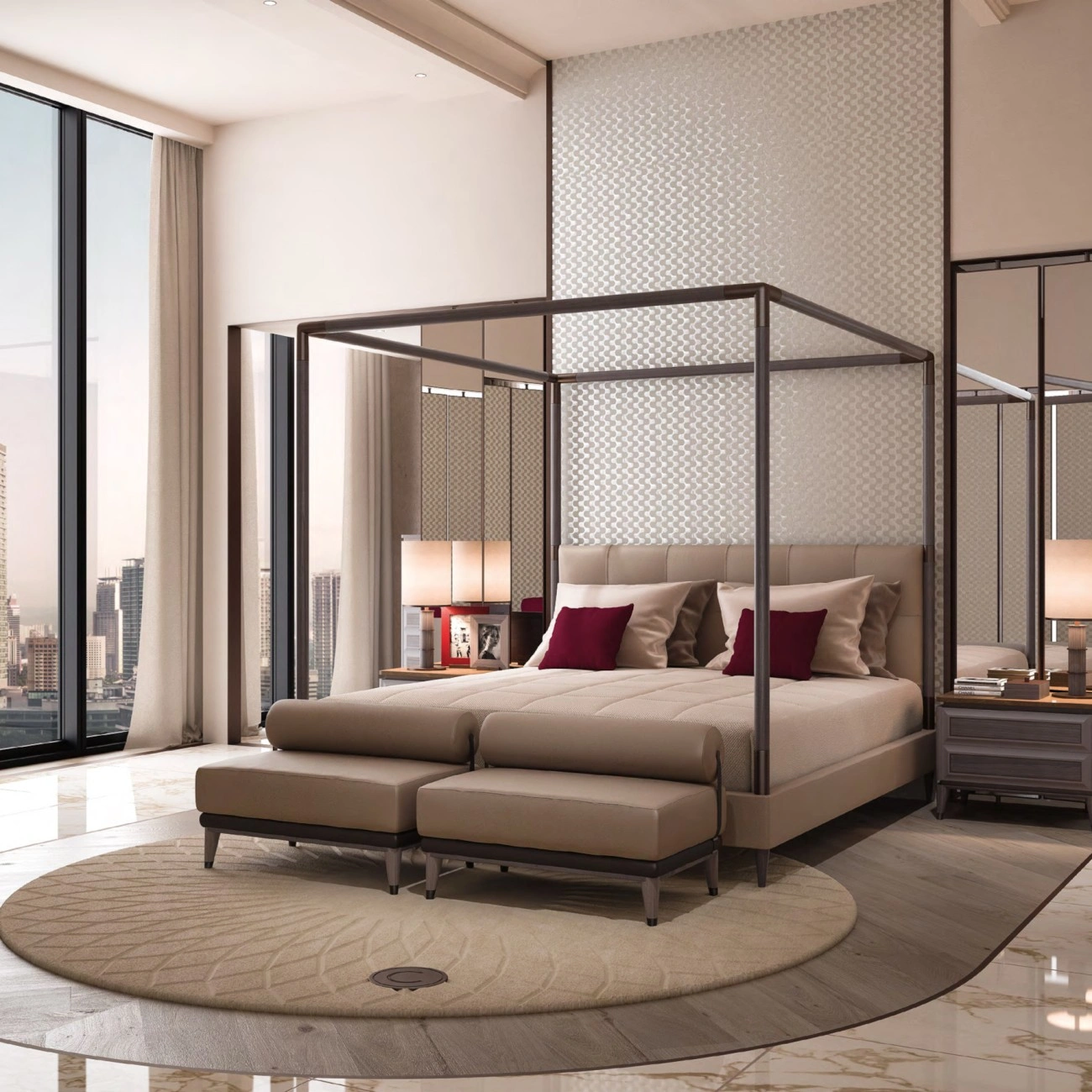
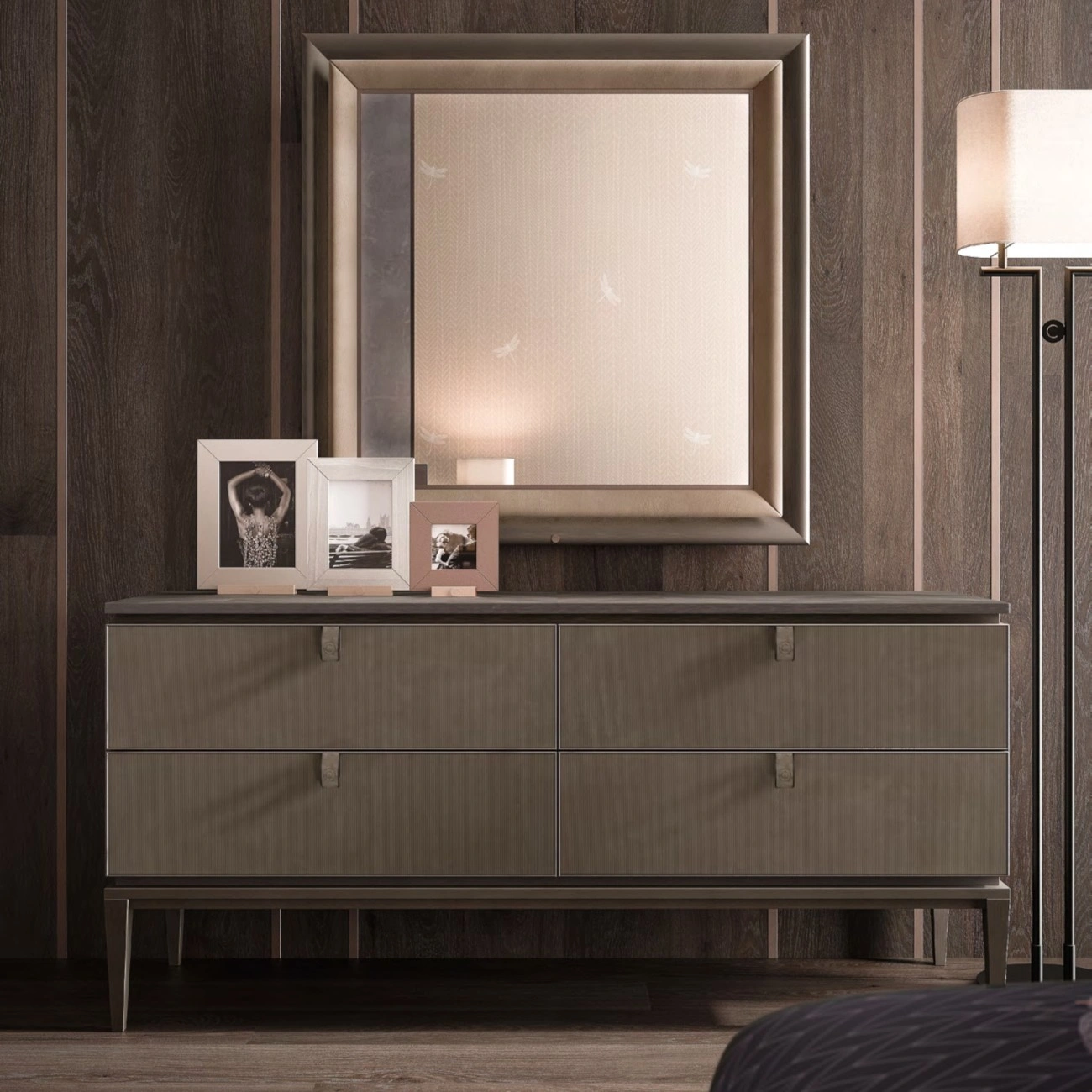

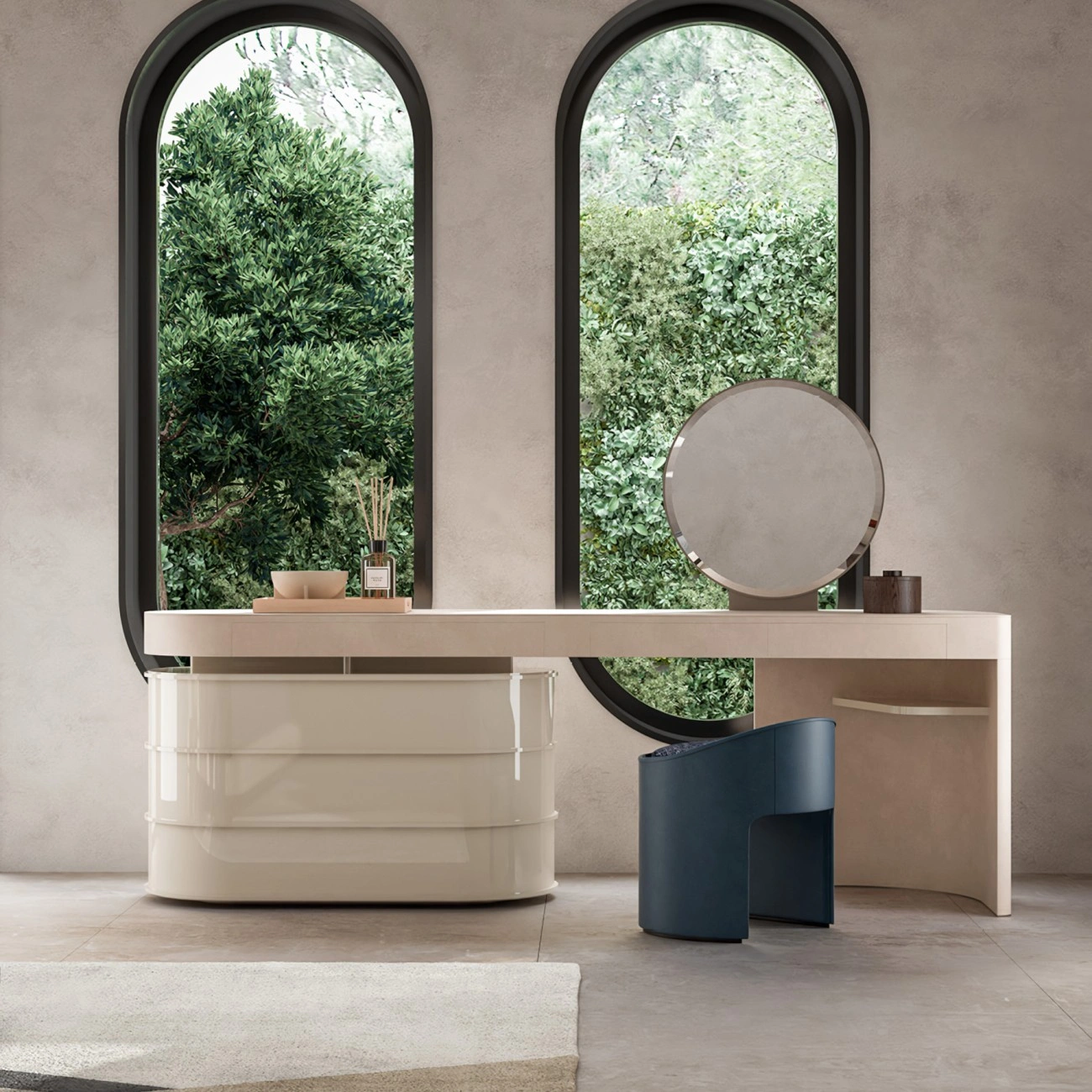






Design is often discussed in terms of shape, line, or color. But texture? Texture speaks differently. It doesn’t announce itself; it insinuates, insinuates and lingers. Designers increasingly use textures in design, not as static surfaces but as emotional instruments. Concrete and wood, velvet and rattan — each pairing isn’t just visual contrast. They create tension, comfort, surprise, intimacy. Interiors are no longer “seen” only; they are felt.
The contemporary interior seems obsessed with contradiction. Hard and soft, cold and warm, rough and smooth. Concrete against wood is the textbook example: raw, cool, industrial concrete juxtaposed with warm, grainy wood. The contrast is not accidental. It is calculated to elicit response. One surface challenges the body, the other soothes it. The mind registers the duality immediately, even subconsciously. Concrete asserts presence; wood offers relief. Together they form a dialogue of sensation, a rhythm between alertness and ease.
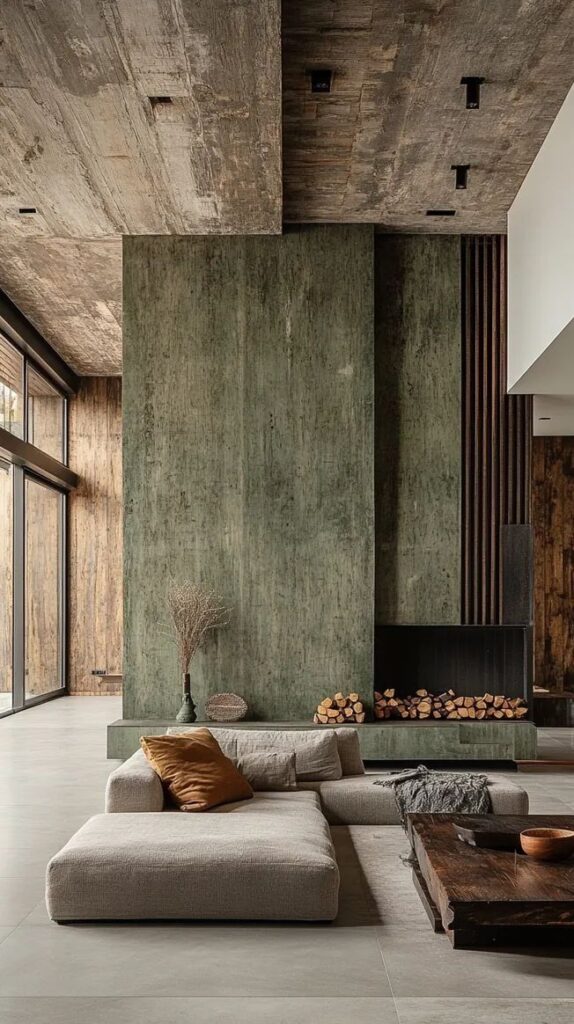
Concrete as Discipline
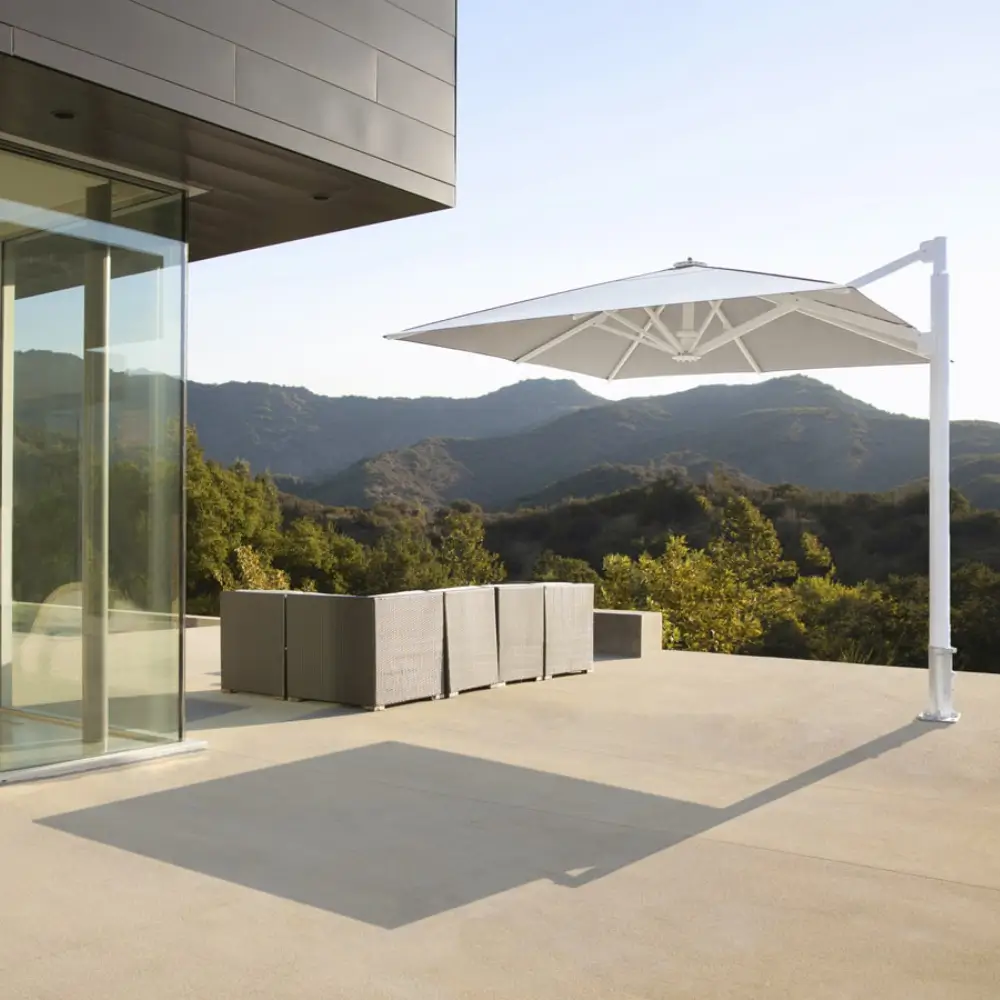
Concrete is an unusual provocateur. In its polished form, it suggests control, precision, permanence. Raw, it is almost aggressive: sharp edges, unyielding planes, cool touch under the fingertips. Its very density communicates gravity. Standing near a concrete wall, the mind senses solidity, the body registers stillness. It is the kind of surface that encourages reflection, even pause. But used sparingly, against its softer counterpart, it transforms. Textures in design is when you paired concrete countertop over a wooden base, or a slab table punctuated with natural wood grain, tells a story of balance. The eye sees structure, the hand feels generosity.
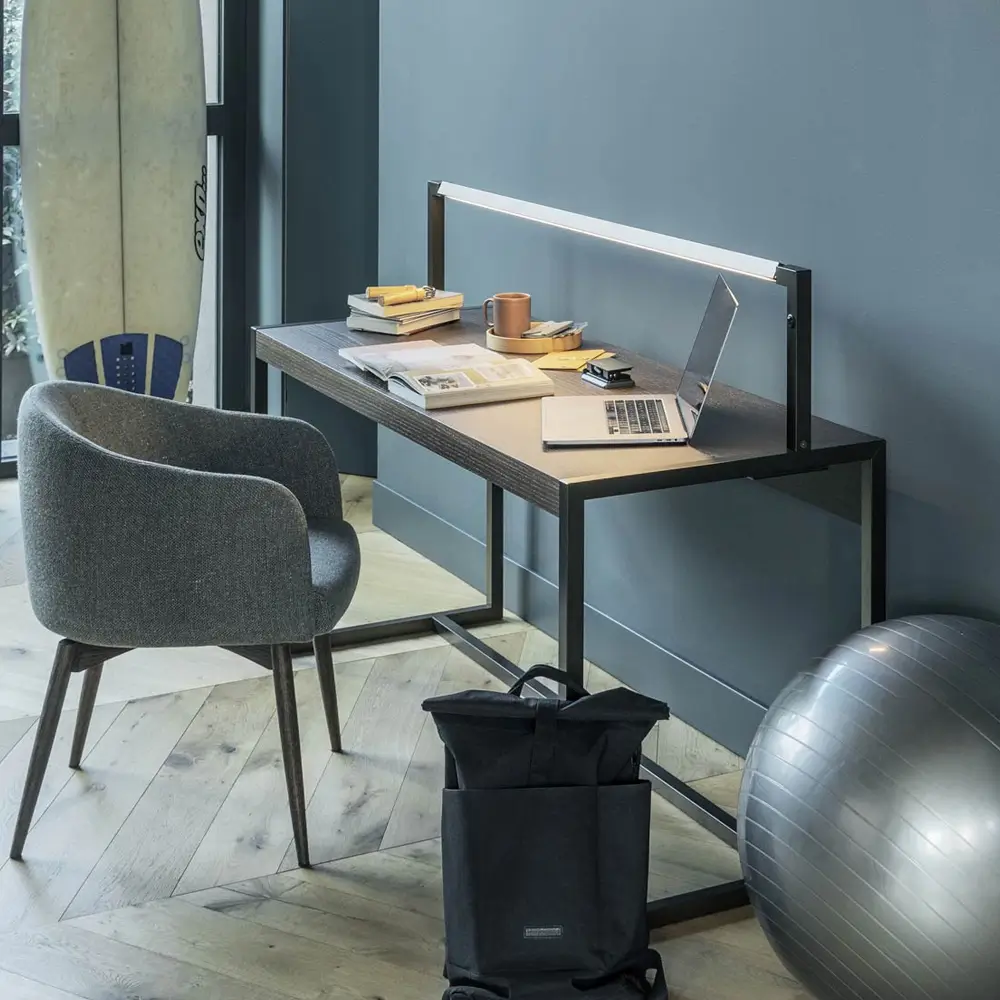
Concrete’s emotional weight is amplified by wood. Grain patterns, warmth, imperfection — these qualities remind the observer that even in solidity, life persists. A concrete floor next to a wooden chair is not merely contrast; it is a tactile conversation. The wood absorbs, refracts, or softens the harshness of the concrete, while concrete lends seriousness to the wood. Alone, either might dominate, but together they teach the occupant something about restraint and sensation.
Wood as Comfort
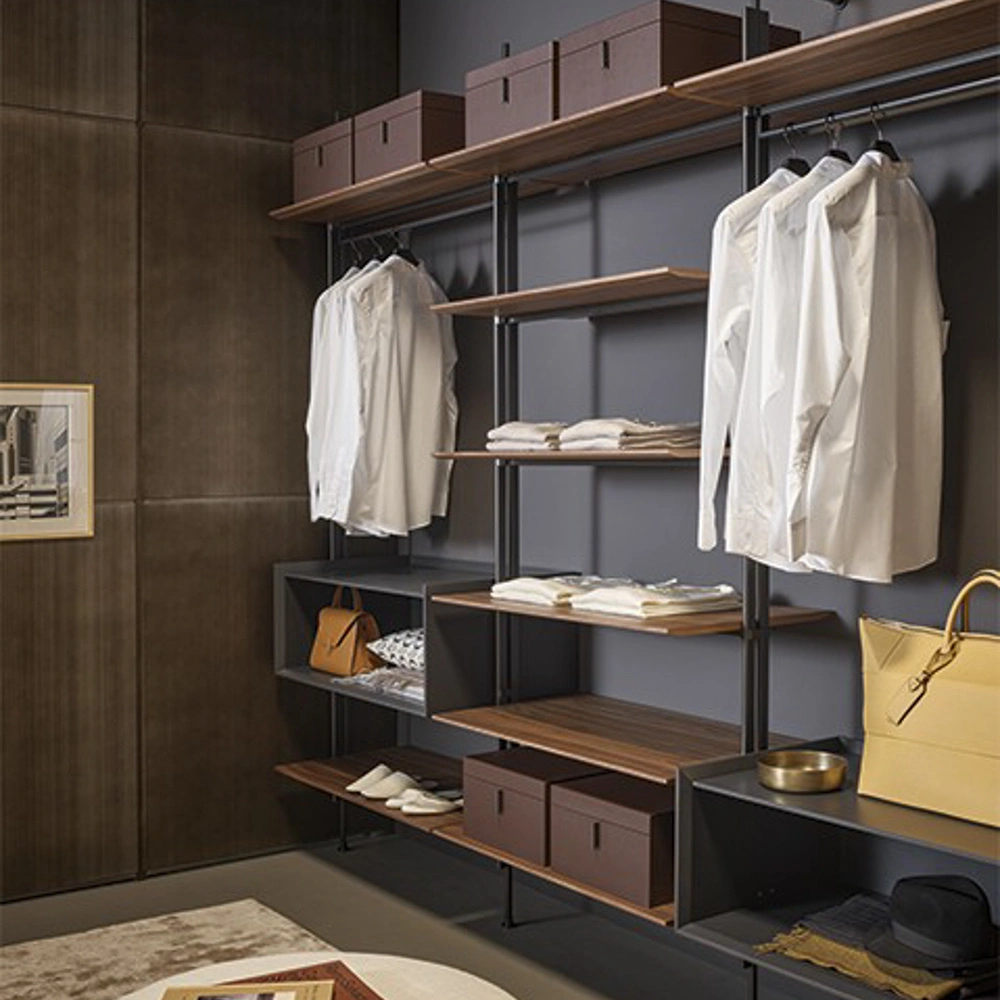
Wood is forgiving. It invites touch, and it remembers it. The body reacts to its texture in a way it rarely does to steel or plastic. Even subtle variations in grain, tiny knots, or the curve of a hand-sanded edge are perceived as warmth, almost like empathy encoded in matter. Designers use these properties to temper harsher materials. A concrete wall can feel austere, but when paired with a carved wood bench or timber paneling, the interior seems alive. The room breathes. There is a psychological balance: tension without anxiety, solidity without coldness.
Wood also brings sound into play. Footsteps on timber resonate differently than on concrete. Chairs scrape lightly, surfaces respond to touch. Interiors are not just visual; they are auditory and haptic. The contrast is cumulative, layering perception. By combining the two, designers manipulate not just the eye, but the nervous system. Concrete and wood together create rhythm and counterpoint, a dialogue the occupant senses before naming it.
Velvet and Rattan: Sensuality and Play
If concrete and wood operate in a language of gravity and restraint, velvet and rattan speak in intimacy and tactility. Velvet is unapologetically soft, dense, and slightly opulent. A hand drawn across its pile feels indulgent. It is emotive, almost theatrical in its persuasion: touch me, sit here, linger. Rattan, by contrast, is lightweight, flexible, warm in tone, but its surface is textured, porous, slightly uneven. It resists indulgence in the way velvet invites it. The juxtaposition is a dialogue between embrace and structure, luxury and casualness, human and crafted.
Designers exploit these contrasts to evoke particular emotional responses. A velvet chair with a rattan frame, or a rattan screen with velvet cushions, creates tension that is felt physically. The eyes register difference, but the hands confirm it. Rattan responds to pressure with gentle give; velvet yields to the touch, then springs back. The interior becomes a stage of sensations. The occupant is aware of their own body in relation to the material, consciously or not.
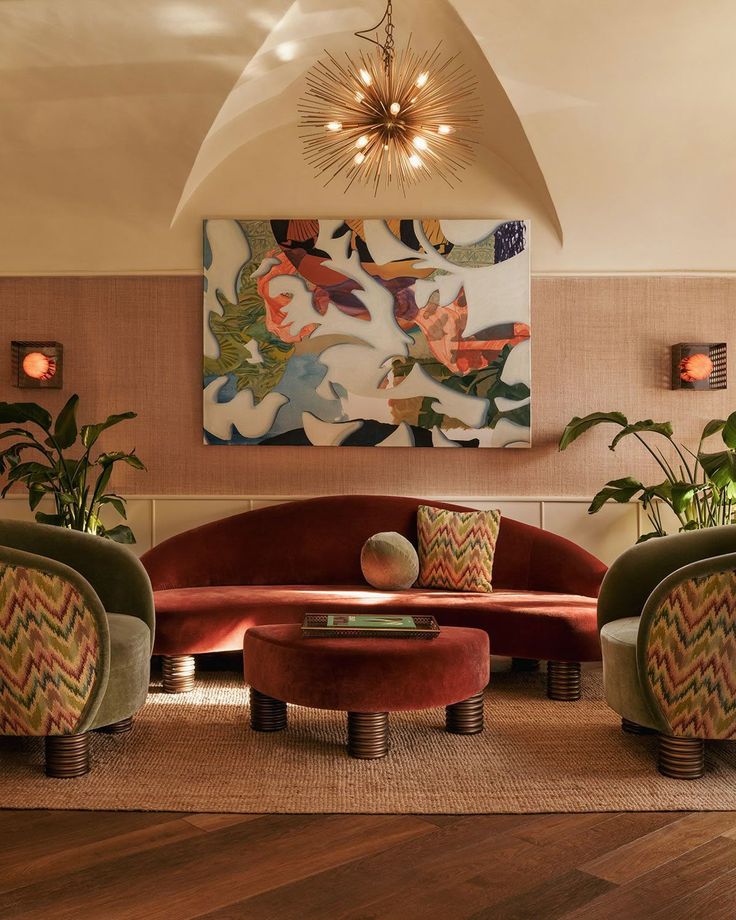
Layering for Complexity
What makes these contrasts compelling is layering. Concrete and wood rarely exist in isolation. Velvet and rattan are not deployed as singular accents. Multiple surfaces interact. A polished concrete floor anchors a room, wooden furniture rises above it, velvet cushions punctuate seating, and rattan baskets or lighting weave lightness into the composition. The eye moves across textures; the body navigates them. Interiors are no longer flat tableaux. They are multi-sensory experiences.
The emotional effect is cumulative. Cool hardness against warm tactility, soft sensuality against light resilience — it creates what designers quietly call “feel.” It is not something easily described, but it is unmistakable. A concrete-and-wood interior communicates seriousness and comfort. A velvet-and-rattan combination communicates ease and intimacy. When paired, they elevate each other. Each surface, by contrast, defines the other.
Imperfection as Honesty
One element of these pairings is imperfection. Wood is rarely perfectly straight, concrete may bear faint marks of casting, velvet may show subtle variation in sheen, rattan may bend slightly. These imperfections are intentional. They signal authenticity, handcraft, and care. Smooth, perfect surfaces can feel sterile; contrast becomes superficial if it lacks human trace. The occupant senses honesty. Interiors feel alive, not staged.
It is why designers often leave minor flaws exposed. A concrete wall with faint trowel lines, a wooden tabletop with uneven grain, a velvet cushion showing pile variation, rattan weaving with slight asymmetry — all speak of process, labor, and tactility. Emotional resonance is not created by perfection, but by subtle unpredictability. The material carries narrative.
Psychological Anchors
Texture influences behavior subtly but powerfully. Hard, cool surfaces like concrete can slow movement, encourage pause. Warm, yielding wood and soft velvet invite touch and extended occupation. Light, porous rattan encourages movement and exploration. Placed together, these materials modulate human response. Designers, often intuitively, use contrasts to control emotional pacing in a space.
Concrete demands attention; wood tempers it. Velvet invites indulgence; rattan restrains it. Together, interiors become emotional instruments. Occupants move through rhythm, pause, and touch without realizing it. The room becomes something more than functional: it becomes lived experience, embodied and felt.
Minimalism and Maximalist Sensation
Interestingly, these textural contrasts flourish in both minimal and maximal interiors. In a stripped-back, minimal room, a concrete floor and velvet chair stand in sharp relief, their emotional dialogue magnified by absence. In a maximalist interior, layers of wood, rattan, and velvet interact, creating complex, overlapping sensations. Designers use texture to create hierarchy — visual, tactile, emotional — in ways that color or shape alone cannot achieve.
The Role of Light
Light cannot be ignored. Concrete glows differently under warm LED than under daylight; wood absorbs and reflects subtly; velvet deepens in low light; rattan casts patterned shadows. Designers orchestrate this deliberately. Texture is inseparable from illumination. The same materials, under different light, communicate entirely different feelings. Concrete may read as cold and imposing in one context, soft and grounding in another. Velvet may seem luxurious or muted depending on angle and shadow. Rattan shifts from playful to serious. The interior is not static; it is responsive.
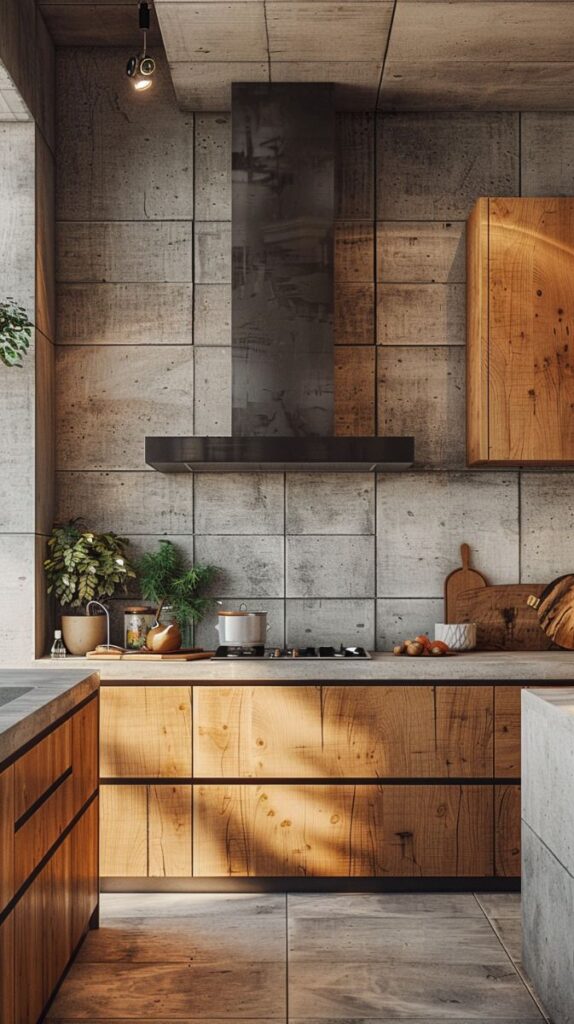
Conclusion Without Conclusion
Texture is no longer decoration. It is language, psychology, performance. Concrete and wood, velvet and rattan — these pairings are tools designers wield to evoke feeling, guide behavior, and heighten perception. The interplay of hard and soft, dense and porous, cool and warm, creates interiors that are felt as much as they are seen. They communicate care, craftsmanship, and emotion. They shape mood without words.
There is no tidy formula. The combinations are infinite, context-dependent, and inherently imperfect. But that is the point. The room is alive, tactile, responsive. It is an ongoing conversation between human and material. Concrete, velvet, wood, rattan — each surface carries weight, invites interaction, and frames emotion. Interiors are no longer flat. They pulse.