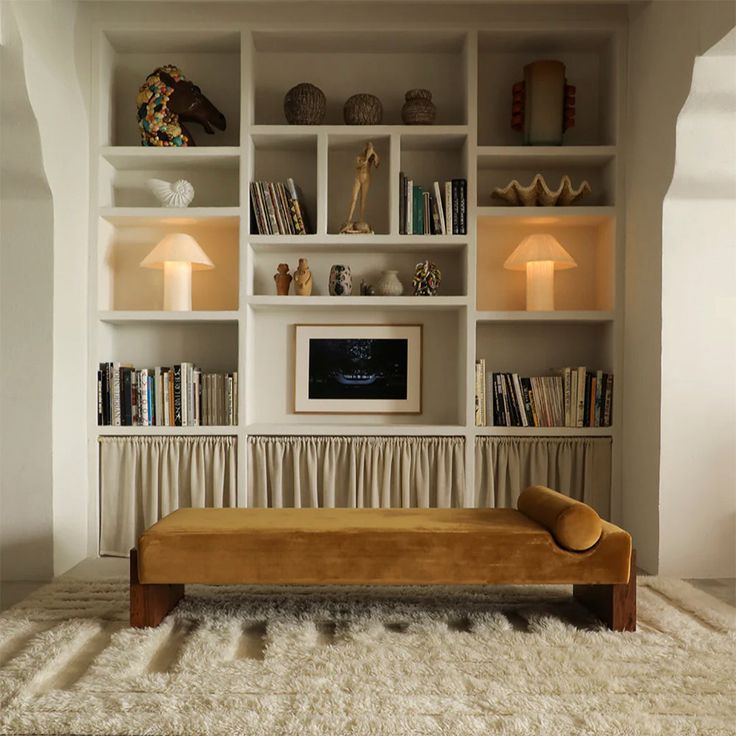
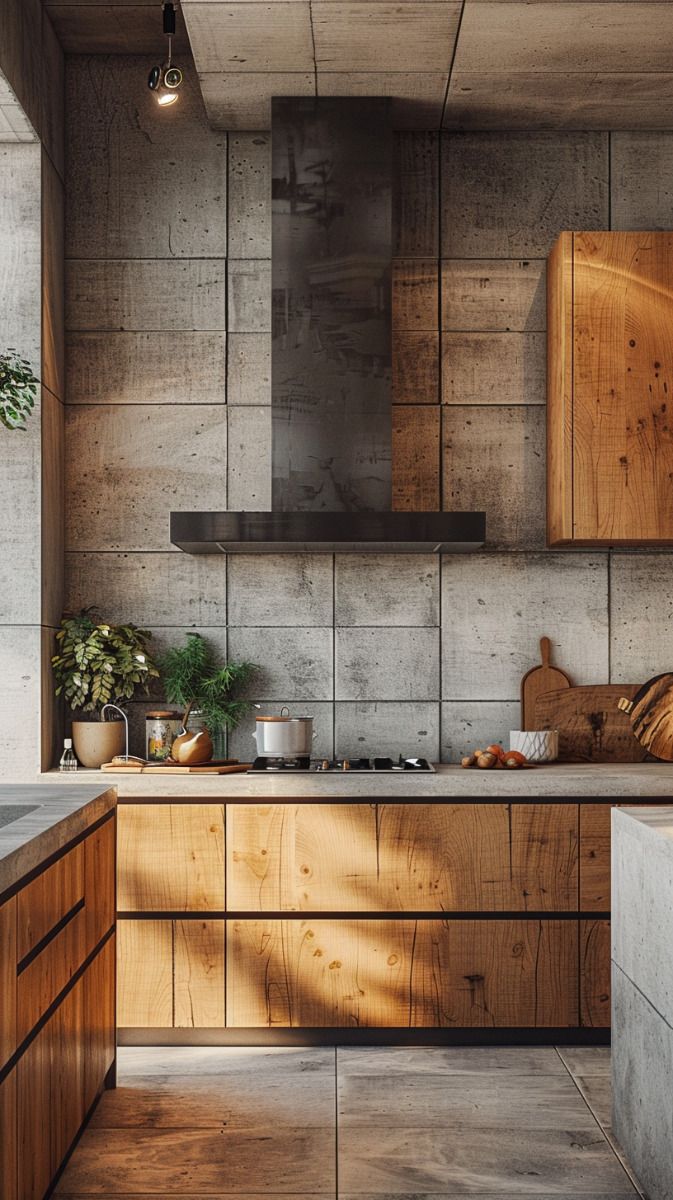
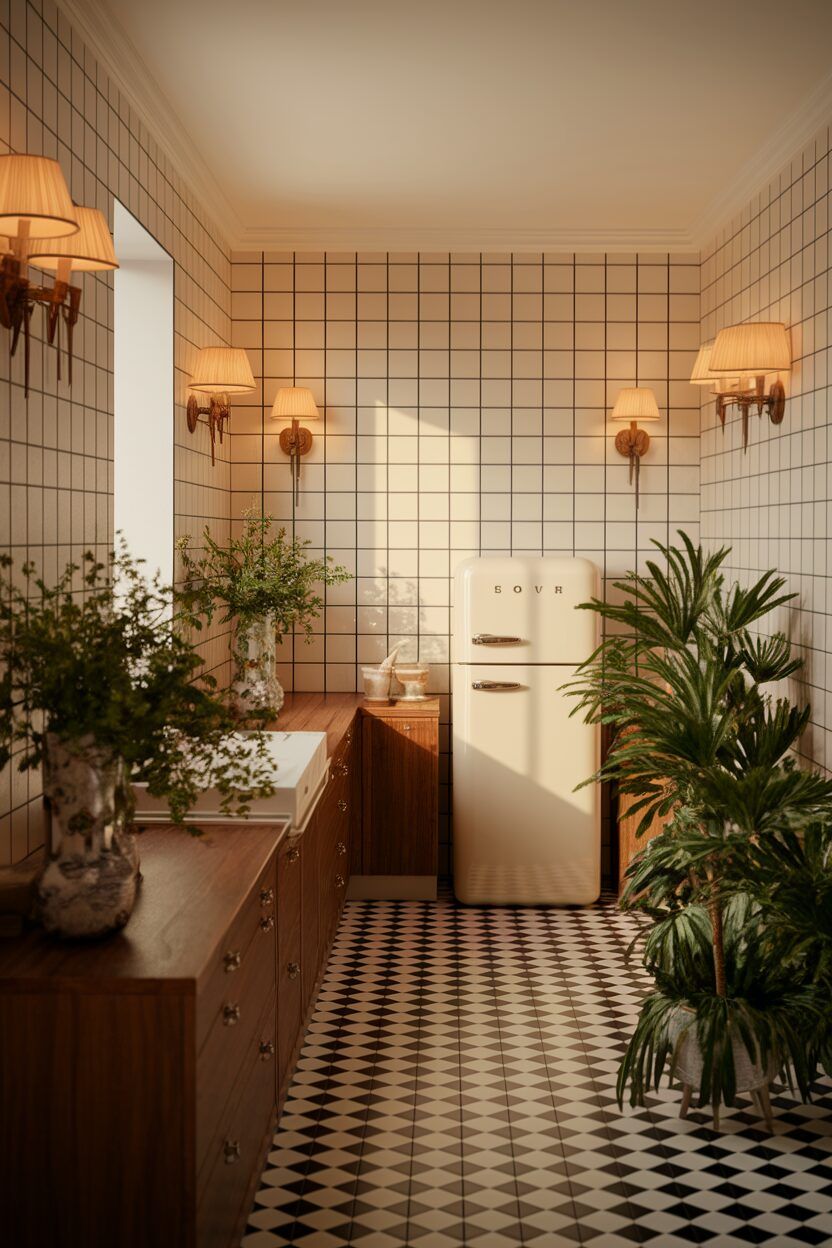
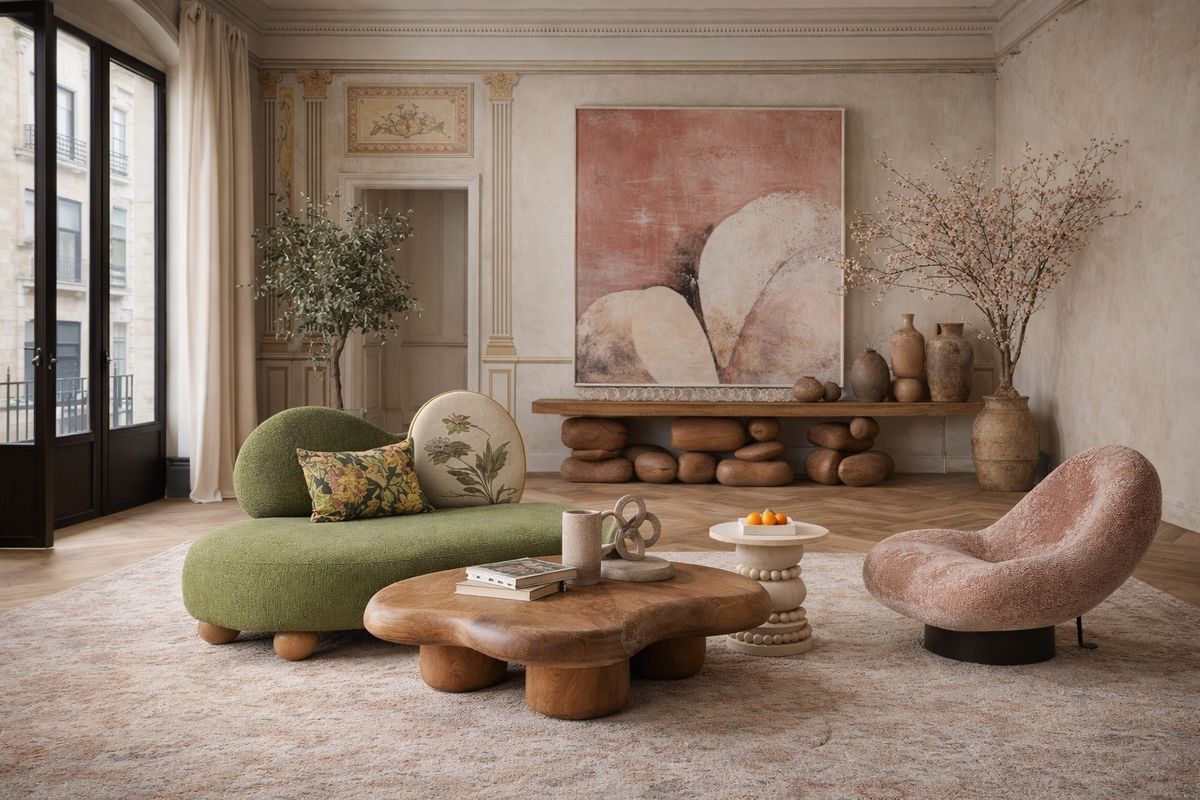
The 1970s were audacious. Interiors weren’t shy. Warm wood paneling, mustard yellows, burnt oranges, avocado greens. Shag carpets thick enough to swallow feet. Geometric patterns in unexpected places. It was all about confidence—scale, texture, color. Now, decades later, the revival of ’70s decor is back, slightly refined, slightly tempered, but still unmistakably 1970s in spirit. Even custom furniture pieces echo the era’s boldness, with sculptural forms, tactile materials, and vivid finishes that bring warmth and presence to modern interiors.
This revival isn’t nostalgia for nostalgia’s sake. It’s a celebration of design that dared to be vivid, tactile, and human. Walnut credenzas, terrazzo floors, leather chairs, velvet upholstery. They have presence. Weight. They demand attention. They make a room feel alive.
Patterns, Colors, and Textures
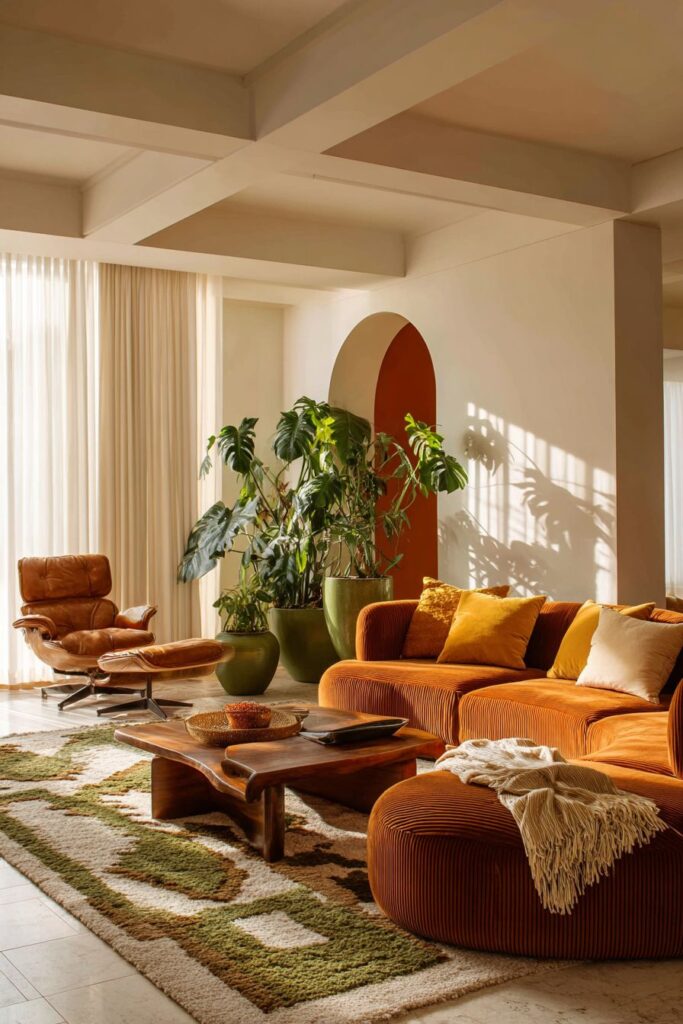
Patterns from the ’70s were bold. Diamonds, chevrons, concentric circles, exaggerated stripes. Shag carpets, tufted velvet sofas, geometric wallpaper. Everything had rhythm. Nothing was shy.
Modern interpretations pull back a little. Walls might carry a muted geometric print instead of a floor-to-ceiling motif. Rugs in shag or cut-pile anchor a space without overwhelming it. Velvet and leather appear, but in measured doses. Bold, tactile, present—but no longer oppressive.
Color is everything in the revival of 70s decor. Mustard yellow is no longer a punchy accent. It can dominate a room, in walls, sofas, or art. Burnt orange gives warmth and depth. Avocado green can be a grounded neutral in cabinetry or furniture. Balance these with cream, soft wood, or warm whites, and the palette feels alive, not dated.
Furniture That Commands Attention
Furniture from the ’70s had confidence. Credenzas with tapered legs. Modular sofas with generous proportions. Sculptural chairs that were art as much as function.
Today’s revival nods to those forms while softening them. Low-profile sectionals, deep cushions, sculptural seating. Still strong, still deliberate—but not boxy or heavy. Wood plays a starring role. Walnut, teak, oak. Polished surfaces against matte finishes. Depth and tactility.
Mixing wood tones works here too. Walnut credenza beside a maple side table. Intentional, layered, human. Grain, undertones, texture—these give furniture a voice beyond shape.
Accessories That Make a Statement
Nothing in the ’70s was understated. Lighting became sculpture. Globe pendants, sputnik chandeliers, arc floor lamps. Accessories too—ceramic vases, mirrored trays, bold objects. Everything added personality.
In modern interiors, accessories nod to the past without becoming kitschy. Brass or matte metals. Geometric ceramics. Minimal statement art. Each piece contributes to the story, without shouting. The trick is tension: bold, but restrained.
Layering Materials
The ’70s knew materials. Wood, leather, metal, glass, fabric. They collided in interesting ways. Leather lounge chair by a wooden credenza, glass coffee table on a shag rug. Every surface invited touch.
Today, layering is still key. Shag rugs under walnut tables. Velvet cushions on leather chairs. Brass lighting over wood paneling. Custom indoor interiors use this layering to make spaces tactile, dimensional, human. Nothing feels manufactured. Everything feels deliberate.
Juxtaposition of Eras
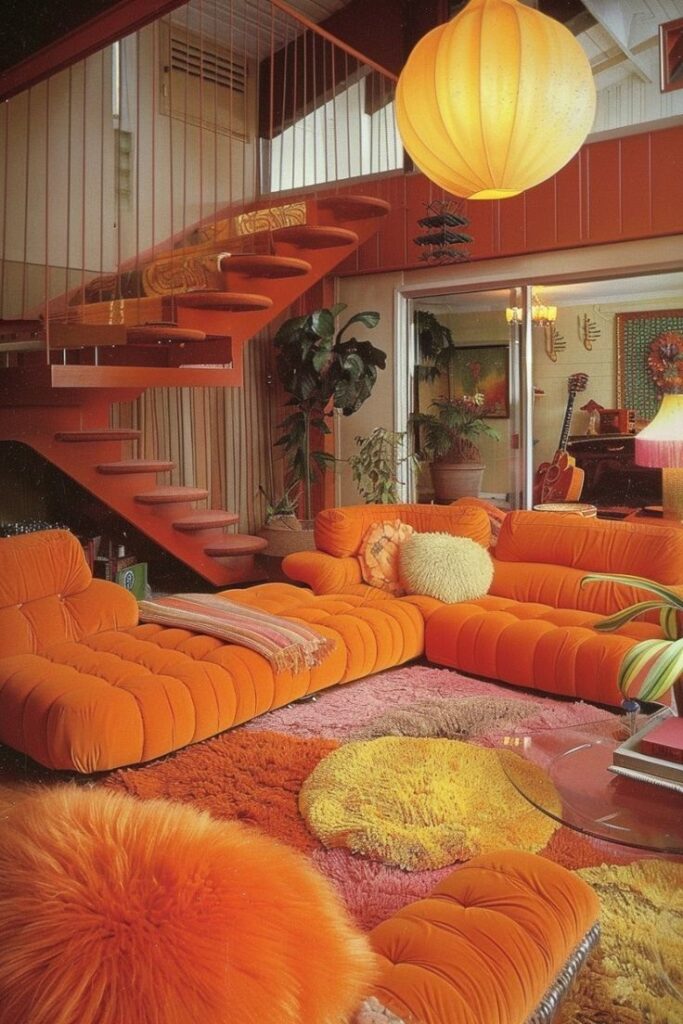
The revival works because it mixes times. A 1970s-inspired credenza beside contemporary photography. Vintage modular sofa with a minimalist coffee table. That juxtaposition of eras—past meeting present—gives rooms vitality. Makes them readable, not fussy.
Even small interventions work. A single 1970s geometric panel. A vintage chair with modern lighting. Not mimicry. Dialogue across decades. The room feels curated but lived-in.
Emotional Resonance
Why does the revival of ’70s Decor feel so compelling? Because it’s emotional, not just visual. Warmth, grounding, tactility. Color inspires optimism. Scale invites presence. Textures beg to be touched.
Rooms feel lived-in. Velvet, leather, wood, shag—feet sink in, hands brush surfaces, eyes linger. Spaces feel human. Objects feel like they belong.
Imperfection as a Feature
Like handcrafted Americana, charm comes from imperfection. Surfaces patina over time. Wood shows age. Leather softens. Minor quirks—slight warps, scratches, worn edges—don’t detract. They authenticate. They tell a story.
Modern interpretations embrace this. Furniture speaks. Spaces feel real. Human. Layered.
Contemporary Context
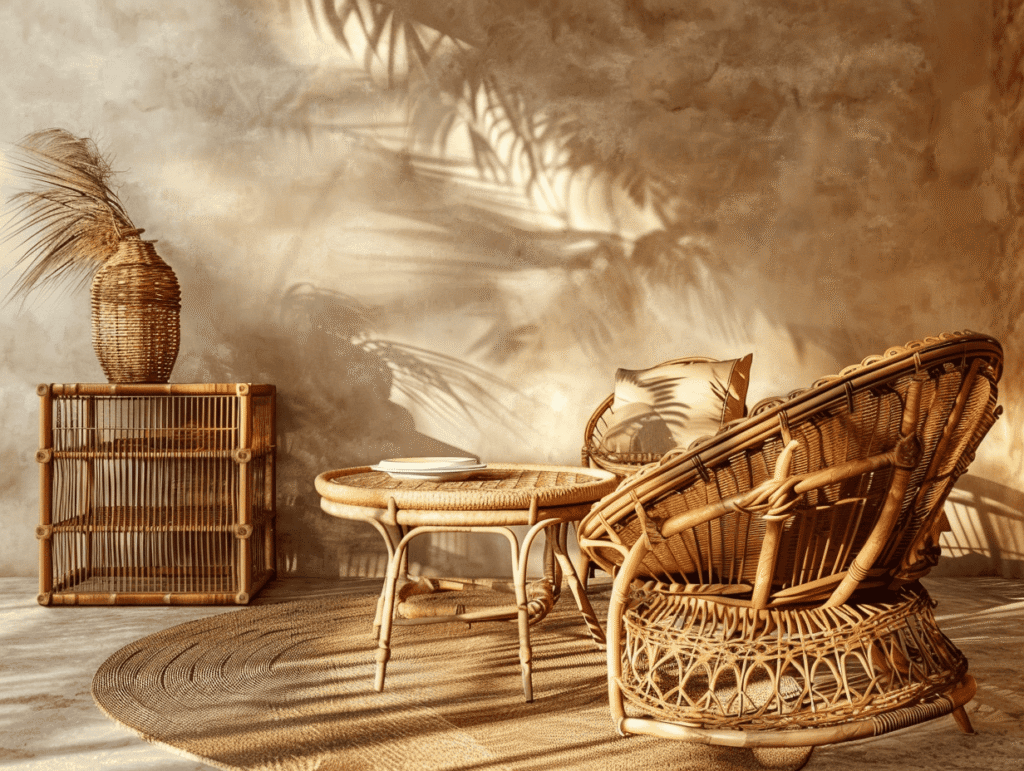
The revival isn’t just for retro homes. Urban apartments, lofts, and custom indoor interiors can play with it. Burnt orange velvet sofa. Walnut credenza under abstract art. Brass pendants over a neutral kitchen island.
Balance is key. Too many nods to the ’70s feel heavy. One or two statements paired with neutral elements breathe. Energy without chaos. Alive. Human. Current.
Living With the Revival
Rooms styled with ’70s revival invite use. Shag rugs for bare feet. Low modular sofas for lounging. Sculptural lighting that functions. Surfaces age. Leather softens. Wood patinas. Fabrics crease. Spaces evolve with their inhabitants.
This is why it endures. It’s tactile, warm, human. Not static. Not sterile. Not disposable.
The ’70s revival succeeds because it’s bold but approachable, playful but grounded, nostalgic but modern. Furniture, textures, colors carry weight and warmth. Accessories, patterns, lighting add rhythm, dialogue, and personality. Juxtaposition of eras gives rooms life. Spaces feel lived-in, human, unmistakably vibrant.