












Most people picture lava stone as dark and volcanic. The reality is far more interesting — here’s a proper look at the full color range for colorful lava stone furniture and how to choose the right glaze for your space.
When people first hear “lava stone furniture,” the image that comes to mind is usually dark. Matte black, deep charcoal, the kind of serious volcanic surface that does a lot of heavy lifting in a contemporary interior. And that version is genuinely excellent. But it’s also only a small fraction of what lava stone can actually be.
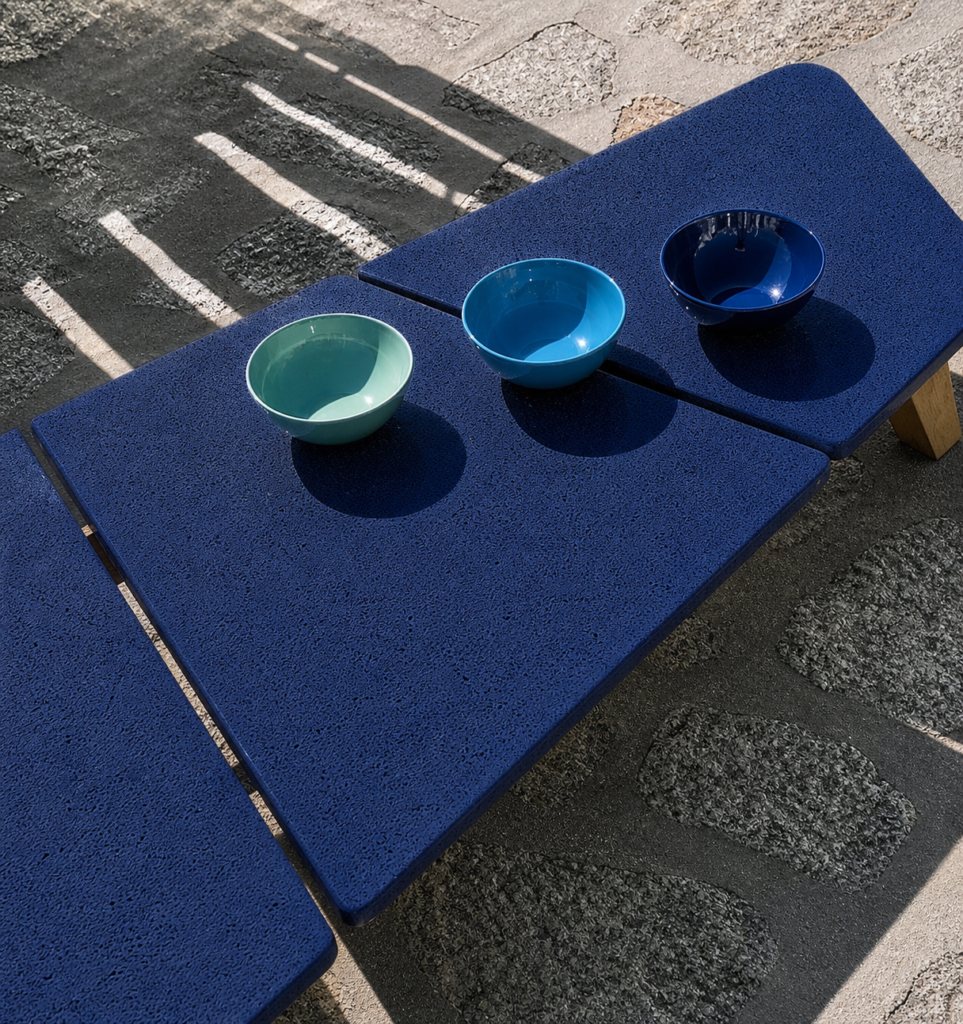
The glazing process, a ceramic coating kiln-fired directly onto the volcanic basalt at temperatures above 900°C opens the material up to virtually any color you can name. Cobalt blue. Burnt terracotta. Dusty sage. Pale bone white. Turquoise. Deep aubergine. The range isn’t a gimmick or a surface treatment. It’s a centuries-old Italian craft tradition applied to a material that holds color better than almost anything else in the luxury furniture market.
At Melaaura, the colorful lava stone conversation is one we have constantly. Clients come in expecting two or three standard finishes and leave having discovered a palette that runs into the dozens. So here’s a proper guide to what’s available, what works where, and how to make the decision without second-guessing yourself six months later.
Why Colorful Lava Stone Holds Color So Well
It’s worth understanding the process briefly, because it’s what separates glazed colorful lava stone from painted furniture or surface-colored ceramics and it explains why the color genuinely lasts.
Sicilian artisans, most working with basalt quarried from the slopes of Mount Etna, apply a ceramic glaze to the shaped volcanic stone, then fire the whole piece in a kiln at extreme heat. At that temperature, the glaze and stone fuse into a single material. The color you see isn’t sitting on top of the surface. It is the surface. Which means it won’t fade under UV exposure, won’t scratch off, won’t dull from cleaning or daily use. A cobalt blue lava stone table left on a Los Angeles terrace will look exactly the same in ten years as it did the day it arrived.
This is also why custom color matching works with lava stone in a way it simply doesn’t with marble or travertine. Those materials are what they are, their color comes from mineral composition and can’t be changed. Lava stone starts from the same dark volcanic base every time, and the glaze does the rest. If you have a specific color in mind, whether a blue from a tile you’ve already committed to, a green that matches your garden, a warm ivory that picks up the tone of your plaster walls, it can almost certainly be achieved.
“The color in glazed lava stone isn’t applied — it’s fused. That’s the difference between furniture that looks good on day one and furniture that looks good on day one thousand.”
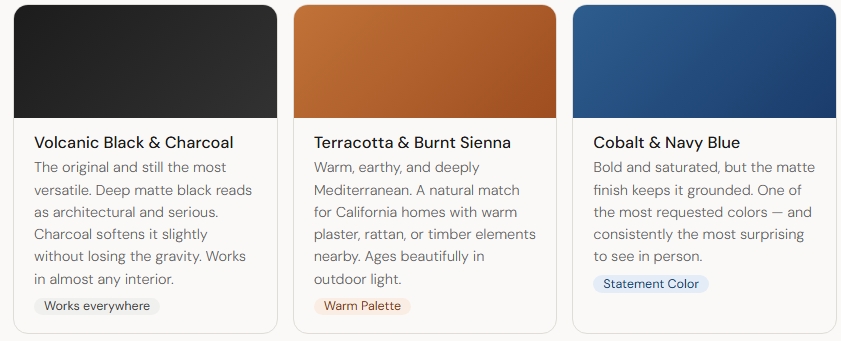
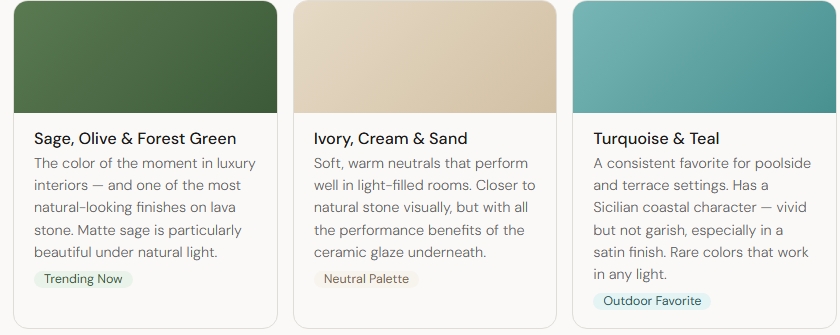
The Color Families: A Full Palette Breakdown
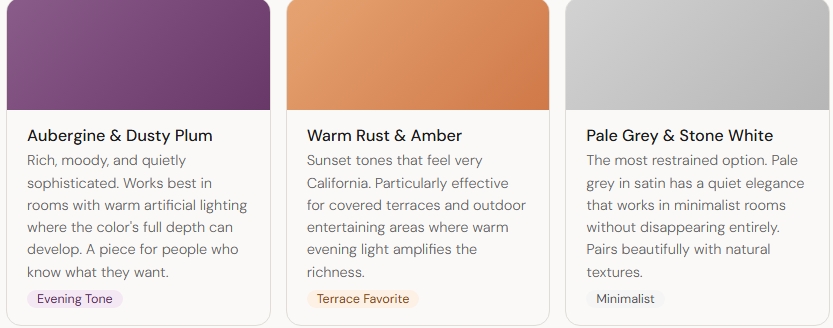
Think of the lava stone palette in broad color families. Within each, there are multiple tones and three finish options, matte, satin, or high gloss that change the character of the color significantly. The same cobalt in matte versus gloss feels like two completely different pieces.
Matte, Satin, or Gloss — Finish Changes Everything
Color is only half the decision. The finish type changes the character of any given color so significantly that the same cobalt in matte versus high gloss almost feels like two completely different materials. This is worth thinking through before you commit to a specific color family.
Matte
No light reflection. Color reads as pure, absorbed, and deeply tactile. Closest to the raw volcanic stone underneath. Best for contemporary and minimalist spaces. Hides minor surface marks easily — the most practical finish for everyday use.
Satin
A gentle, alive sheen, not mirror-like, but present. Colors feel richer and slightly deeper. The most versatile finish option. Works across both casual and formal settings. A solid default choice if you’re genuinely undecided between the three.
High Gloss
Full reflective surface. Colors become vivid and jewel-like. Best reserved for bold tones — cobalt, turquoise, aubergine, where intensity is the point. Visually dramatic and makes real demands of the space around it.
How to Actually Choose the Right Color for Your Room
The most common question we get: how do I know which color is going to work? Here are three practical principles that hold up consistently.
Match the temperature, not the exact shade
Warm rooms, timber floors, linen upholstery, brass hardware, warm-spectrum lighting — work best with warm lava stone tones: terracotta, rust, ivory, amber, olive. Cool rooms; white walls, polished concrete, chrome fixtures, daylight-spectrum lighting, suit the cooler end of the palette: pale grey, cobalt, sage, stone white. You don’t need an exact color match anywhere. You need the temperature of the room and the piece to be consistent. When they clash, it registers as wrong even if you can’t immediately identify why.
Let the lava stone carry the color moment
In a room that’s already rich with pattern, varied materials, or multiple colors, a neutral lava stone;charcoal, ivory, pale grey is almost always the better call. But in a room that’s deliberately restrained and quiet, a single colorful lava stone table in cobalt, terracotta, or sage can carry the room’s entire personality without overwhelming anything else. The material has enough visual interest on its own, texture, depth, the natural variation of the volcanic surface that it doesn’t need the room to meet it halfway.
Think about how light changes through the day
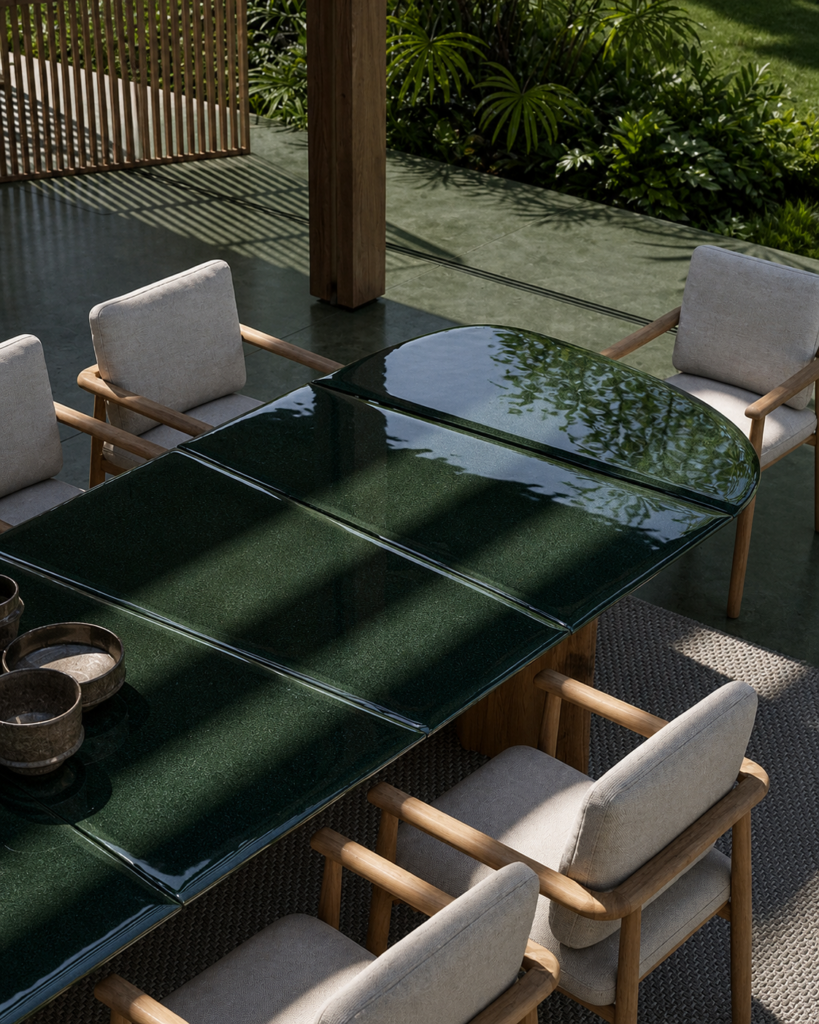
Darker colors like forest green, cobalt, aubergine deepen and enrich under warm evening light. Paler colors such as ivory, sand, pale grey perform better in bright natural daylight where the clean simplicity of the tone is amplified rather than dulled. Turquoise and teal are the unusual exceptions that work genuinely well in both conditions, which is partly why they’re such a consistently popular choice for outdoor pieces that see use morning through evening.
Outdoor Styling Note
If you're choosing a colorful lava stone piece for a terrace or poolside setting, go bolder than your instinct says to. Colors that feel strong indoors read as exactly right outside, where the scale is larger and natural daylight flattens saturation slightly. A turquoise or cobalt glazed lava stone drink table that might feel intense in a living room is perfectly calibrated beside a pool.
Which Colors Work Best by Table Format
Based on what we’ve seen work consistently across different furniture types, here’s a practical breakdown.
Coffee tables
The coffee table sits at the center of a room and has to live with everything around it. Sage green, matte charcoal, warm ivory, and dusty olive are the most reliable performers, colors that anchor a room without competing with it. Bold options like cobalt or terracotta work too, but only when the rest of the room is deliberately held back. The table can carry the color moment. It just can’t carry everything at once.
Side tables and drink tables
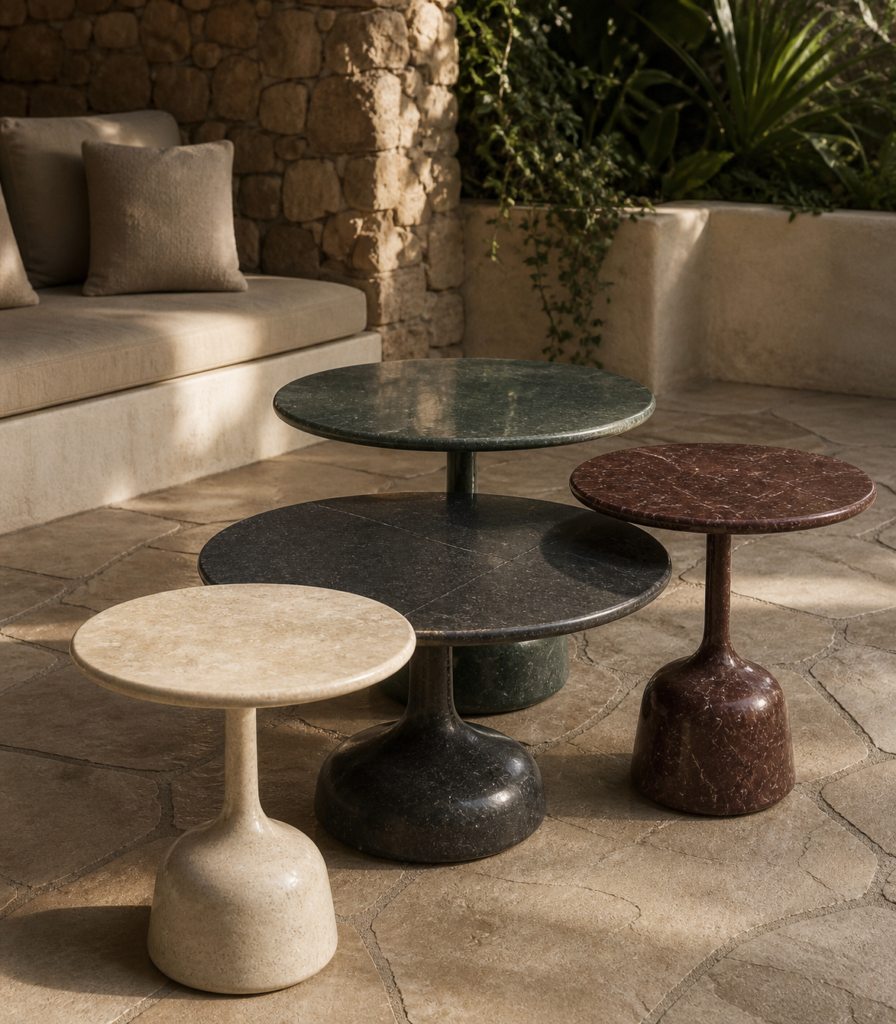
More latitude here. Because the piece is smaller and positioned to the side, you can push color further without it taking over the room. A cobalt or burnt sienna lava stone side table beside a neutral sofa reads as a considered design detail, intentional, specific, interesting. For outdoor formats, drink tables by the pool, side tables on a terrace, turquoise, teal, rust, and terracotta all perform exceptionally well in California’s natural light.
Outdoor pieces generally
The full palette works outdoors, but warm tones like terracotta, rust, amber and coastal tones such as turquoise, teal, cobalt tend to feel most at home in the Southern California setting. Pale grey and stone white also work beautifully in bright outdoor spaces, particularly where the surrounding furniture is in natural materials like teak, rope weave, or raw linen.
Custom Color Matching at Melaaura
For clients with a specific color in mind, one that comes from a tile already committed to, a fabric being worked around, or a paint color already on the walls, Melaaura’s custom furniture service can work directly with the lava stone artisan workshops to achieve a closely matched or custom-specified glaze color. It takes longer than ordering something from stock, but the result is a piece that was made precisely for a specific room rather than adapted to it.
We’ve completed custom color projects ranging from a dusty rose for a bedroom side table to a near-exact match of a client’s pool tile in turquoise for an outdoor drink table series. If you have a reference, a paint chip, a fabric swatch, a photograph, bring it in. The conversation about what’s achievable is always worth having before settling for something that’s merely close enough.
The handcrafted nature of lava stone production means there’s already natural variation between pieces, small differences in surface character and tone that are a feature of the material, not a defect. Custom color matching works with this variation rather than against it, which is why the results tend to feel richer and more alive than a factory-matched finish on a mass-produced piece ever could.