


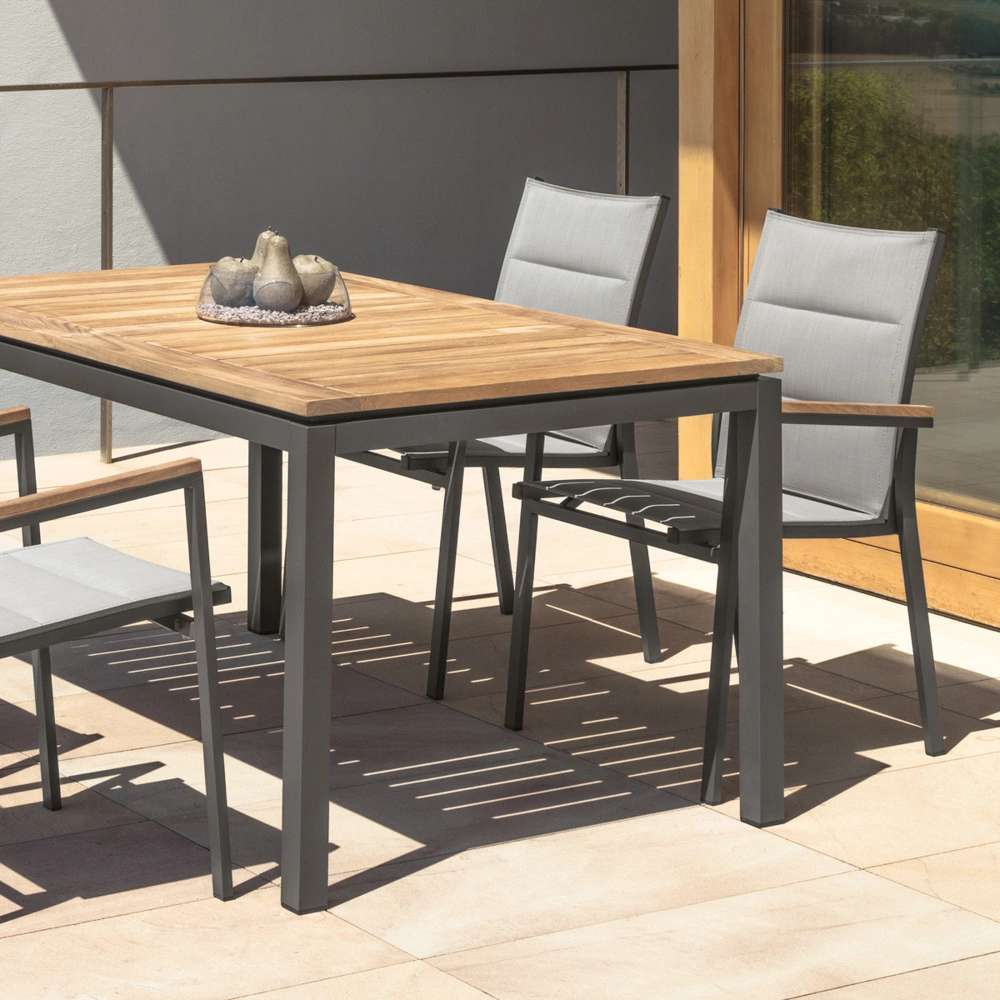
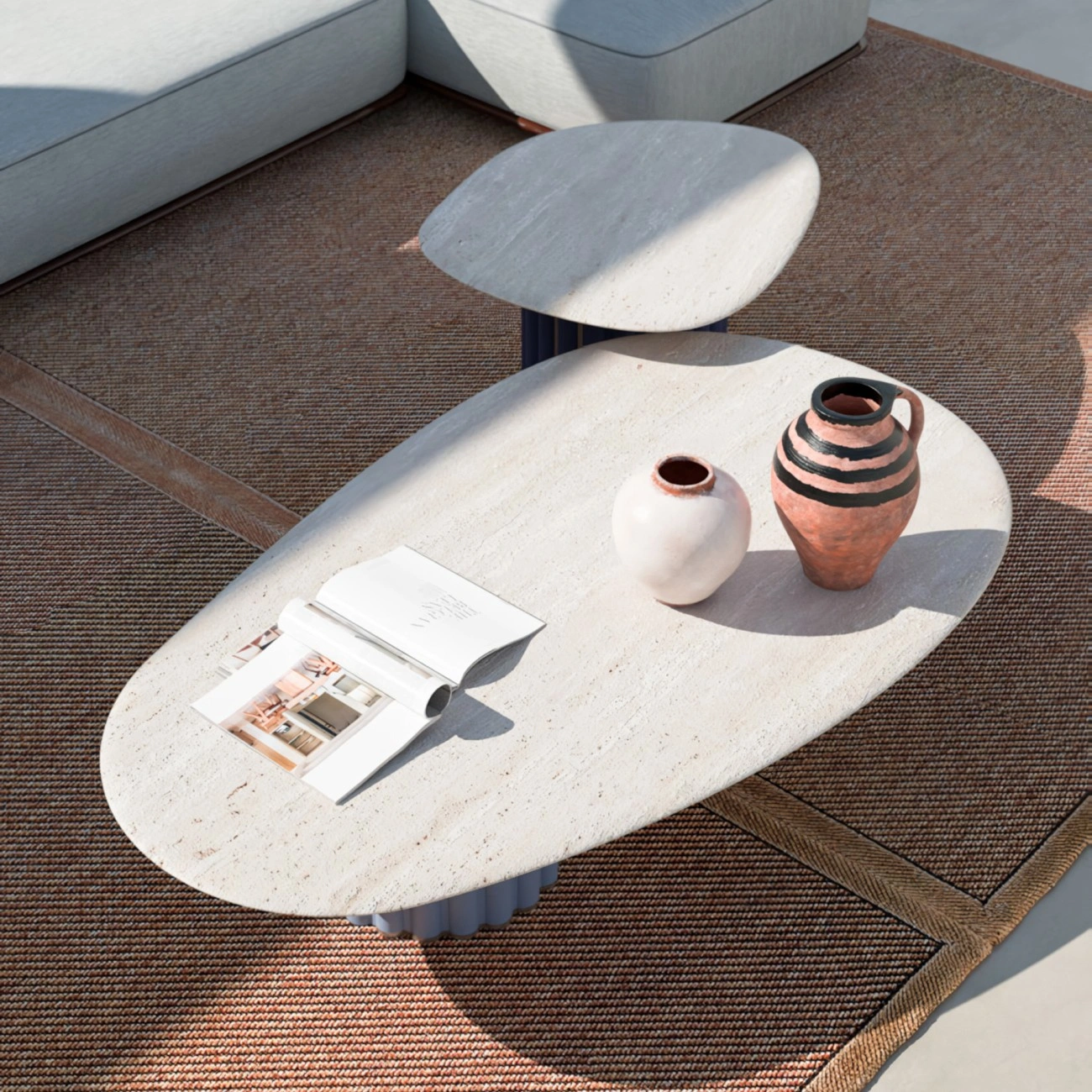


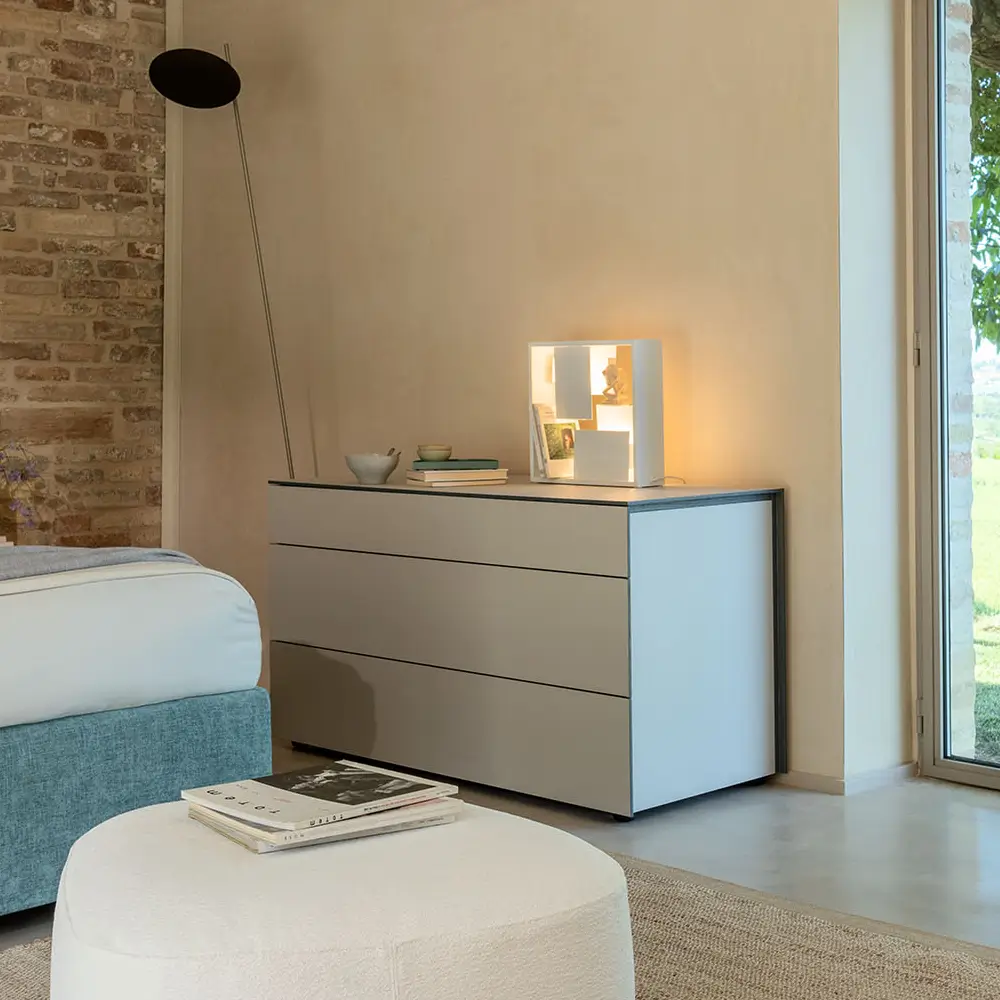
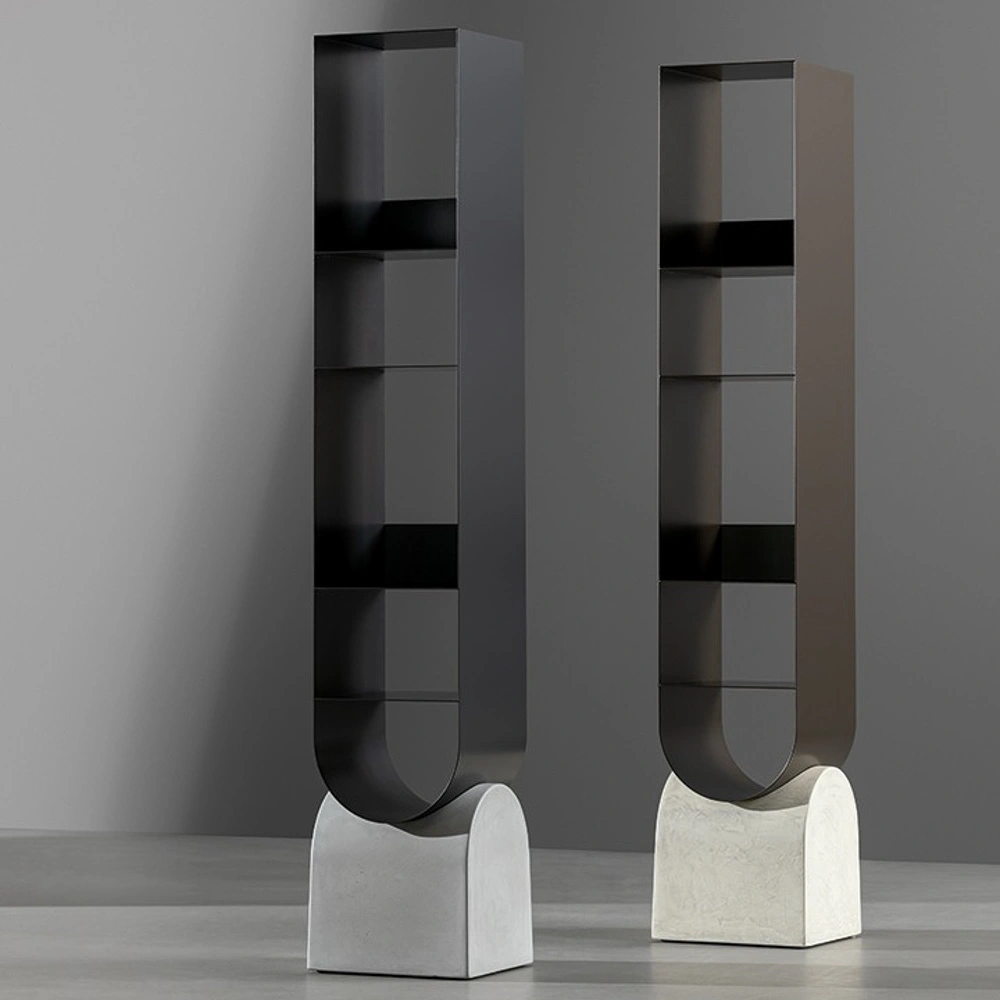








It starts as molten rock. It ends up in your living room. Here’s what makes the lava stone side table one of the most interesting pieces in luxury furniture right now.
Not every furniture trend deserves the attention it gets. But lava stone? This one’s earned it.
The material has been around for centuries, Sicilian artisans have been working with volcanic stone from Mount Etna since the 1600s but it’s only recently found its way into the broader conversation around luxury interiors. Part of that is timing. We’re in a moment where people are genuinely tired of surfaces that look impressive in a showroom and feel generic the moment they get home. Lava stone is the opposite of that. It has texture, depth, and a quiet kind of authority that’s hard to fake and impossible to mass-produce.
At Melaaura, we carry lava stone side tables because we think they represent something rare in today’s furniture market: a material that is both genuinely beautiful and genuinely practical. That combination is harder to find than it sounds and when you do find it, it’s worth paying attention to.
What Actually Is Lava Stone?
The short answer: it’s volcanic rock, formed when molten magma cools and hardens after an eruption. But the version used in luxury furniture is far more refined than anything you’d find on the ground near a volcano.
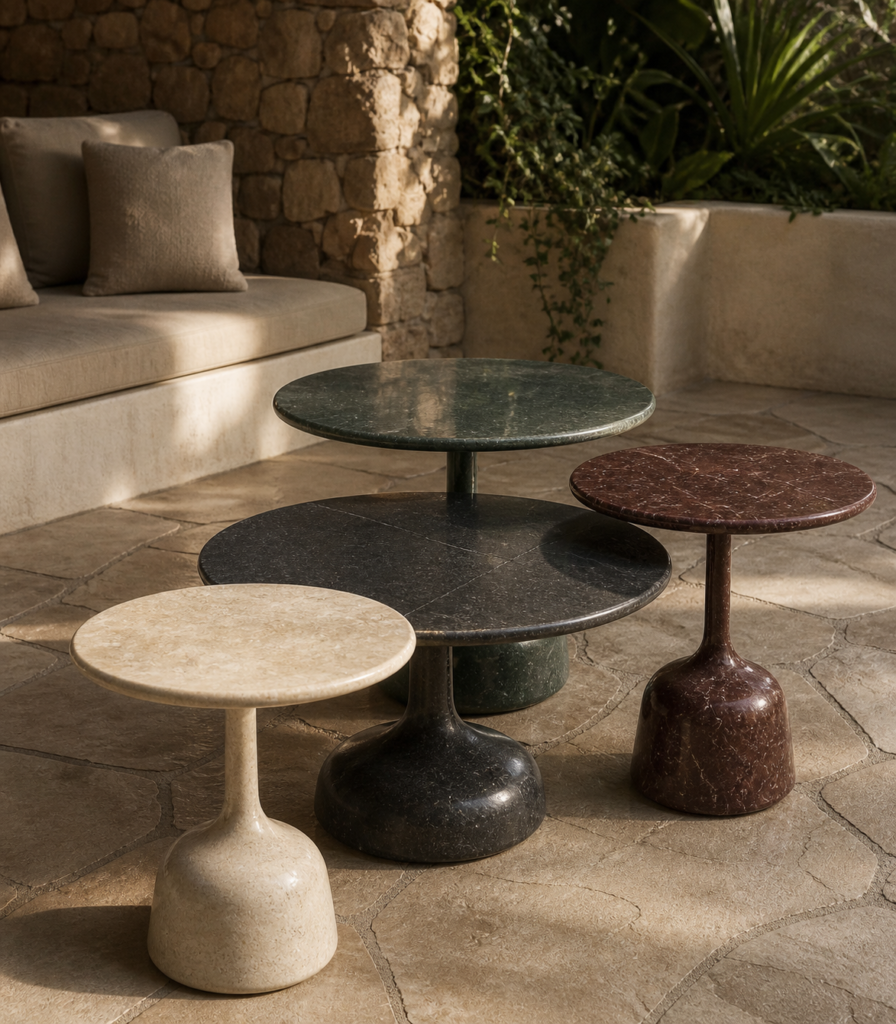
The lava stone used in high-end pieces, particularly the Italian variety quarried from the slopes of Mount Etna in Sicily, goes through a traditional ceramic glazing process before it ever becomes furniture. Artisans shape the stone, apply a glaze, then fire the whole thing at extremely high temperatures. What comes out the other end looks nothing like raw rock. Depending on the glaze, you can end up with a surface that’s deep and glossy, softly matte, richly patterned, or elegantly minimal. The color range is essentially unlimited. We’ve seen lava stone tables in everything from bone white and sage green to jet black and burnt terracotta.
That firing process also transforms the material’s practical properties in a significant way. The glaze fuses permanently with the volcanic surface, making it resistant to heat, UV exposure, frost, moisture, and staining. These aren’t just selling points — they’re why lava stone has been used for decades in professional restaurant kitchens, luxury hotel terraces, and high-traffic commercial interiors where surfaces have to perform as well as they look.
“There’s something almost contradictory about lava stone, it’s one of the most ancient materials on earth, yet it keeps showing up in the most contemporary interiors.”
For a side table specifically, this durability matters more than people might initially think. Side tables are working surfaces. They hold coffee mugs, wine glasses, books, candles, and whatever else ends up on them throughout the day. A material that can handle all of that without requiring coasters, sealant, or careful handling is a genuinely useful thing.
How Lava Stone Compares to Marble, Travertine, and Ceramic
This question comes up constantly, so it’s worth being straightforward about it.
- Marble is timeless and beautiful , nobody’s arguing otherwise. But marble side tables require more care than most people expect. The surface etches easily from acidic spills like lemon juice, wine, or vinegar. It needs to be sealed and resealed. And it’s not a material you’d seriously consider for an outdoor terrace or poolside setting unless you’re comfortable with the maintenance. For buyers who want the visual weight of natural stone without those limitations, marble often ends up being a compromise.
- Travertine has a lovely warmth, particularly in its natural beige and walnut tones. But like marble, it’s porous and prone to staining without proper treatment. It also doesn’t offer much in terms of color versatility,you’re essentially limited to the stone’s natural palette, which is beautiful but narrow.
- Ceramic top tables solve some of the durability issues but often sacrifice character in the process. Many ceramic surfaces feel flat, uniform, and a little corporate. They don’t carry the material depth or natural irregularity that makes stone furniture worth having in the first place.
Lava stone occupies a genuinely interesting position between all of these. The base material has the authenticity and presence of natural volcanic stone, no two pieces are identical, and the surface has a tactile quality that you notice immediately. But the ceramic glaze gives it a performance profile closer to porcelain. Heat-resistant, stain-resistant, and tough enough for outdoor use without any seasonal treatment. It’s the kind of material that solves problems you didn’t know you had.
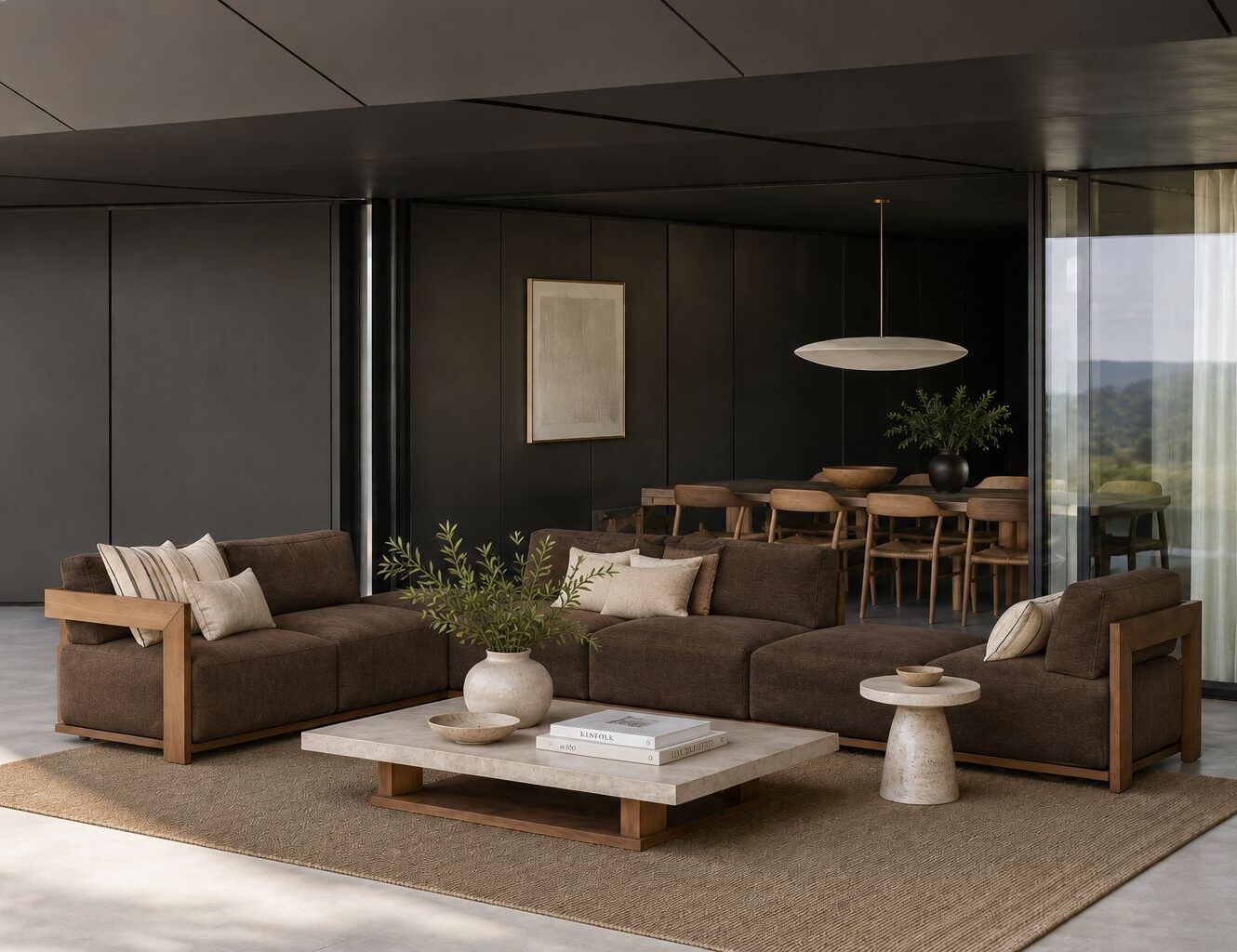
Styling note : A matte black lava stone side table next to a natural linen sofa is one of those combinations that works almost without trying. The contrast between the volcanic texture and soft fabric is very hard to replicate with any other material pairing.
Where Lava Stone Side Tables Work Best
Living rooms
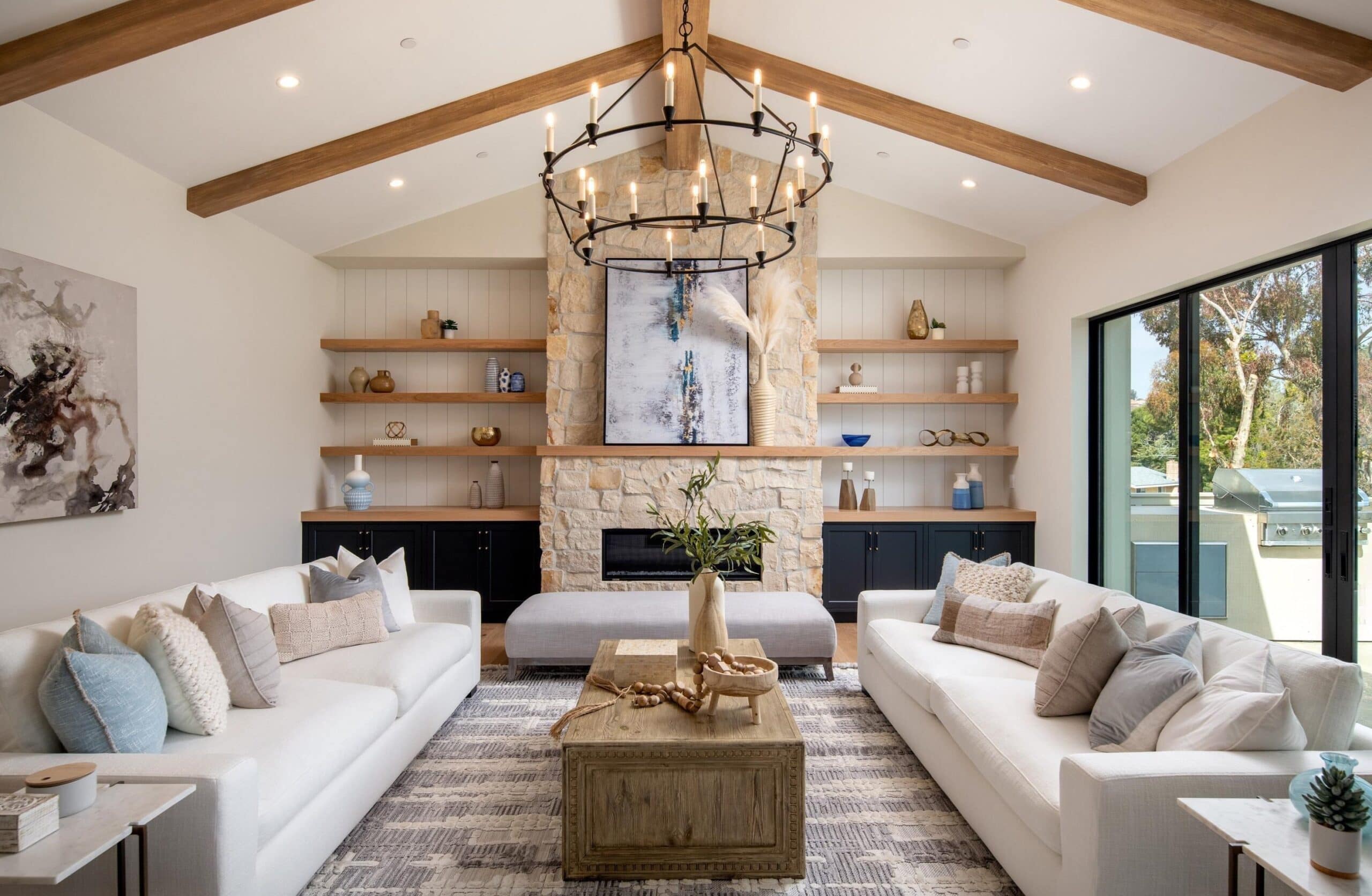
This is the most common application, and it makes sense. A lava stone accent table beside a sofa or lounge chair introduces a material story that most rooms are missing. It grounds the space without dominating it. The key decision is whether you want the table to blend into the room’s palette, in which case matching the glaze color closely to your existing tones works well, or act as a deliberate contrast. Both approaches work. A deep cobalt or forest green glazed top in a neutral room can be quietly stunning without ever tipping into statement piece territory.
Outdoor terraces and pool areas
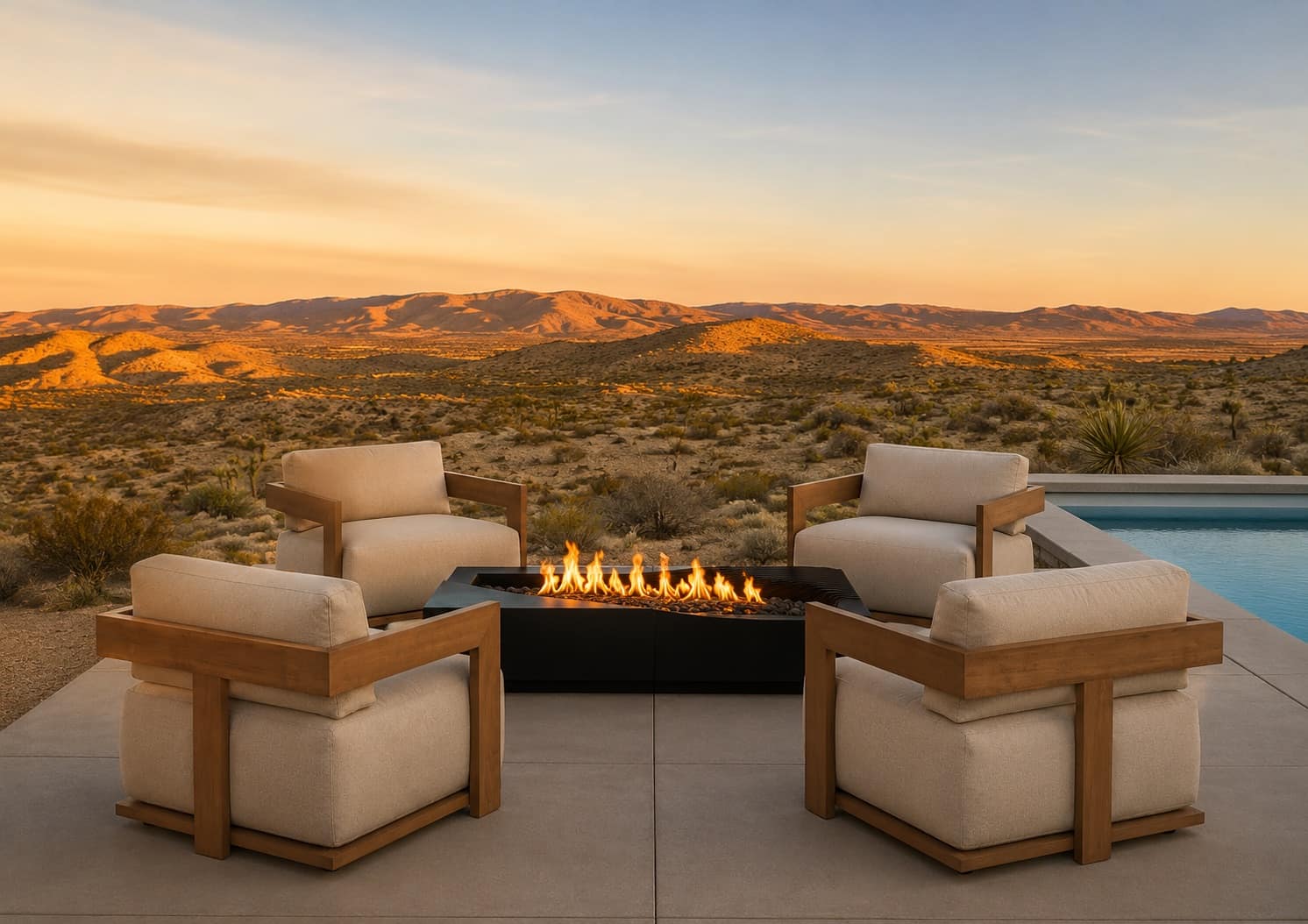
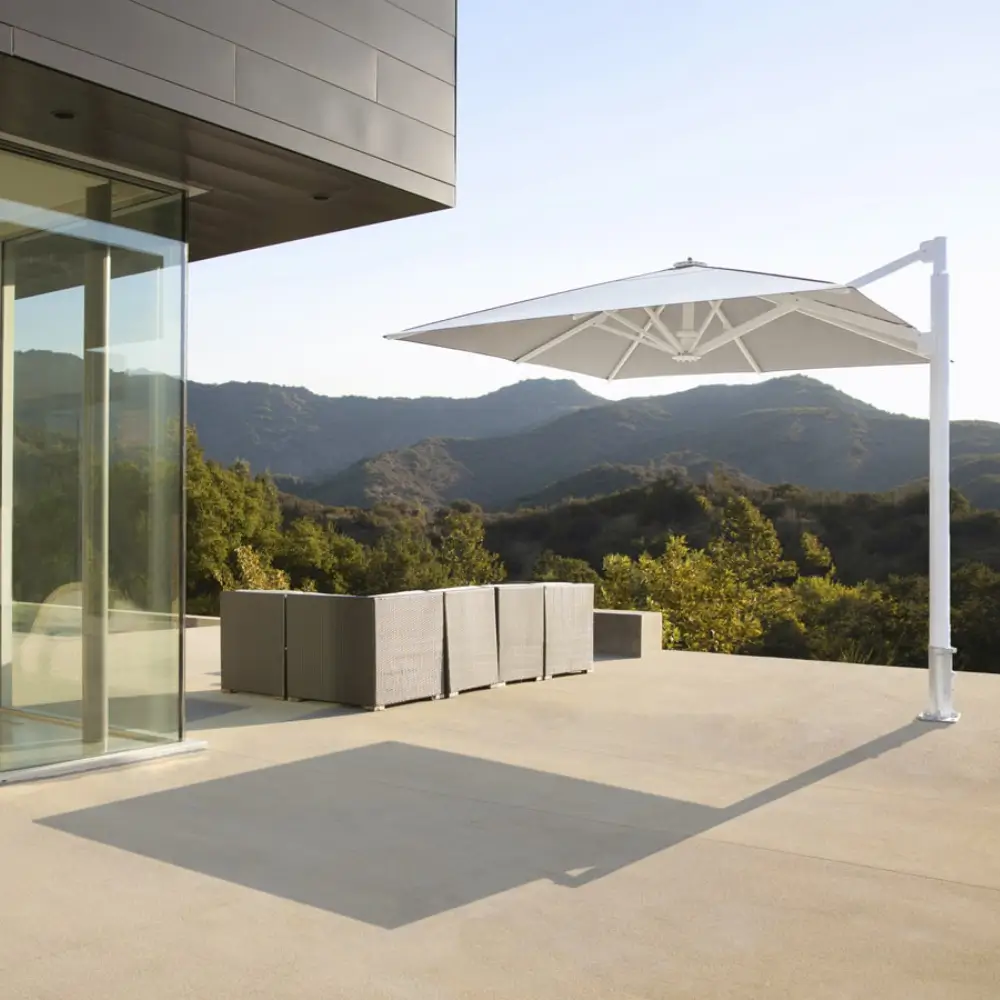
This is honestly where lava stone outdoor side tables are most impressive. California living means spending serious time outside, and most premium materials don’t hold up as well as they should. Teak grays and requires oiling. Marble develops a patina outdoors that not everyone wants. Powder-coated metals can chip over time in coastal environments.
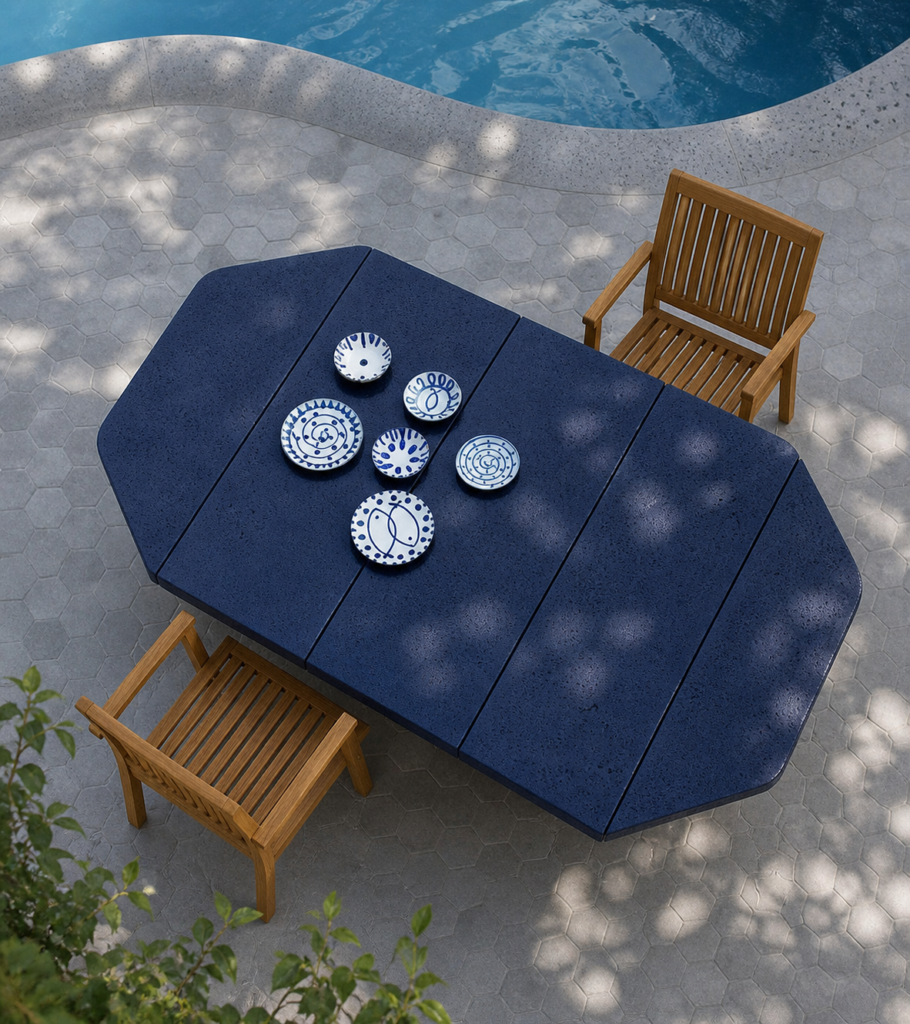
Glazed lava stone doesn’t have those problems. UV exposure, salt air, temperature fluctuations between morning and afternoon, none of it causes any meaningful degradation. You wipe it down with soapy water when needed and that’s essentially the full maintenance routine. For a poolside side table or rooftop terrace, it’s hard to think of a better choice at the luxury end of the market.
Bedrooms as a nightstand alternative
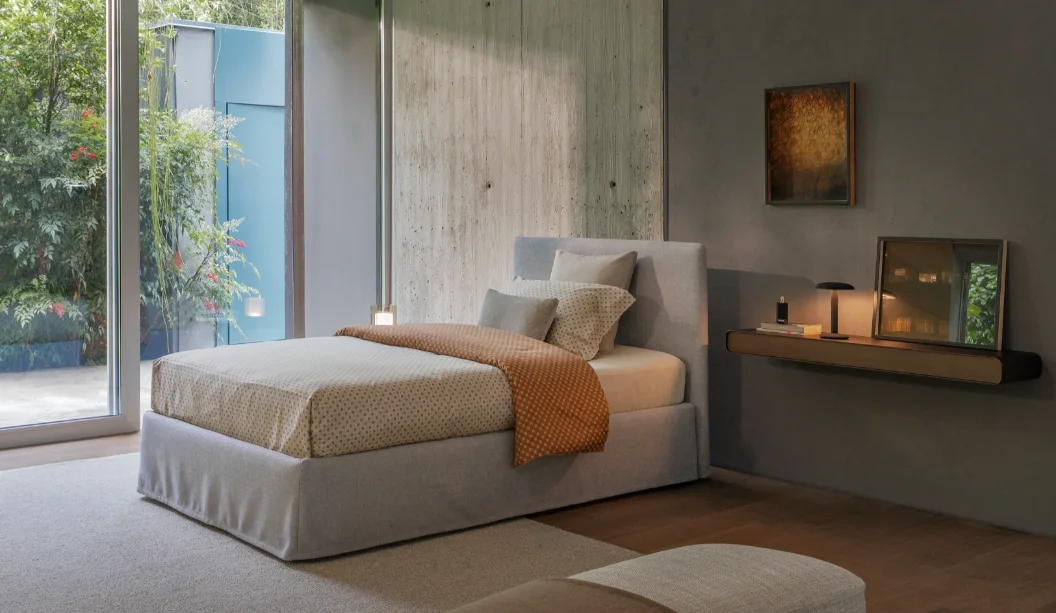
This is the slightly unexpected one. A low, round lava stone side table used as a nightstand brings a sculptural quality to a bedroom that a standard timber or lacquered nightstand simply can’t match. The surface is cool to the touch, which is a pleasant sensory detail that sounds minor until you’ve experienced it. And because the material varies naturally between pieces, your table is genuinely one of a kind — not a style that ten thousand other people ordered from the same catalog.
Contract and hospitality interiors
We’d be remiss not to mention this. Lava stone has a long history in high-end hospitality design — hotels, restaurants, and resort settings,precisely because it performs so well under real use conditions. If you’re specifying furniture for a commercial project in Los Angeles, a lava stone accent table is the kind of piece that looks considered and holds up to the wear that commercial spaces demand. Melaaura’s contract service works with designers and developers on exactly these kinds of projects.
Custom Lava Stone: Why Personalization Actually Works Here
Most natural stone materials don’t lend themselves to easy customization. Marble comes in what it comes in. Travertine is travertine. But lava stone, because of the glazing process, is genuinely one of the more customizable materials in the luxury furniture space.
Shape, size, glaze color, finish type;satin, matte, high gloss, metallic and even edge profile can all be specified. If you have a particular color in mind that needs to tie into an existing interior scheme, or a dimension that fits an awkward corner just right, a custom lava stone side table is an achievable thing, not just a theoretical option. At Melaaura, our custom furniture service handles these conversations regularly, both for private residential clients and for larger contract interiors across Southern California.
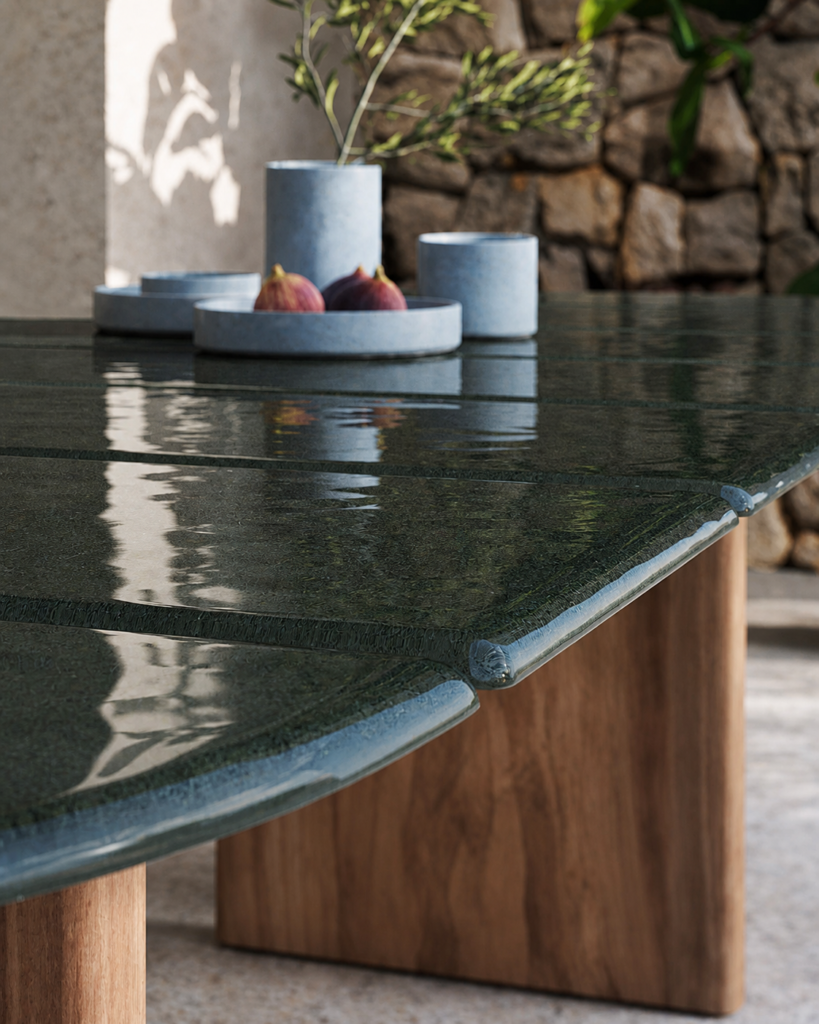
It’s also worth knowing that the handcrafted nature of lava stone production means there’s natural variation in every piece. Small differences in tone, texture, and surface character aren’t defects — they’re evidence that the table was made by hand, by a specific person, in a specific place. For buyers who care about that kind of provenance, it matters.
What to Look for When You’re Buying
A few things worth knowing before you commit. First, not all lava stone is the same. Authentic Sicilian lava stone from Mount Etna has specific density and structural properties that give it an edge over generic “volcanic stone” products from other regions. It’s worth asking where the stone actually comes from.
Second, the glazing process matters. A proper ceramic glaze, applied and fired correctly, bonds permanently with the stone and provides the durability properties that make lava stone worth investing in. Surface coatings that haven’t been properly fired won’t perform the same way, particularly outdoors.
Third, look at the base. A beautifully made lava stone top paired with a flimsy or poorly finished base is a common cost-cutting move. The structural integrity of the whole piece matters, not just the tabletop. The brands we carry at Melaaura are selected partly on this basis,we’re not interested in pieces that look good in photos and disappoint in person.
If you have questions about specific pieces or want to discuss a custom order, our team at the Los Angeles showroom is always happy to walk you through the options. Lava stone is one of those materials that’s worth seeing in person before you decide, the photos never quite capture what it’s actually like to have it in a room.