




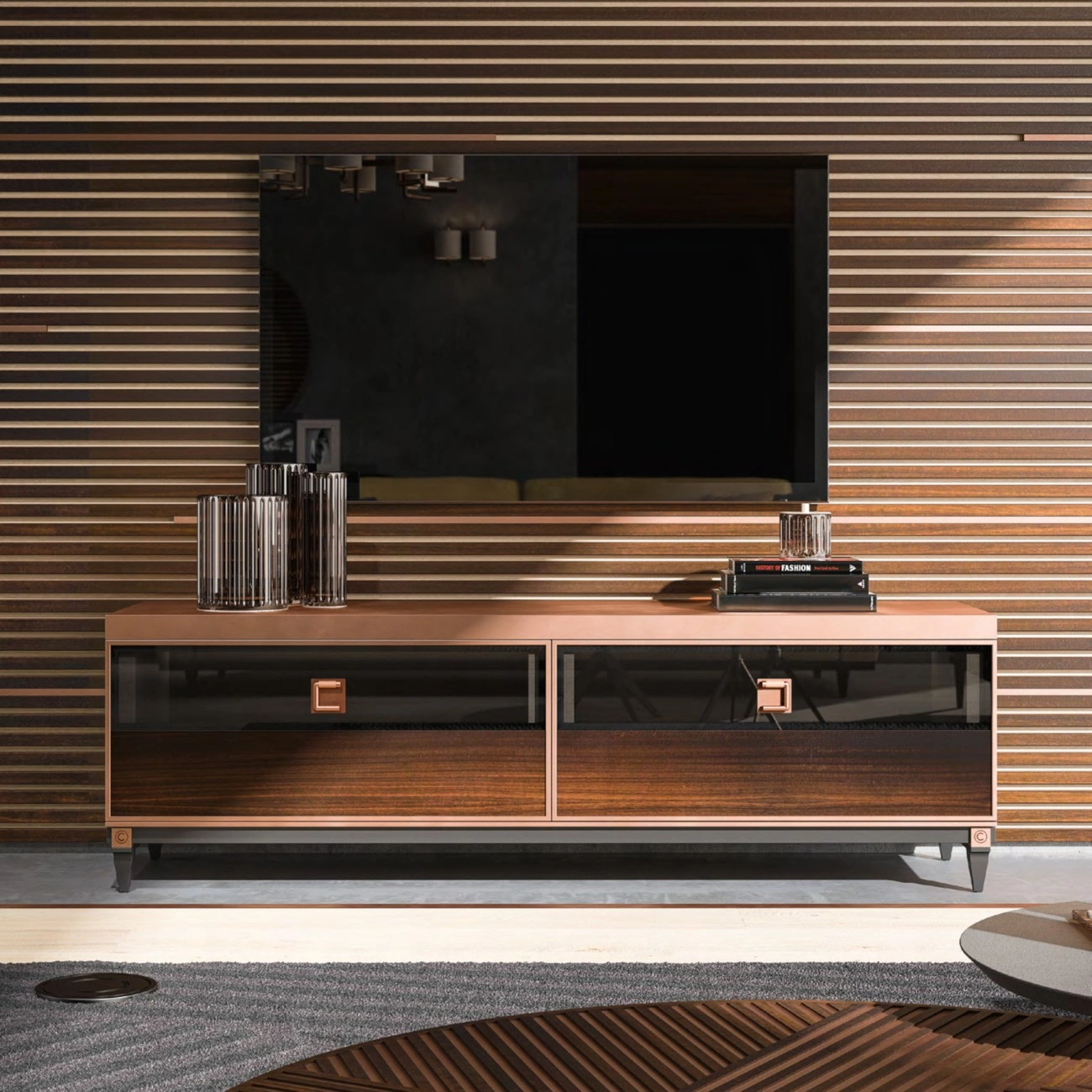
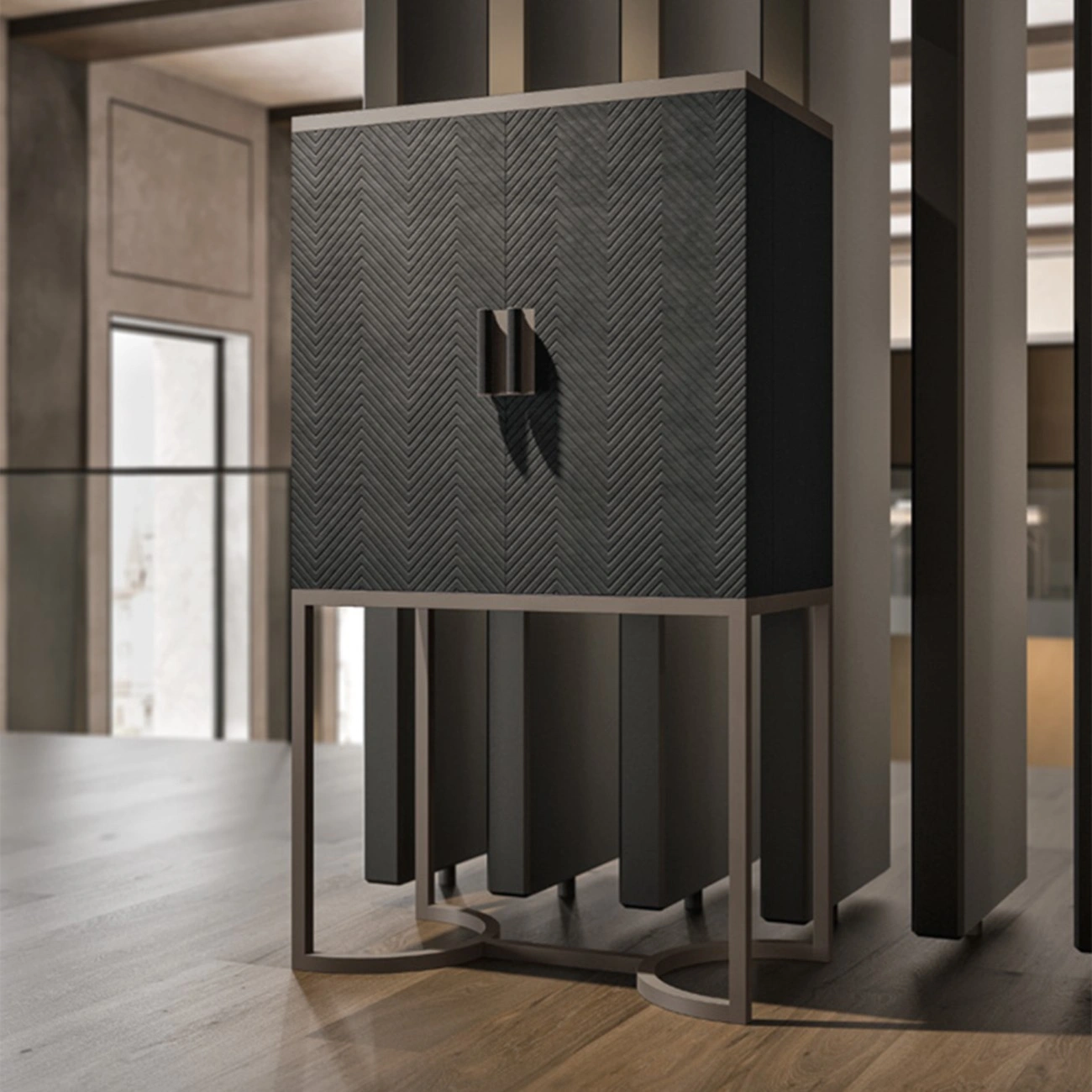

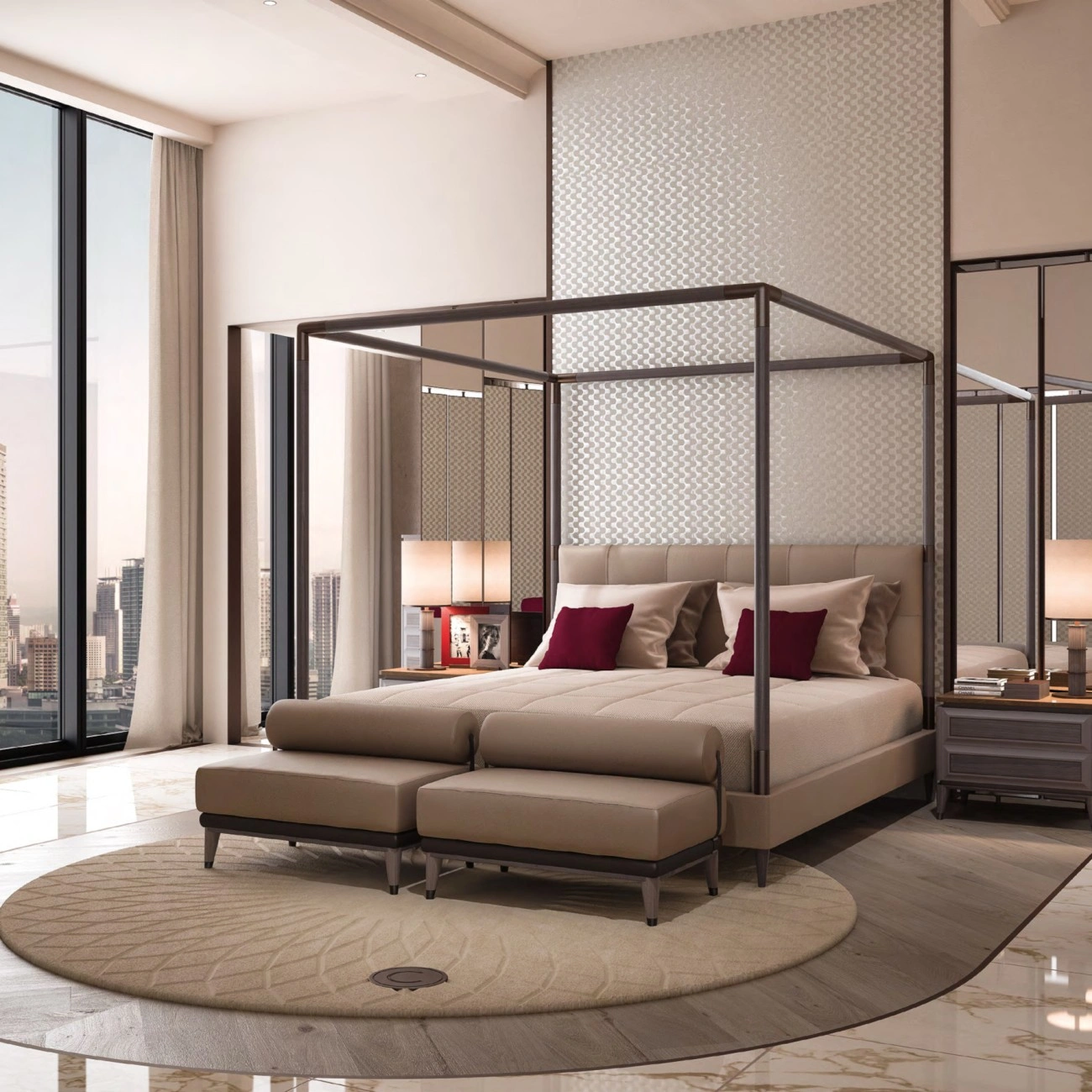
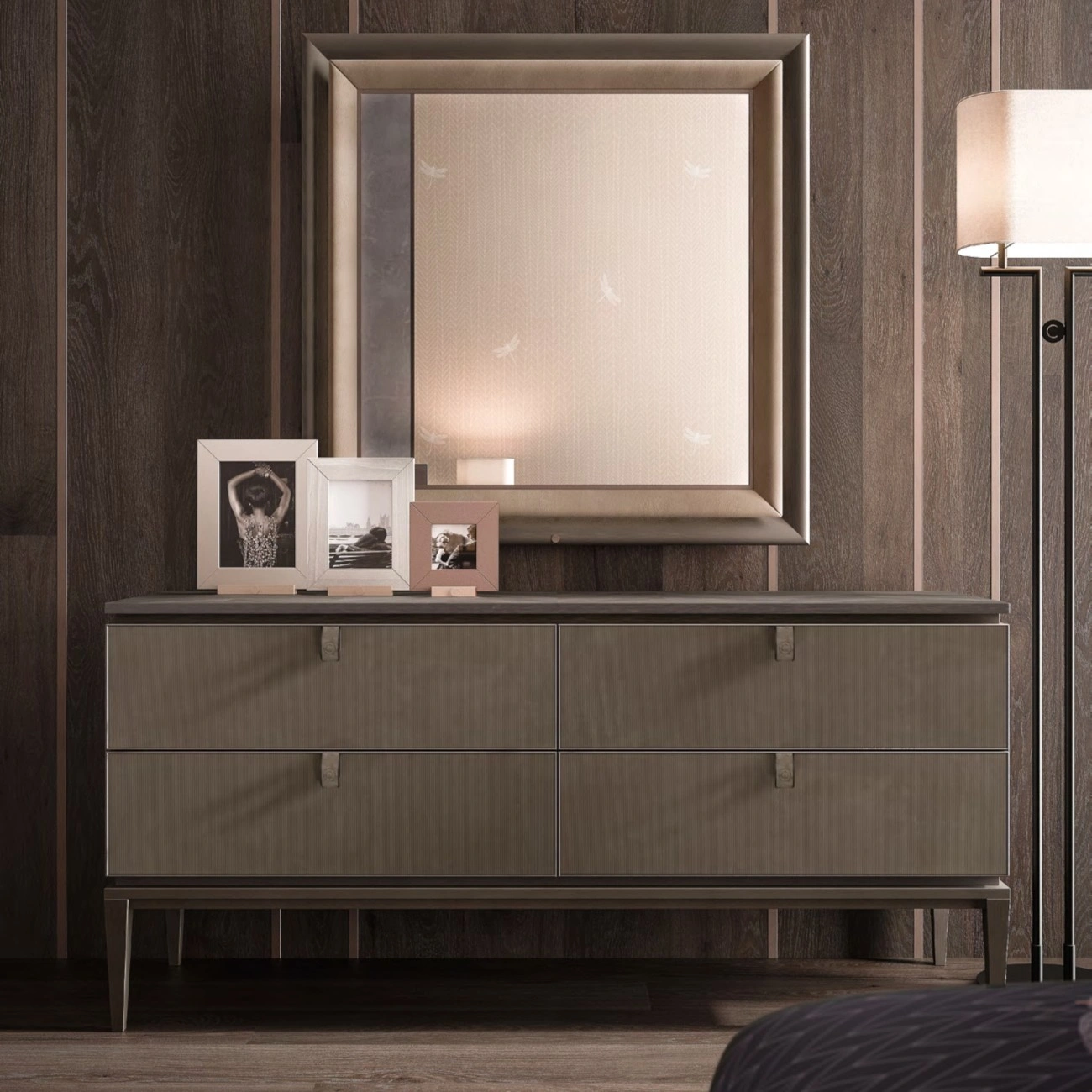

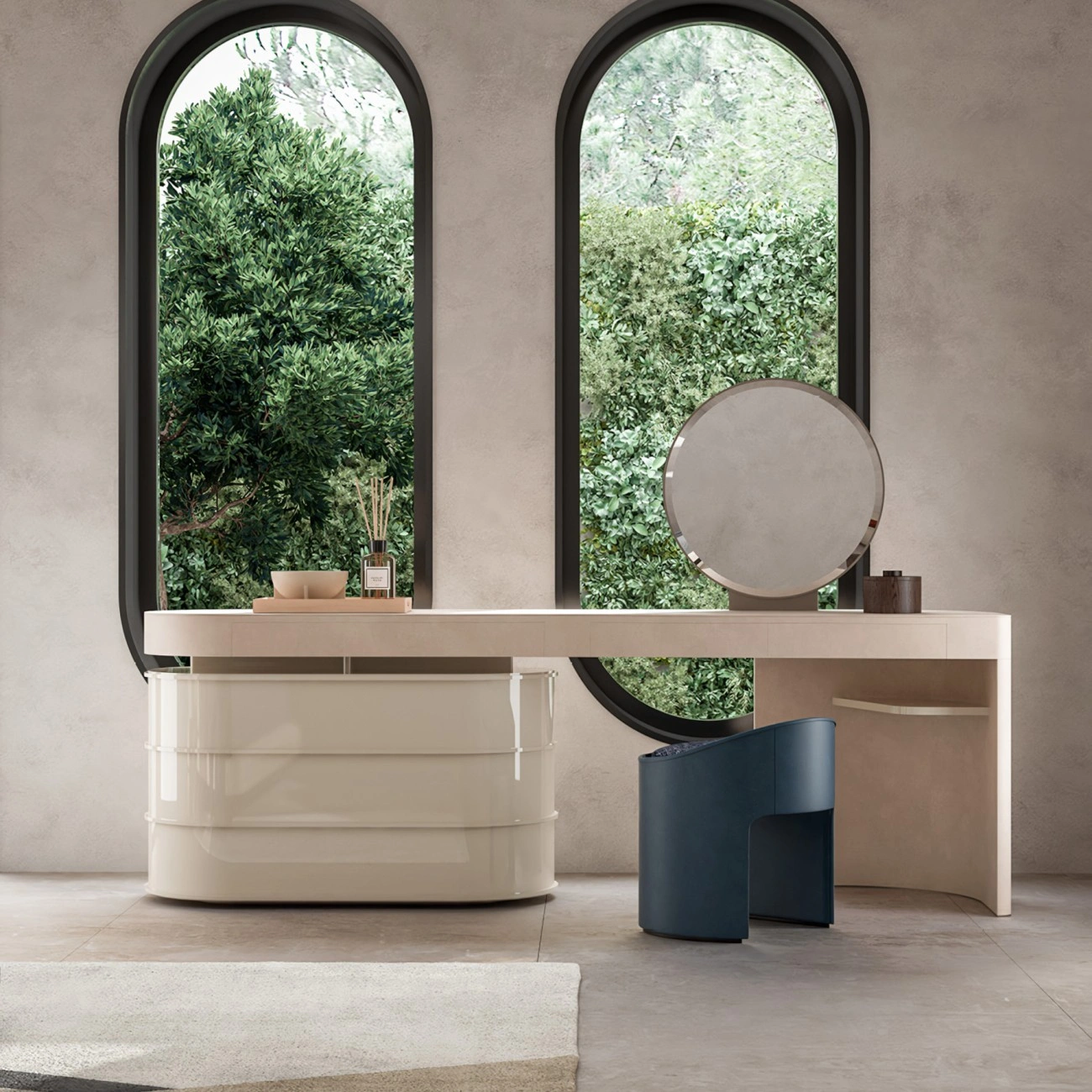
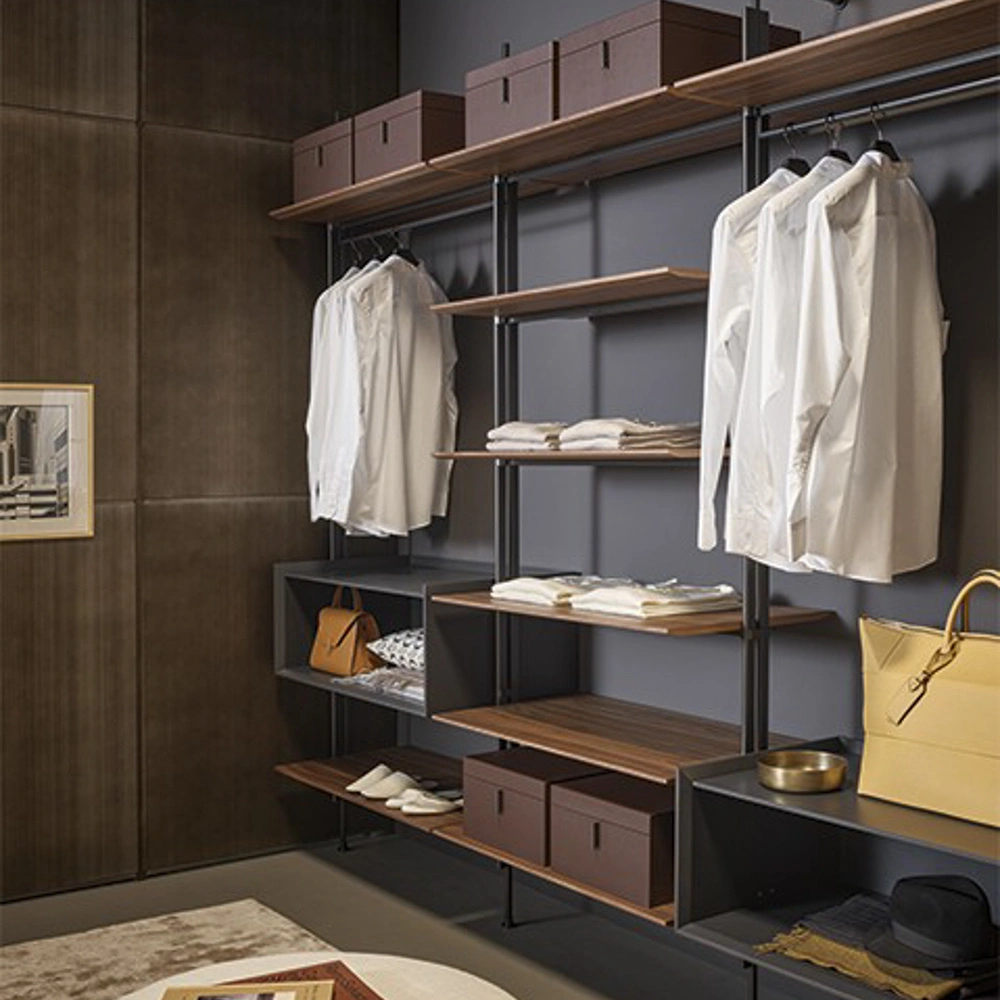
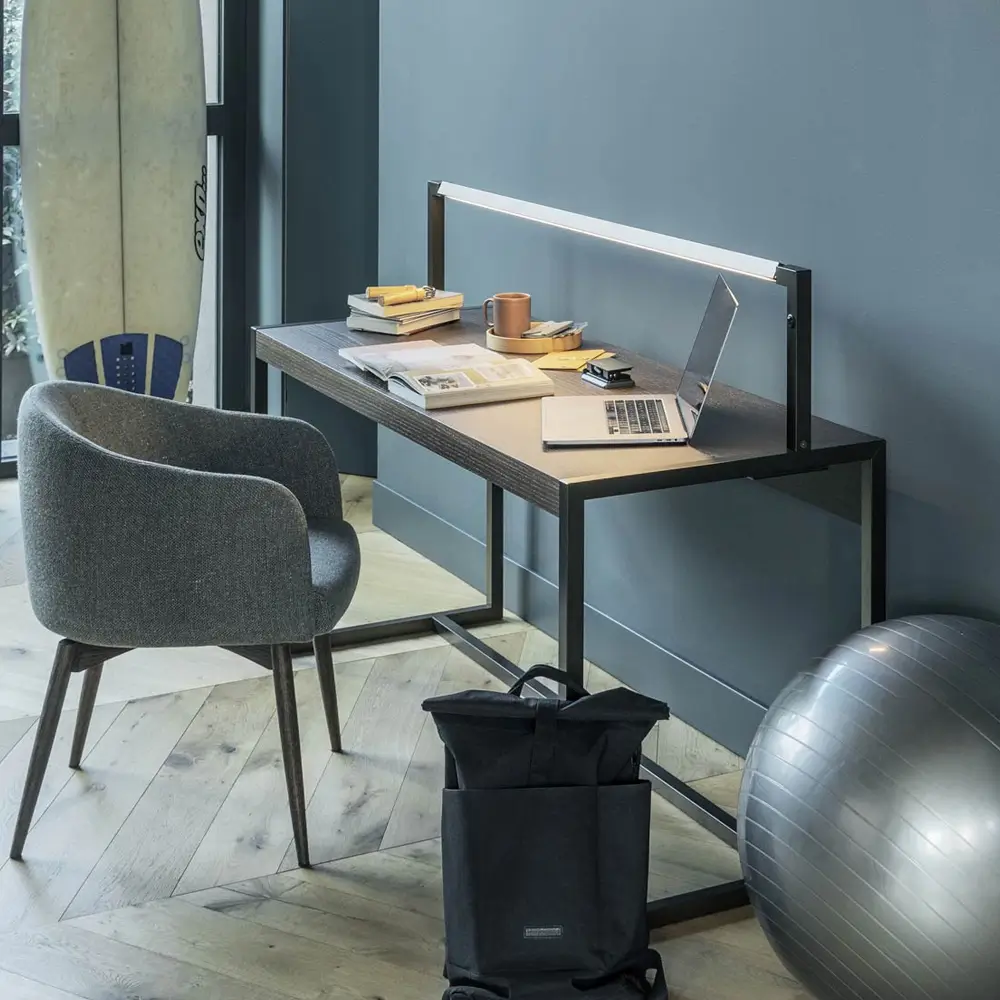







The open-plan home has been around for decades, and yet the conversation around it keeps evolving. Once a hallmark of modernity, open spaces have gradually revealed their friction points: noise, wandering sightlines, lack of boundaries. But designers aren’t retreating behind drywall or glass partitions anymore. The 2027 interior ethos is clear—zoning without walls. Openness remains sacred, but so does function.
Visual and material cues have taken the place of walls. Not arbitrarily, not as decoration, but as logic. The floor changes subtly, a swath of oak transitions to stone, signaling that this is now the kitchen, that is the living area. Texture itself communicates purpose. It’s almost unconscious—the body senses difference before the mind categorizes it.

Floors as Silent Boundaries
Changes in floor material are the oldest trick in the book, but used smarter now. The shift is rarely abrupt; subtle gradients, directional grains, or inlaid patterns act as thresholds. Flooring is now a language, not just surface. Oak might run through a lounge area, interrupted by a square of slate for dining, bordered by soft wool carpet for a reading nook. Each material marks function while allowing the space to breathe.
It’s tactile too. Bare feet, the weight of a chair, even the angle of movement—all register the boundaries without signage. The difference in friction, temperature, or acoustics reinforces the intended function. And unlike walls, floors invite movement—they suggest, they guide, they never command.
Ceiling Cues and Architectural Signals
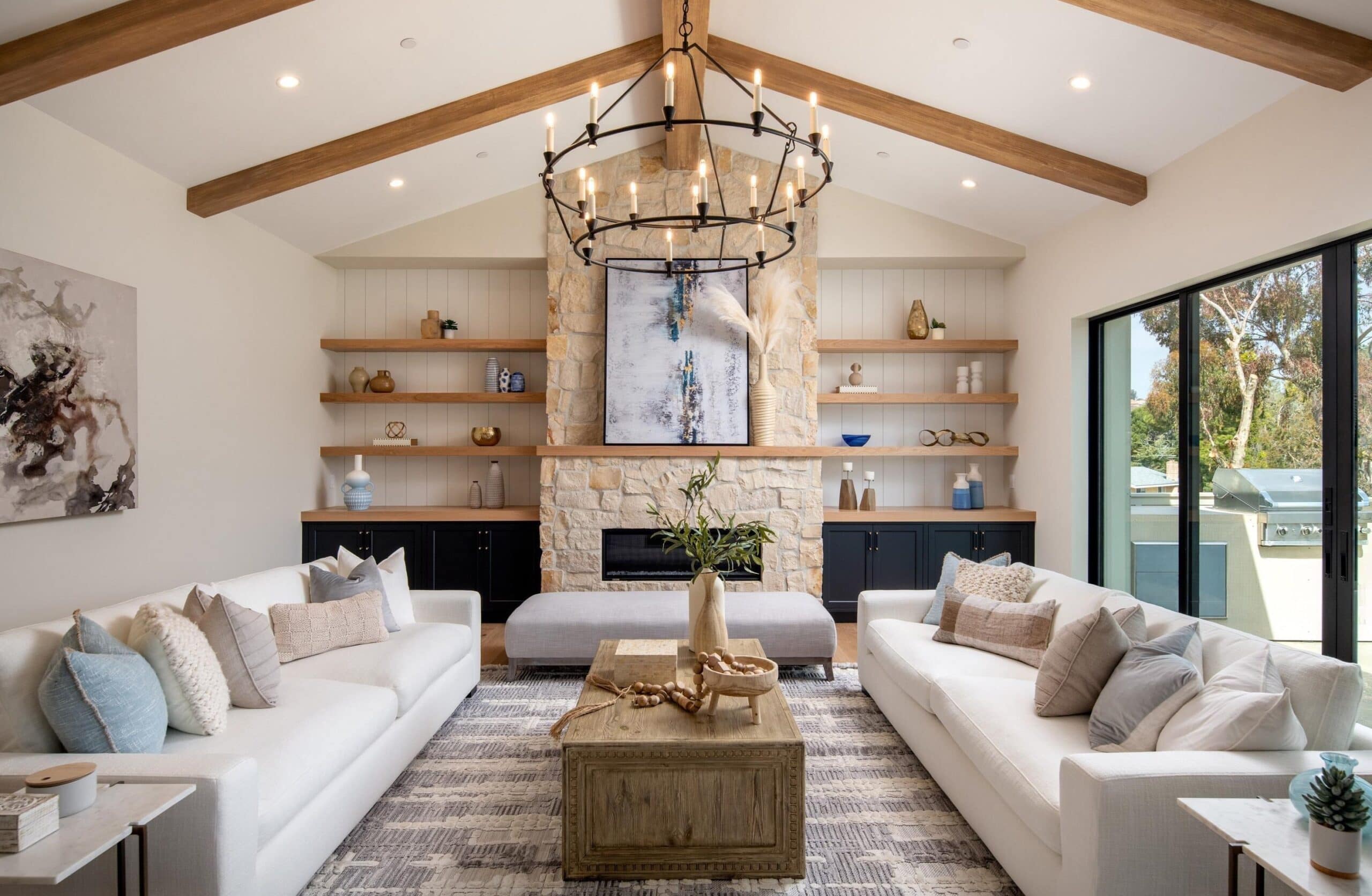
Walls are gone in open-plan zoning, but designers have discovered the ceiling’s latent authority. Variations in height, exposed beams, or soffits now define zones naturally. A lowered ceiling over a dining area compresses and shelters, giving intimacy without enclosure. A lofted living area feels expansive, inviting circulation.
Beams aren’t just structural; they punctuate zones. A single timber running across an open kitchen-living space delineates without separating. Light and shadow interact with these forms, reinforcing their cues. Designers are treating the third dimension as a canvas of function, not just a plane to hide ducts or hang pendants.
Rugs and Textiles as Anchors
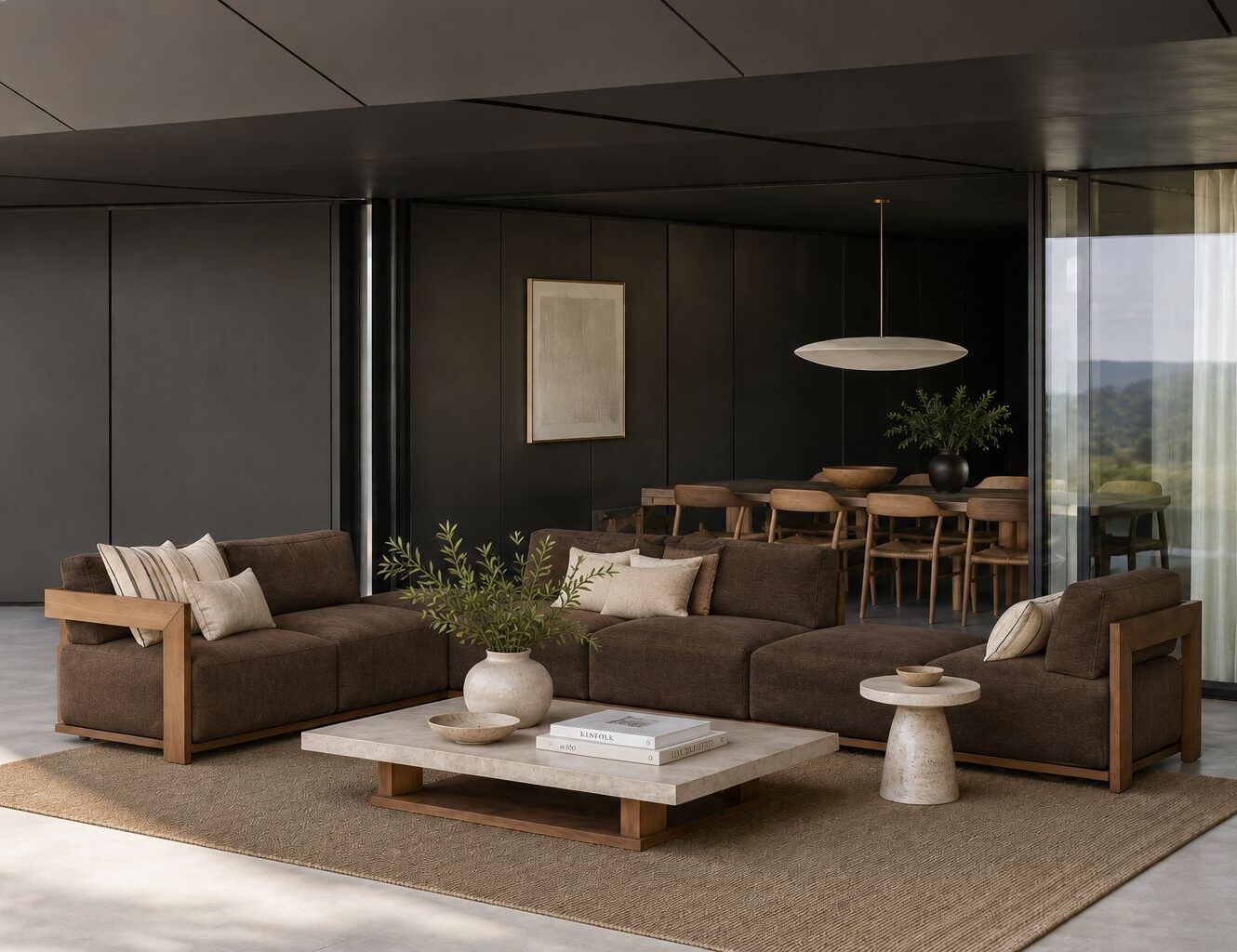
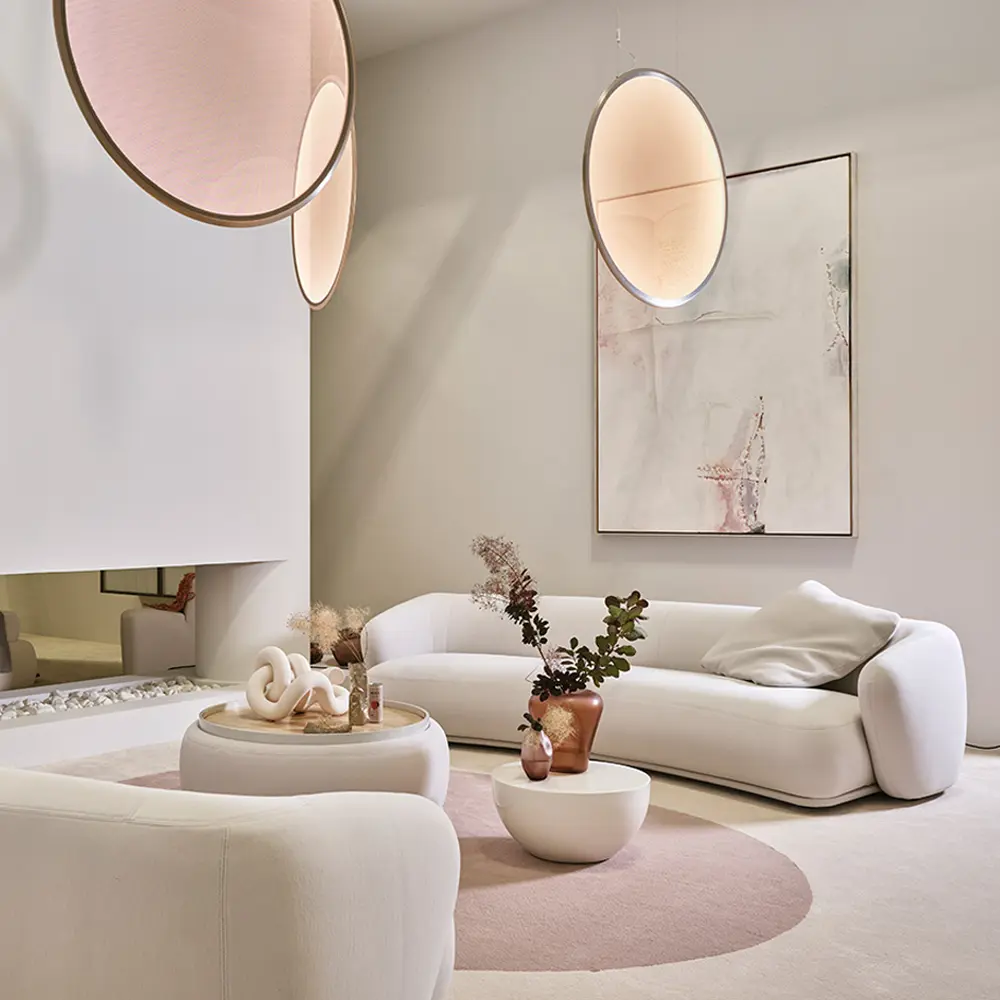
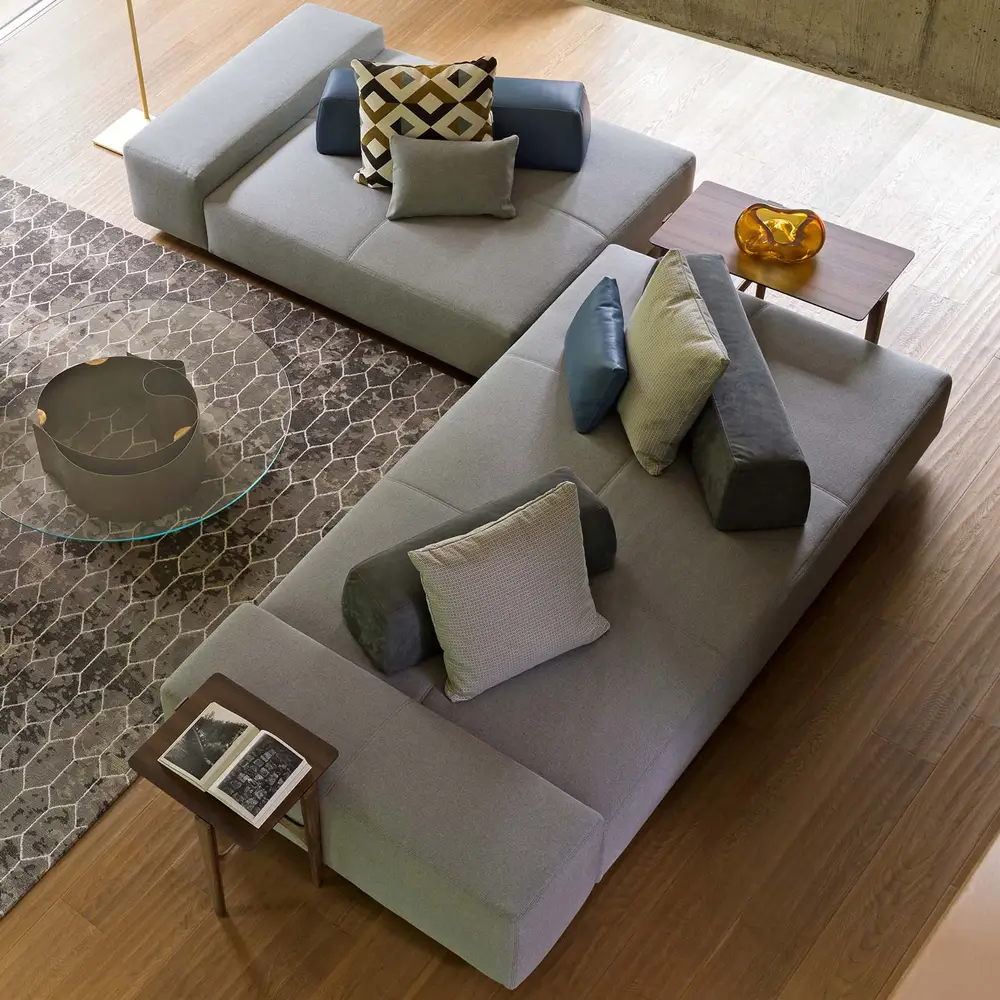
Area rugs have always existed in living rooms, but in 2027 interiors, they are strategic agents of zoning. A rug anchors furniture, defines conversation clusters, or frames dining arrangements. Layered textiles subtly suggest purpose: a woven flatweave signals casual lounging, while a dense hand-knotted carpet invites pause and attention.
Rugs also buffer sound, tying in with acoustic strategies from wellness design. In open spaces, they reduce the scatter of footsteps and conversations, creating pockets of relative calm. Their boundaries are visual, tactile, and functional at the same time.
Lighting as Spatial Cartography
Lighting completes the zoning toolkit. Layered lighting defines activity without intrusion. Pendant lights above dining tables, recessed spots over work counters, soft uplighting for lounging corners. Each layer signals use. Shadows and illumination guide behavior. The eye reads the ceiling and floor in concert—movement becomes intuitive.
Dynamic lighting amplifies flexibility. Zones can overlap or shift based on activity. A living area doubles as a home office. A breakfast nook transitions into a reading corner. Layered lighting, paired with floor and ceiling cues, lets a single space host multiple identities without chaos.
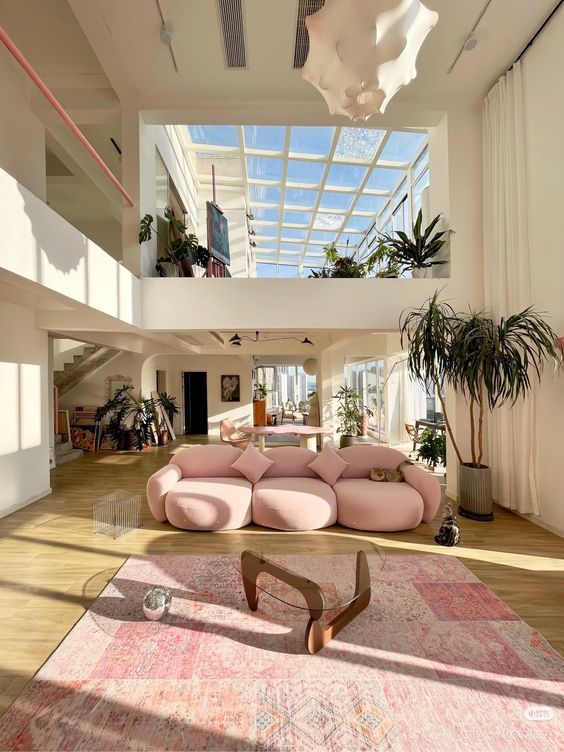
Visual Continuity Meets Functional Separation
The trick of zoning without walls is subtlety. Material, texture, light, and proportion suggest boundaries without imposing them. A room feels cohesive, yet the brain understands where functions begin and end. Color palettes often reinforce this. Slight shifts in tone or finish create zones without resorting to partitions.
Transparency becomes a principle, not a gimmick. The space reads as one, even when activity is compartmentalized. Designers are increasingly layering visual signals: furniture orientation, cabinetry lines, shelving, lighting, floor textures—all coordinate to delineate zones naturally.
The Social Dimension
Open spaces demand social intelligence. Zoning without walls acknowledges how humans inhabit space. Furniture, lighting, rugs—they orchestrate flow. Conversations, movement, interaction patterns—they all respond to cues embedded in materials. A dining area is visually distinct yet connected to the living room; it encourages interaction while signaling when one has crossed into a functional “different” zone.
Families, roommates, hybrid work setups—all benefit. Activity zones reduce conflict. Circulation becomes smoother. Open homes feel simultaneously private and communal. Walls aren’t the only way to negotiate social dynamics.
Movement and Bodily Awareness
Zoning without walls is about the body too. Step from tile to carpet and you sense a change in function. Look up at lowered ceilings and your posture adjusts. Move into lighted areas that signal activity versus calm, and the body aligns automatically. Interiors communicate subtly, training inhabitants in flow without instruction.
This approach treats home as an experience rather than a static container. Boundaries exist, but they are felt, not read on a blueprint. Interiors speak the language of movement and perception.
Flexibility and Adaptation
Open spaces with subtle zoning are flexible. Furniture arrangements can shift. Rugs can be replaced. Lighting layers can be dimmed or expanded. Ceilings are permanent, but their cues interact differently with changing layouts. Designers no longer need rigid partitions to account for change—the space adapts naturally.
Hybrid work and evolving lifestyles demand this. Dining areas become work zones. Living spaces double as yoga corners or play areas. Zoning without walls allows the interior to evolve without reconstruction.
Layered Design Language
The success of wall-less zoning depends on layering. Floor materials, ceiling variations, rugs, lighting, furniture, color, texture—all speak together. Any single element is insufficient; a rug alone doesn’t define a zone. Lighting alone can confuse. The interplay of cues creates clarity.
It’s almost musical. Themes repeat, motifs overlap, transitions are smooth but discernible. The result is a spatial symphony where openness and function coexist.
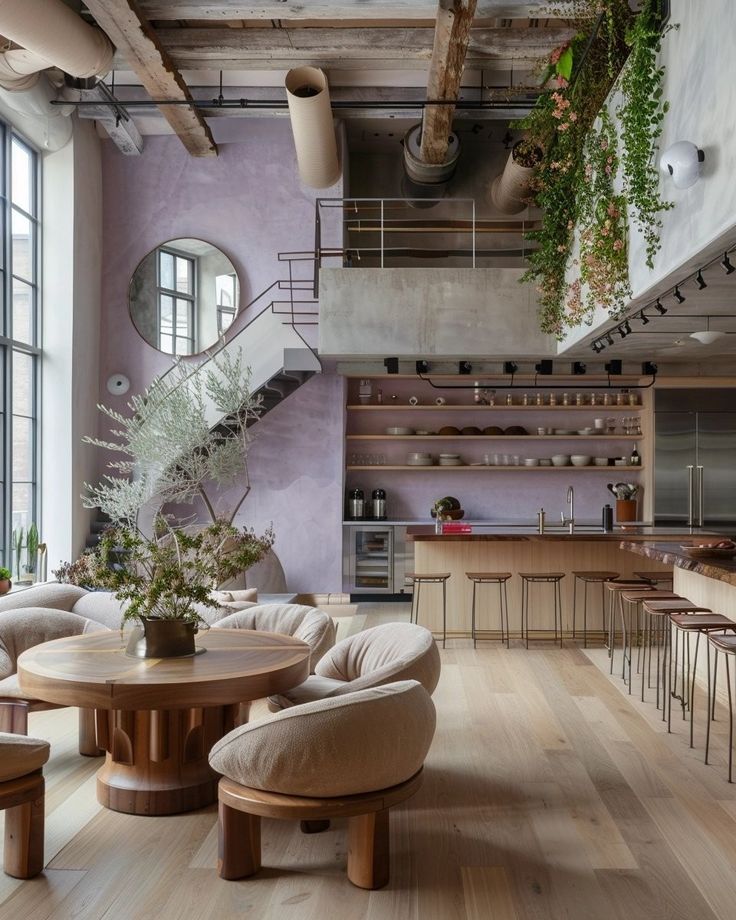
Aesthetic Freedom and Spatial Logic
Designers are discovering that zoning without walls is not a compromise. It is freedom constrained by logic. Open-plan homes retain visual expansiveness while performing structurally and functionally. Zones are distinct without isolation. Interiors become flexible instruments rather than rigid scripts.
Even minimalism benefits. Clean lines, coherent palettes, and unbroken sightlines thrive alongside subtle, embedded zoning. Function no longer requires division; it requires orchestration.
Challenges and Missteps
Not every open space succeeds without walls. Poor flooring choices, weak lighting differentiation, or inconsistent textures create confusion. Without thought, zones can overlap awkwardly or appear arbitrary. The subtlety that makes zoning effective also makes it fragile. Designers must think like choreographers, considering circulation, behavior, and perception simultaneously.
There is also a social dimension. Visitors may misread zones. Children may ignore cues. Humans are messy, unpredictable, and zoning without walls is more negotiation than prescription.
The Norm, Not the Novelty
By 2027, zoning without walls is no longer experimental. It is standard practice. Designers rely on cues rather than partitions to define space, embracing openness without sacrificing usability. The strategy reflects evolving lifestyles: hybrid work, multi-functional living, social and private cohabitation. Homes must perform without boundaries that block flow.
Walls are still there when needed, but increasingly as punctuation rather than diktat. Open interiors are layered, nuanced, and subtly guided. Material, light, texture, and proportion all conspire to make living functional, flexible, and beautiful.
Living in Zones Without Walls
Daily life in a well-zoned open-plan home is effortless. Circulation flows naturally. Zones function intuitively. Conversations don’t collide; feet don’t stumble on transitions. Lighting cues guide attention. Rugs anchor furniture. Ceilings suggest intimacy or expanse. Material transitions signal purpose without shutting down space.
It’s almost invisible. Residents barely notice the system at work—until it’s missing. Then the chaos of undifferentiated open space becomes obvious: noise, congestion, conflicting functions. When done well, wall-less zoning disappears into behavior and habit.
The Future of Spatial Intelligence
Open-plan interiors in 2027 are about intelligence, not just openness. Designers use floors, ceilings, rugs, and light to teach inhabitants how to inhabit space. Walls are optional. Cues are constant. The interior communicates with its occupants, subtly orchestrating function, movement, and social behavior.
Zoning without walls is now not novelty, not experiment. It’s the new baseline for living, working, and interacting in modern homes. The open-plan home has matured: visually expansive, functionally discrete, and quietly instructive.