


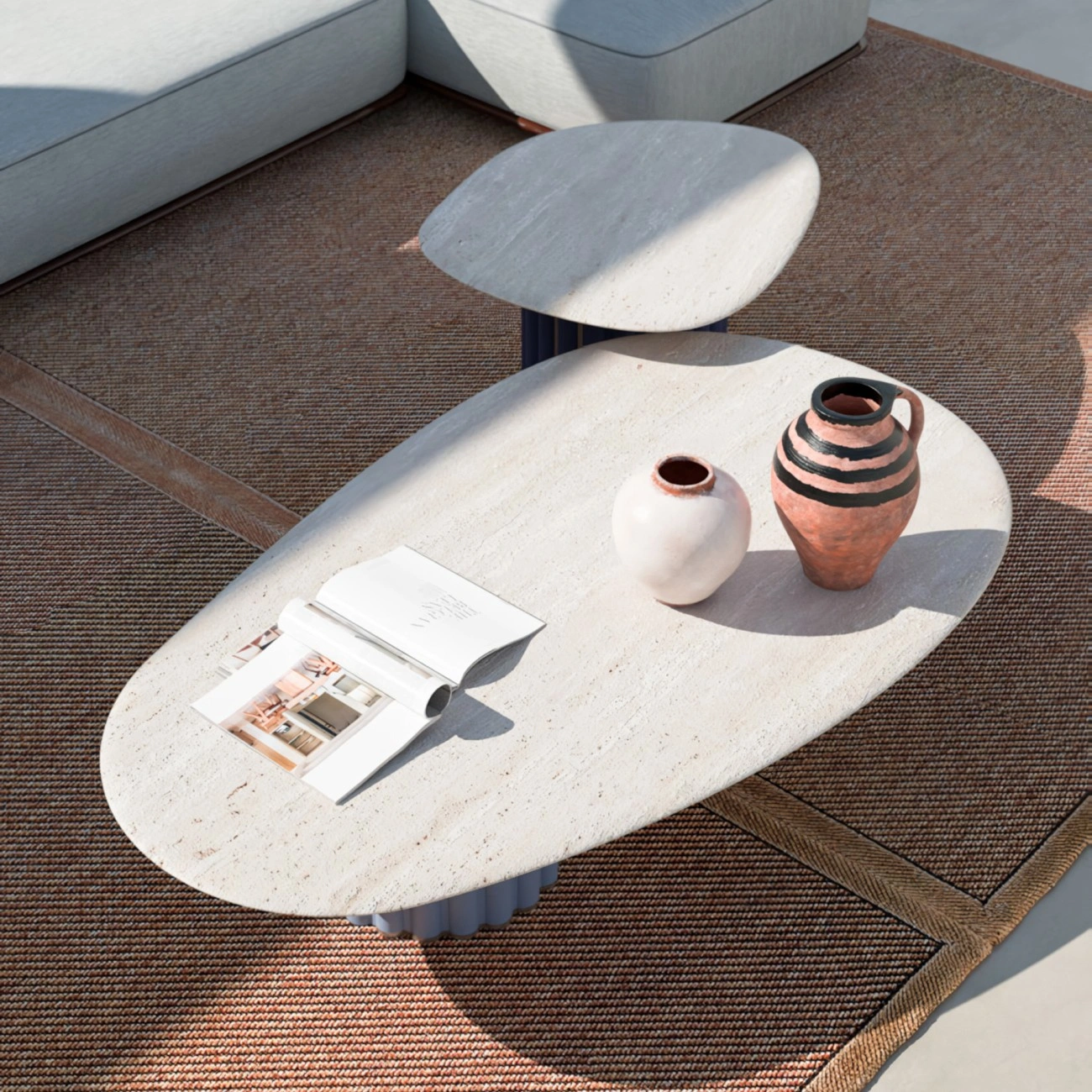











For a long time, the rectangle ruled domestic life. Tables followed walls. Islands mirrored cabinetry. Rooms were planned around straight lines because buildings were, and because efficiency liked corners. But something has shifted. Rounded dining tables and curved kitchen islands are no longer stylistic outliers or boutique gestures. They are becoming defaults in homes that are paying closer attention to how people actually move, gather, pause, and talk.
This is not about trend fatigue with minimalism or a sudden nostalgia for mid-century forms. It is more practical than that. As homes absorb more roles—workplace, social space, refuge—the edges that once defined order now feel obstructive. Curves soften not just rooms, but behavior.

Circulation Over Composition
Rectangular furniture privileges alignment. It assumes rooms will be used from predictable angles. Chairs pulled straight back. People seated opposite one another. Circulation happening around the perimeter. That logic breaks down in contemporary homes where spaces overlap and movement is constant.
Rounded dining tables interrupt that rigidity. They allow circulation to flow around them rather than collide with corners. Chairs slide more easily. Paths bend instead of stop. The room feels less choreographed, more permissive. This matters most in smaller homes, where a sharp corner can dictate the entire floor plan.
Kitchen islands follow the same logic. A curved edge where people gather—leaning, perching, passing through—feels less like an obstacle and more like an invitation. Movement becomes intuitive. No one has to navigate around a protruding corner with a hip or a coffee mug.
Social Geometry
There is a reason round tables carry so much symbolic weight historically. Equality is baked into the shape. No head. No hierarchy. In domestic settings, this translates into something quieter but no less real: better conversation.
At a rounded dining table, eye lines are softer. No one is stranded at the end. Conversations overlap rather than split. Meals stretch. The table supports lingering rather than signaling when it is time to clear plates. The geometry encourages presence.
Curved islands do something similar, albeit more casually. They allow people to cluster without forming a line. Someone cooking, someone working, someone just hovering with a drink—all occupy the same object without competing for position. The island becomes social furniture, not just a work surface.
The End of Defensive Design
Rectangular islands often feel defensive. They assert territory: prep here, sit there, don’t cross this edge. Rounded islands relax those boundaries. The curve absorbs interaction instead of resisting it. Hands land where they will. Stools rotate slightly. Bodies angle toward one another rather than lining up.
This has implications beyond aesthetics. Kitchens are no longer closed workshops. They are shared spaces where cooking, working, and socializing overlap. Curved islands acknowledge that overlap instead of trying to control it.
Material Behavior on Curves
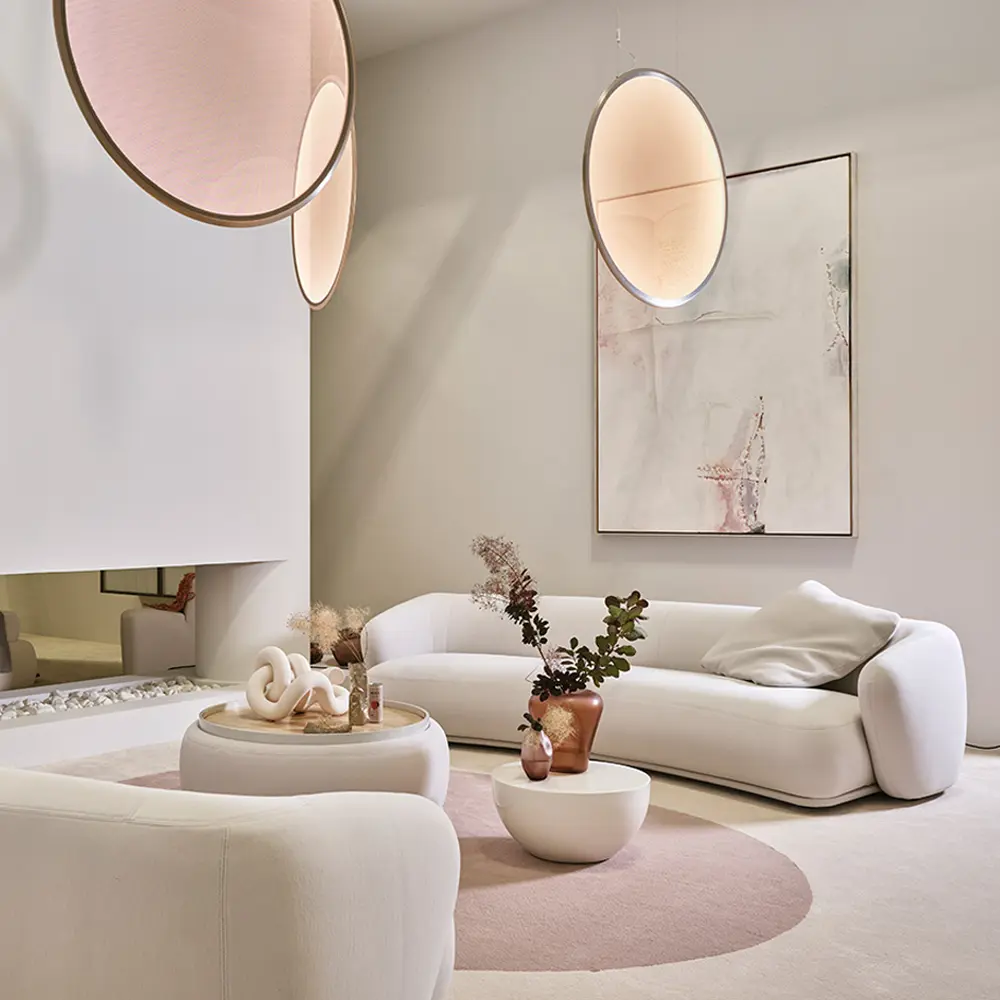
Materials behave differently when bent. Wood grain follows arcs. Stone reveals new veining. Even laminate reads differently when it is not forced into straight lines. Rounded tables and islands often feel more tactile because the hand encounters variation as it moves.
Edges matter here. A softened edge invites touch. It is easier to rest an arm, lean in, stay longer. Hard corners discourage lingering, even subconsciously. In a home that is already saturated with screens and stimuli, this physical softness makes a difference.

Safety Without Signaling
One of the least discussed advantages of rounded furniture is safety. Corners bruise. Shins remember. In homes with children, aging parents, or simply a lot of movement, rounded tables and islands reduce risk without announcing it. There is no institutional padding, no visible compromise. The design simply behaves better.
This quiet safety aligns with a broader shift in residential design toward preventative comfort rather than reactive fixes. The room accommodates life instead of demanding caution.
Scale and Perception
Curves change how scale is perceived. A large round table often feels smaller than a rectangular one of similar footprint. The absence of corners tricks the eye. Space feels more generous, even when it is not.
The same applies to islands. A curved island can occupy significant square footage without dominating the room visually. It reads as an object rather than a barrier. This is particularly valuable in open-plan homes where the kitchen must coexist visually with living and dining areas.
Less Formal, More Intentional
Rounded dining tables tend to signal informality, but not carelessness. There is intention in choosing a shape that prioritizes interaction over alignment. Place settings become flexible. Seating adapts to the moment. The table supports different group sizes without feeling over- or under-set.
This flexibility mirrors how people actually live now. Dinners fluctuate. Guests linger. Work happens temporarily, then disappears. A round table absorbs these shifts without needing to be reconfigured constantly.
Islands as Furniture, Not Fixtures
The most successful curved islands are designed less like cabinetry and more like furniture. They sit within the kitchen rather than locking into it. Their curves distinguish them from the surrounding architecture, allowing them to operate as social anchors.
This furniture-like quality also softens the kitchen’s visual dominance. Appliances recede. The island becomes the focal point, but a humane one. It suggests gathering rather than labor.
The Craft Question
Curves demand more from makers. They expose mistakes. They resist shortcuts. Joinery becomes visible. Finishes must be consistent across changing planes. This is partly why rounded tables and islands feel more considered—they are harder to execute convincingly.
That difficulty carries value. In a market saturated with flat-pack solutions and replicated forms, a well-made curve reads as deliberate. It suggests time, skill, and a willingness to prioritize experience over efficiency.
Living With the Shape
Daily life around rounded furniture feels different. Chairs are pulled at slight angles. People stand where they want. Conversations drift. There is less choreography, more improvisation. The furniture supports this without calling attention to itself.
Cleaning even changes. Crumbs gather differently. Surfaces wipe more fluidly. There are fewer tight corners where debris accumulates. These small practicalities add up over time.
Not a Universal Solution
Rounded tables and islands are not answers to every space. Some rooms demand alignment. Some households prefer the clarity of edges. The point is not replacement, but recalibration.
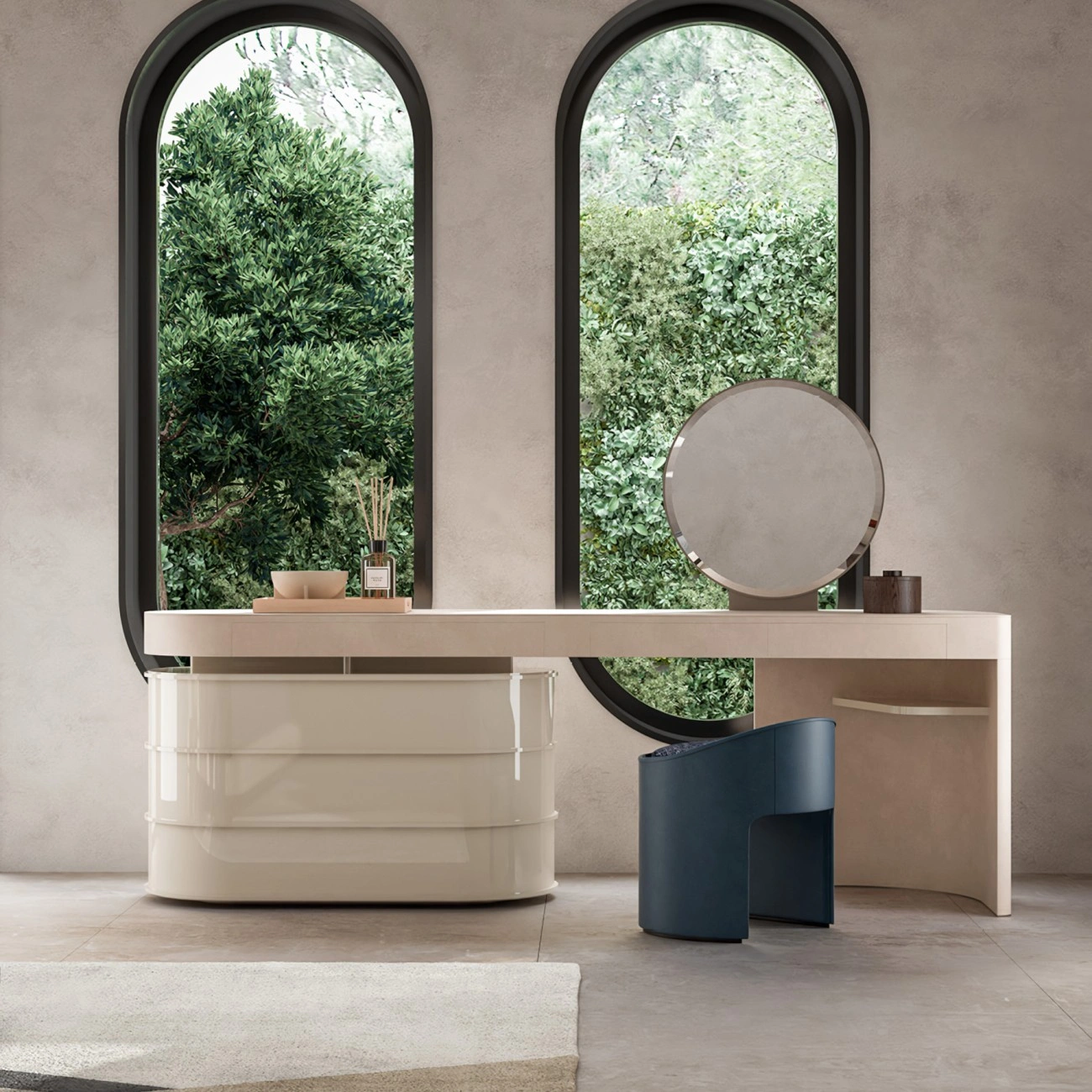
What is clear is that curves are no longer decorative exceptions. They respond to real shifts in how homes are used. They acknowledge movement, overlap, informality, and the desire for spaces that feel less controlled.

A Softer Way to Organize Life
The embrace of rounded dining tables and islands reflects a broader rethinking of domestic order. One that values flow over rigidity. Interaction over positioning. Comfort over correction.
Corners will always exist in architecture. But within those rooms, furniture is beginning to push back gently. Curves introduce another way of organizing life—less confrontational, more accommodating.
And once lived with for a while, the absence of sharp edges starts to feel less like a design choice and more like common sense.
Rounded tables are just the start — see the full dining room trends for 2027.