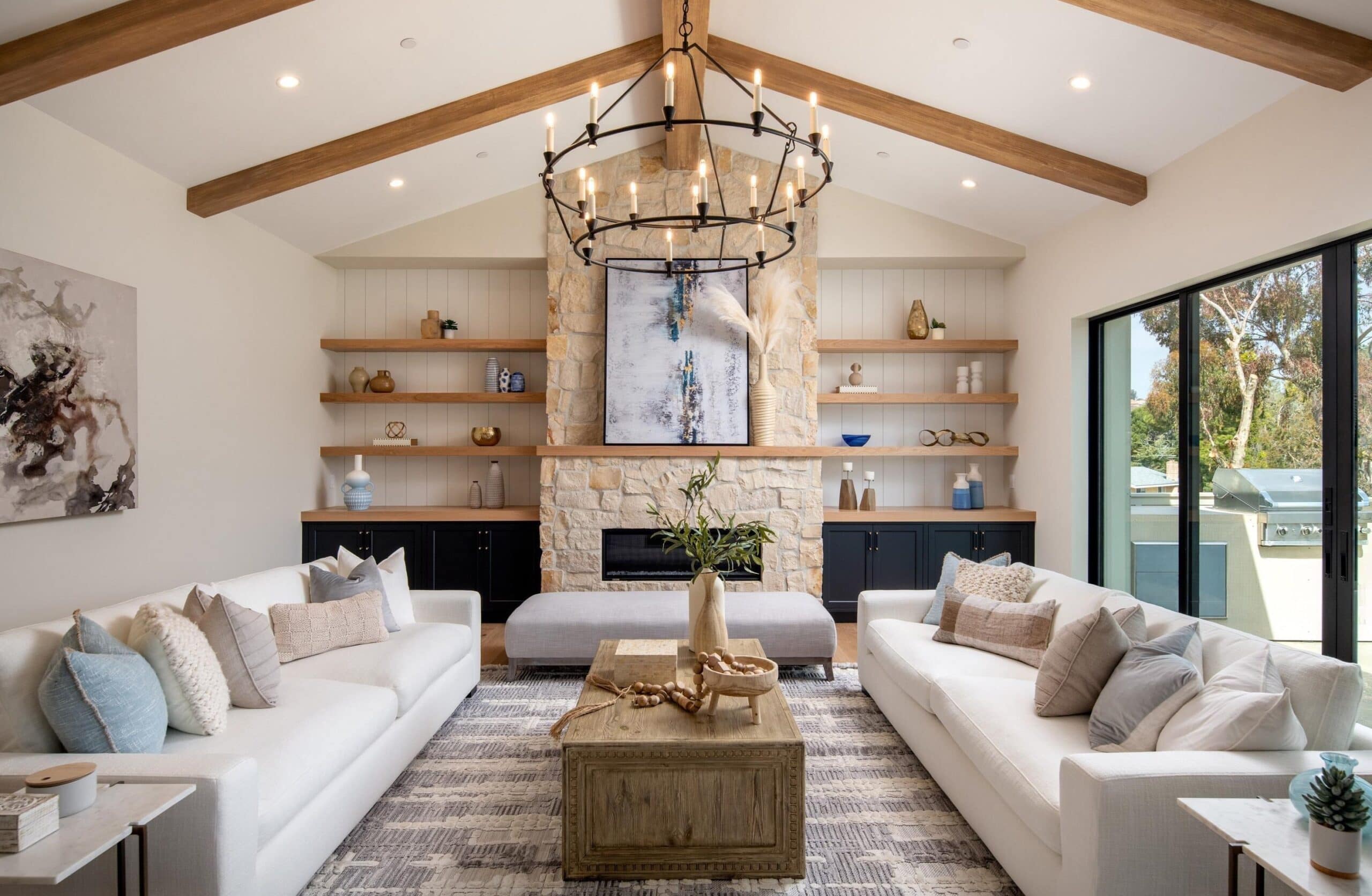

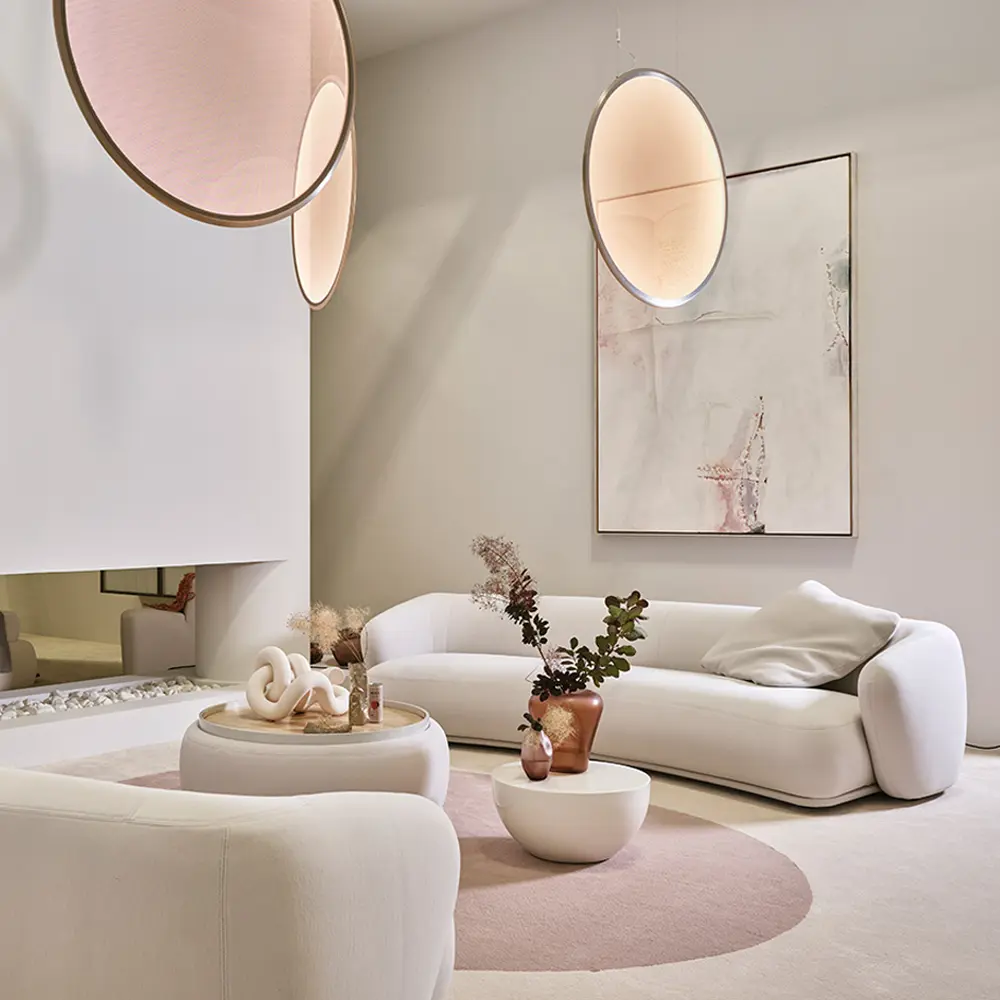

















There is a peculiar gravity to vintage lighting. A lamp or pendant seems to hang in a room like a relic, not because it is old in some sentimental sense, but because it carries weight. Brass, touched enough to have a soft patina. Glass, uneven. Cords replaced once, maybe twice, but never fully hidden. None of it is accidental. It is time, accumulated. Like a note held too long, shaping the space around it more than any carefully planned fixture ever could.
It is tempting to dismiss old lighting as kitsch or “retro,” but that misses the point. Look at the shadows it throws. A scalloped shade, a tapered glass, they cast differently than a modern LED, which is too clinical, too even. There is honesty in the way light falls from older materials. Subtlety. Shifts with the sun. Flickers with the flame of a candle. A designer might plan for light, but the quirks? They are discovered.

The Materials Speak
Steel, glass, wood—they all speak differently once they’ve aged. A chrome sconce from the ’60s doesn’t just show its era; it shows life. Tiny dents. A sagging arm. The smell of heated metal. Storytelling without words. Restoration often spoils it. Overpolishing kills context. The soft sheen of brass after decades of touch says more than a freshly lacquered surface ever could.
Take a Murano glass chandelier. Its stems slightly asymmetric. Fingerprints of the blower. Light refracts unpredictably. Scatter across the ceiling. Modern replicas chase perfection. But perfection is sterile. Unevenness makes a fixture matter. Makes it a participant, not just background.
Shadows Over Function
Functionality is always secondary. Modern fixtures promise efficiency, dimming, color accuracy—but they’re pragmatic, not poetic. A mid-century pendant isn’t just illumination; it defines mood. It draws attention to corners otherwise ignored. Textures flattened by fluorescent uniformity come alive.
There is negotiation between fixture and room. Tiffany lamps with complex leaded glass do not illuminate evenly. Pockets of darkness. Not flaws. Opportunities. Furniture, flooring, dust—all highlighted aesthetically. Imperfection is character.
Temporal Layering
Vintage lighting carries history quietly. A pendant from an old hotel lobby, enamel chipped, patina uneven, social history intact. In a modern loft, it challenges polished surfaces. Design exists in continuity, not isolation.
Time leaves traces designers ignore: micro-scratches, sun-faded spots, repairs with mismatched screws. Choices not made consciously by the original maker, but by life itself. Modern fixtures are born perfect, die instantly. Vintage arrives imperfect, survives decades, carries stories silently.

The Ritual of Light
There is ritual in using older lamps. Pull chains, dimmer knobs, striking a match. Tactile gestures, almost ceremonial. Modern lighting reduces this to invisible sensors, apps. Convenient, yes. But intimacy lost. Weight of a switch. Slight resistance of a rotary dimmer. Warmth of metal after hours.
Ceiling fixtures participate too. Pendants hung low over dining tables make diners move in relation to light, not vice versa. Shadows lengthen, scatter, converge—ephemeral architecture no fixed luminaire could replicate.
Market and Misconception
The market misreads vintage lighting. Collectible, decorative. Instagram feeds flatten context. A Danish teak lamp looks elegant online but lives differently in a real room. Photography kills interaction.
Designers sometimes do the same. Fetishize forms, neglect lived qualities. Brass polished, shades replaced, cords hidden. Legible at a glance, story gone. Appreciation requires tolerating quirks, embracing irregularities that resist control.

The Dialogue of Spaces
Vintage lighting dialogues with space. A 1920s pendant in a loft punctuates emptiness. A 1950s sconce softens a corridor. Light is not neutral—it participates.
It teaches humility. Cannot be coerced into uniformity without betraying itself. Responds to room unpredictably. Shadows change with ceiling height, windows, paint sheen. Negotiation, not dictation.
The Seduction of Patina
Patina is seductive because it is earned. Voice hoarse with age, not artificially altered. Copper oxidizes, brass softens, wood darkens—never evenly. Irregularity is point. Beauty need not be perfect. Perfection rarely interesting.
Modern reproductions mimic forms. Cannot mimic lived time. New chandelier shimmers but carries none of it—no hands adjusting shades, no scratches, no repairs. Palpable difference to anyone who works with materials. Visible in shadows, glints, reflected light.
An Unfinished Conversation
No fixture exists in isolation. Vintage lighting demands attention—not for nostalgia, but for insisting on being noticed, for altering its environment. Resists efficiency. Resists predictability. Designer cannot control it fully. Maybe that is the point: design is about presence, history, imperfection.
Conversation between old light and new space never resolves neatly. Corners glow too warmly, floors half in shadow, no rendering captures it. Unevenness endures. Light moves. Patina accumulates. Shadows deepen. Objects persist, quietly arguing design is about temporality as much as geometry.