












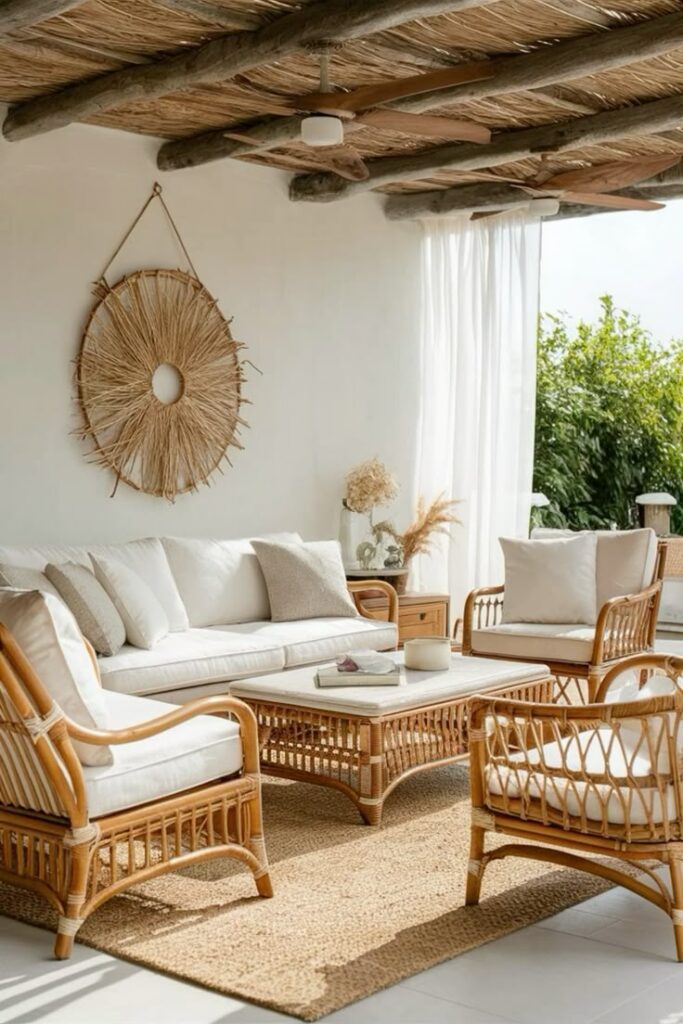
Coastal boho isn’t new. We’ve seen it drift in and out for years—white slipcovers, jute rugs, maybe a rattan pendant if someone was feeling bold. But in 2026, it feels different. Less staged beach house, more layered and personal. And at the center of it all: rattan and bamboo furniture. Not as props. As structure.
There’s something about rattan and bamboo furniture that makes a room exhale. They don’t fight for attention, but they don’t disappear either. They sit somewhere between furniture and texture. A bamboo armchair isn’t just a place to sit; it’s a line drawing in space. A rattan sideboard casts shadows that move throughout the day. You notice it without trying to.
What’s interesting now is how designers are using these materials beyond the obvious coastal clichés. It’s not all white walls and seashell art anymore. Rattan shows up against deep olive paint. Bamboo frames contrast with moody plasters. The palette has matured, and the materials have followed.
The Shift Away from Over-Polished
After years of slick finishes and ultra-smooth surfaces, there’s a clear appetite for texture again. Rattan and bamboo deliver that without feeling heavy. They’re imperfect, slightly irregular, sometimes even a little noisy visually. That’s part of the appeal.
Run your hand across a woven rattan chair and you feel the variation. Some strands tighter, some looser. Slight bends. Subtle inconsistencies. It feels human. And in 2026 interiors, that human quality matters more than ever. Rooms aren’t supposed to look airbrushed anymore. They’re supposed to feel inhabited.
Bamboo, in particular, brings a graphic element. Its natural nodes create rhythm. You can see the growth pattern, the pauses along the stem. It’s structural but still organic. When used in bed frames or console tables, it creates a kind of light architecture inside the room.
Coastal, But Not Literal
The coastal influence is still there, but it’s less literal beach house and more atmosphere. Think filtered light, linen drapery moving slightly in the breeze, woven furniture that feels collected rather than ordered in a set.
Rattan works beautifully in layered spaces. Pair a rattan lounge chair with a worn-in linen sofa. Add a ceramic lamp with an uneven glaze. Let the materials do the talking. There’s no need to over-style it. In fact, too much styling ruins it.
The mistake people used to make with coastal boho was leaning too heavily into the theme. Everything pale. Everything airy. Now, designers are anchoring these light materials with grounding elements—aged wood, darker textiles, even stone. The contrast gives rattan and bamboo more presence.
Shape Matters More Than Ever
It’s not just the material; it’s the form. In 2026, coastal boho rattan and bamboo furniture leans sculptural. Rounded backs. Oversized loops. Thick, almost exaggerated frames. Pieces feel intentional rather than delicate.
The classic peacock chair has made a quiet return, but in more restrained silhouettes. Lower backs, wider seats, softer curves. Bamboo dining chairs are chunkier, less fussy. There’s a confidence to them.
Armless rattan sofas are especially interesting. They feel open, fluid, adaptable. Without bulky arms, the woven frame becomes the visual boundary. Light passes through. The sofa doesn’t block the room—it filters it.

Indoor–Outdoor Blur
Rattan and bamboo have always hovered between indoor and outdoor use. In 2026, that line is even blurrier. Covered terraces flow directly into living rooms. Sliding doors stay open most of the year in warmer climates. The furniture moves with the seasons.
A bamboo bench that works in the entry hall might migrate to the patio in summer. A rattan side table can handle both sunroom and bedroom. There’s a casualness to this flexibility. Furniture isn’t precious.
And yet, quality matters. Cheap, brittle rattan that unravels after a year won’t survive this trend. Designers are investing in better craftsmanship—tighter weaves, reinforced frames, finishes that age well rather than peel.
Color Is Changing the Narrative
For a long time, rattan and bamboo lived in their natural honey tones. Now, they’re being stained, smoked, even painted. Deep walnut finishes give bamboo a more dramatic presence. Black-stained rattan feels graphic, almost architectural.
Even so, the natural tone still dominates—but it’s paired differently. Instead of crisp white walls, think muted clay, dusty blue, or soft sage. The warmth of the weave plays against cooler backgrounds in a way that feels considered, not default.
Textiles layered on top matter too. Striped cushions, block-printed throws, nubby wool rugs. Coastal boho in 2026 isn’t minimal; it’s textured. Rattan and bamboo act as the structural backbone for that layering.
Sustainability, But Quietly
There’s also the sustainability conversation, though it’s less shouted about now. Bamboo grows quickly. Rattan is renewable. These materials feel aligned with a slower, more thoughtful approach to interiors. But it’s not presented as virtue signaling. It’s just common sense.
Clients are asking where things come from. They want materials that make sense environmentally, but also aesthetically. Rattan and bamboo check both boxes without feeling preachy.
Still, not all pieces are created equal. Some mass-produced versions flatten the texture, over-lacquer the surface, or simplify the weave to cut costs. The result looks thin. The better pieces have depth, slight irregularities, a sense of hand.
Mixing Eras
One of the most compelling shifts is how rattan and bamboo are being mixed with other styles. A bamboo console beneath a contemporary abstract painting. A rattan chair next to a marble pedestal table. The contrast is what makes it interesting.
Coastal boho in 2026 isn’t about committing to one aesthetic. It’s about tension. Organic against polished. Light against solid. Woven against smooth.
Even in urban apartments nowhere near the coast, these materials make sense. They soften hard architecture. They bring warmth to concrete floors and steel windows. You don’t need ocean views for rattan to feel appropriate.

The Comfort Factor
There’s also something undeniably comfortable about woven furniture. It has give. It breathes. Unlike fully upholstered pieces, rattan chairs feel airy even when they’re substantial.
Add a thin cushion and it’s enough. Overstuff it and you lose the charm. That restraint is part of the appeal. Coastal boho doesn’t try too hard to be comfortable; it just is.
Bamboo bed frames are another quiet favorite. They feel lighter than solid wood but more grounded than metal. The vertical lines of bamboo poles create subtle rhythm in a bedroom without overwhelming it.
Not Just a Summer Fling
It would be easy to dismiss this as another seasonal trend. But the way rattan and bamboo are being integrated suggests otherwise. They’re not temporary accents. They’re foundational pieces.
A well-made rattan cabinet can anchor a dining room year-round. A bamboo headboard can define a bedroom for years. These aren’t novelty items. They age, they patina, they pick up character.
And that’s probably why they’re resonating now. In a design culture that swung from maximalist to minimalist and back again in what felt like record time, rattan and bamboo offer something steadier. They don’t scream trend. They just exist comfortably within a room.
Coastal boho in 2026 isn’t about recreating a seaside fantasy. It’s about lightness, texture, and a slightly undone feeling that still feels intentional. Rattan and bamboo happen to deliver that almost effortlessly.
You see a woven chair in the corner, sunlight catching the curves, shadow pattern on the wall behind it. Nothing dramatic. But the room feels different because of it. Softer. Looser. More lived in.
And maybe that’s enough.