










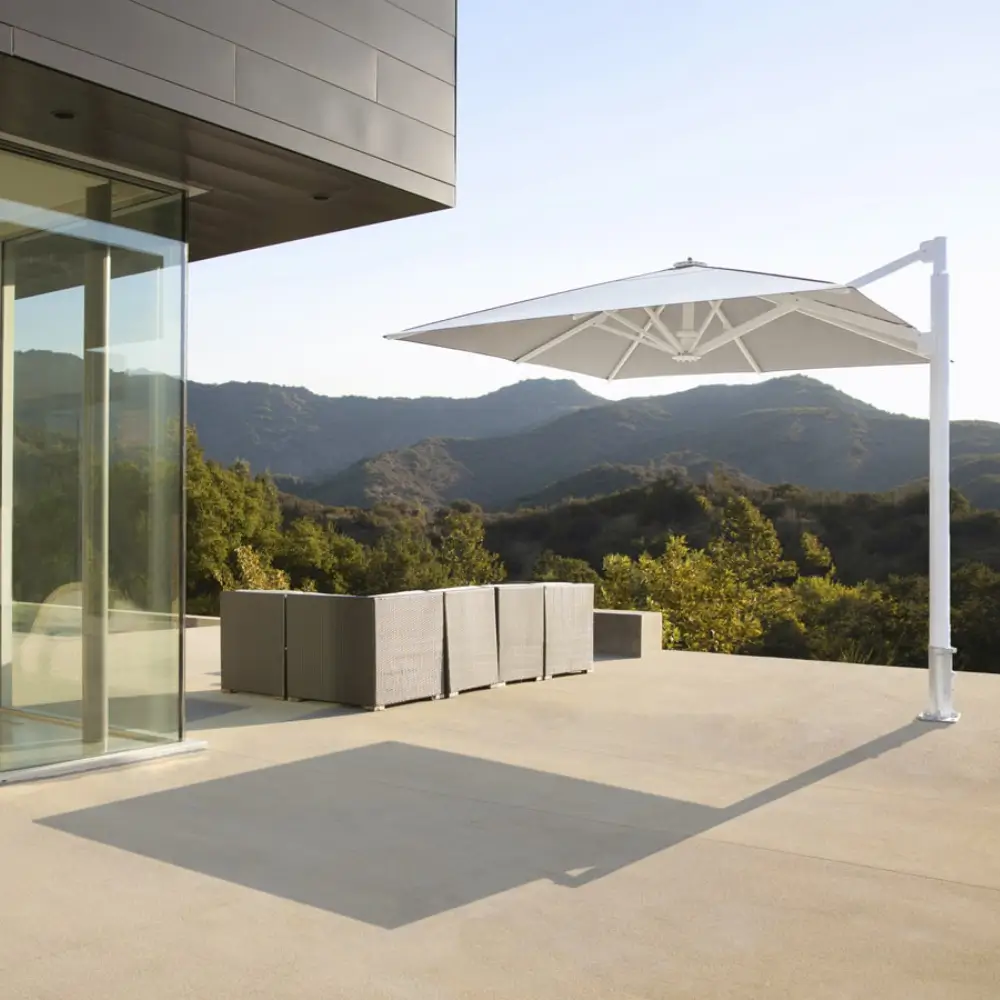


There’s a moment, early in a kitchen installation, when everyone sees it: the raw slab arriving, its veins cascading like a geological pulse, colors deep and unexpected. Up until recently, quartz ruled because it was reliable, predictable, quiet. But quiet has lost its allure. The new talk in design circles — whispered with real excitement — is dramatic natural stone. Viola marbles with smoky striations, emerald quartzite shimmering with depth, burgundy veined slabs that look more like art than material. We aren’t downgrading simplicity; we’re redefining expression.
Laura Williams of Living Oak Interior Design put it bluntly: dramatic natural stones aren’t a niche anymore — they’re the countertop trend moving into 2026. “We are no longer seeing simple quartz stones on countertops or in other applications; installing beautiful viola marbles or emerald quartzite is the future. Bring on the colorful drama.” And when someone says “bring it on,” designers listen.
This isn’t trend chasing by committee. It’s a reaction to spaces that started to feel too safe, too neutral, too homogeneous. Kitchens used to be about functionality cloaked in neutral quartz. Now they are theaters for color, narrative, and material presence. It’s worth noticing how stones with personality — stones that demand attention — change not just the countertop, but the perception of the entire home.
A Counterpoint to Minimalism
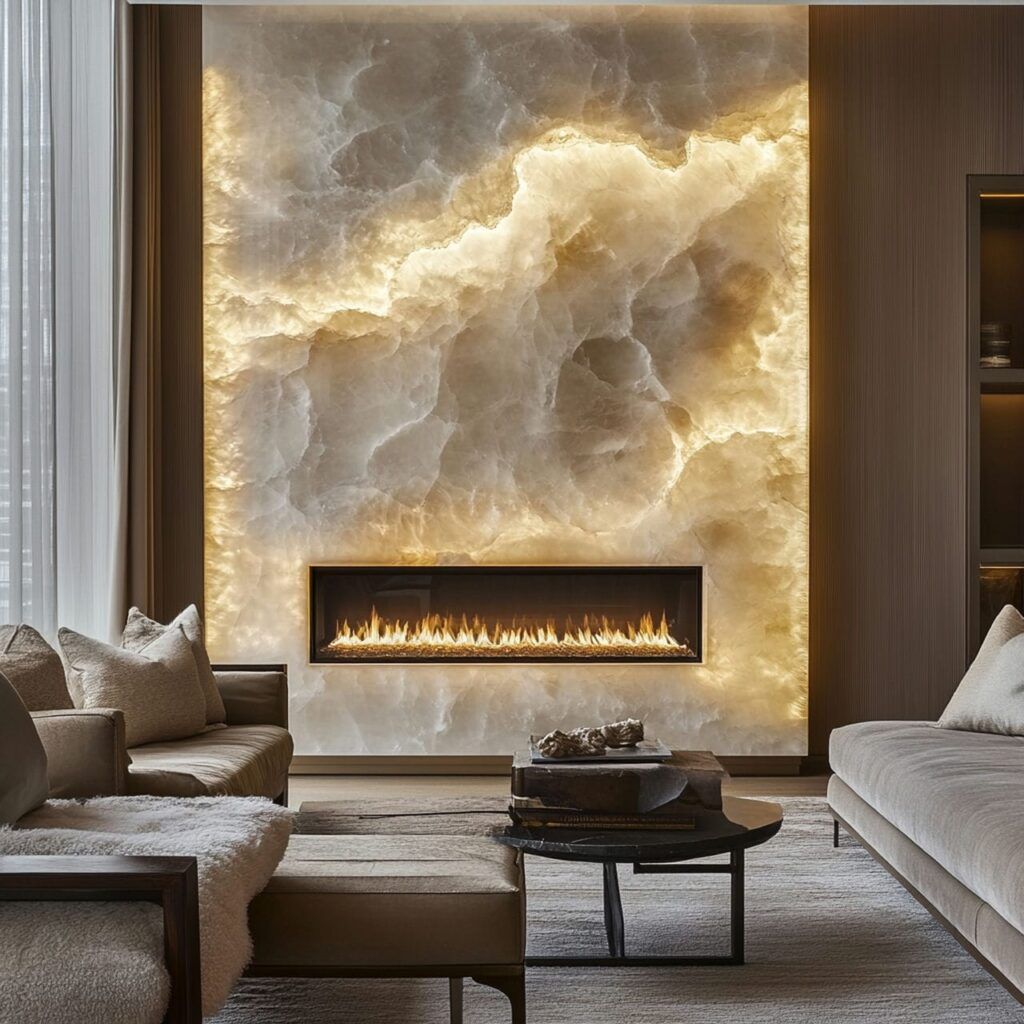
Minimalism, at its height, prized restraint: quiet materials, invisible joins, barely-there palettes. That was the language of modernism translated for mass consumption. But a room pared down to essentials can easily lose its sense of soul. A slab of dramatic natural stone, imagine emerald quartzite or burgundy marble, with veins like fingers reaching out across the surface, forces that soul back into the space. It doesn’t shout. It speaks.
It speaks about place — geology, color, depth — in a way that engineered materials rarely do. A stone’s pattern is a record of time and pressure and temperature, narrative layers you can almost trace with a finger. That’s something people are craving. Not shock value, but presence. Kitchens are where life happens — morning coffee, late-night conversations, cutting boards and wine glasses — and these stones hold up to that life without abandoning design ambition.
Color That Doesn’t Compete
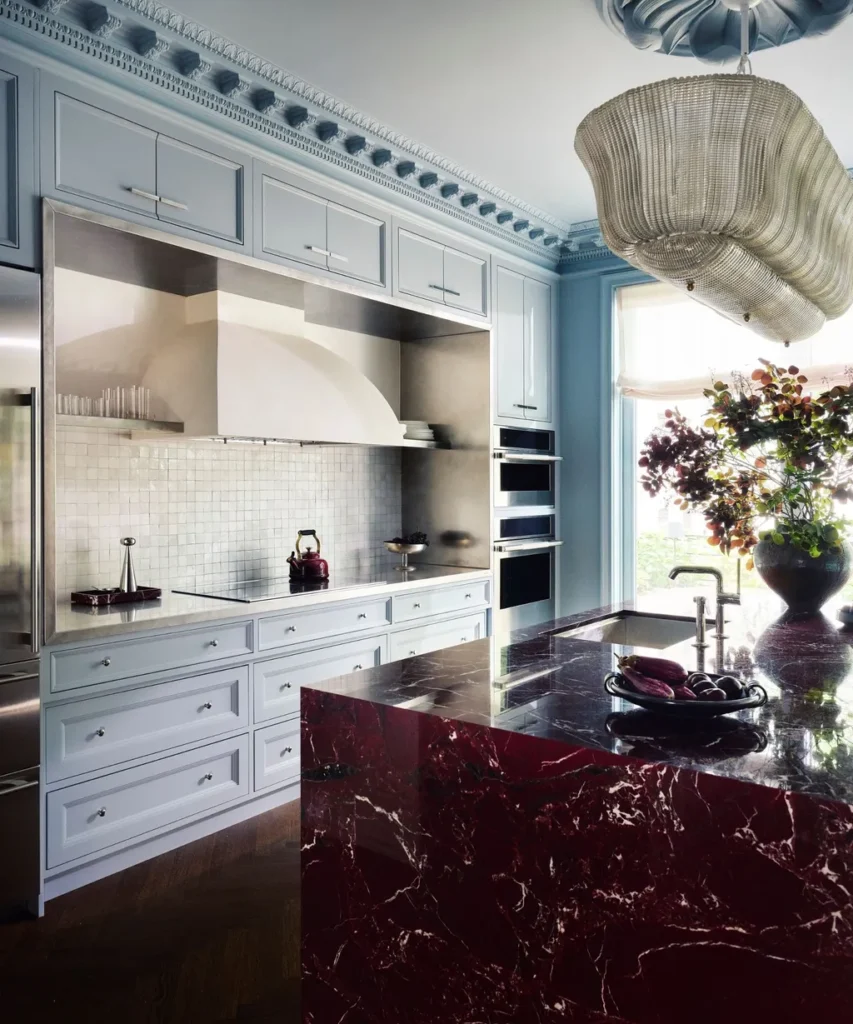
Let’s be clear: neutrals aren’t dead. Far from it. A well-picked beige or soft grey continues to give spaces a timeless, restorative feel. But neutrals have been so dominant for so long that they started to feel invisible. Dramatic stones don’t compete with neutrality — they support it. A burgundy slab beside soft oak cabinetry doesn’t disrupt; it punctuates. A deep green quartzite under warm brass hardware creates a coherence that feels intentional, not chaotic.
Designers talk endlessly about contrast and balance, but rarely do materials embody both so elegantly. The colors found in viola marbles and emerald quartzites are deep without being loud. They have saturation, but they aren’t fluorescent. They feel grounded — rich, earthy, centuries-old — even when they’re making a bold design statement.
Beyond Countertops
What’s most interesting about this movement is that stone is no longer confined to countertops. If you’re courageous, you run it up onto walls. Backslashes aren’t just functional patches of splash resistance; they become sculptures. A slab that climbs from counter to ceiling can make a kitchen feel like a sanctuary instead of a workspace. It shifts the mood from everyday utilitarian to something closer to gallery space.
Tables, too: a dining table hewn from a dramatic stone slab has presence that wood can’t replicate. A stone surface can ground a room without heaviness. It introduces temperature and texture in ways that wood, fabric, or metal only approximate.
And then there are accessories: trays, mirror frames, even small panels integrated into cabinetry. Designers are loving these moments because they create cohesion. A hint of emerald quartzite on a tray echoes the cabinetry below. A burgundy marble mirror frame bridges a fireplace with adjacent built-ins. Subtle repetition of material gives a room continuity.
Stones That Work With Light
One of the reasons dramatic stones resonate so well is how they interact with light. Emerald quartzite comes alive in daylight — the surface catches reflections, subtle flashes, variations that only show up when sun or lamp hits at the right angle. Viola marble’s smoky striations deepen in the evening and soften in the morning. Light isn’t just reflecting off the stone; it’s engaging with it, revealing movement across the surface.
Quartz, by comparison, always looks the same. It’s reliable, yes, and that was its appeal: predictability. Natural stones, on the other hand, are dynamic. They have mood. They change. They respond. Most design lovers sense this immediately, even if they can’t articulate why.
Making the Bold Choice Work
Bold is a loaded word in interiors, because it often feels like a risk. But dramatic stones aren’t reckless. They work best when thoughtfully paired with complementary materials. A stone slab with deep green veins needs a backdrop that respects it. Soft neutrals, warm woods, matte metals — these are the supporting cast that allows the stone to shine without overwhelming.
In kitchens, that might mean oak or walnut cabinetry with minimal hardware so the stone can stay the star. In bathrooms, a dramatic stone wall might sit opposite matte plaster walls, giving texture without visual conflict. It’s not just about slapping a vibrant stone somewhere — it’s about orchestrating a dialogue between surfaces. That’s what keeps a space coherent rather than hectic.
Richness Without Overkill
There’s a temptation to think that bold colors or strong materials equate to “loud.” But richness should not be confused with excess. Dramatic stones bring complexity and warmth without chaos. They change the mood of a room without making it feel smaller or overly busy. A burgundy slab doesn’t shrink a space — it expands it by giving the eye something substantial to rest on.
In larger spaces, multiple stones can coexist. A deep teal quartzite might define a bar area while a warmer terracotta marble grounds the kitchen island. These are choices that make sense only when someone understands the room’s architecture, light patterns, and lifestyle. It’s an evolved kind of design intelligence.
Stories in Stone
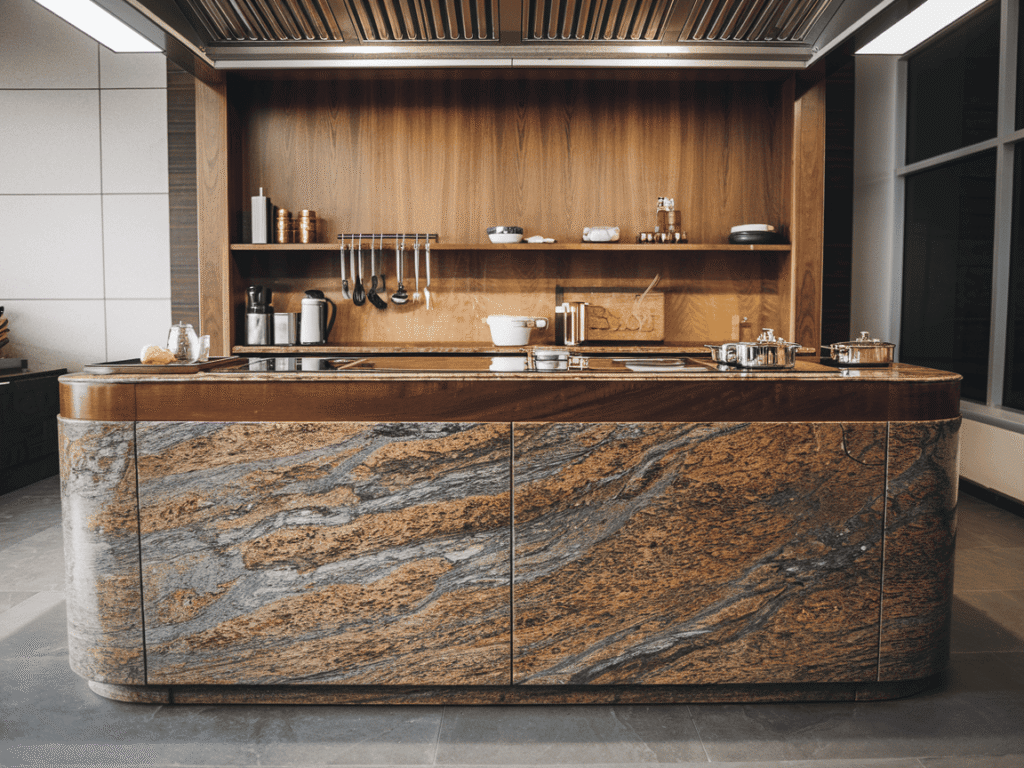
There’s something narrative about dramatic stones. They carry geography and geology with them. An emerald quartzite slab reads like a place — mountain formations, mineral deposits, the slow, deliberate processes that birthed it. Viola marbles look like landscapes caught in time, all smoky swirls and hidden depths. They invite you to slow down, look closer, touch, sit, reflect.
This storytelling quality is part of why designers are excited. Interiors now have to feel personal, not sterile. They have to feel lived in, layered, and meaningful. Stones with character help achieve that.
Longevity, Not Fad
Of course, trends come and go, and dramatic stone could be dismissed as “just a moment.” But this feels more sustained than that. Natural stones have always had presence in architecture. What’s happening now is a rediscovery of how color and veining — not just neutral slabs — can be a core part of the design narrative.
Unlike ultra-bright accents or ephemeral color trends, these stones age well. Their character deepens over time. They collect patina. They become part of the home’s history, not just its current mood. In a world where interiors change with frenetic frequency, stone feels like a stabilizing force.
Kitchens, Rooms, and Beyond
Kitchens are the most visible arenas for this shift, but don’t think of it as limited. Powder rooms, bar areas, entry halls — anywhere that benefits from presence and material richness can be transformed by dramatic stone. A burgundy marble vanity wall doesn’t feel out of place. A green quartzite bar top doesn’t need a lot of ornament — it is the ornament.
Feature walls in living rooms, flanking fireplaces, or even in bedrooms behind headboards — these applications feel fresh because they defy expectation without feeling gimmicky. The stone feels intentional, not decorative. It reads as architecture, not ornamentation.
Risk and Reward
There’s risk here, sure. Bold material choices make you commit. But the reward is worth it: spaces that feel intentional, rich, and unmistakably designed. A dramatic natural stone becomes a signature; it gives a room identity in a way that generic quartz rarely does.
That’s what’s compelling about the 2026 shift. It’s less about color for color’s sake, or surface for surface’s sake. It’s about giving rooms a sense of substance. People want interiors that feel real, tactile, layered — not sterile or overly neutral. Dramatic stones help deliver that.
Natural stone has always had a place in interiors. What changes now is the appetite for color, depth, narrative, and presence. Deep teal, dusty emerald, midnight navy, earthy terracotta — these aren’t just shades. They’re moods, memories, geological poems. And in a design world that has spent too long pursuing safety, maybe a little drama is exactly what feels timeless.