For years, visible lighting cords were the enemy of interiors. Tangled, dangling, awkward—they had to be hidden. Now, suddenly, they’re embraced. Designers are treating cords not as a necessary evil, but as a feature. Pendants, wall lights, even floor lamps wear their cables with pride. The cord is no longer just functional; it’s structural, sculptural, expressive.
Sculptural lighting has rewritten the rules. Wire doesn’t disappear into ceilings anymore. Instead, it arcs, twists, sweeps across space, creating lines that extend the design vocabulary of a room. A single cord can define rhythm, draw the eye from ceiling to floor, frame furniture, or introduce unexpected angles. Lighting is no longer just about glow or the fixture itself; the suspension—the tension, the fall, the deliberate loop—plays an equal role.
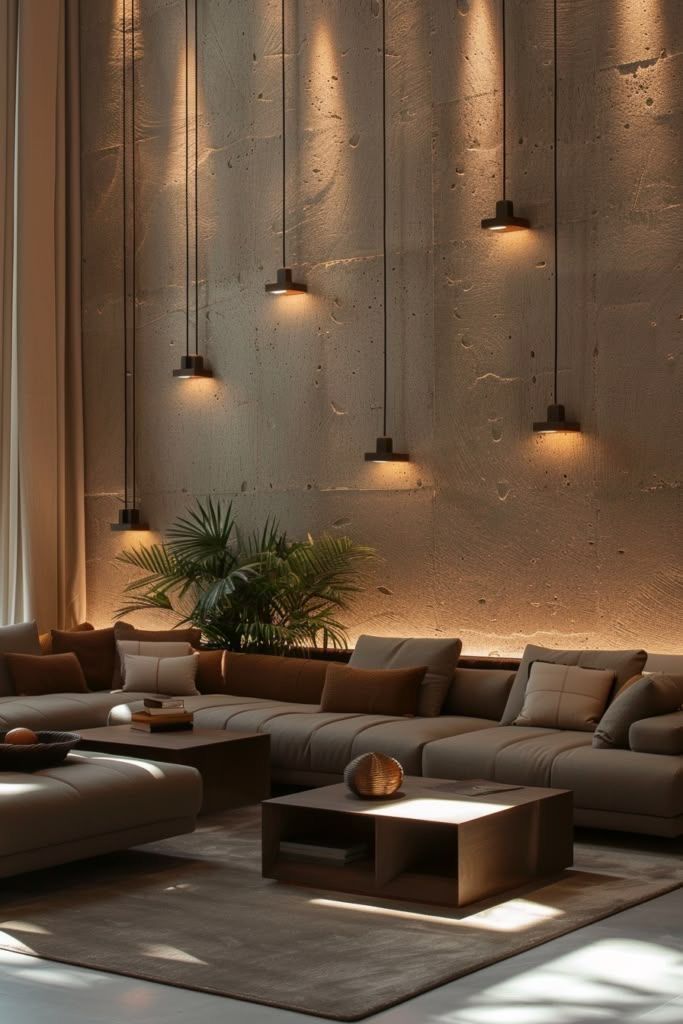
Pendants That Play
Pendants are where this trend really shines. Designers experiment with length, angle, and curves, making cords part of the installation rather than just a conduit. Multiple pendants strung at staggered heights, a single cord arcing across a dining table, or a cluster that seems to float mid-air—suddenly, the cable becomes geometry. Furniture, architecture, and light all respond to it.
Cables also bring drama. A long black cord twisting around a pendant feels kinetic, even if the lamp itself isn’t moving. The cord draws attention, suggests movement, and makes the fixture part of a larger visual composition. Custom furniture positioned beneath or around it interacts with the lines, grounding the energy and echoing the cord’s rhythm. It doesn’t just hold the light; it shapes the space and how the room is inhabited.
Wall Lights That Flex
Wall-mounted lighting has seen a similar evolution. Feature flexes, articulated arms, exposed cabling—they’re intentional now. Designers bend, loop, and drape cords to accent walls, paired with neutral material, follow architectural lines, or create patterns. A wall light isn’t a dot anymore; it’s a line, a stroke of intention. The cord can curve over a shelf, swoop like a ribbon, or loop around a hook—adding a layer of dynamism that flat walls rarely get.
Materials matter. Fabric cords in bold colors become part of the palette. Metallic flexes gleam, echoing fixtures or hardware. Even a simple black or white cable gains weight when treated as design. Texture, color, shadow—they all make the cord feel like an equal partner.
Functional Flexibility
Beyond looks, visible cords signal adaptability. Homes are no longer static; furniture moves, spaces evolve, and lighting needs to follow. Adjustable pendants and wall lights with long cords allow fixtures to respond without rewiring. The cable itself becomes a tool, not just a conduit.
It’s practical too. A long drop cord lowers a pendant over a dinner table, then rises when cleared. A wall light can swing across a bed for reading or tuck neatly aside. Movement becomes choreography; the room feels more human, more responsive.
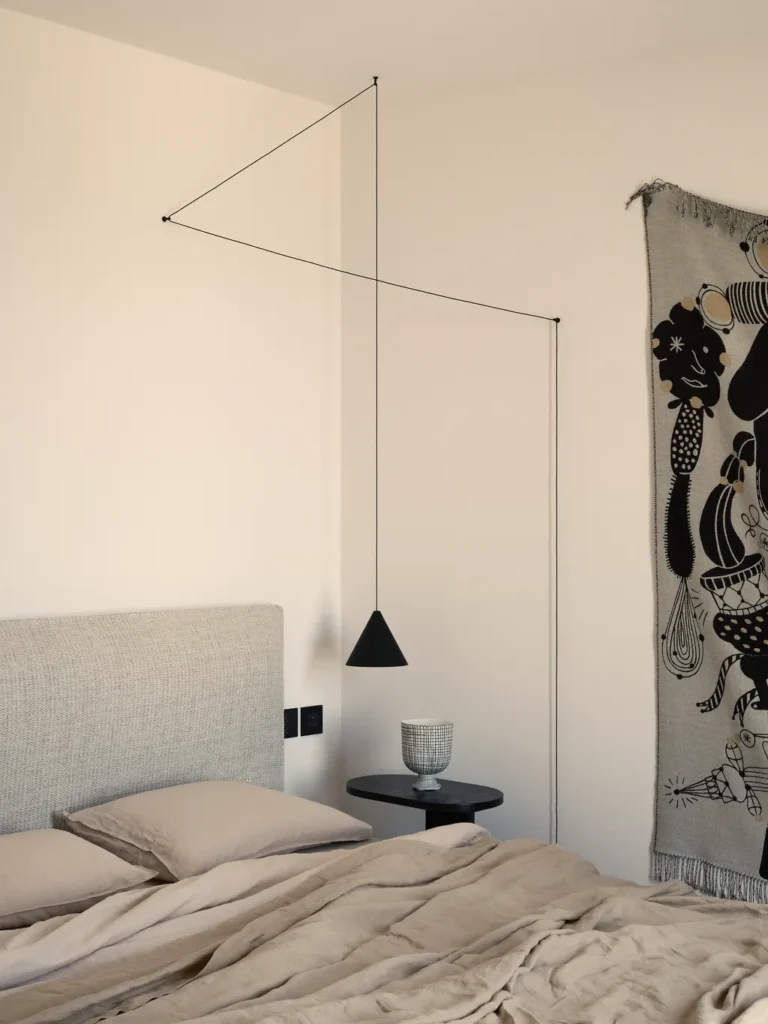
Industrial Roots, Modern Refinement
There’s an industrial lineage here. Exposed wires were once purely functional—lofts, factories, warehouses wore their structure openly. Today, interiors borrow that honesty, but refine it. Cords are measured, materials chosen, suspensions calculated. There’s precision in length, rhythm, and alignment. It’s functional beauty, controlled spontaneity.
Minimalist spaces benefit too. In pared-back rooms, a single cord introduces line, punctuates surfaces, and adds motion. Against neutral walls, a black cable draws geometry. Against timber or plaster, a colored fabric flex adds warmth. The cord is simultaneously structural, decorative, and functional—a rare trifecta.
Playful Geometry
Multi-cord installations feel almost sculptural. Designers create triangles, diagonals, intersecting lines. Asymmetry introduces rhythm without rigidity. A room can feel dynamic even before a bulb is switched on. The cord guides the eye, defines zones, interacts with furniture and architecture.
Even small gestures—a cord looped over a hook, draped deliberately along a wall—add tension, pause, and texture. The cord doesn’t just carry current. It carries presence.
Materials and Color
Not all cords are equal. Fabric flexes introduce softness and color. Metallic sheathing gleams. Rubberized or matte finishes feel industrial. Placement, shadow, and texture make cords three-dimensional. Color is deliberate too. Red, yellow, blue—they’re accents. Black or white can disappear or create contrast depending on context. The cable unites the fixture and space while adding rhythm and play.
Embracing Imperfection
Cords also allow imperfection—or what feels like it. Loops, twists, and bends break symmetry, adding spontaneity. The “perfectly aligned” cord can feel stiff. Slight curves, unexpected arcs, and staggered heights signal thought rather than accident.
It’s part of why the trend resonates. Interiors are moving away from hiding function. Exposed cords show honesty, process, and intention. They introduce personality without clutter.
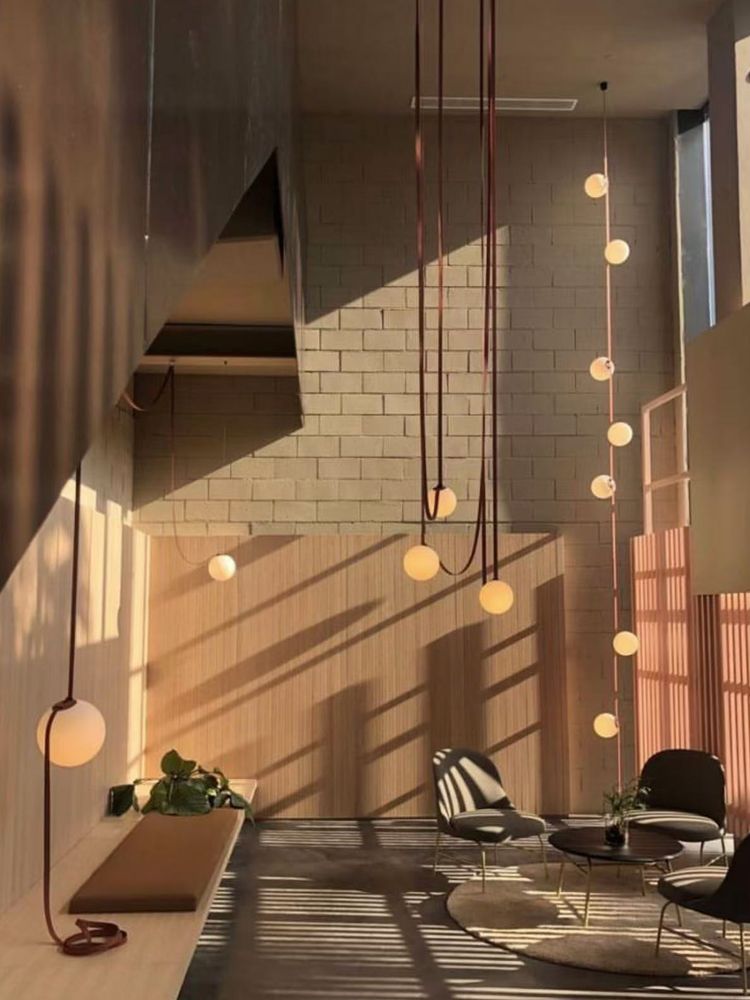
Beyond Lighting
This isn’t limited to lamps. Hanging plants, art installations, audio systems—they all borrow the same language. Flexible cords, loops, and suspensions create drama and function across a room. The trend is about thinking beyond the fixture: movement, connection, and the beauty of what was once hidden.
Not every interior can pull this off. Highly formal rooms or strict minimalism may need restraint. But in layered, sculptural, or contemporary spaces, cords introduce line, texture, and play without feeling cluttered. Small interventions make a room dynamic, responsive, alive.
The Takeaway
Visible cords are a quiet revolution. Function is expressive. Pendants, wall lights, flexes—they twist, arc, and hang deliberately. The cord is no longer background noise—it’s part of the conversation.
Honesty, adaptability, spatial awareness—they’re all part of the appeal. And delight, too—the tiny detail that makes a room feel dynamic, responsive, alive. A cord is more than current; it’s personality, intention, rhythm. Interiors are richer for it.
In the end, it’s just a line hanging in space. And somehow, that line changes everything.