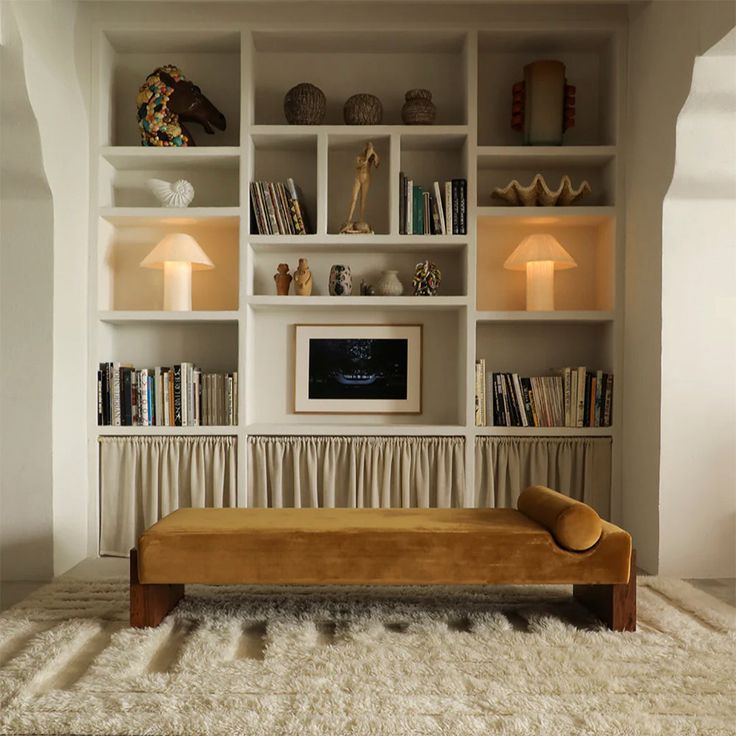
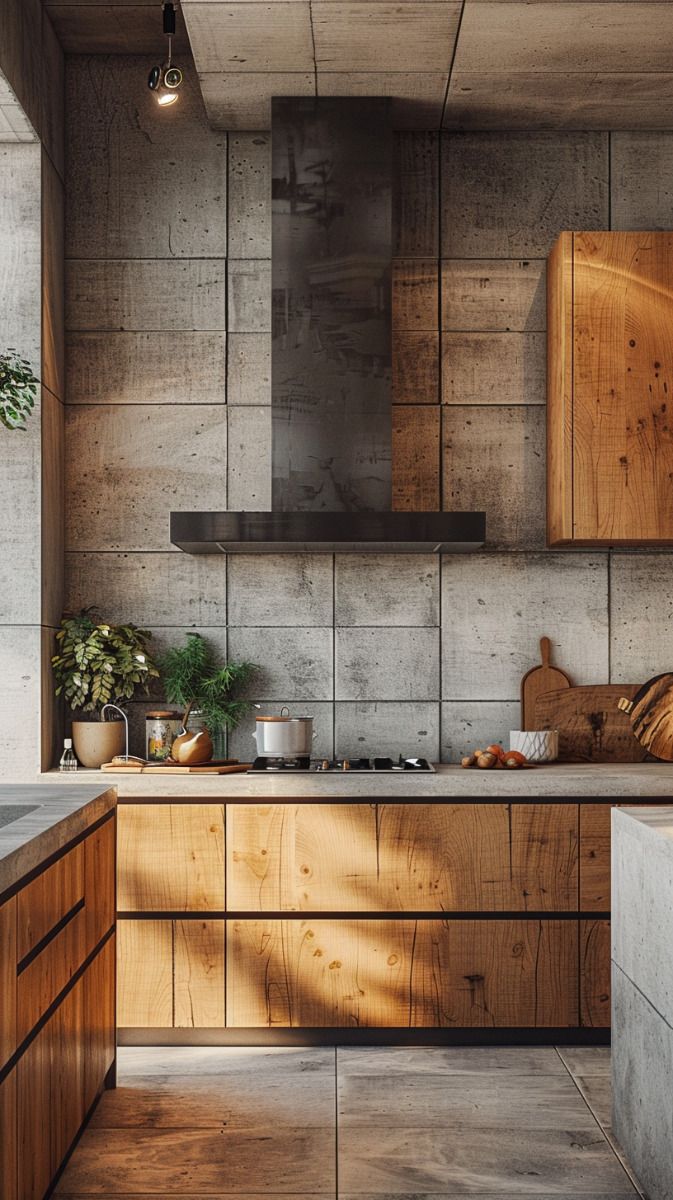
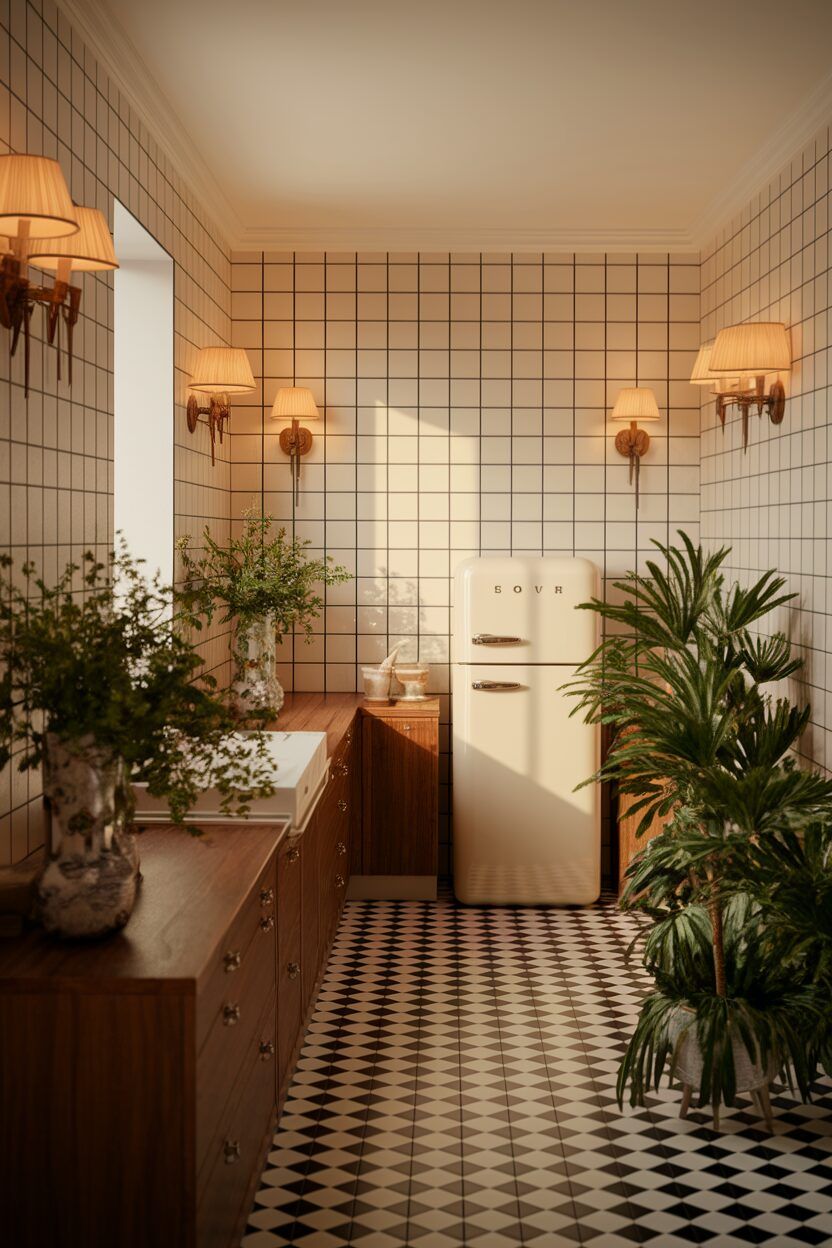
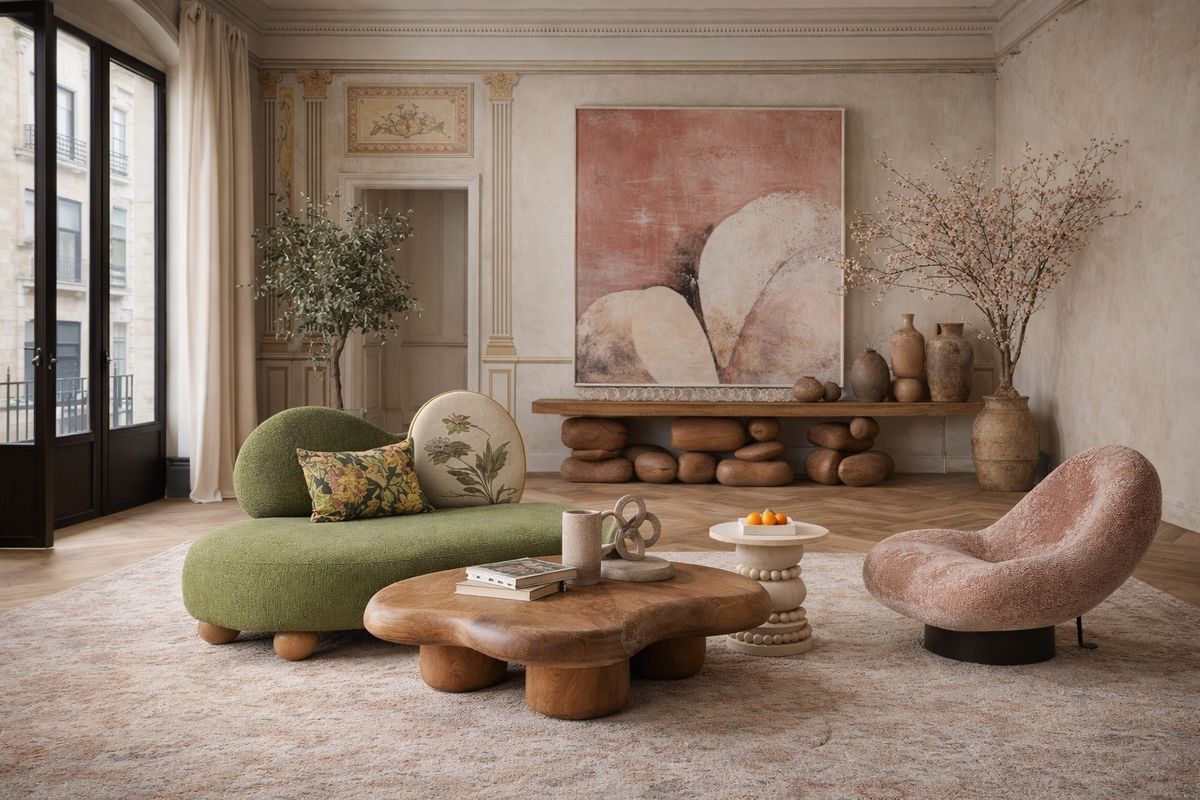
Walking into a home now can feel like stepping onto a set. Not a set in the sense of fake or staged, but one deliberately designed to evoke a mood. Every piece has a reason for being there—not just function but narrative. A velvet sofa isn’t just a seat—it’s a focal point, a character. Lamps don’t just light the room; they punctuate the drama, casting shadows and drawing the eye along unintended paths. The floor, the walls, the ceiling: all curated to choreograph an experience.
Architectural Digest has been noting this trend for years, but it feels more pronounced now. Interiors aren’t quiet backdrops anymore. They’re performances. Theatrical interiors don’t mean fake. It means intentional. Every object has a line of dialogue, every pattern a gesture. The room exists to be inhabited—and witnessed.
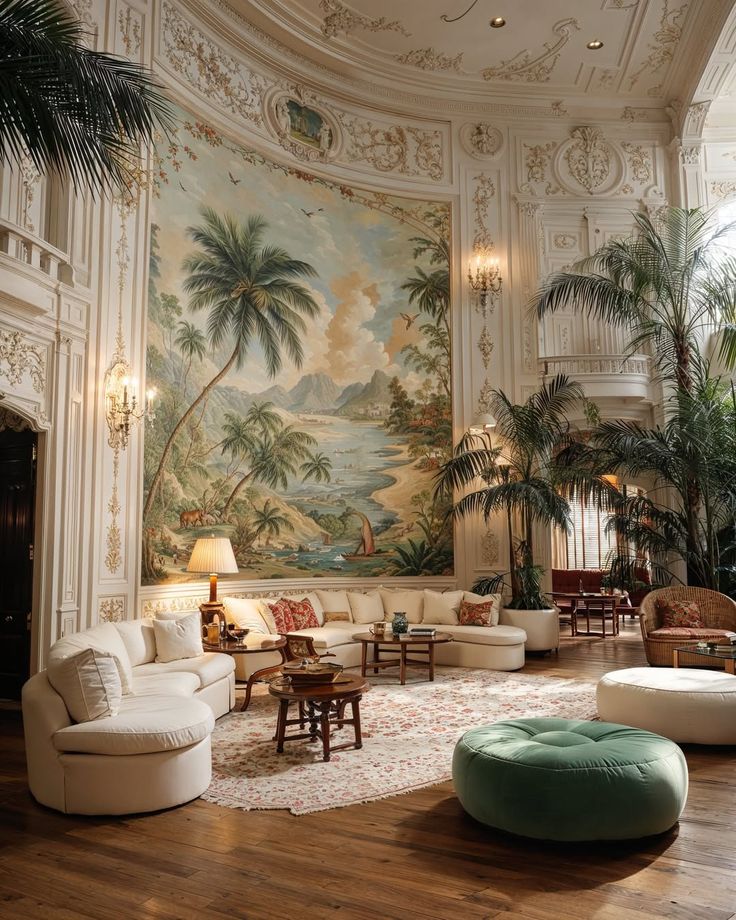
Layered Patterns and Weight
The visual texture of these spaces is dense. Patterns aren’t tucked into one corner or one pillow—they cascade, collide, sometimes clash in ways that feel deliberate, not messy. Stripes meet florals, geometrics meet period textiles. Somehow it works. There’s a mastery in restraint behind the apparent chaos: drapes that frame windows like proscenium arches, rugs anchoring seating clusters as if marking center stage, wallpapers that read more like monologues than backgrounds.
There’s also a physical weight. Drapes are thick, sculptural, sometimes pooling on the floor like they refuse to be constrained. Upholstery invites the body as much as it pleases the eye. Patterns are deliberate, arranged to create rhythm and surprise, moving the observer through space almost without thinking.
Objects as Storytellers
What sets these interiors apart is the use of objects with history. A 19th-century armchair might sit next to a minimalist steel side table, a porcelain vase perched atop it like a relic. These are not “styled for the photo” pieces, though they photograph beautifully—they anchor narrative, items that carry lineage beyond their visual form. Collecting has become about storytelling. Each object signals a chapter: a journey, a memory, a provenance you can feel, if not immediately read.
It’s the opposite of mass-market uniformity. In a theatrical interior, nothing is accidental. A sculpture isn’t there because it matches a color scheme; it’s there because it reacts to the sofa, the drapes, the incoming light. Objects speak to each other, to the observer, and the space becomes a stage for these conversations.
The Drama of Modern Minimalism
Even modernist interiors, which once celebrated emptiness, have joined this trend. Minimalism now tolerates—or encourages—history. A stripped-back room is punctuated by a storied object or a carefully chosen artwork. A single antique console can animate an entire corner, turning a plain wall into a tableau.
Subtle theatricality is at play. The room doesn’t scream its intentions. Drama lives in the pauses, in empty spaces around objects that let them breathe. Light plays across surfaces, shadows become props, angles become staging. In a way, theatrical interiors borrow from cinema: they choreograph attention, invite an emotional response, but never feel forced.
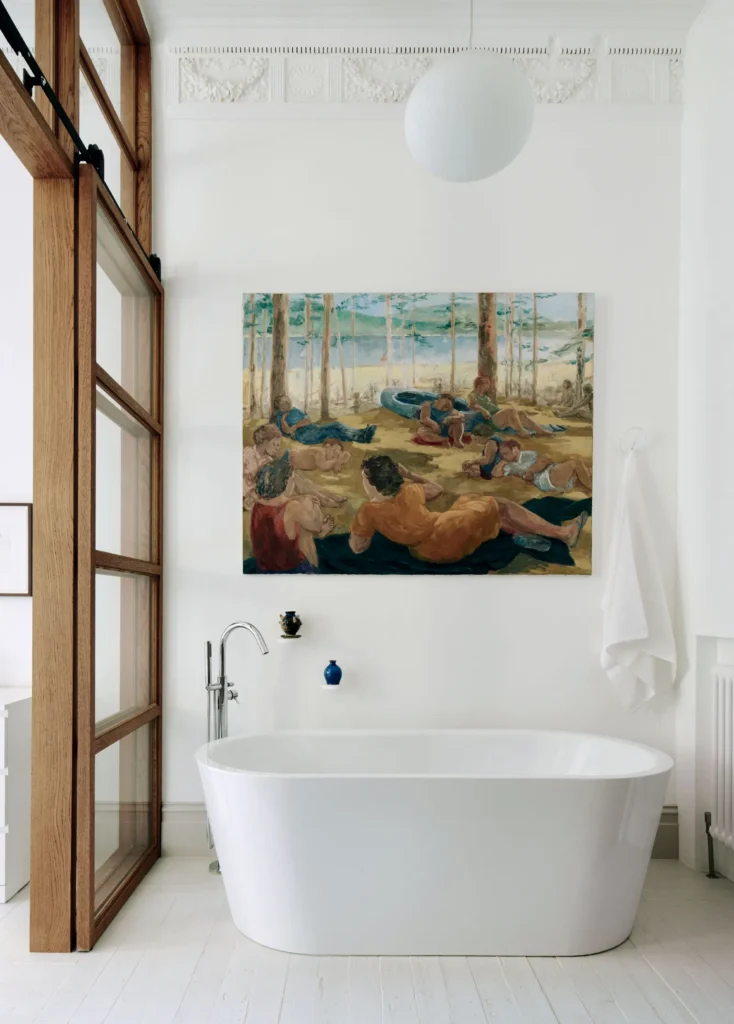
Emotional Choreography
There’s a psychological logic here. Layers, textures, objects with history—all contribute to a feeling, a narrative that unfolds over time. Not just first impressions. Visitors notice one antique, then another, then how they relate. Even daily inhabitants experience shifts as sunlight moves, shadows stretch, or metal accents catch lamplight.
Theatrical interiors understand that people live in motion. They’re staged, but not frozen. Their drama is kinetic: materials, light, and human presence interacting. Sitting becomes a moment in a larger performance, a rehearsal of how living and seeing can coexist intentionally.
The Labor Behind the Illusion
It’s easy to assume these spaces appear intuitive or effortless. They don’t. Every placement is considered. Every fabric, every line of sight measured. Designers work like composers, arranging patterns in rhythms, drapes in weighted gestures, furniture in anticipation of movement.
The trick is invisibility. The room feels lived-in and natural, though logic and labor are exacting. Theatrical interiors thrive on tension between meticulous orchestration and organic experience. The eye senses design; the brain senses story; the body responds instinctively.
Negotiating Between Past and Present
One defining trait is the negotiation between eras. Antiquity doesn’t sit in a museum corner—it inhabits the room. A centuries-old armoire next to a modern coffee table. A patterned carpet echoing motifs in a high-tech lamp. Juxtapositions are deliberate, highlighting temporal dialogue and giving the room depth.
This temporal layering reinforces theatricality. Objects aren’t just functional—they’re actors with history. Their placement tells stories that extend beyond the walls. The room becomes a living archive, a stage where history and contemporary life intersect.
Invitation to Presence
Theatrical interiors demand participation. They’re not passive. Seating invites conversation; surfaces encourage touch. Light encourages noticing—how polished surfaces reflect, how drapes frame a window, how shadow moves across floorboards. Occupants sense staging, yet are free within it.
The tension is subtle. The room suggests mood, atmosphere, and narrative but leaves space for personal interpretation. Theatrical interiors rely on inhabitants to complete the story. Drama exists only when bodies move, glance, inhabit.
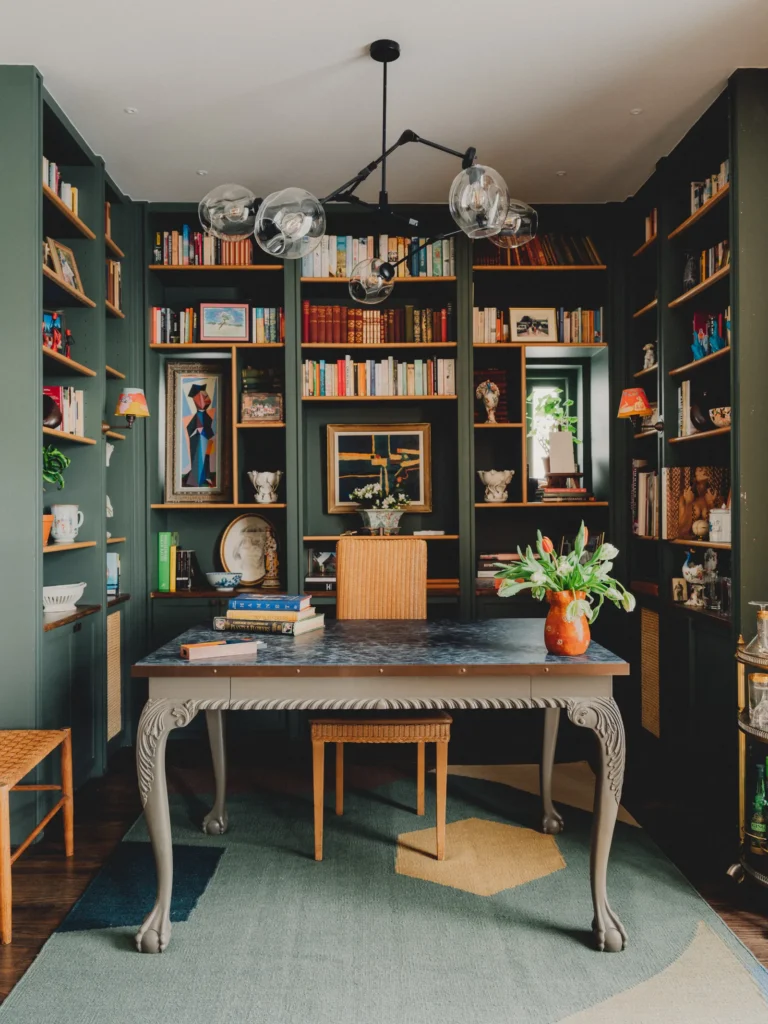
Quiet Spectacle
Despite drama, these spaces rarely feel flamboyant. They avoid clichés of opulence or spectacle. Drama is internal, in interplay of objects, light, texture, and history. Shadowed corners, a velvet sofa, an antique chest—subtle instruments of spectacle. Nothing shouts; everything performs.
The eye moves like following a score, discovering details gradually. The brain reads cues in object placement, layering of fabrics, cadence of patterns. The body responds instinctively. Staging is orchestrated but never prescriptive.
Beyond Photography
It’s tempting to view these interiors primarily through a camera lens. Many photograph beautifully, but their real power is lived experience. Movement, touch, light, and human presence complete the staging. The room is performance space, with observer as both audience and actor.
Designers understand the theatrical interior is a living thing. Furniture and objects are cues. The narrative unfolds only when inhabited. Patterns and layers read differently in morning light than evening. Shadows transform ordinary objects into actors. Photography freezes, but the drama lives in time.
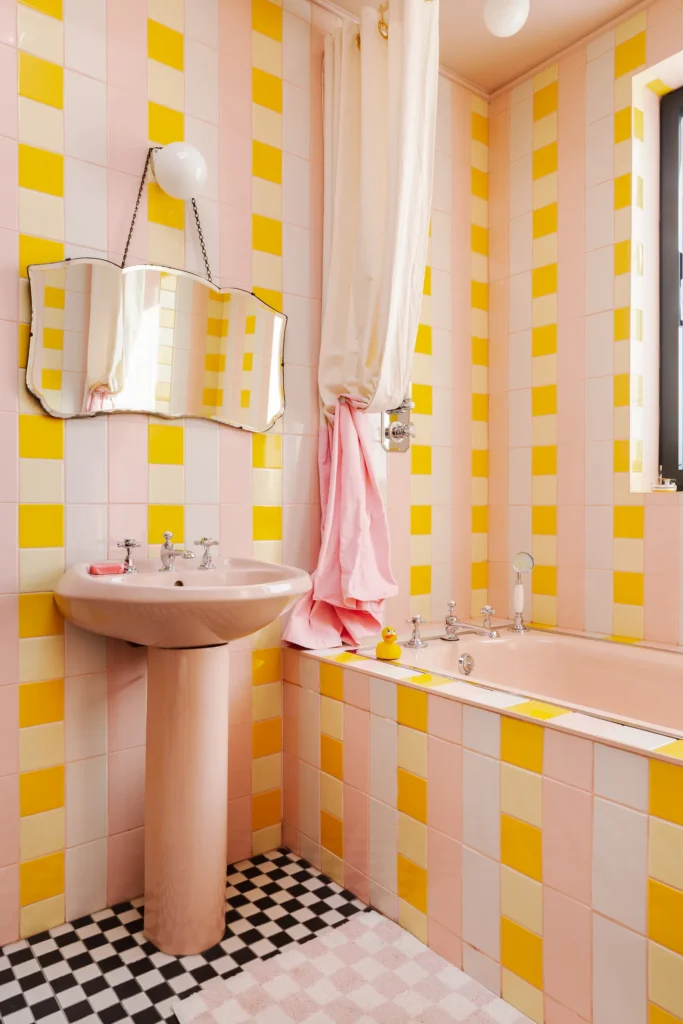
A Living Narrative
Theatrical interiors insist on slow reading. Dense with stories, histories, gestures that reveal themselves over time. They demand attention without forcing it. They balance spectacle and restraint, past and present, stillness and motion. Far from static, they respond to inhabitants.
They remind that interiors can be more than containers. They can be stages, archives, performances, storytellers. Theatricality enriches reality, inviting participation, contemplation, discovery. A room can be mood, story, place of pause and recognition—all in one.
No final act. No scripted ending. The performance continues with every glance, every touch, every movement through shadowed corners and sunlit thresholds. Narrative unfolds endlessly, evolving with history, habitation, and time.