Romance has reentered the room. Not the predictable kind — not candles and florals and overt nostalgia — but the architectural, ornamental, unapologetically expressive romance of Regency and Rococo. After a decade dominated by pale oak, flat planes, and disciplined minimalism, 2026 house decor feels noticeably more decorative. More curved. More willing to indulge.
Scrolls are back. Gilded edges are showing up in rooms that would have rejected them five years ago. Silhouettes feel drawn rather than engineered. And none of it looks accidental.
The Regency period carried a certain structural restraint beneath its ornament. Symmetry mattered. Proportion mattered. Rococo, in contrast, reveled in asymmetry and movement — shell motifs, carved flourishes, frames that seemed to ripple outward. Both styles understood something contemporary interiors briefly forgot: beauty doesn’t always need justification.
In 2026, those references are returning — edited, scaled, reframed for modern living. Not replicas. Not stage sets. References.
A curved bergère chair upholstered in performance velvet. A gilt mirror placed against limewashed plaster rather than silk damask. Decorative wall moulding painted in the same tone as the wall so it reads as shadow, not contrast. The romance is present, but it’s controlled.
Permission seems to be the underlying theme this year. Permission to decorate again.
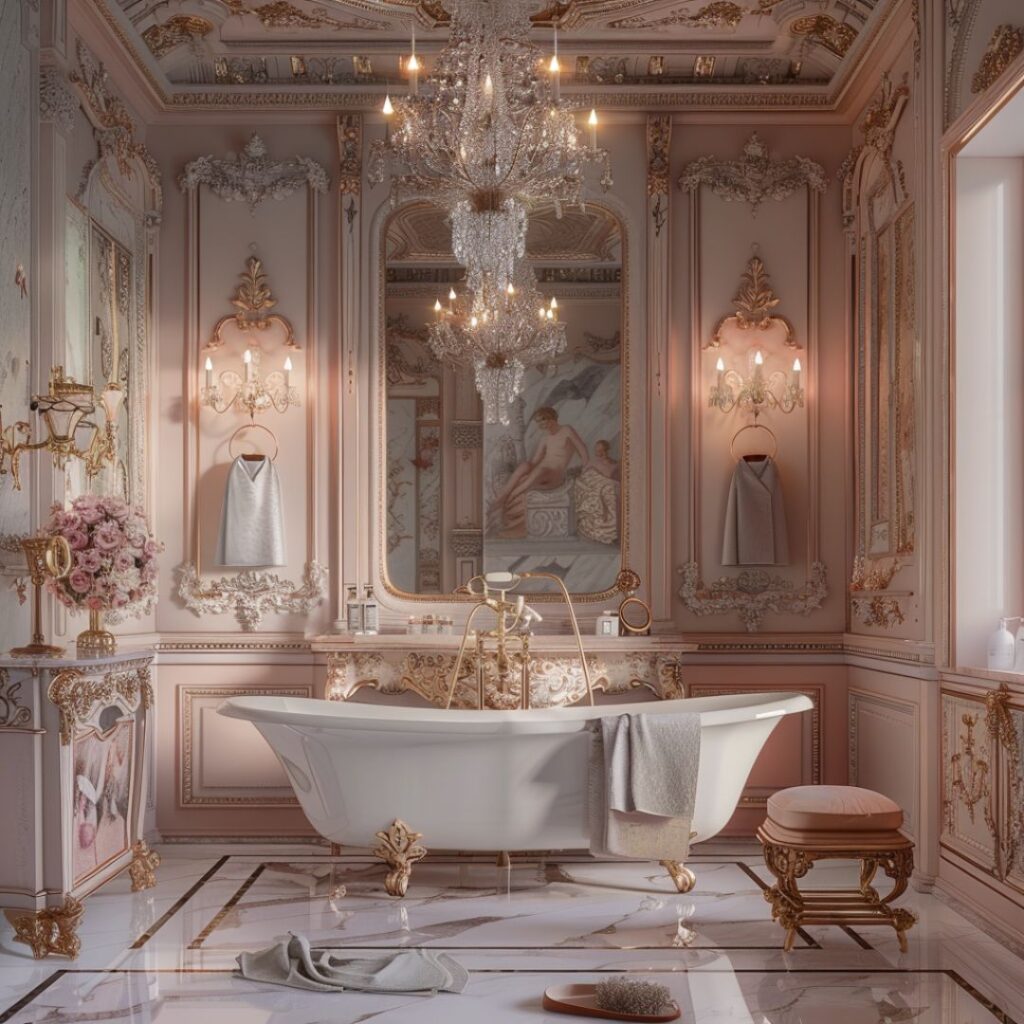
Curves That Do More Than Soften
The curve trend never really left. Arched doorways, rounded sectionals, scalloped edges — they’ve defined recent interiors. But Regency and Rococo curves are different. They are expressive, not merely ergonomic.
A Rococo mirror frame doesn’t simply round at the edges; it undulates. A Regency console doesn’t taper quietly; its legs sweep and exaggerate. These silhouettes create tension against the straight lines of contemporary architecture.
In 2026 romance house decor, these pieces appear strategically. One carved console in a restrained hallway. Six Regency-inspired dining chairs around a clean-lined oak table. A curved chaise placed deliberately off-axis in a neutral living room.
The contrast is what makes it work. Too many ornate pieces and the room collapses into theme. One or two, and the space feels layered.
Minimalism trained homeowners to remove. Regency romance encourages selective addition.
Ornament Without Apology
For years, ornament was treated like a design flaw. Decorative moulding was stripped away in renovations. Ceilings were flattened. Details were simplified under the assumption that restraint equaled sophistication.
2026 feels different.
Ornament is returning, but with discipline. Wall panelling applied in geometric Regency proportions rather than elaborate Victorian excess. Subtle plaster ceiling medallions painted to match the ceiling. Carved wood details that are visible but not loud.
The appeal isn’t clutter. It’s shadow. Moulding creates depth; carved edges catch light. Flat drywall, for all its practicality, lacks dimensionality. And dimensionality is what many interiors now crave.
Rococo craftsmanship, in particular, reminds the eye how to move through a room. There’s rhythm in the detailing. A sense that the surfaces are alive rather than static.
In 2026 house decor, ornament reads less like nostalgia and more like texture.
Color, but Grounded
Regency and Rococo interiors historically embraced color — powder blues, blush pinks, celadon greens, gilded accents. The 2026 interpretation avoids pastiche by grounding those tones.
Dusty rose instead of pastel pink. Moss and sage rather than mint. Creamy plaster paired with brushed gold. Deep teal velvet replacing bright turquoise.
The effect is romantic but not precious.
Marble also plays a central role in this revival. Carved marble mantels, pedestal tables, fluted stone bases. Instead of purely functional stone surfaces, marble is being treated as furniture. As sculpture. A nod to classical architecture layered into modern homes.
These materials temper the softness. They give weight to the curves and gilding, preventing the room from drifting into theatricality.
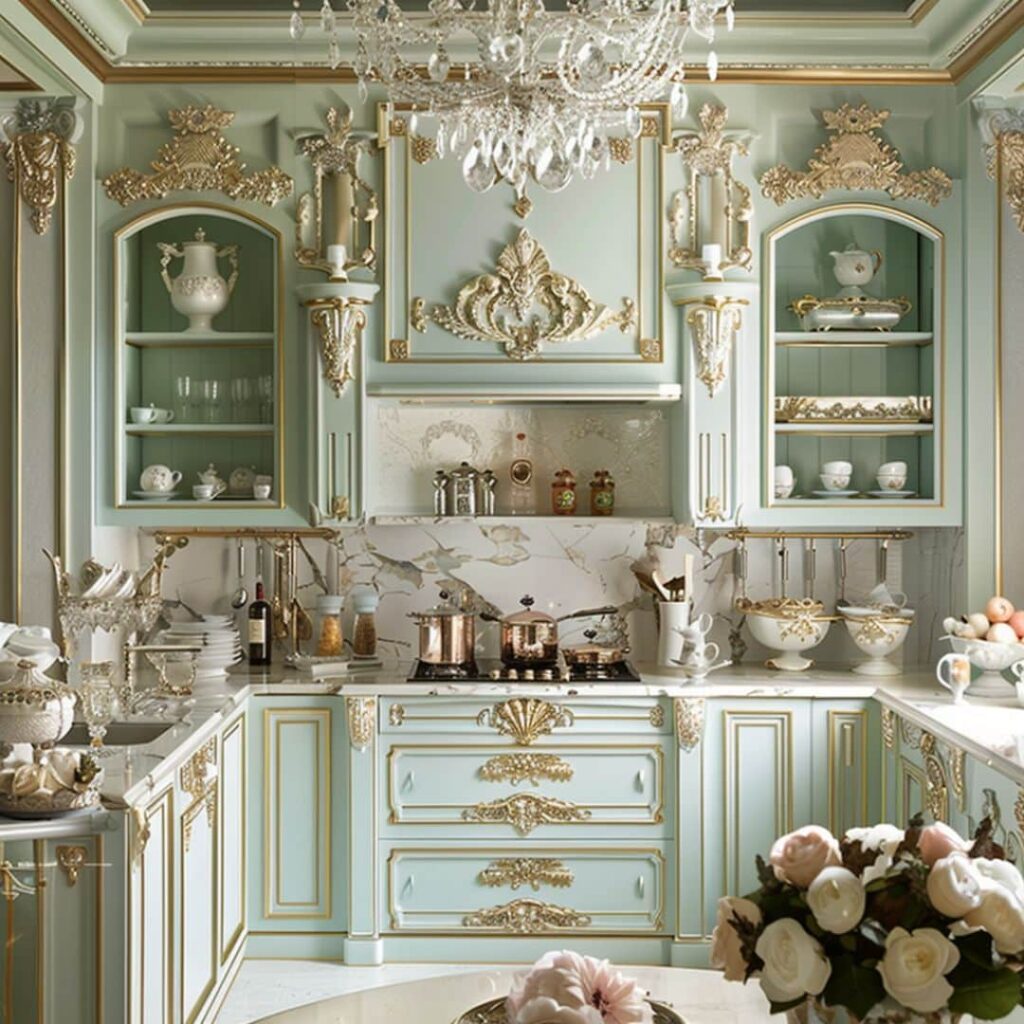
Gilding, Reconsidered
Gold is no longer taboo. What has changed is the finish.
High-polish chrome once defined contemporary luxury. In 2026 house decor, softer metallics dominate — antiqued brass, brushed gold, muted gilt. Finishes that diffuse light instead of reflecting it aggressively.
A thin gold trim on cabinetry. A curved brass sconce flanking a plaster fireplace. A mirror frame with subtle leaf detailing.
Used sparingly, gilding becomes architectural rather than decorative. It frames. It outlines. It highlights proportion.
And against matte plaster or textured paint, the contrast feels deliberate. Shine paired with softness.
There is confidence in that restraint.
Modern Layouts, Historical Soul
Open floor plans remain. Integrated kitchens remain. Performance fabrics, concealed storage, and clean-lined upholstery remain.
What has shifted in 2026 house decor is the layer placed on top.
A Rococo-inspired settee might sit within a loft that still has concrete floors and steel-framed windows. Regency wall panelling may appear in a newly built home with expansive sliding glass doors. A crystal chandelier could hang above a minimalist dining table.
The tension between eras prevents imitation. It feels curated rather than recreated.
This blending aligns with a broader movement toward personalization — interiors that mix historical references with contemporary architecture rather than subscribing to one strict aesthetic. The result feels intentional, not nostalgic.
Rooms Designed for Conversation Again
There is also a social undertone to this revival. Rococo interiors were built around salons — intimate seating clusters designed for dialogue. Furniture was arranged for proximity, not spectacle.
In 2026, that spatial philosophy feels relevant. Curved sofas facing each other. Upholstered stools tucked into corners. Rooms arranged for gathering rather than orienting everything toward a screen.
The return of ornamental furniture coincides with a renewed interest in entertaining at home. Spaces feel less transitional and more inhabitable. Softer edges encourage lingering.
The romance isn’t purely visual. It’s spatial.
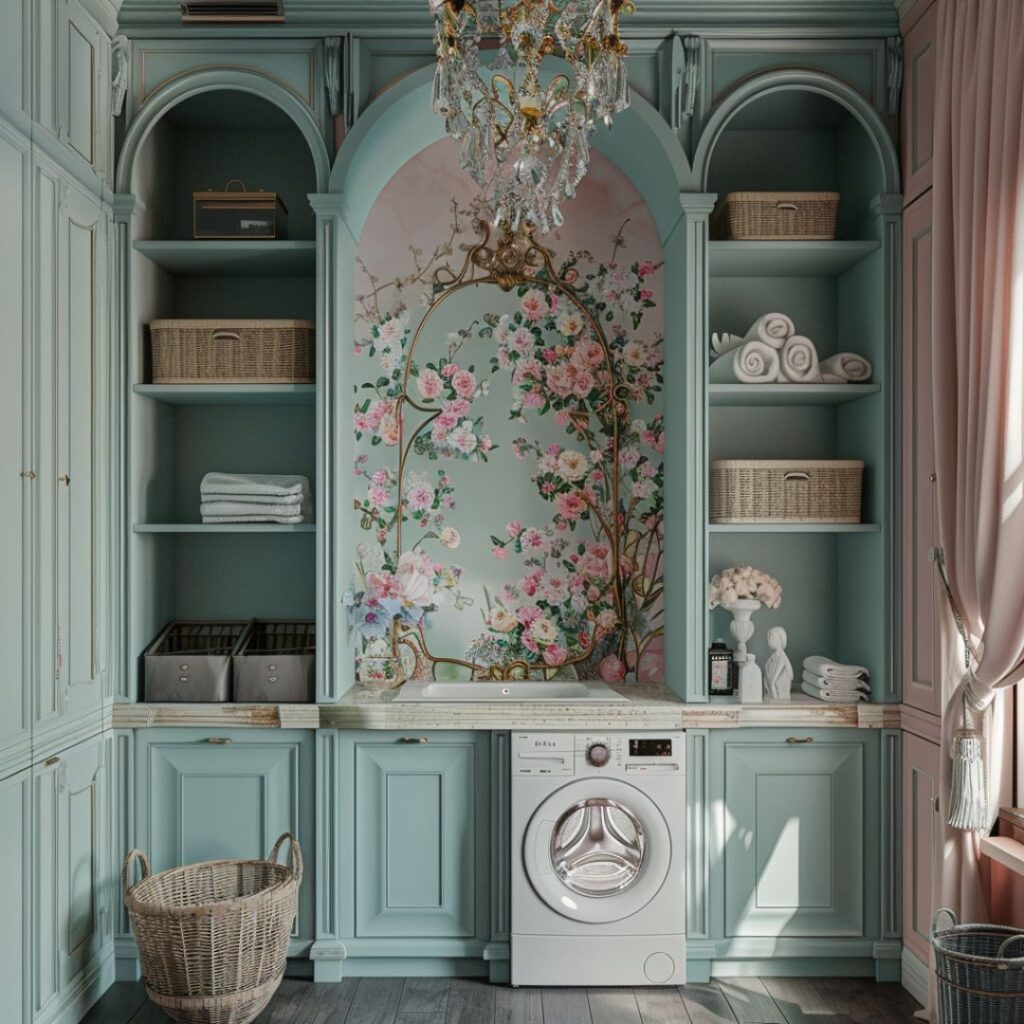
Craft as Status
Perhaps the most significant shift tied to Regency and Rococo references in 2026 house decor is the renewed respect for craftsmanship.
Carved wood legs. Detailed upholstery seams. Hand-applied plaster moulding. These elements signal time and skill in a market saturated with flat-pack convenience.
Mass production has its place, but visibly crafted pieces communicate permanence. A carved chair leg cannot be mistaken for molded plastic. A hand-gilded mirror frame carries variation that machine finishes lack.
There is substance in that variation. Slight irregularities. A softness at the edges. These details create emotional texture.
And in 2026, emotional texture appears to matter more than ever.
Controlled Indulgence
Regency and Rococo romance does not demand excess. It asks for intentionality.
One dramatic headboard instead of an entire ornate bedroom suite. Decorative wall moulding in a single room rather than throughout the house. A sculptural chaise positioned in a quiet corner.
The indulgence is selective.
Perhaps that is why the revival feels relevant instead of regressive. The modern homeowner understands editing. Knows when to stop. Knows that contrast is essential.
The romance functions as punctuation, not a paragraph.
The 2026 house decor landscape suggests that austerity has reached its limit. Clean lines still matter. Simplicity still has power. But the appetite for decoration — for curves, gilding, carved silhouettes — has returned in a measured way.
Not as escapism.
As expression.
Rooms feel warmer. Slightly theatrical. Willing to show personality again. Regency and Rococo references provide the vocabulary — proportion, ornament, flourish — while contemporary architecture keeps the grammar intact.
The result isn’t historical reenactment. It’s something looser. More layered. A house that acknowledges beauty without apologizing for it.