Homes are no longer shy about their references. The hesitation that once surrounded cultural mixing—fear of getting it wrong, of appearing derivative—has given way to something more fluid. The world is porous now. Flights are long but common. Images travel faster than objects. Craft techniques circulate on screens before they arrive in crates. Interiors are absorbing all of it.
Among the more compelling currents shaping decor right now is what many are calling a Moroccan Revival. Not a literal recreation of a riad in Marrakesh. Not a theme. Something looser, more interpretive. A fusion of North African craft, European restraint, and contemporary proportion. It shows up in apartments in Berlin, townhouses in Melbourne, lofts in Brooklyn. The influence is unmistakable, but it’s filtered.
This is not about copying arches and calling it global. It’s about texture, shadow, pattern, and the kind of ornament that feels earned.

The Return of the Arch
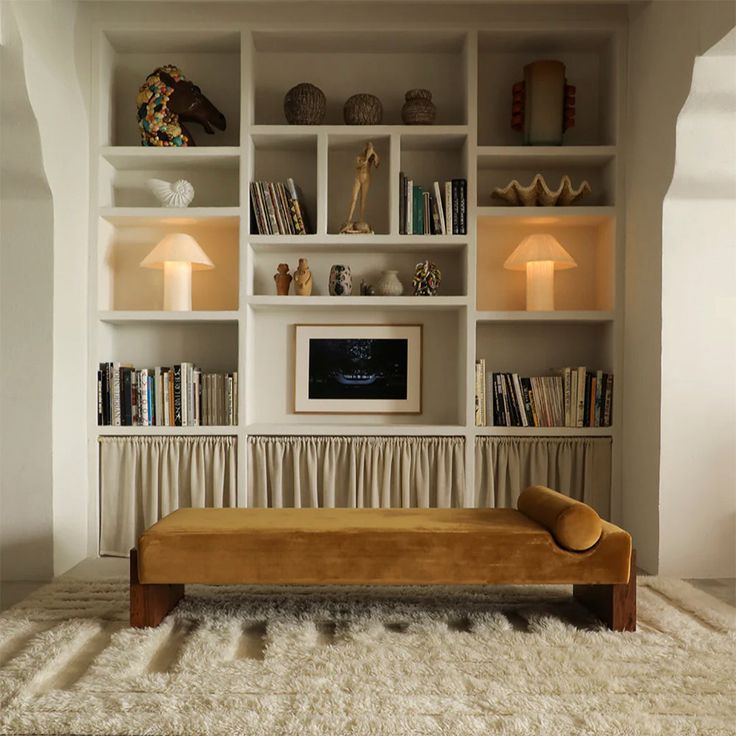
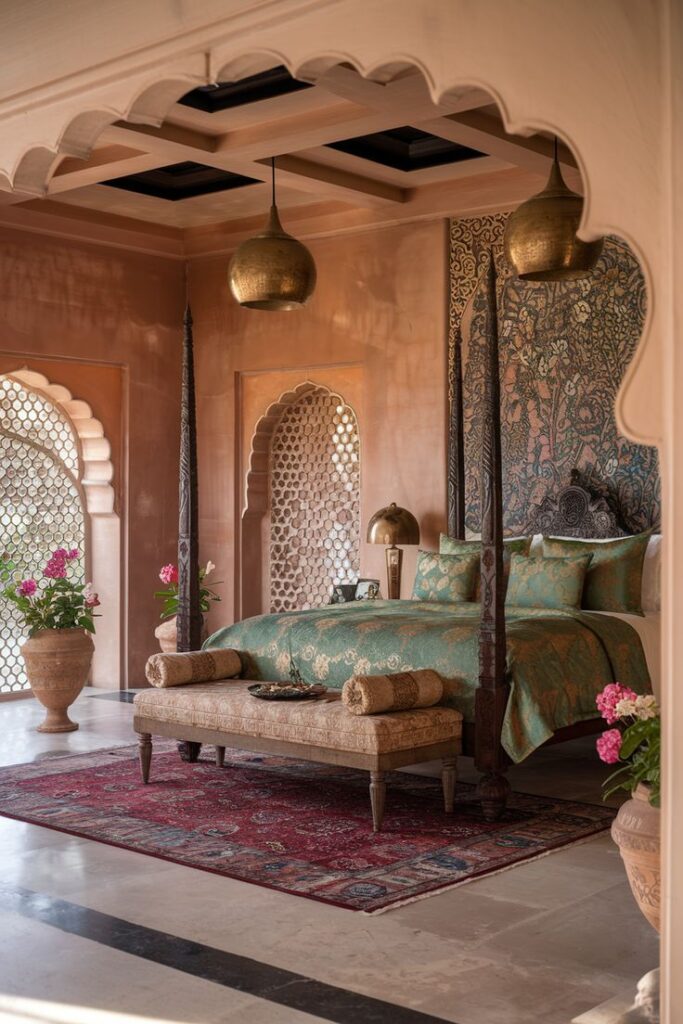
The arch has re-entered the room, quietly but persistently. Doorways soften. Built-in shelving curves at the top. Mirrors echo horseshoe silhouettes without exaggerating them. It’s architectural borrowing, yes, but rarely literal.
There’s a reason the arch resonates now. After a decade of rigid lines and squared edges, curves feel generous. They hold space differently. They frame light instead of cutting it. In Moroccan architecture, arches were never decorative afterthoughts; they were structural poetry. The revival respects that lineage by using the form sparingly, allowing it to guide circulation and sightlines rather than dominate them.
In fusion interiors, an arch might sit within an otherwise minimal plaster wall. No intricate tilework. No carved cedar. Just a curve interrupting a plane. It’s enough.
Plaster, Tadelakt, and the Beauty of Imperfection
Walls are warming up. High-gloss finishes and flat paint are giving way to tactile surfaces. Tadelakt-inspired plaster—smooth but visibly hand-worked—has become a quiet obsession. The finish carries slight undulations, catching light in uneven ways. It feels ancient and modern at the same time.
This is where global fusion is at its most honest. Instead of importing ornate motifs wholesale, designers are borrowing material sensibilities. Lime-based plasters, clay washes, textured renders. Surfaces that breathe. That absorb and release humidity. That patinate gently.
There’s restraint in how they’re used. Entire rooms might be wrapped in warm, sandy plaster tones, but furnishings remain edited. The richness comes from surface, not accumulation.
Imperfection is part of the appeal. A slightly uneven edge reads as human. In a time when digital precision defines so much of life, the hand mark feels grounding.
Pattern, But With Air Around It
In Moroccan revival, the design is often associated with pattern—zellige tiles, intricate geometric motifs, layered textiles. The 2027 interpretation is more selective. Instead of saturating every surface, pattern is isolated and given space.
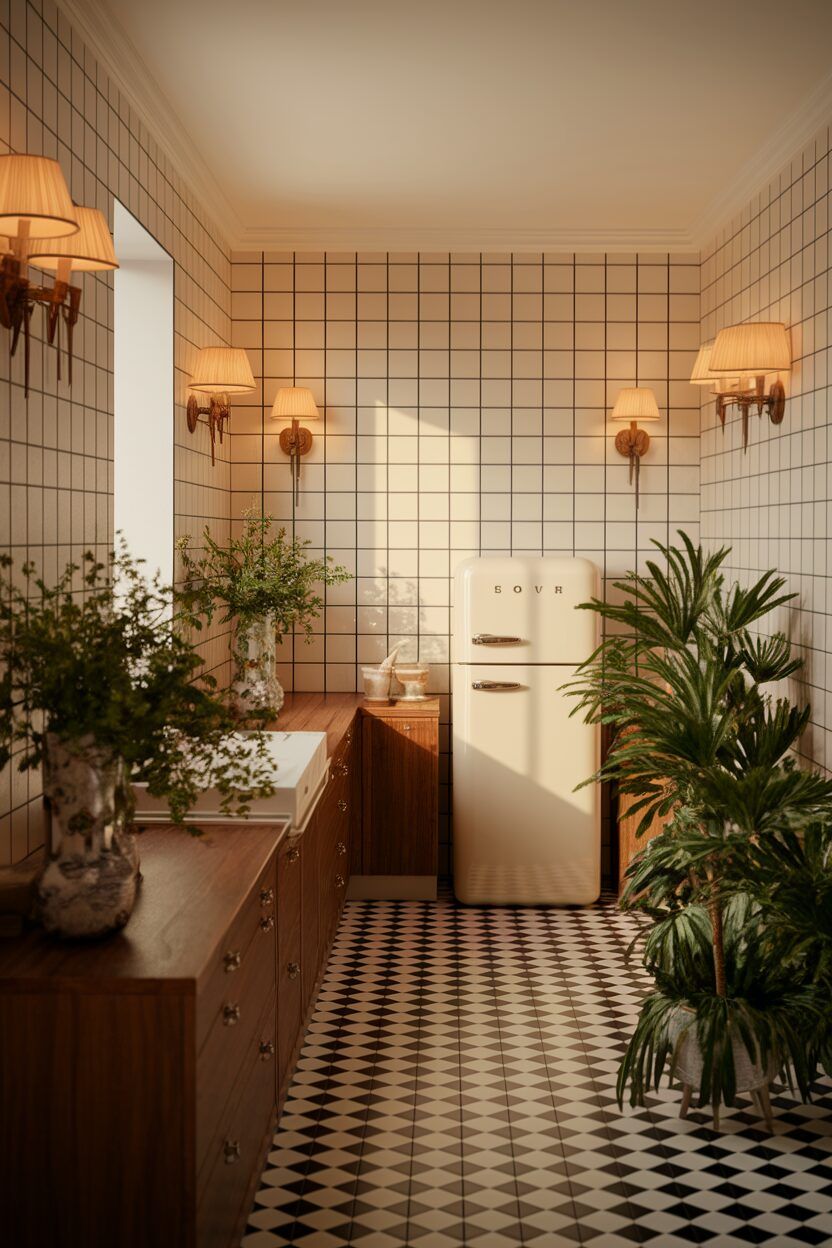
A single tiled backsplash in a kitchen. A patterned runner in an otherwise neutral hallway. Cushions in subtle, faded geometrics against a linen sofa. The motifs are still there, but they breathe.
This editing is what distinguishes revival from pastiche. The eye needs rest. Global fusion interiors understand this. They allow one cultural reference to stand clearly rather than stacking multiple signifiers on top of each other.
It’s not about maximalism. It’s about punctuation.
Low Seating and Grounded Living
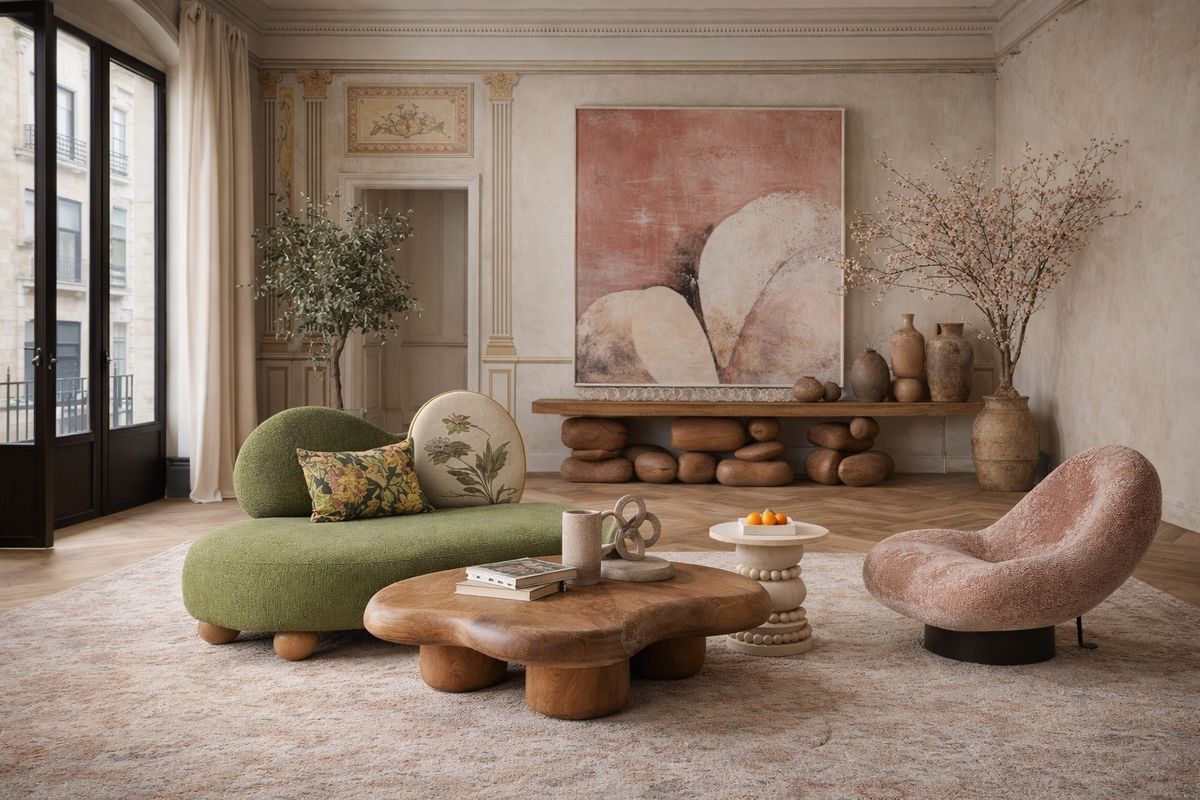
Another thread pulled from Moroccan interiors is the idea of low, grounded seating. Not literal floor cushions scattered indiscriminately, but sofas that sit slightly closer to the ground. Deep, generous proportions. Spaces arranged for conversation rather than television.
There’s something inherently intimate about lowering the visual horizon. The ceiling feels higher. The body feels heavier, in a good way. Anchored. It changes the rhythm of a room.
In fusion spaces, low seating is paired with contemporary silhouettes—clean-lined but plush. Upholstered in textured neutrals: sand, clay, muted olive. The palette nods to desert landscapes without becoming theatrical.
It’s less about replicating a salon and more about shifting posture. Encouraging pause.

Craft as Counterbalance
The Moroccan Revival also intersects with a broader return to craftsmanship. Handwoven rugs. Hammered brass trays. Carved wood stools. Not mass-produced approximations, but pieces sourced carefully or made in collaboration with artisans.
There’s an awareness now about origin. About credit. About economic exchange. Global fusion in 2027 can’t ignore ethics. It’s not enough to borrow an aesthetic; there’s increasing expectation that designers understand and respect the craft traditions they’re referencing.
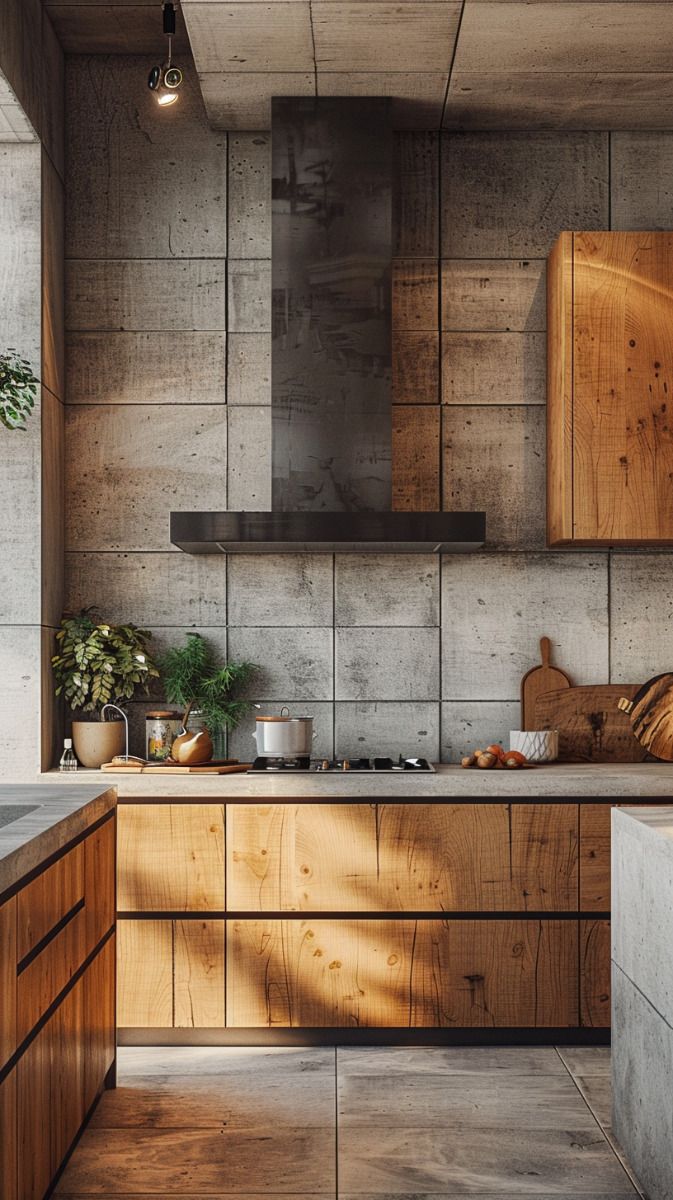
That shows up in material honesty. Brass is allowed to tarnish. Wool rugs shed slightly. Wood shows grain and tool marks. These aren’t flaws to be corrected; they’re reminders of process.
In minimalist Western interiors, craft becomes the emotional counterweight to clean lines. It prevents sterility.
Light as Atmosphere
Moroccan interiors have always understood light. The way it filters through screens. The way it pools in courtyards. The way shadow becomes decorative in its own right.
Fusion spaces borrow this sensitivity. Sheer drapery filters daylight. Perforated pendants cast patterned shadows at night. Lighting is layered—lamps, sconces, concealed strips—rather than centralized overhead glare.
The goal isn’t drama. It’s atmosphere. Soft gradients instead of stark contrasts. The room shifts from morning to evening without abruptness.
There’s a psychological undercurrent here. Soft light reduces tension. It slows the body. Paired with textured plaster and woven textiles, it creates an environment that feels enveloping rather than exposed.
The Risk of Surface-Level Fusion
Of course, cultural fusion can go wrong. It can flatten complex traditions into aesthetic shorthand. A pouf here, a lantern there, and suddenly the room feels like a caricature.
The difference lies in depth. In understanding proportion, context, restraint. In avoiding the temptation to stack references for visual impact alone.
The Moroccan Revival works best when it integrates, not imitates. When a plaster wall meets a contemporary oak table. When a geometric tile floor is balanced by plain linen upholstery. When the space acknowledges influence without surrendering identity.
Fusion should feel layered, not crowded.
A Softer Globalism
What’s interesting about decor trends 2027 is how gentle this globalism feels. There was a time when international influence meant bold eclecticism—rooms stuffed with souvenirs and statements. Now the blending is subtler.
A curved arch in a Scandinavian apartment. A clay-toned wall in a Melbourne townhouse. A single Moroccan rug anchoring an otherwise restrained living room. The references are clear but not loud.
Travel-inspired aesthetics have matured. They’re less about display and more about absorption. Instead of asking, “Where is this from?” the better question is, “How does this make the space feel?”
And often, it feels warmer.
Why It Resonates Now
The appeal of Moroccan Revival within global fusion speaks to a desire for tactility and grounding. Screens dominate work and social life. Information moves at speed. Interiors are compensating by slowing things down.
Textured plaster resists glare. Low seating encourages conversation. Handwoven rugs soften acoustics. Pattern, used sparingly, gives the eye something to explore without overwhelming it.
There’s also comfort in historical continuity. Moroccan design traditions stretch back centuries. Integrating elements of that lineage into contemporary homes creates a subtle sense of stability. A reminder that not everything is transient.
Luxury, in this context, isn’t about excess. It’s about depth. About surfaces that reward touch. About materials that age.
Beyond Trend
Calling it a “trend” feels slightly reductive. Moroccan Revival may crest and dip in popularity, but the larger movement—toward cultural fusion grounded in respect and restraint—seems less temporary.
The most compelling spaces don’t look like catalog spreads. They look lived in. Layered over time. Influenced by travel, yes, but also by research, collaboration, and curiosity.
Global influence isn’t new. What’s changed is the tone. Less appropriation, more conversation. Less spectacle, more atmosphere.
An arch cut into a plaster wall. A handwoven rug under a contemporary sofa. A clay vase catching filtered light. None of it shouts.
It doesn’t need to.