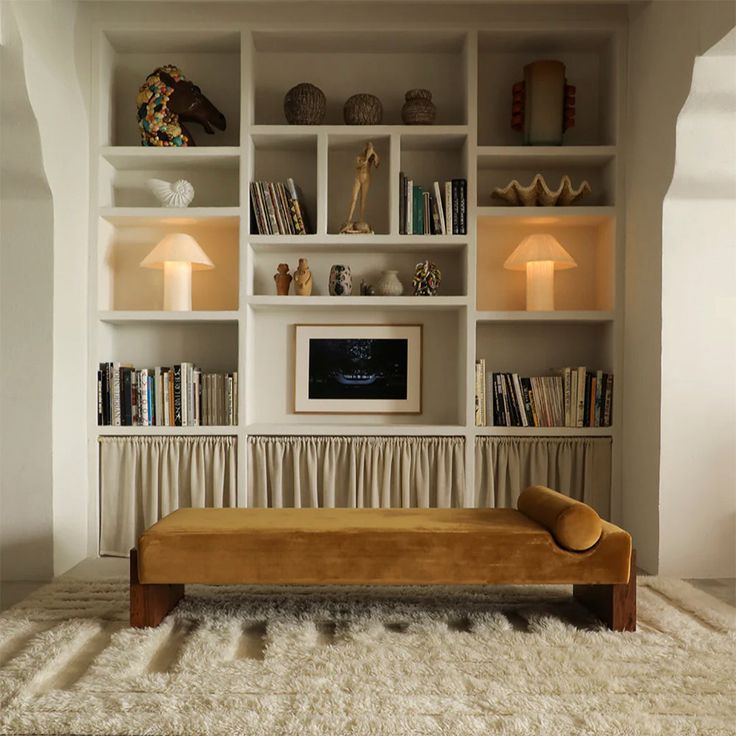
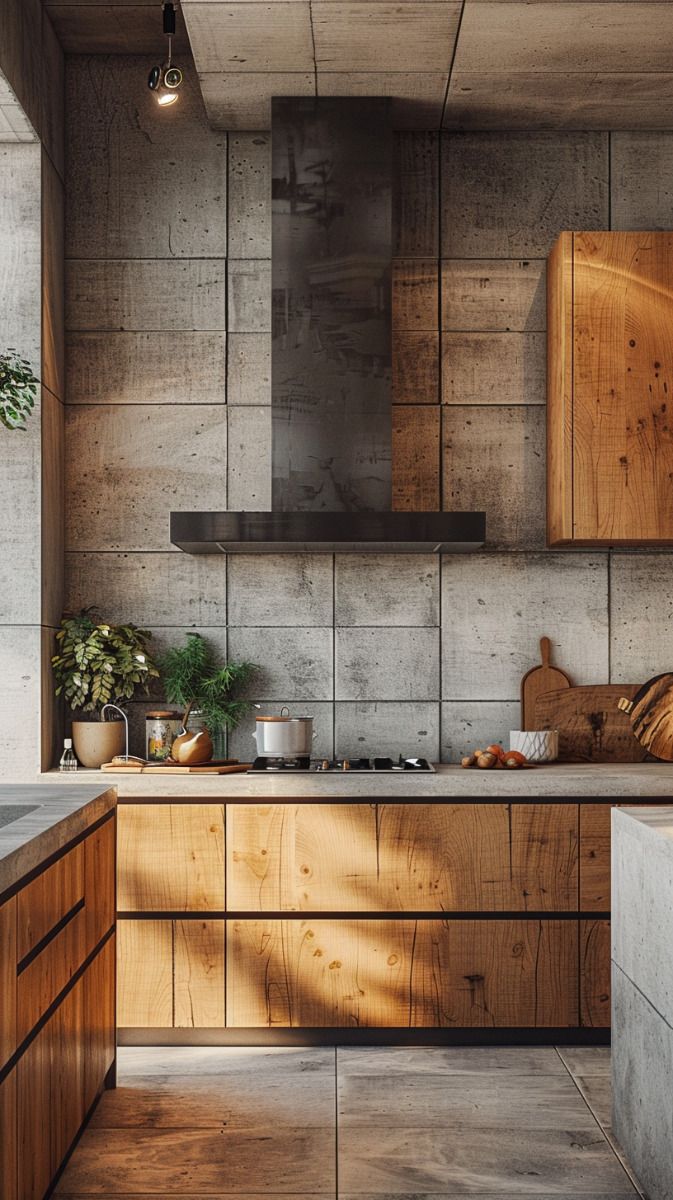
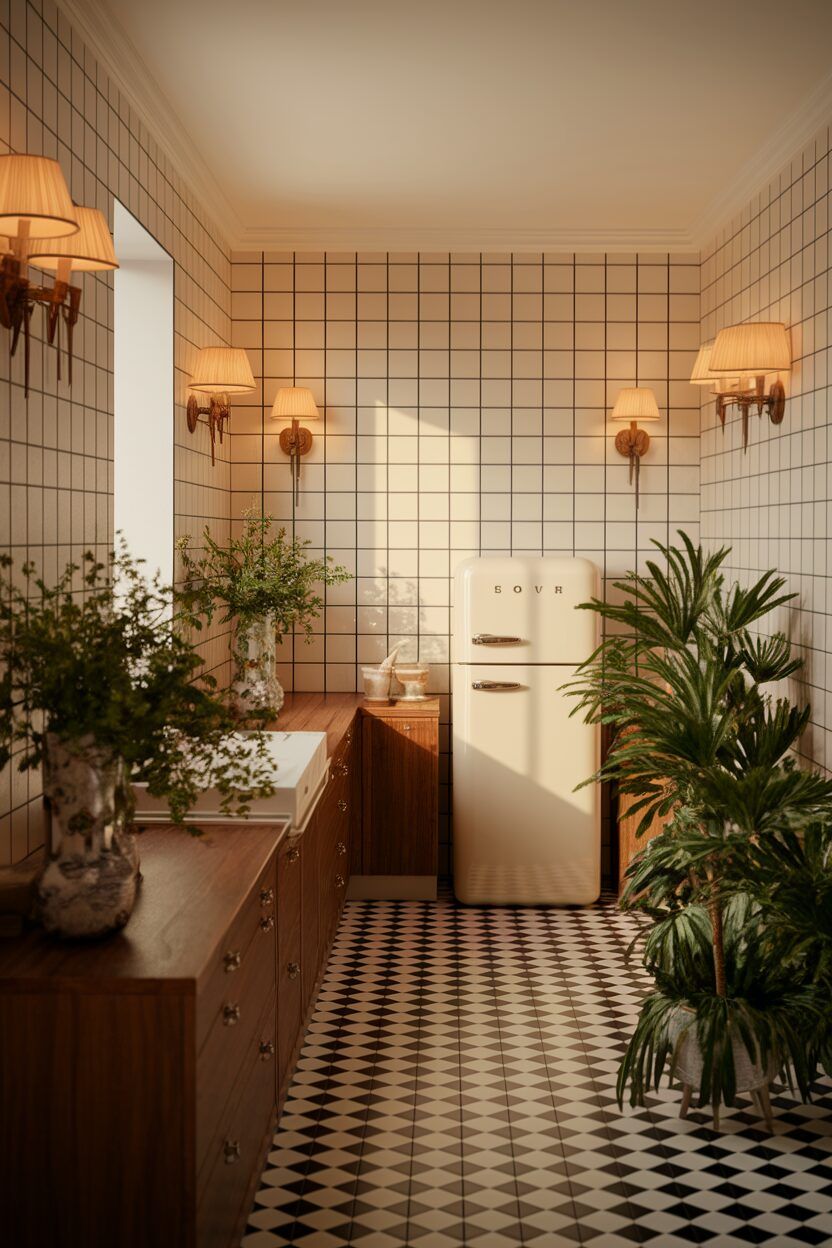
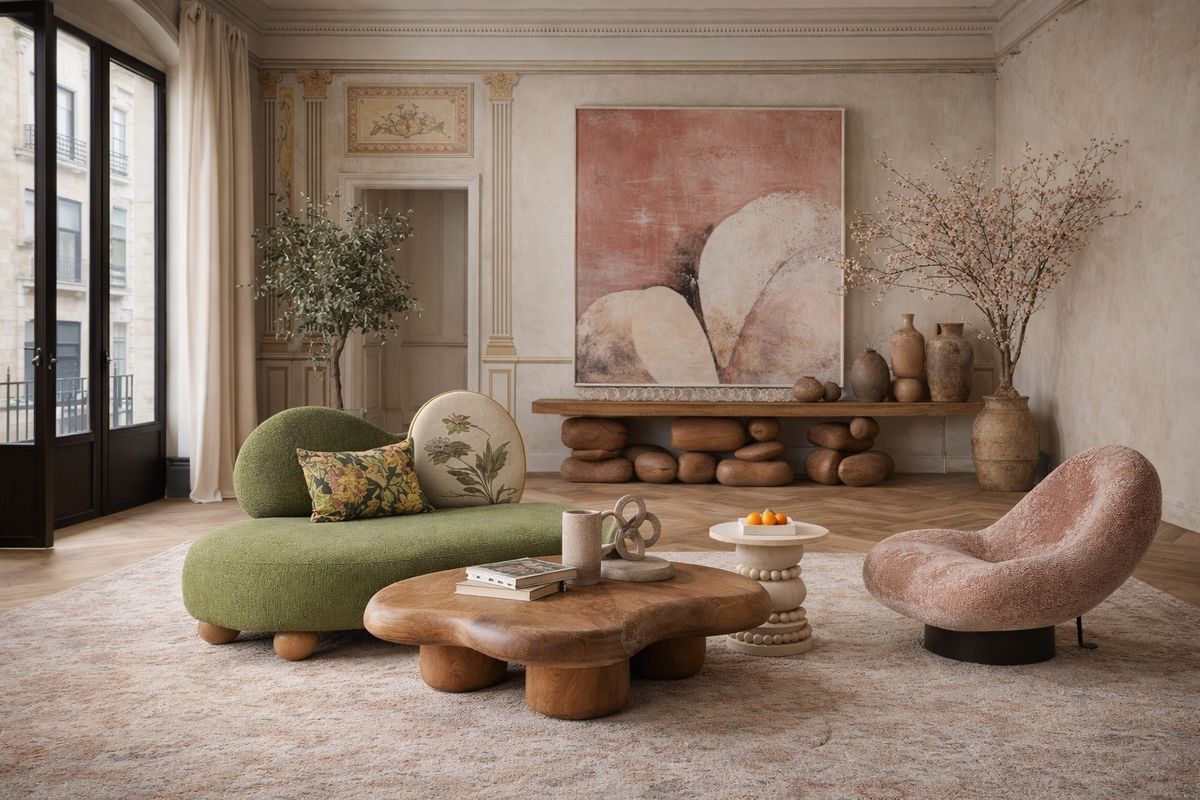
What makes a room feel alive today isn’t a clean line or a curated palette. It’s the collision of times. A 17th-century farm table next to a contemporary photograph. An antique chandelier paired with a postmodern chair. That juxtaposition of eras—the deliberate friction between periods—is what makes a space feel current, even when almost nothing in it is new.
You see it everywhere if you’re looking. Not in showrooms, which tend to sanitize and linearize. Not in catalogues, which love to reduce furniture to style timelines. But in houses where people actually live. Where the past isn’t a museum and the present isn’t a billboard. The eye jumps between centuries and feels a thrill.
Objects Speak in Time
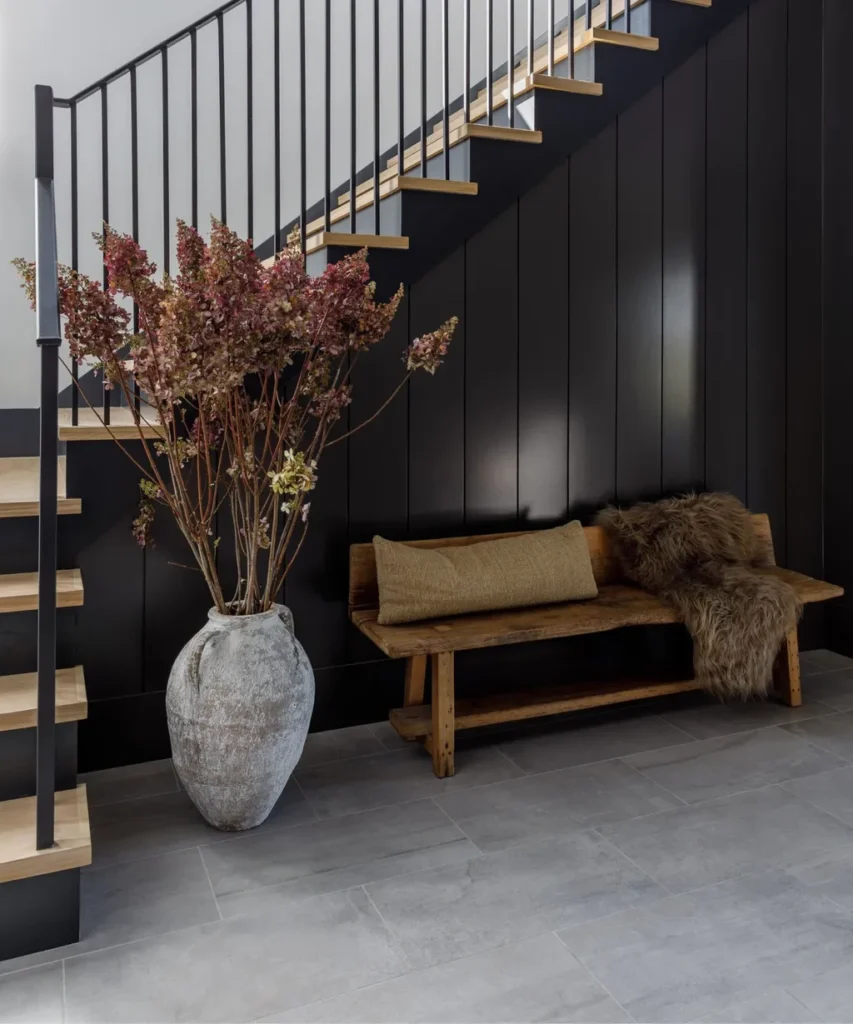
In a custom indoor interior, a centuries-old farm table with a pocked, patched surface can sit next to a series of minimal, glossy photographic prints. The table carries the weight of its own history. The photographs don’t compete; they whisper of now. Tension builds. A quiet conversation emerges. This is the essence of juxtaposition of eras—the table seems to tell the story of hands that carved it, meals eaten over decades, the smell of wood and fire. And the photograph responds in crisp modern tones: “Look, we are here too.”
Juxtaposition like this isn’t about novelty. It’s about allowing objects to retain their voice while letting them talk to each other. You don’t need everything to match, to belong to the same decade. The shock of contrast is what awakens perception. A room can feel stale if it’s all 2020s furniture, all mid-century modern, or all reclaimed wood. But a whisper of something older—or something very new—makes it breathe.
The Subtle Mechanics
There’s a subtle mechanic at work, though designers rarely call it out. When eras collide, the eye searches for relationships. Scale becomes a language. Material becomes syntax. A bronze candlestick on a glass table, a postmodern chair next to a Gothic console—they are punctuation, not clutter.
I’ve seen rooms where it goes wrong. A baroque cabinet slammed against a fluorescent acrylic desk feels arbitrary. The dialogue is missing. But when the objects are selected with care, even loosely, the juxtaposition tells you: history is present, and yet we are not living in a museum.
Minimalism Meets Ornament
One of the most exciting pairings is the flirtation between minimalism and ornament. Take a sculptural, modern chair with its sleek black lines and place it near an intricately carved armchair from the 1800s. The contrast is not just visual; it’s narrative. The modern chair makes the old chair seem purposeful, dramatic even, rather than dated. The old chair, in turn, gives the modern one context and warmth. Alone, either piece risks being cold, overexposed, or sentimental. Together, they make each other current.
Or consider a simple linen sofa paired with a gilt mirror from a different century. The mirror isn’t a costume piece. It’s punctuation. It allows the sofa to read as contemporary without being lonely in the space. Juxtaposition here is a dialogue between restraint and extravagance, between time and timelessness.
Photography and Painting as Temporal Anchors
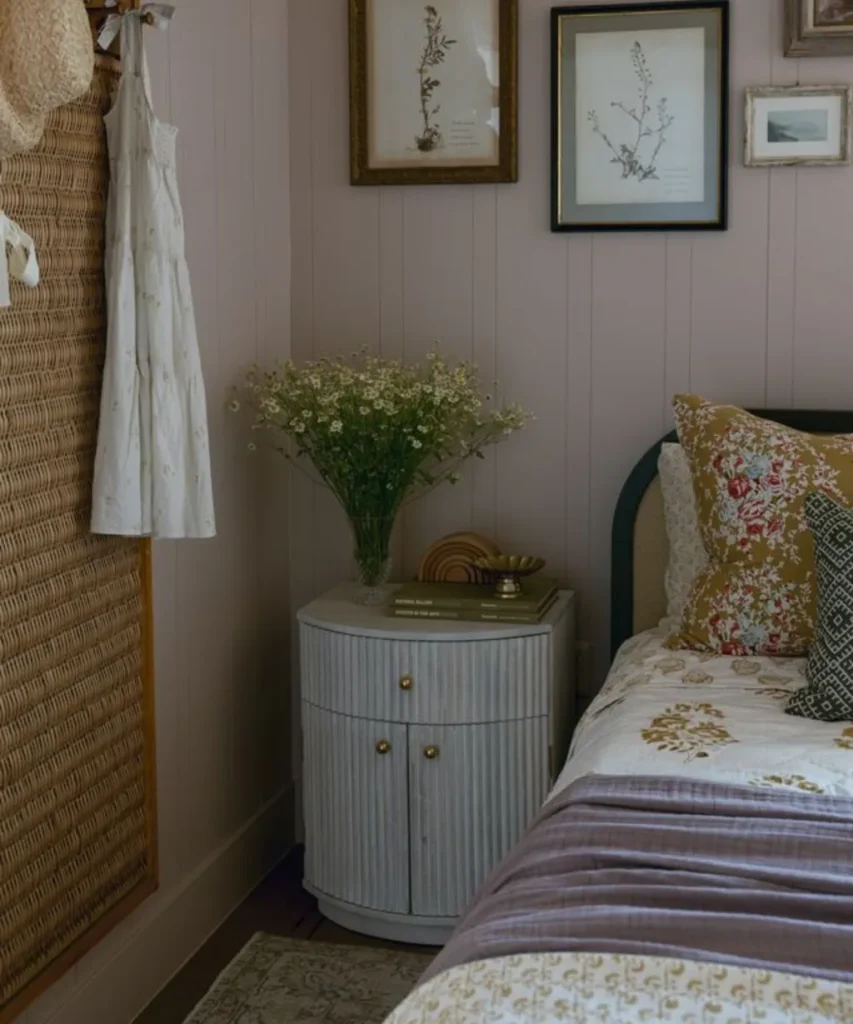
I’ve become increasingly drawn to the way photographic and painted works anchor these collisions. A contemporary photograph hung above a 17th-century sideboard can reset the room. The photograph’s sharp lines and color palette declare, “We live now.” The antique’s texture and history say, “We came from there.” And that tension, that whispering conversation, is what gives a room its vitality.
Paintings, too, play this role. I once saw a room where a mid-century abstract canvas hovered over a rustic farmhouse credenza. The credenza’s wood, worn to a deep honeyed tone, grounded the canvas. The canvas elevated the credenza. Neither would have felt complete alone. The juxtaposition made the room hum in ways that no single piece could.
Postmodern Meets Pre-Industrial
Postmodernism, with its tongue-in-cheek angles, bold forms, and neon absurdity, is a particularly fun counterpoint to antique or pre-industrial furniture. An antique mahogany desk paired with a geometric postmodern lamp suddenly reads as witty and contemporary. You get the sense that the space has a mind, that it’s not dictated by eras, by rules, by catalogues.
The key is restraint. If you throw too many postmodern objects around antiques, it starts to feel chaotic, like a theater set rather than a lived-in room. But one or two pieces, carefully placed, create tension that’s almost musical. The eye is drawn to the collision, to the rhythm between past and present, and the room feels alive.
Texture as Timeline
Texture plays a critical role in temporal juxtaposition. Smooth, lacquered surfaces meet cracked, hand-planed wood. Cold metal meets soft leather. Every contact point becomes a marker of age, of process, of intent. A 17th-century table with a glossy acrylic chair doesn’t just juxtapose centuries—it juxtaposes craft. Labor-intensive, hand-finished work versus machine-polished, industrial precision. The contrast is invisible at first glance, but it registers in the body. You sense it, even subconsciously.
I’ve seen designers deliberately leave imperfections in older pieces visible, as if to emphasize that friction. A chip, a patina, a crack—they anchor history in a way that no reproduction can. Then, place a contemporary object nearby and you feel the present pressing in without erasing the past.
The Role of Surprise
One of the joys of juxtaposition is surprise. You walk into a room and expect uniformity, but instead you find temporal dissonance that delights rather than confuses. A Rococo mirror, a Bauhaus stool, a minimalist floor lamp. The combination makes you pause, observe, reconsider. This is the opposite of predictable, catalogue-driven design. It’s personal, messy, intelligent.
In a way, juxtaposition is an antidote to trends. It resists being pinned down. It says: these objects existed, and now they exist together. That’s the story of the room, not the story of the current season.
Conversation Without Words
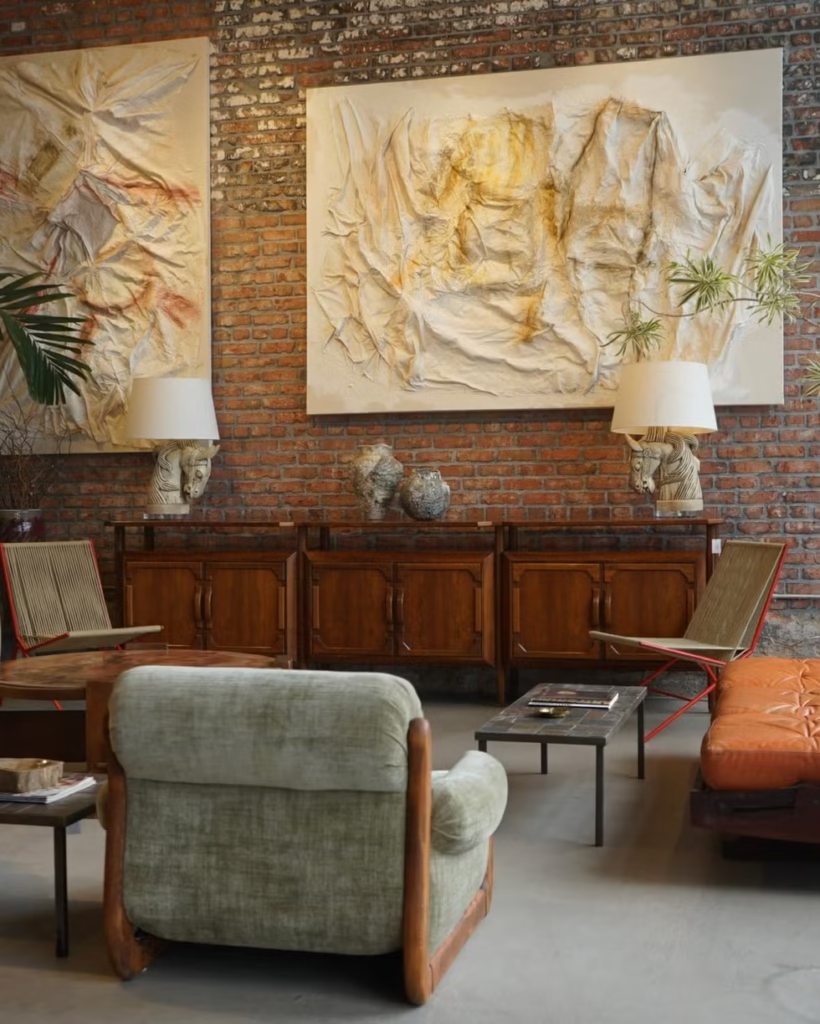
Juxtaposition isn’t just visual; it’s conversational. Antique and contemporary objects talk without speaking. They argue over scale, over material, over purpose. A worn wooden table can dominate a room physically while quietly surrendering authority to a bright, new sculptural piece nearby. And the room listens.
There’s a subtle humor in it, too. A gilded frame that once displayed aristocratic portraits now mirrors a room full of modernist prints. It’s absurd in the best way. You catch yourself smiling, thinking: “This is deliberate, and it works.”
The Current Moment
What makes these collisions feel current is not novelty. It’s not the presence of new or old objects alone. It’s the curation of tension, the creation of dialogue. A single object is static. A pair is a conversation. A room full of juxtapositions is a symphony of eras, a timeline you can live in.
It also encourages observation. When you walk into a space with intentional collisions, your eyes move differently. You linger. You note details. The floorboards, the patina of brass, the sheen of acrylic. The room becomes interactive in a way that spaces that are stylistically uniform rarely achieve.
Time in Design
I find myself returning to this idea constantly. In hotel lobbies, in friends’ homes, in showrooms with the courage to mix decades. A room that juxtaposes eras tells a story. Not a curated Instagram story, not a minimalist manifesto—but a story of time itself. Of labor, of taste, of lived experience.
The thrill of juxtaposition is that it doesn’t need explanation. It is immediately legible to anyone who cares to look. And yet, it resists cliché. A 17th-century farm table paired with a contemporary photograph is more than old meets new. It’s past conversing with present. It’s history pressing against now. And in that collision, the room comes alive.