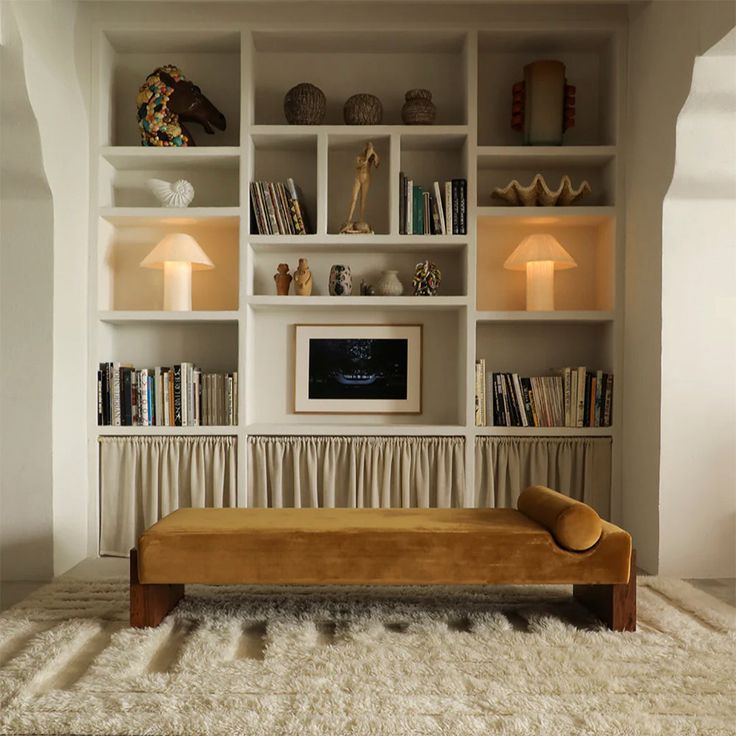
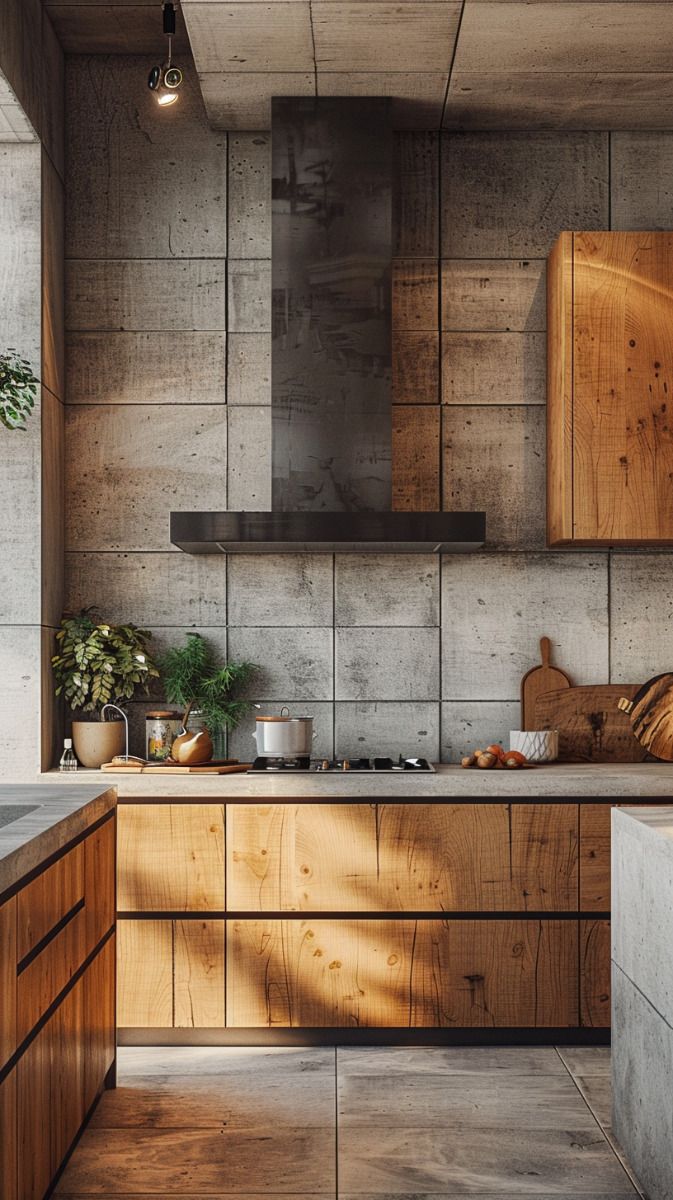
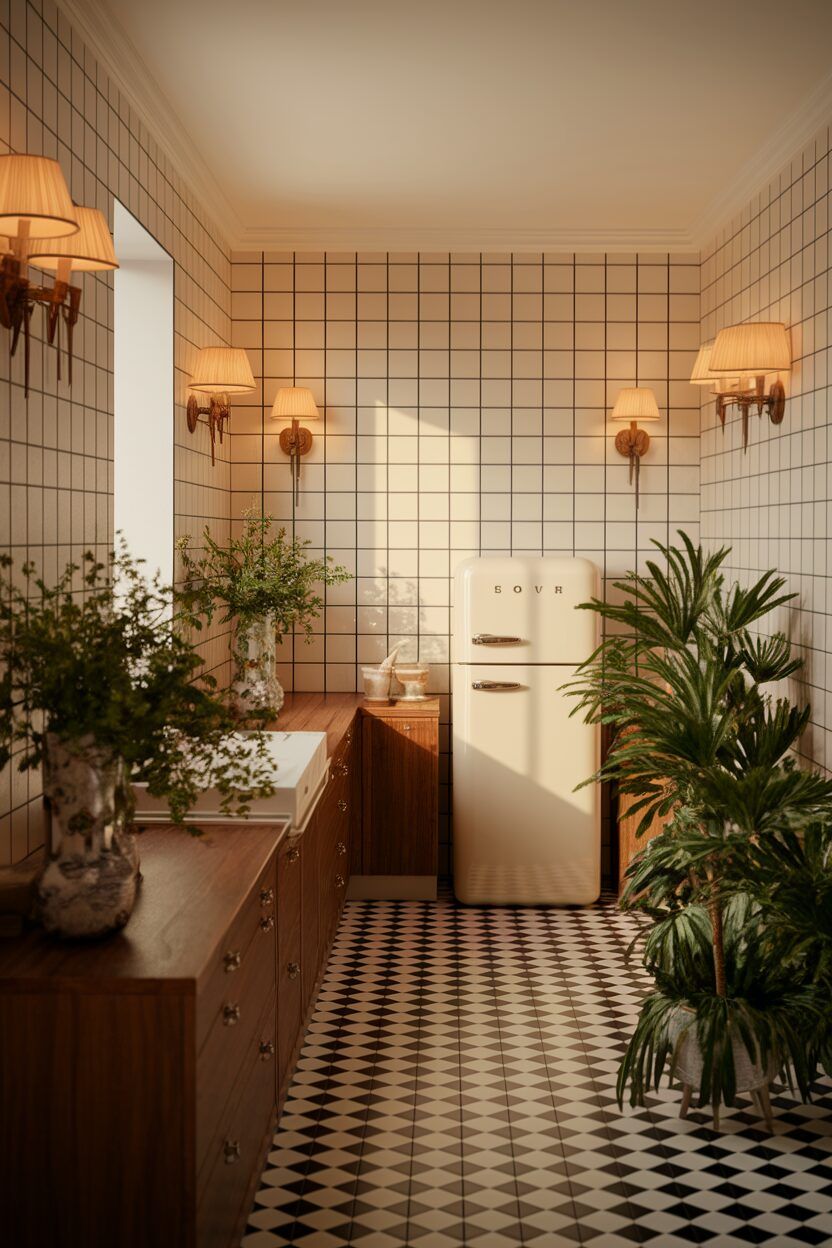
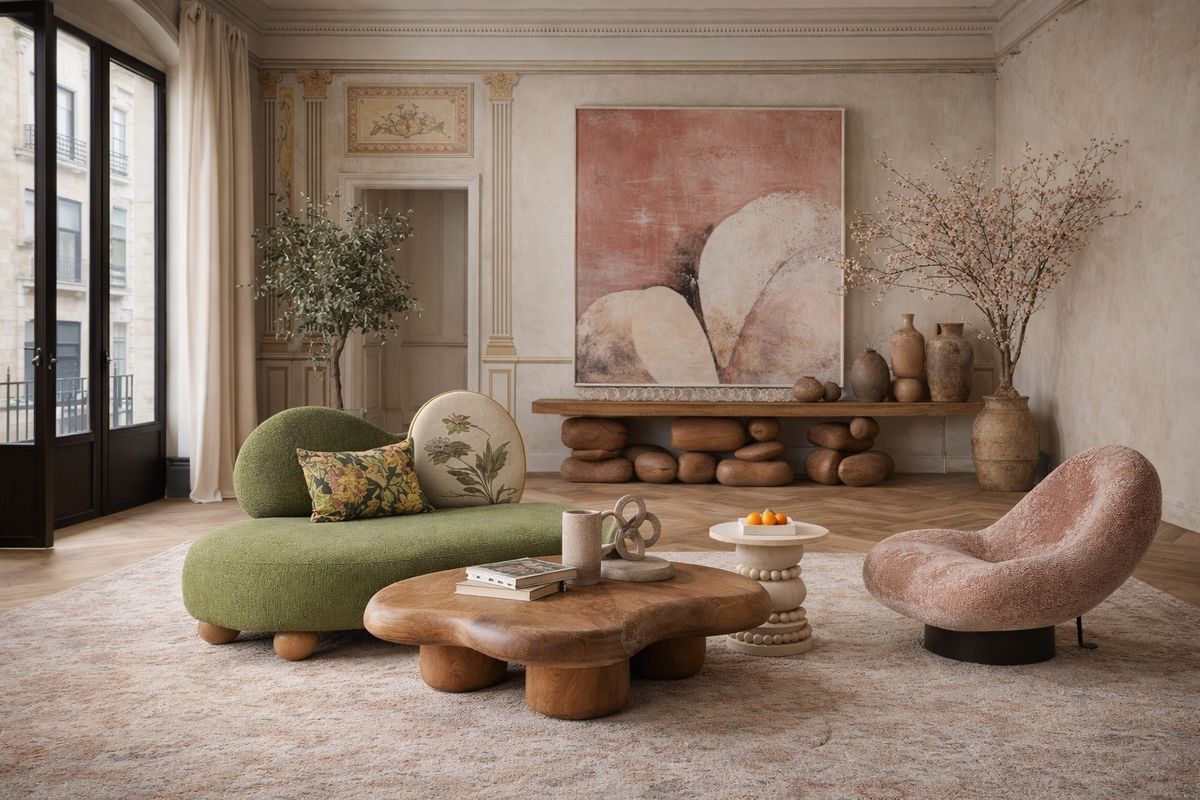
For years, floors were treated as neutral infrastructure. White oak planks, pale concrete, quiet stone. Rugs existed mostly to soften acoustics or protect surfaces, rarely to assert themselves. They behaved. They filled rectangles. They matched sofas. Graphic rugs undo that politeness. They pull the floor back into the conversation, not as background, but as a plane of expression with its own agenda.
In contemporary interiors, graphic rugs operate almost like drawings laid flat. Lines, blocks of color, fragmented geometry, oversized motifs—these are not patterns meant to disappear under furniture. They are meant to be read. Sometimes they interrupt the room more than the furniture does. Sometimes they hold it together.

When the Ground Plane Speaks
A graphic rug changes how a room is understood spatially. Walls still define enclosure, furniture still defines use, but the rug defines attitude. A bold composition underfoot reframes everything above it. A quiet sofa suddenly feels intentional. A sculptural chair gains context. Even circulation shifts; people walk differently across a floor that feels designed rather than neutral.
These rugs often work best when allowed to be slightly wrong. Too large. Too bold. Slightly off-center. Perfection dulls them. Their strength comes from tension—from refusing to align neatly with architectural grids or furniture groupings. The floor becomes active, no longer a passive field.
Pattern as Structure, Not Decoration
Graphic rugs differ from traditional patterned rugs in intent. They are not about ornament or repetition. They are about composition. Shapes are often oversized, cropped, or asymmetrical. Color fields bleed into one another or stop abruptly. The design logic feels closer to painting or printmaking than to textile tradition.
This approach gives rugs structural authority. They divide open-plan spaces without walls. They anchor furniture groupings without enclosing them. A dining area can be suggested through a strong graphic form rather than through perimeter furniture alone. In this way, the rug becomes an architectural tool, not an accessory.
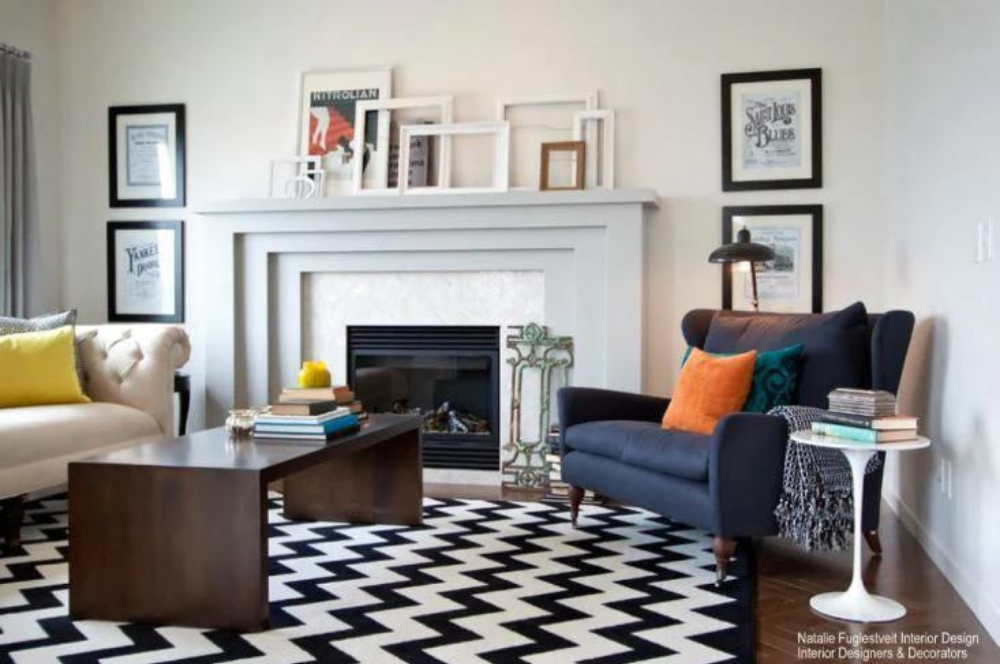
Furniture in Conversation With the Floor
Graphic rugs demand restraint elsewhere, but not minimalism. Furniture placed on them must either echo the rug’s confidence or deliberately counter it. Overly busy upholstery fights for attention. Too much pattern creates noise. The most compelling rooms let the rug lead, with furniture responding in form, texture, or scale rather than color or motif.
Curved furniture softens sharp graphic lines. Sculptural pieces gain grounding. Low-profile sofas allow the rug to remain visible, legible. Tables with open bases avoid blocking the composition beneath. Even legs matter; heavy plinths can obscure, while lighter frames allow the rug to breathe.
Custom furniture often enters the conversation here, not as a showpiece but as a moderator. Proportions can be adjusted so that a sofa lands just right on a bold shape, or a chair interrupts a line without cutting it in half. These small decisions determine whether the rug feels intentional or accidental.
Color Without Sentimentality
Graphic rugs often use color assertively, but without nostalgia. These are not floral palettes or historical references. Colors feel modern, sometimes slightly off: muted reds, dusty blues, acidic greens, chalky neutrals. The combinations are deliberate, sometimes uneasy. That unease keeps the room alive.
In more restrained interiors, a graphic rug can introduce color without spreading it everywhere else. Walls stay quiet. Furniture remains neutral. The floor carries the chromatic weight. This containment makes bold color livable. It feels focused rather than overwhelming.
Texture Still Matters
Despite their visual impact, graphic rugs are not flat experiences. Pile height, fiber choice, and weaving technique matter. A crisp graphic rendered in thick wool feels different from the same design executed in flatweave. Texture influences how the pattern is perceived—soft edges versus sharp ones, blurred boundaries versus crisp lines.
Some contemporary graphic rugs play with this deliberately, carving patterns into pile or mixing heights to add depth. The result is a design that changes depending on light, angle, and movement. The graphic is not fixed; it shifts subtly throughout the day.
Living With Boldness
There is a misconception that graphic rugs are fragile, precious, or difficult to live with. In reality, many are forgiving. Strong patterns hide wear. Irregular designs mask stains better than uniform fields. The visual complexity absorbs daily life.
What they require is commitment. A graphic rug does not like being hedged. Pairing it with timid furniture or overly cautious styling drains its energy. These rugs reward confidence. Once placed, they set the tone, and the room follows.
They also age well when chosen thoughtfully. Because they are not tied to trends in upholstery or finish, they can outlast furniture cycles. A sofa may change. A table may move. The rug remains, recontextualized each time.
Graphic Rugs in Open Spaces
In open-plan interiors, graphic rugs perform especially well. They carve out zones without fragmenting space. A living area can exist clearly within a larger room, defined by a strong floor composition rather than by walls or screens. Movement flows around it, not through it.
Here, scale becomes critical. Undersized rugs weaken the effect. Oversized rugs assert it. Letting the rug extend beyond the furniture grouping allows the graphic to read fully, like an image rather than a sample.
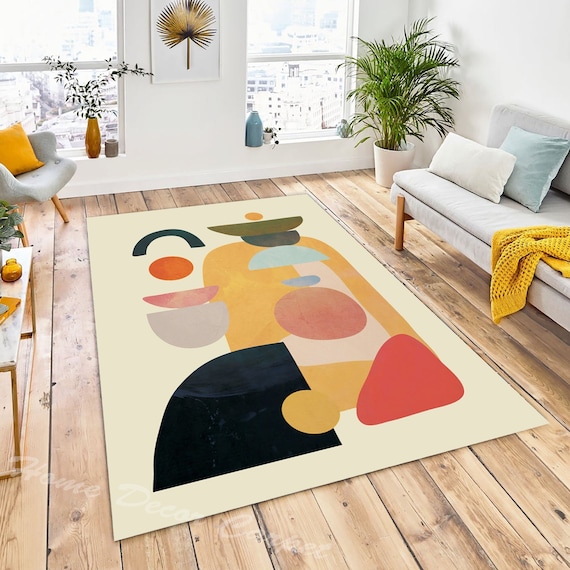
A Quiet Rebellion
The rise of graphic rugs feels like a quiet rebellion against sameness. After years of safe neutrals and polite layering, these rugs reintroduce risk at ground level. They ask the room to participate, not just accommodate.
They also shift attention downward, which subtly changes how space is experienced. Eyes drop. Bodies respond. The room feels grounded, physical, less abstract. In an era of increasingly digital lives, that physicality matters.
Graphic rugs do not solve rooms. They complicate them, in a productive way. They introduce friction, rhythm, and intention. They remind interiors that the floor is not just something to stand on, but something to engage with—visually, spatially, and emotionally.
And once that engagement happens, it’s difficult to go back to silence underfoot.