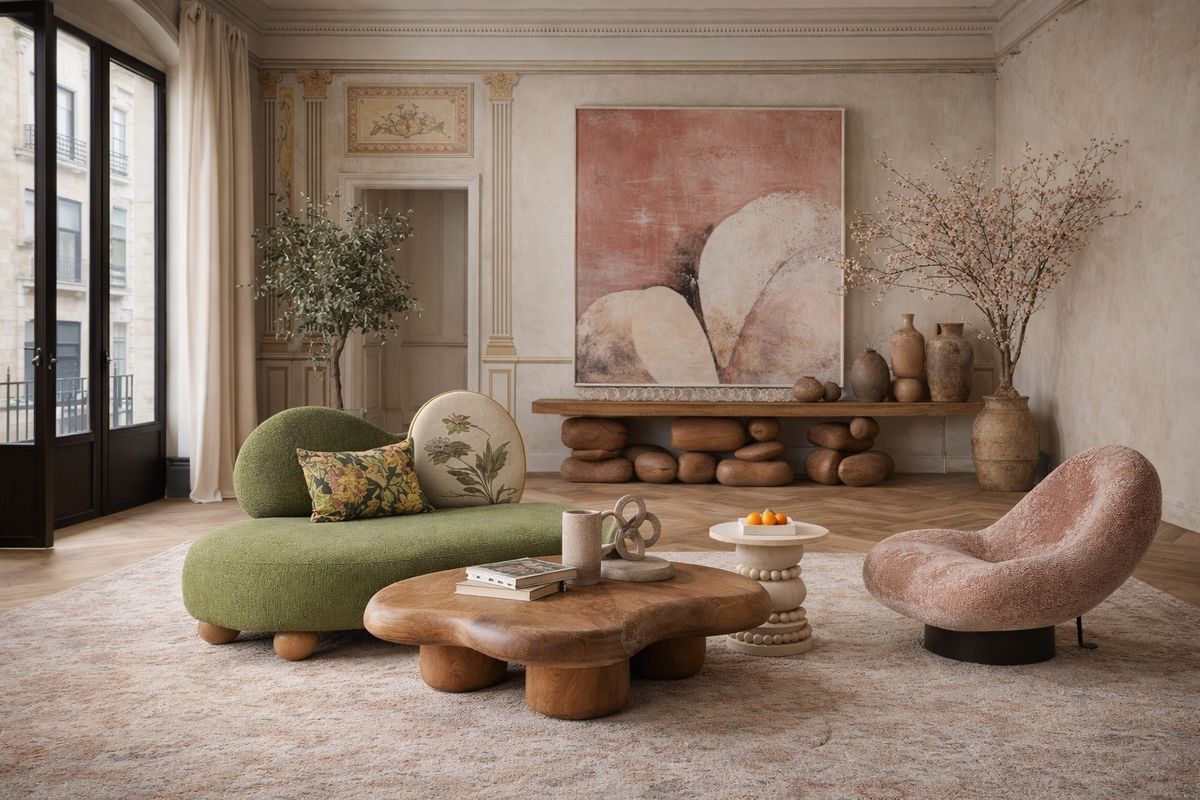
The room bends around a chair. At first glance, it seems like a sculptural object dropped from a gallery wall—smooth curves that fold into themselves, a kind of urban cliffside for the body. But the surface isn’t arbitrary. Every contour has been traced, measured, and fed into a model. The designers didn’t sketch it with a pencil and intuition; they trained it on thousands of hours of spinal movement, sleep cycles, and the subtle shifts of shoulders against upholstery. This is not just ergonomics, it’s a calculation of comfort itself.
There’s a curious paradox at play. Chairs that are algorithmically comfortable often feel more like art objects than furniture. The eye registers rhythm and flow before the body registers support, and yet the body accepts them without complaint. Traditional ergonomics was about angles and pressure points—rules to obey. Algorithmic ergonomics treats the body like a living graph, every vertebra a node, every shift of weight a line on a constantly updating chart. Sitting becomes a dynamic negotiation with geometry.
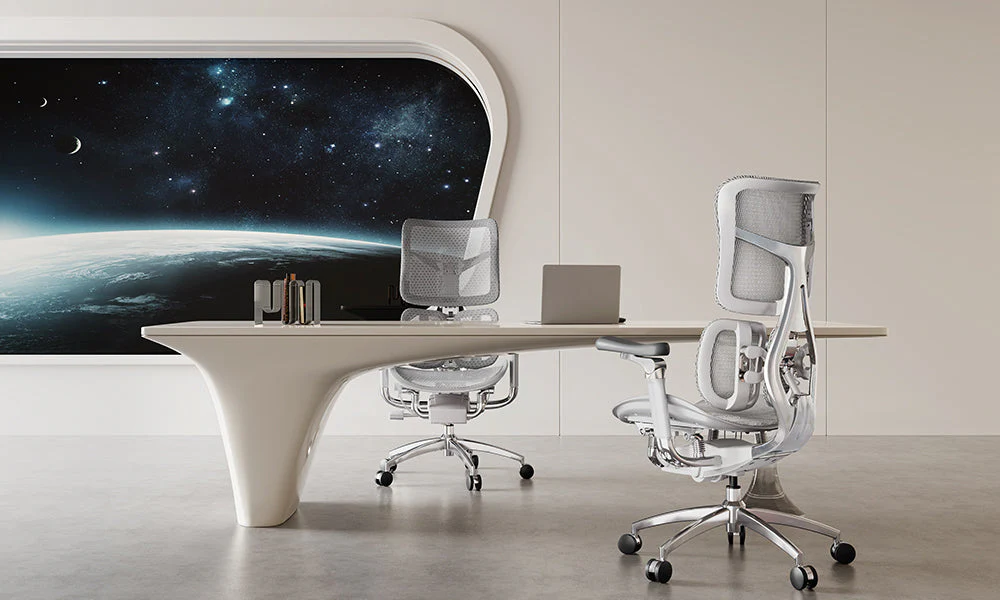
Calculating the Spine
Observing people in these chairs is instructive. There is no “correct posture” anymore. The spine surrenders to the seat in real time, guided by invisible forces. People lean slightly forward, then recline, then roll to one side, and the chair seems to respond. Designers will talk about data sets: MRI scans, motion capture sequences, biofeedback sensors, hours of continuous monitoring. And yet, the magic is in what can’t be fully described: the unconscious adjustments, the micro-fidgets that signal comfort. Algorithms can predict them, or at least approximate them.
The technology is unsettling to some. It treats the human body as a machine, a series of inputs to optimize. But for those who work with it, the machine-like abstraction is liberating. Comfort is no longer a compromise between aesthetics and utility; it becomes emergent, something discovered rather than imposed. The chair doesn’t demand a shape from the sitter; it invites a performance.
Sculptures That Sit
There’s a visual tension inherent in this design approach. Furniture becomes more sculptural because the algorithms prioritize the body over convention. Armrests are low and sweeping, almost like the contour of a hill rather than a flat plane. Backrests curve asymmetrically, but the asymmetry is intentional, designed to cradle a twisting shoulder or counterbalance a slight pelvic tilt. Sometimes, the chair appears too generous, almost exaggerated, until a person settles into it, and suddenly every swell and dip aligns with the spine’s subtle wanderings.
Traditional designers might balk at the apparent lack of symmetry or the way proportions defy typical rules of scale. But algorithmic ergonomics doesn’t care for precedent. Comfort is not beholden to historical references or visual restraint. The best pieces seem uncanny at first, like they were grown rather than made, because the algorithm’s logic follows the body more faithfully than the eye. And the paradox is that the more sculptural the object, the more it conforms to human physiology.
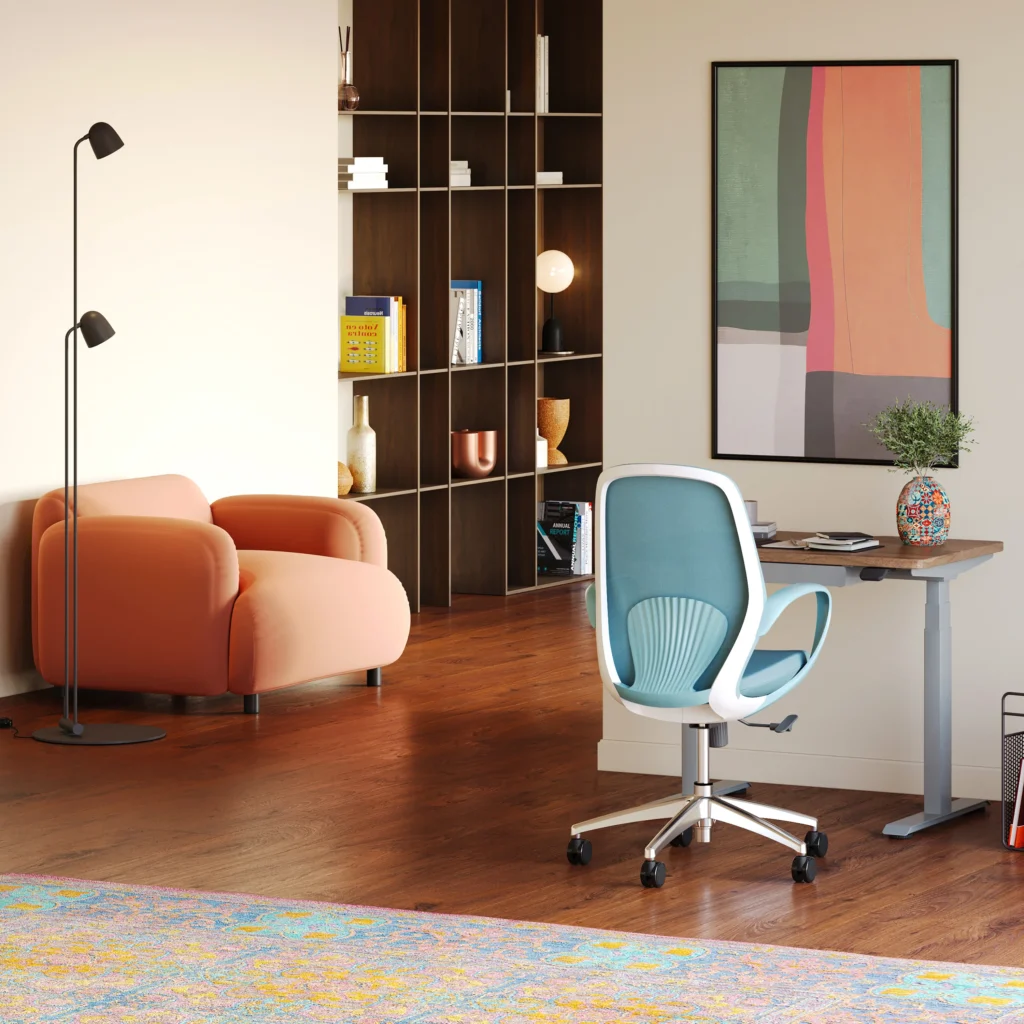
Comfort as Data
There’s a certain humility in working with this approach. Designers surrender to the patterns of the body, the rhythms of spine and shoulder, to find shapes that feel right. Every measurement, every curve, is a translation of biological reality into code. The chair becomes a repository of human behavior, a frozen record of micro-movements that are otherwise invisible. Sitting on it is like encountering a landscape designed by millions of small, unconscious decisions: weight shifts, shoulder rolls, hip rotations.
Yet it also raises questions. If comfort is measurable, is it universal? Data sets are never neutral. They capture certain populations, certain morphologies, certain habits. Algorithmic chairs are superb for some bodies, adequate for others, awkward for the rest. The promise of mathematical comfort can never escape the limitations of input data. The chair is perfect, in a sense, and simultaneously incomplete.
The Uncanny Familiar
The most compelling pieces have an odd familiarity, as though the body recognizes a memory it didn’t know it had. Algorithmic ergonomics is not about imposing shapes; it is about discovering the natural envelope of movement. Sitting becomes a revelation: muscles relax without conscious effort, micro-fidgets subside, the spine seems to lengthen without stretching. This is a different kind of design success, one that can’t be photographed well, can’t be captured in a catalog. It lives in the interaction, in the lived experience of an evening spent in the curve of a chair.
And there is a subtle rebellion in it too. These chairs don’t conform to expectations of “pretty” furniture. They demand engagement. They insist that comfort is not just an absence of pain but a complex, often surprising dialogue between form and body.
Invisible Craft
The artistry lies not in the visible surface but in the invisible work. Every curve is the result of iteration on data, simulations that map how a human might shift over hours. Some designers describe it as sculpting in four dimensions—the fourth being time, the continuous evolution of posture. The final product looks effortless, but it is stitched from thousands of micro-decisions rendered through algorithms that have no eye, only a sensorimotor logic.
It’s tempting to reduce these designs to novelty—“futuristic furniture” or “tech-luxury objects.” But they feel inevitable when experienced. Bodies adapt to shapes that were once abstract concepts. The chair holds the spine like a story that was always waiting to be written.
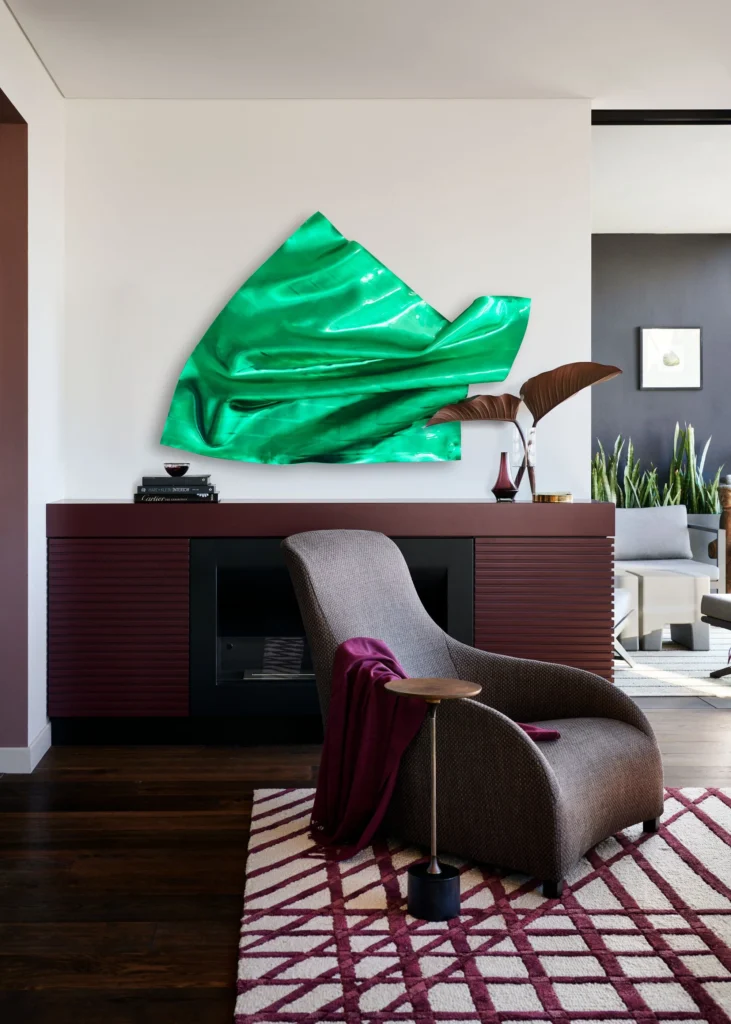
The Future of Sitting
There is no neat conclusion here. Algorithmic ergonomics is still young, still exploring how far data can go before comfort becomes sterile. There are chairs that predict weight shifts, couches that anticipate slouch, ottomans that track the rotation of the pelvis over time. Some pieces will feel alien; others will feel like they’ve always existed in memory but never in reality. Designers continue to map, model, measure, and feed the body into the computer. The results are part laboratory, part gallery, part private revelation.
Perhaps that is the truest achievement: making the familiar strange, and in strangeness, rediscovering comfort. The spine moves, the algorithms watch, the chair responds. It is neither magic nor mundane, just a geometry of living, unfolding quietly in the room.