
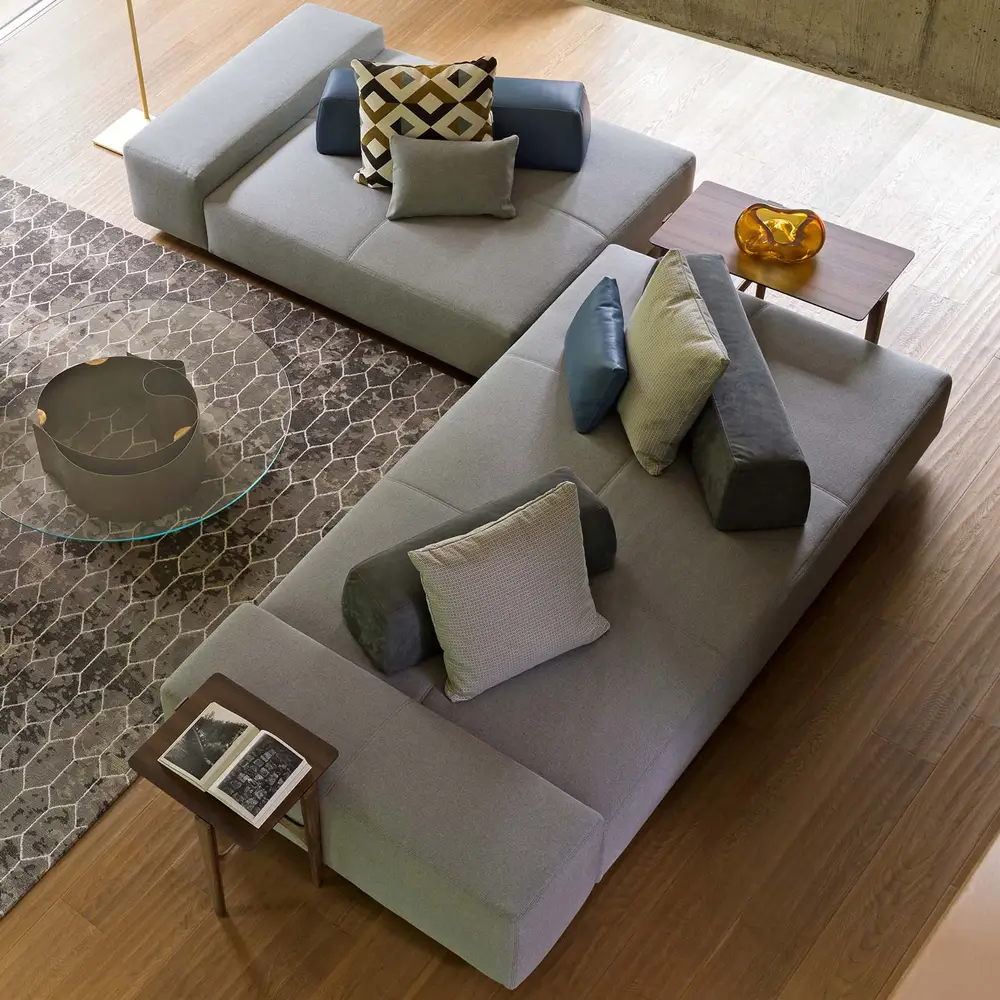
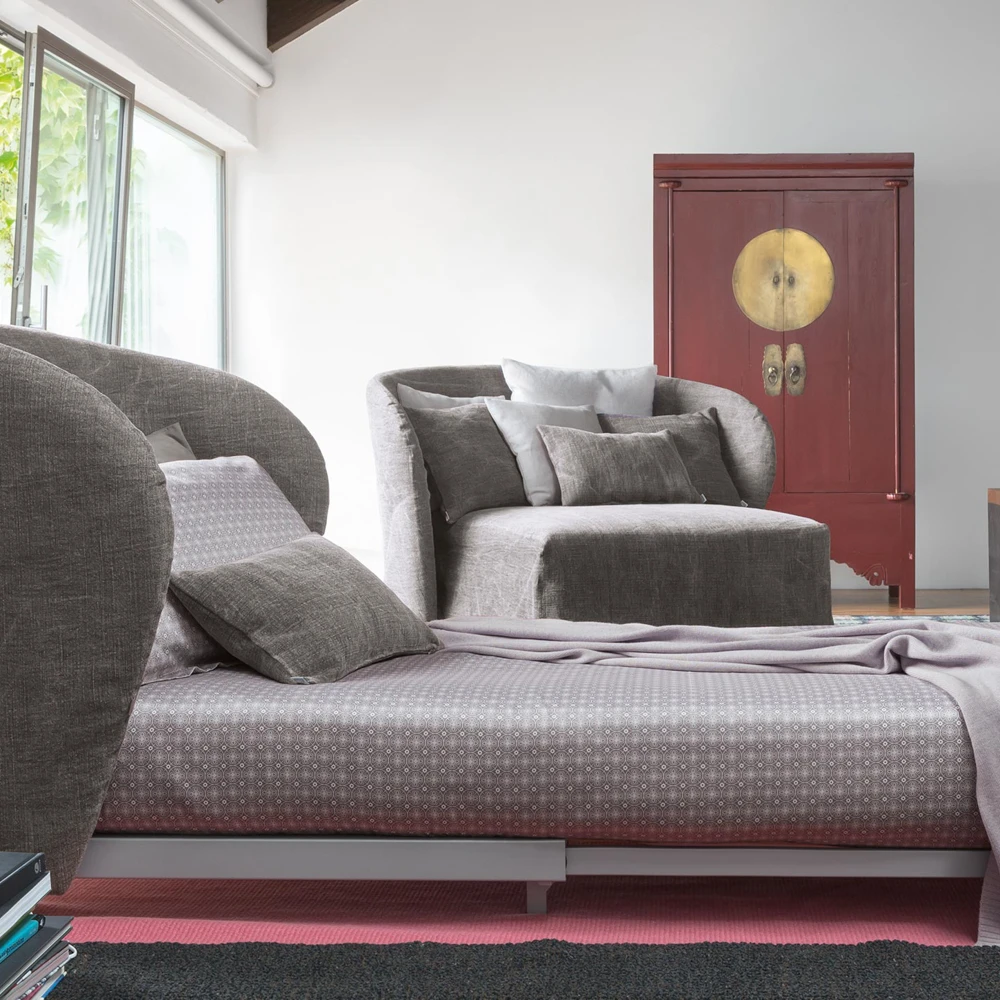
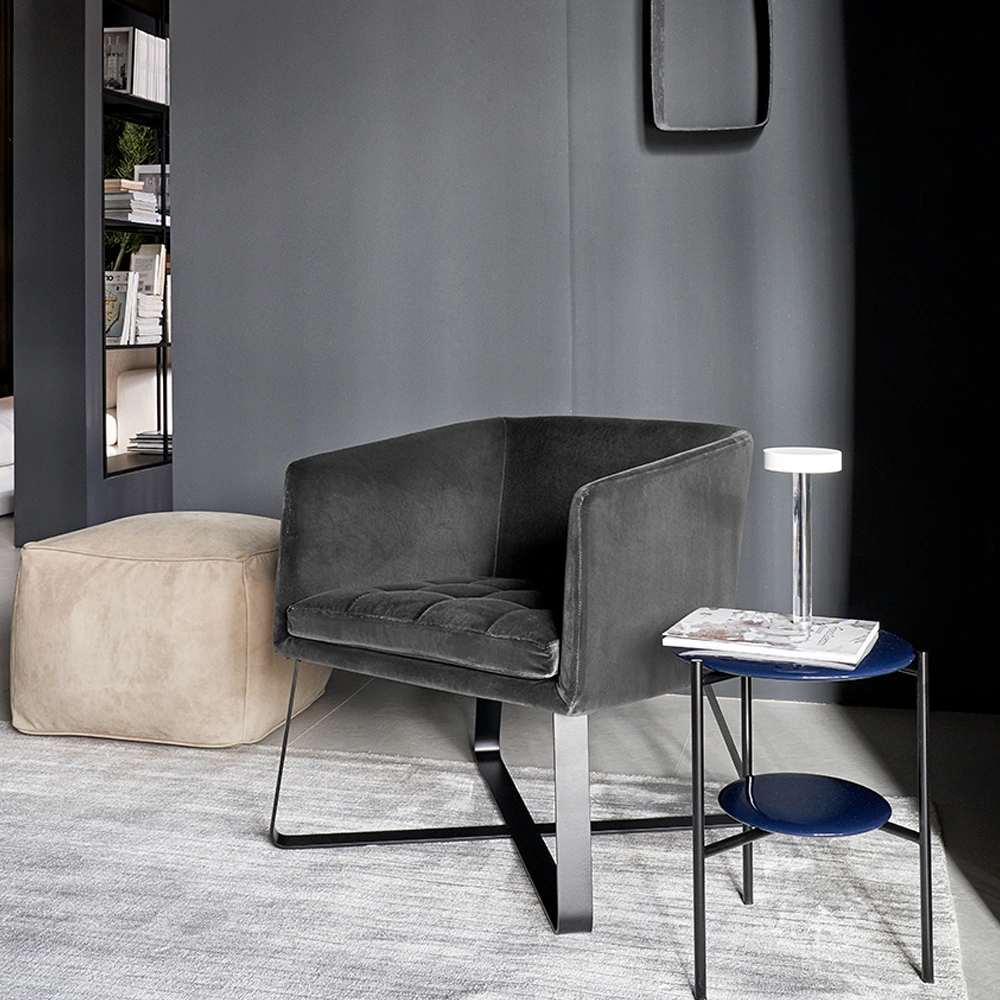



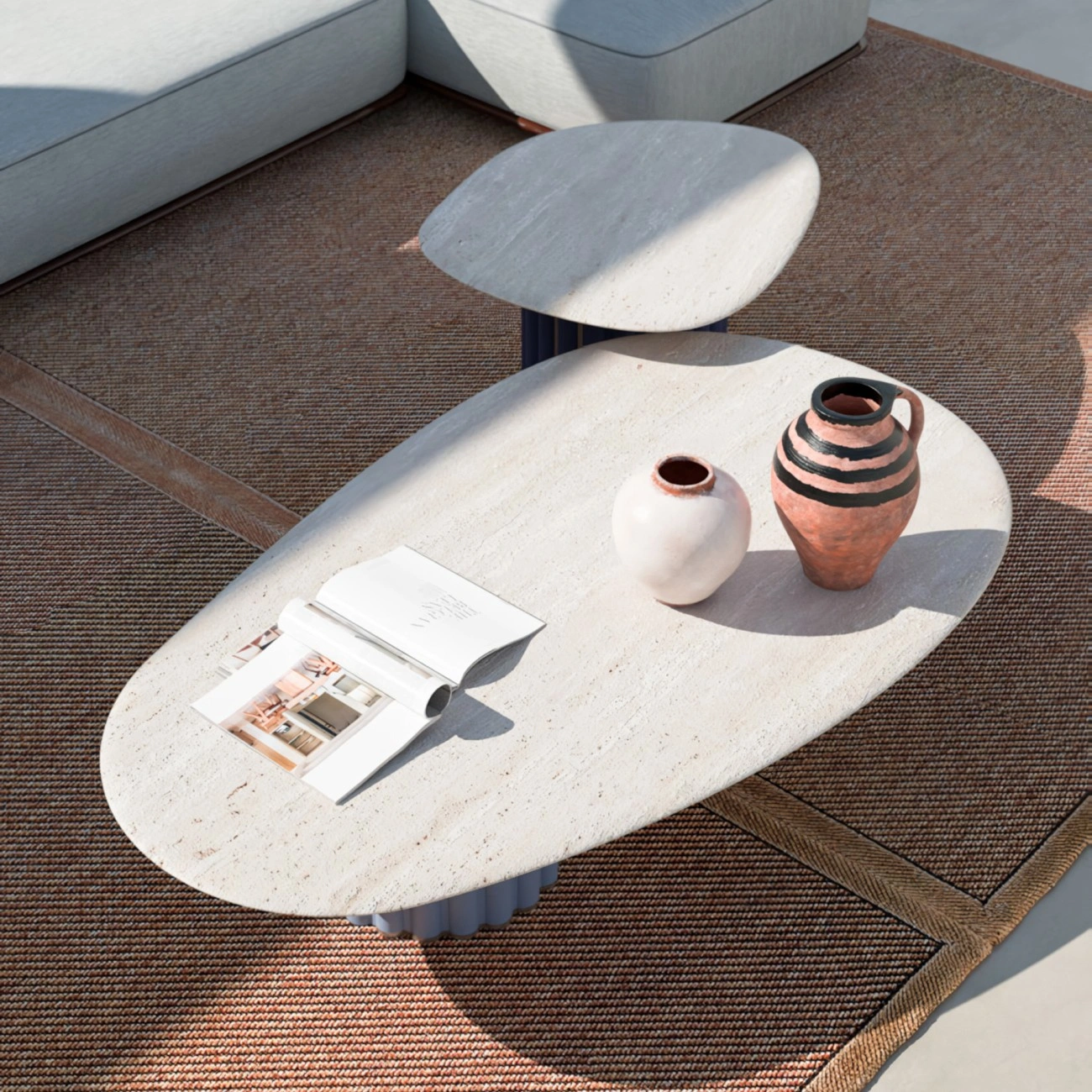














Cocoa and chrome sound, at first glance, like a color pairing lifted from a trend report or a showroom vignette designed to photograph well and date badly. Brown and silver. Warmth and glare. The sort of combination that, handled carelessly, can veer into hotel-lobby territory or early‑2000s excess. But in practice, when it appears in real homes or in custom furniture rather than styled sets, cocoa and chrome reveal something more interesting. They’re less about contrast than about tension. And tension, when it’s sustained rather than resolved, is often what makes an interior feel alive.
The Quiet Strength of Cocoa
Cocoa is not brown in the generic sense. It’s heavier. More specific. It carries associations of leather that’s been touched too often to stay pristine, of wood darkened by years rather than stain, of textiles that absorb light instead of reflecting it back. Cocoa surfaces don’t announce themselves. They sit there, quietly, waiting for the room to settle around them.
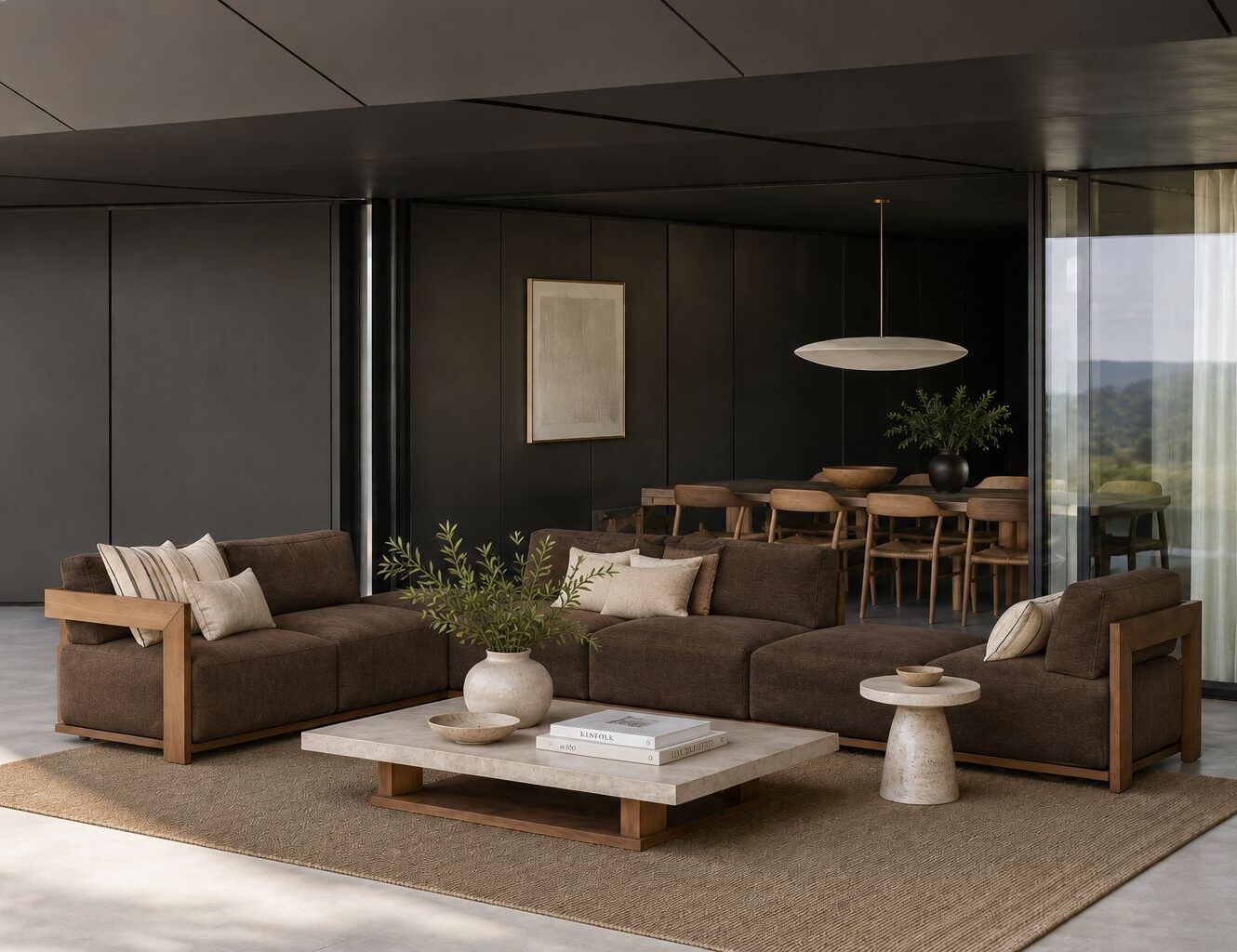
There’s a physicality to cocoa that many neutral tones lack. A cocoa sofa seems to have mass; it sits firmly in the space without needing a rug or a throw to justify its presence. On walls or cabinetry, it offers a backdrop that’s forgiving, one that doesn’t compete with art or accessories, but subtly enhances them. The eye can linger on cocoa without fatigue, and yet it quietly demands attention over time. A cocoa leather armchair in a sunlit corner doesn’t shout, but it anchors the room. Its color ages into richness rather than fading into background, and that slow change is part of its appeal.
Chrome as a Disruptor
Chrome does the opposite. Chrome insists on being noticed. Even when it’s thin—chair legs, lamp arms, a trim detail—it pulls light toward itself and throws it back into the space. It sharpens edges. It refuses to blend in. Chrome is not patient. Cocoa is nothing but.
The tension is tactile, too. Touch a polished chrome railing and feel the cool metal, the hardness, the slight slickness under your fingers. Sit on a cocoa velvet chair and feel warmth, resistance, give. Side by side, they are a conversation. Neither dominates; neither explains itself. There’s a rhythm in the room that only exists because one surface absorbs while the other reflects.
Chrome can also define space without taking up volume. A thin chrome table leg, a polished door handle, even a subtle trim line on cabinetry—these elements direct the eye subtly, creating movement through a room that cocoa alone could never do. In a bedroom or a study, it can give the cocoa surfaces a frame, almost a punctuation mark. The chrome is never incidental; it is part of the architecture of attention.
Where the Pairing Works Best
I’ve seen cocoa and chrome in kitchens, in bedrooms, in offices, and the most compelling moments happen in unexpected corners. A chrome sconce over a cocoa-painted wall. A cocoa leather ottoman punctuated by chrome legs. A simple shelf bracket in chrome, holding books against a cocoa backdrop. It’s not about large gestures; it’s about tension in the small things, the details that draw the eye over time rather than immediately.
Rooms that fail usually do so because the pairing is literal or decorative. A chrome chandelier over a chocolate floor looks like someone tried too hard. A cocoa rug with chrome-accented furniture can feel cold if the chrome is overexposed. It’s about restraint and placement. Subtlety. Letting each material breathe, letting it age a little, letting fingerprints and patina accumulate without fear.
Textures in Tension
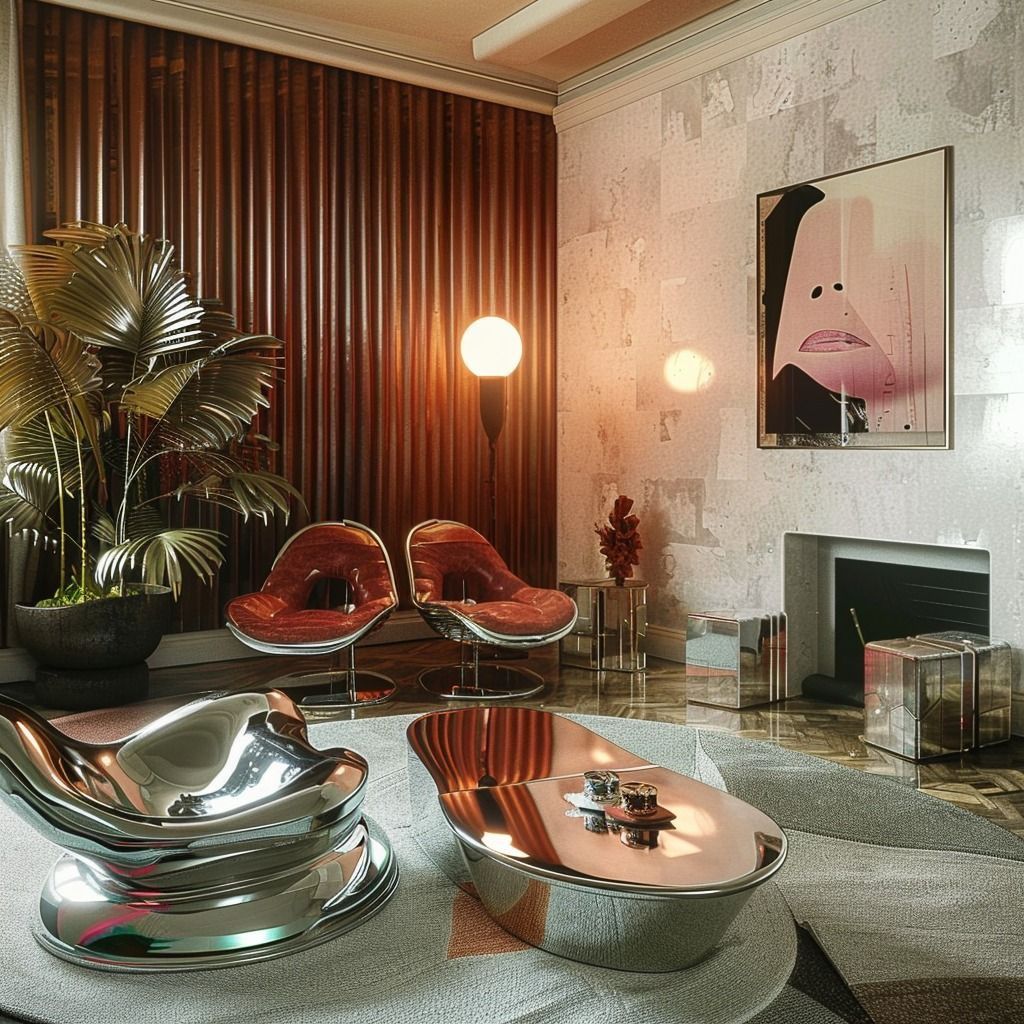
Texture changes everything. Chrome on its own can feel sterile, but layered with cocoa in varied textiles or finishes, it becomes part of the room’s rhythm. Rough-hewn walnut, matte leather, boucle upholstery—all expand the cocoa family. The contrast with reflective chrome feels deliberate rather than jarring.
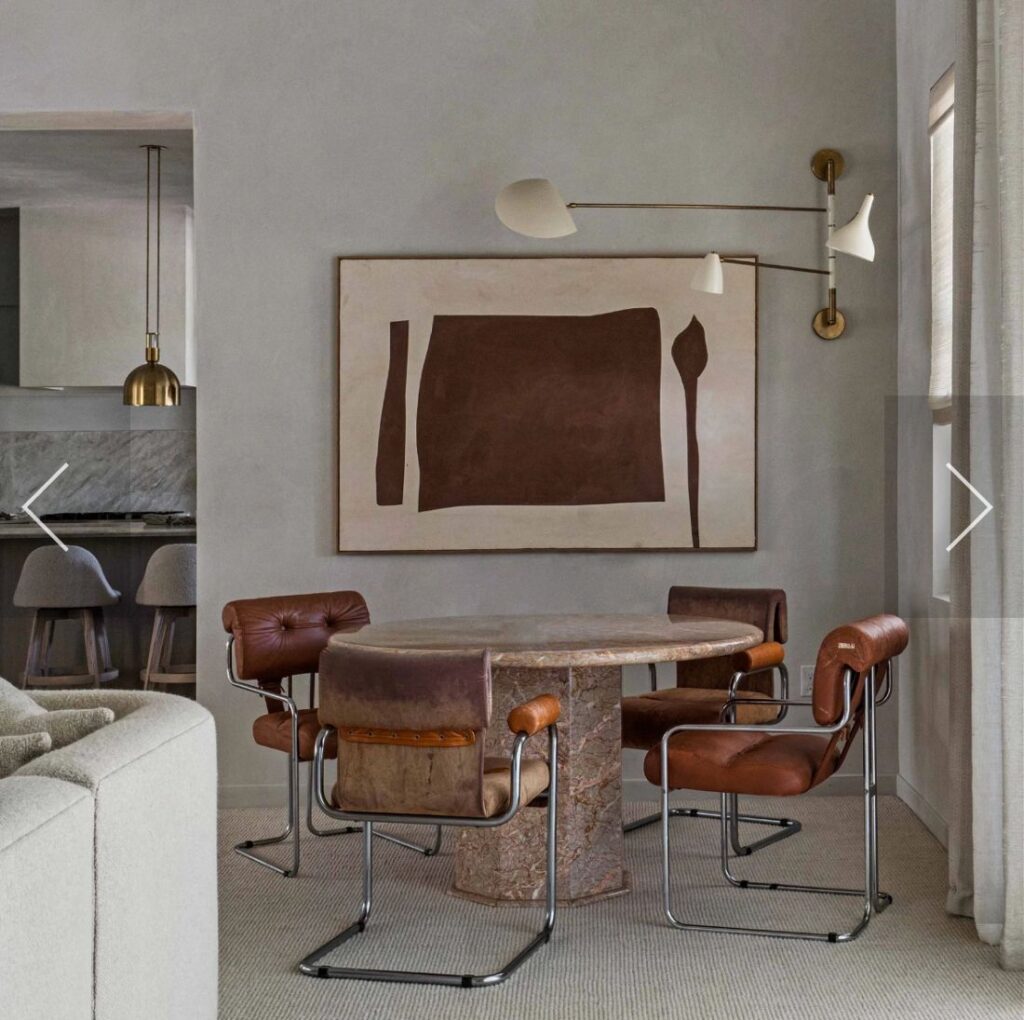
Consider a cocoa velvet sofa paired with a chrome-framed coffee table. The velvet wrinkles under use, absorbing the warmth of afternoon sun. The chrome legs catch it, reflecting a moment that is constantly shifting. A room like this never feels staged. It tells you someone lives there, moves through it, interacts with it. That imperfection—the slight patina on a chrome handle, the softening of a leather arm—is part of the narrative. It’s what makes the material feel like it belongs.
Cocoa, Chrome, and Light
Natural and artificial light are critical. Chrome thrives on reflections, while cocoa absorbs. Windows facing south turn cocoa into deep, almost molten shades in midday. Chrome catches those moments and amplifies them. Evening light dulls the chrome slightly, and suddenly the room reads differently. The same elements feel entirely new with a different hour. That is the subtle drama of the pairing.
Artificial light must also be considered carefully. A warm tungsten lamp against cocoa enhances depth but can flatten chrome, while cooler LEDs make the metal glint but risk making cocoa look lifeless. Designers often forget how much light transforms cocoa’s tone and chrome’s brightness. It’s not just about color; it’s about presence.
Furniture Choices Matter
The combination isn’t just about paint or fixtures. Cocoa and chrome are as much about furniture as anything else. A mid-century chair in cocoa leather with chrome legs reads differently than a modernist sofa in cocoa velvet with chrome rails. Both work, but the choices dictate the mood. One whispers; the other shouts.
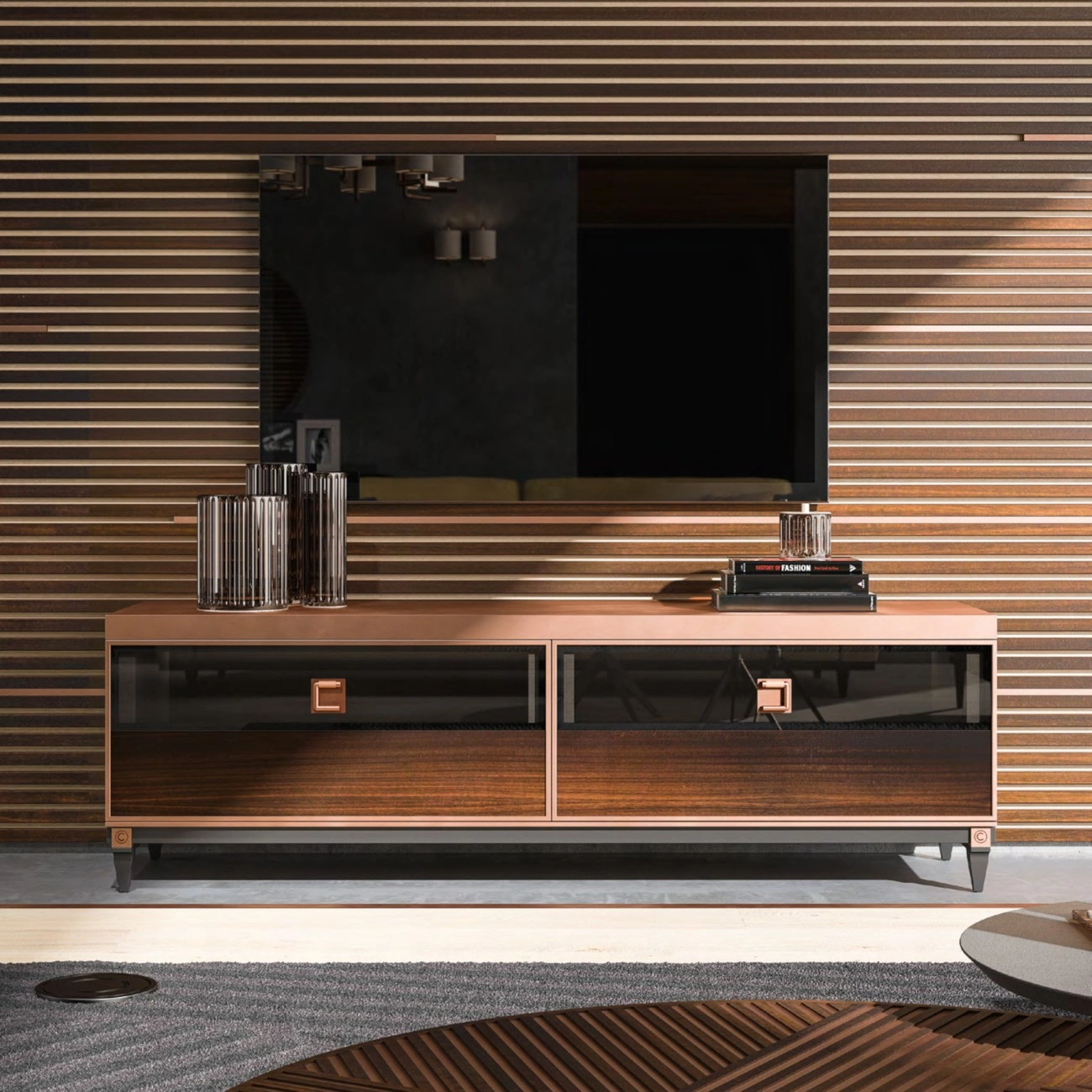
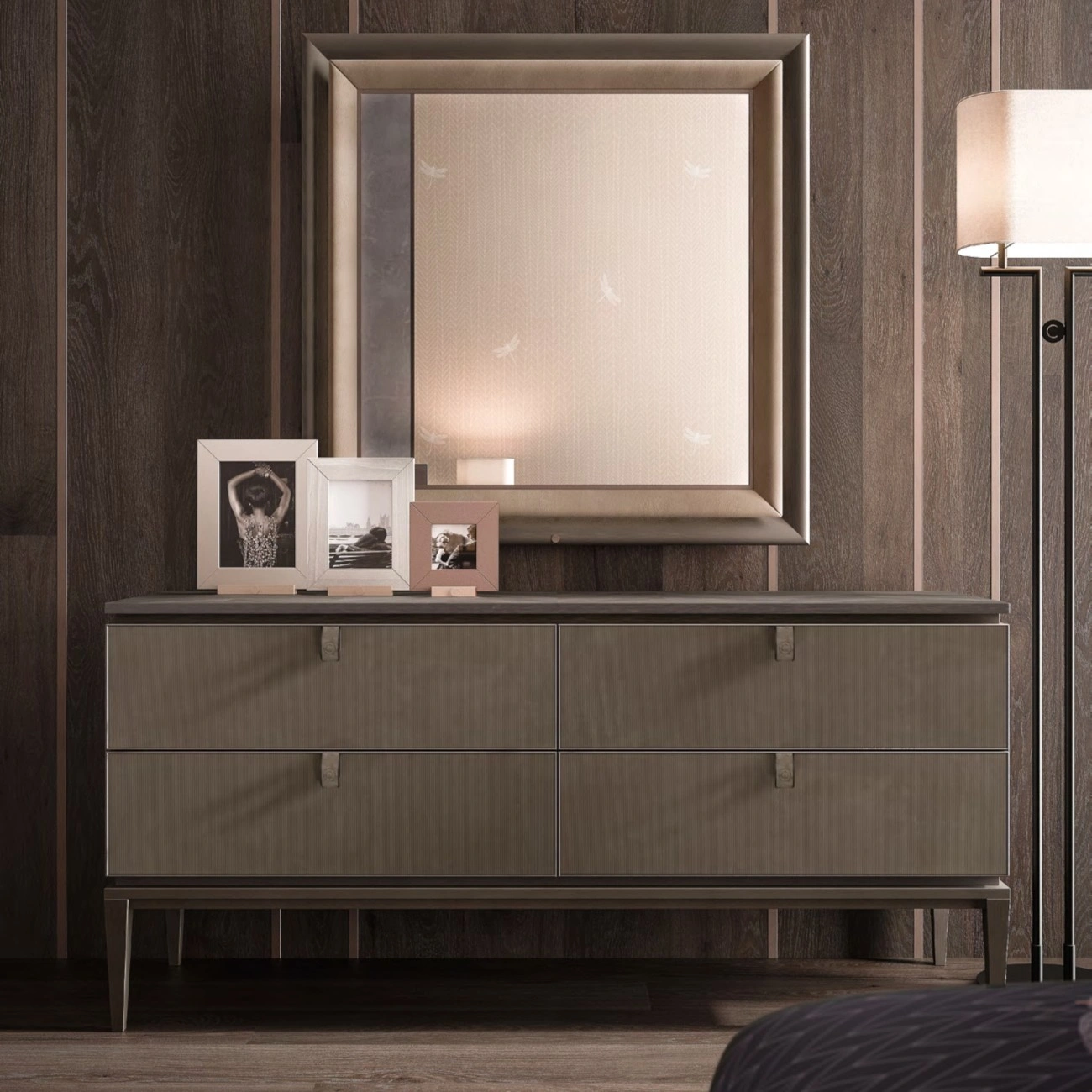
Even in storage or cabinetry, the choices matter. Cocoa cabinetry with chrome hardware conveys rigor, a certain seriousness, while chrome shelving against a cocoa wall can feel playful and airy. The pair is flexible if treated as material conversation rather than literal matching. It’s less about design rules and more about listening to how each surface behaves.
Emotional Resonance
Cocoa and chrome evoke mood in ways color charts rarely capture. Cocoa offers grounding, comfort, a sense of stability. Chrome adds energy, a modernity, a hint of audacity. A room is no longer just “decorated”; it exists as a space that feels lived in, deliberate, slightly unpredictable.
The tension between warmth and cold, mass and reflection, creates a subtle narrative. Rooms that lean into this properly reward repeated observation. You notice the grain of the wood, the pull of light across metal, the way fabric catches shadows. The room is not only visually rich; it feels experiential.
Why It Works Over Time
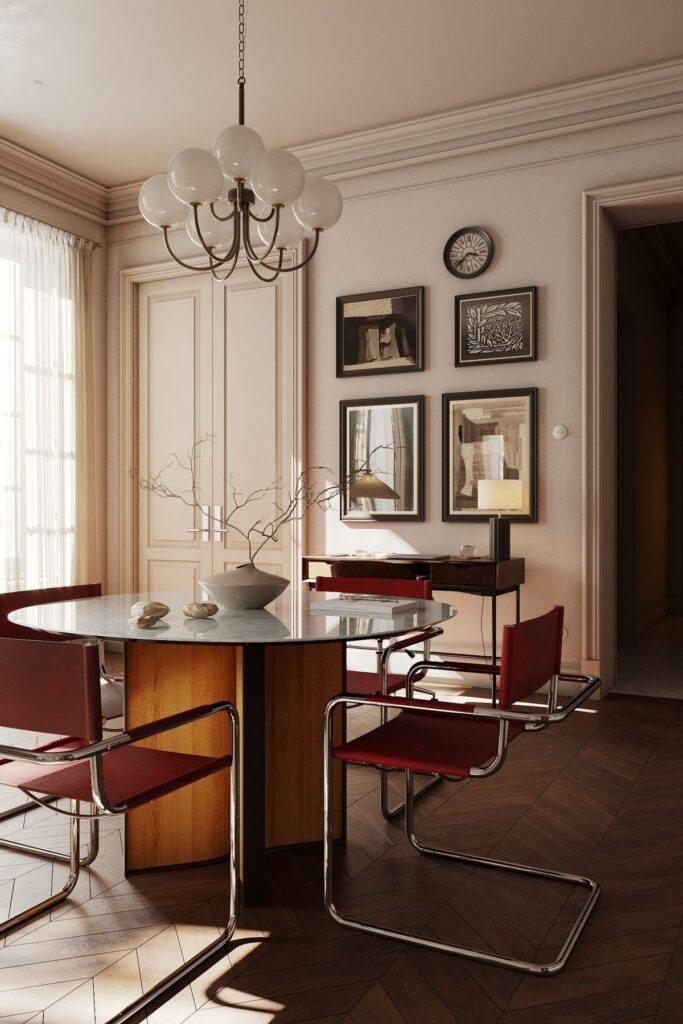
The cleverness of cocoa and chrome is that the pairing ages. Cocoa warms, leather softens, wood darkens or lightens according to its nature. Chrome will pick up fingerprints, small scratches, the tiniest dulling in places you touch frequently. These imperfections are assets—they show life, history, use. A home built around these contrasts feels alive rather than staged.
And because neither material is relying on color for attention, the room remains relevant even as trends shift. A chrome-accented cocoa sofa from today could sit comfortably alongside new pieces in twenty years without looking dated. That’s a rare kind of timelessness.
Living with Friction
The most compelling interiors I’ve seen are those that accept friction. Cocoa absorbs; chrome reflects. Hard meets soft, warm meets cold, velvet meets metal. The eye rests, moves, rests again. Nothing dominates, yet nothing is neutral. It’s a tension that persists without resolution, the kind of complexity humans notice subconsciously.
Cocoa and chrome in practice are rarely loud. They don’t announce themselves as “design-forward” or “avant-garde.” They simply exist, and in their quiet insistence, they make the rest of the room feel sharper, softer, richer. They reward attention. They allow life to leave traces. That is what makes them enduring.