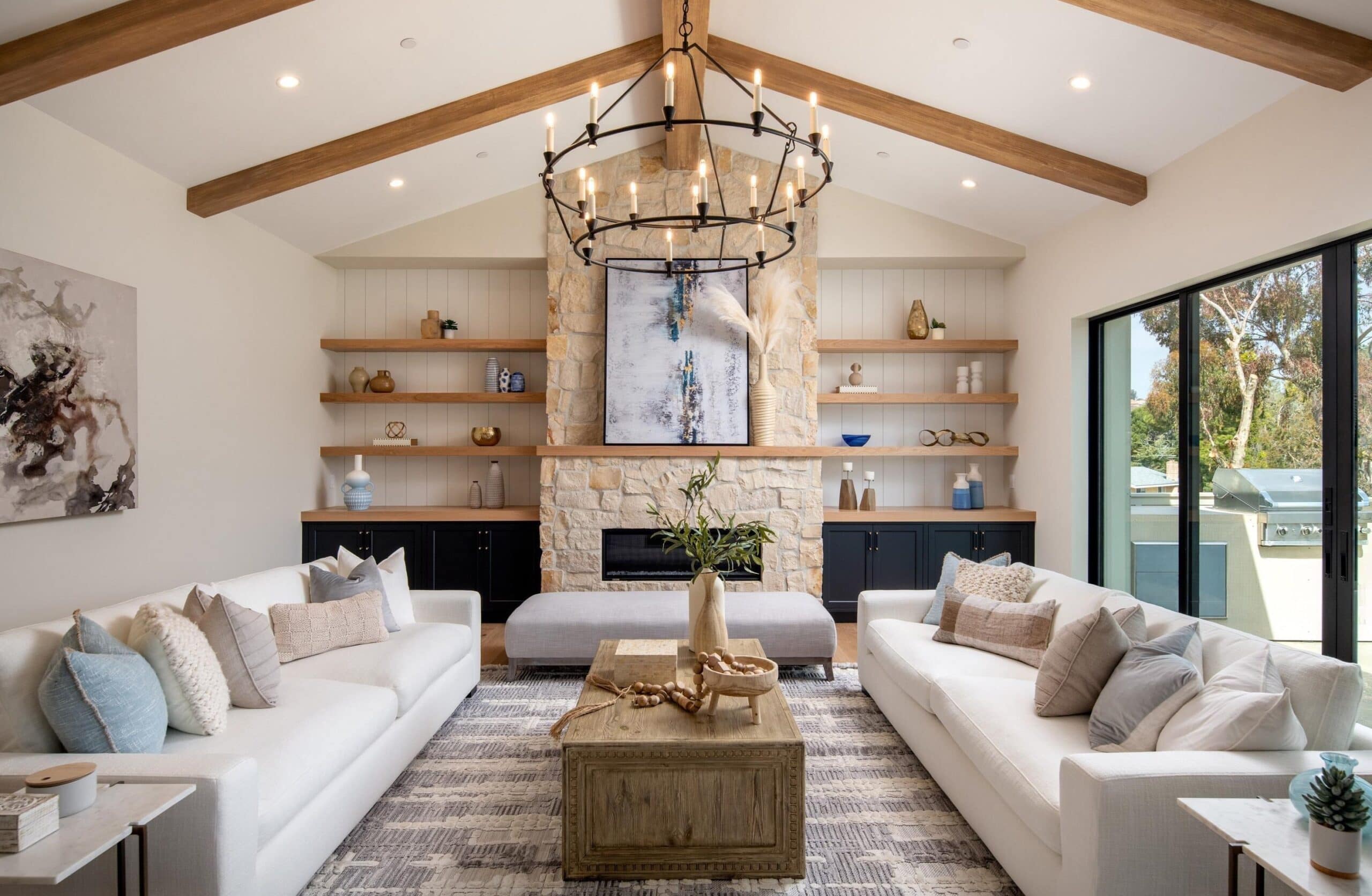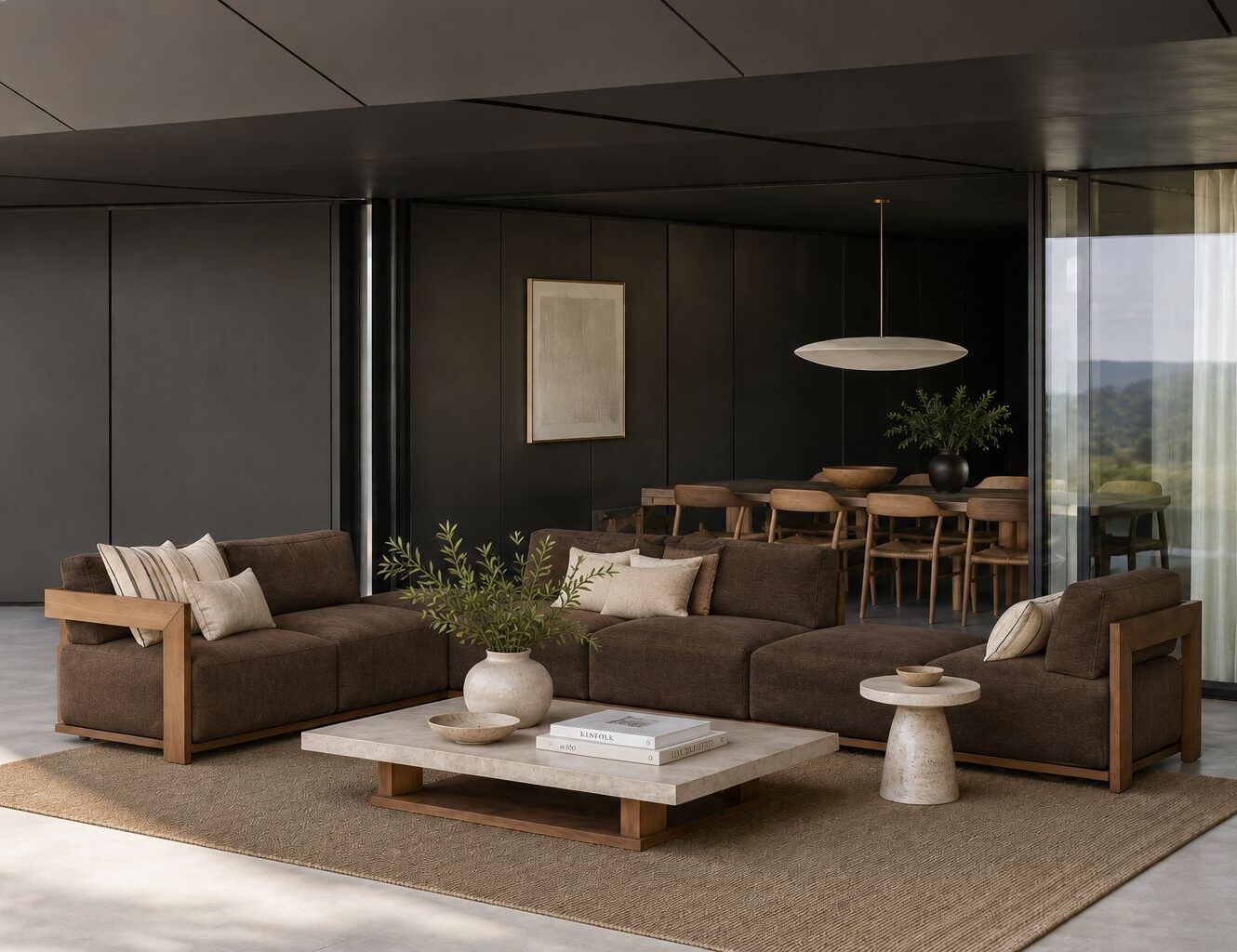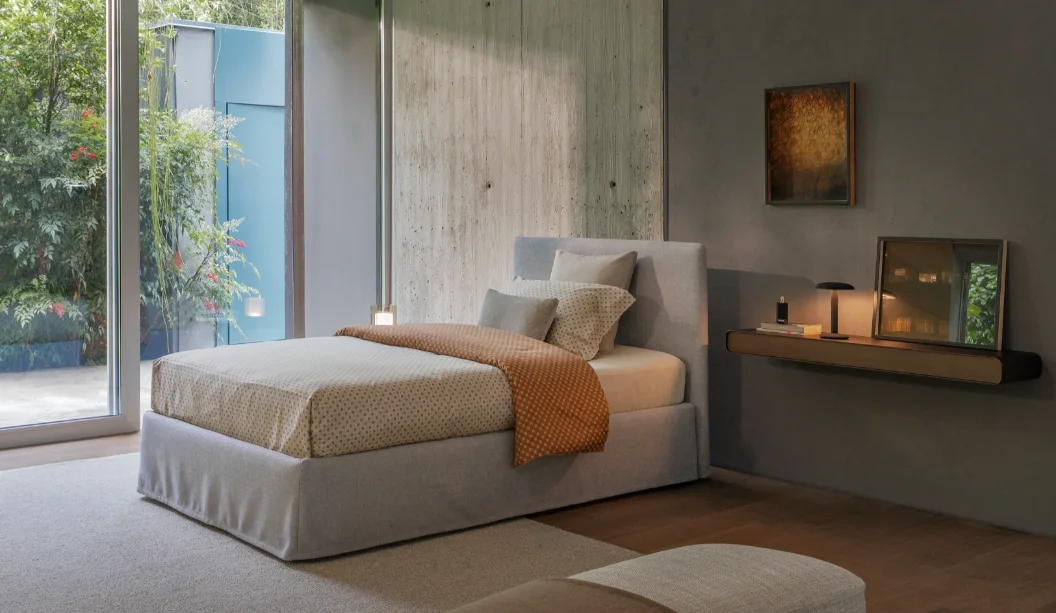

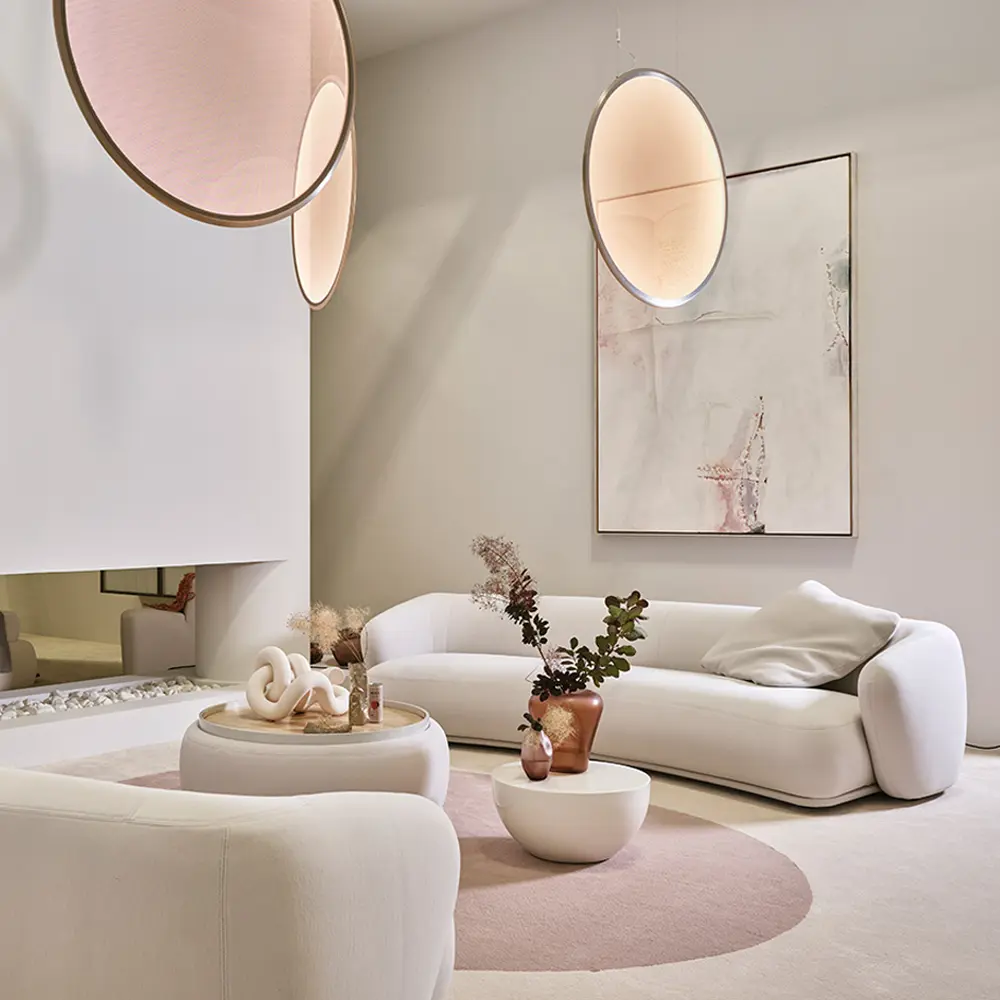
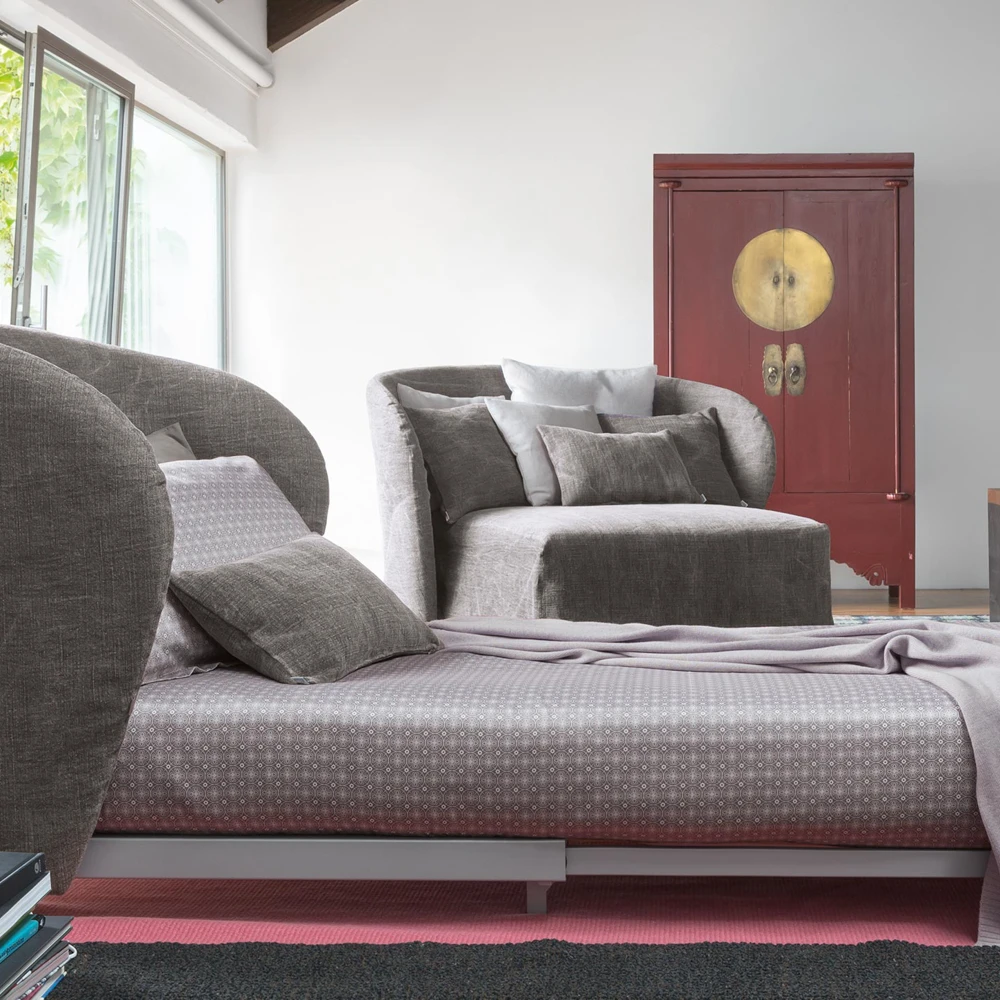




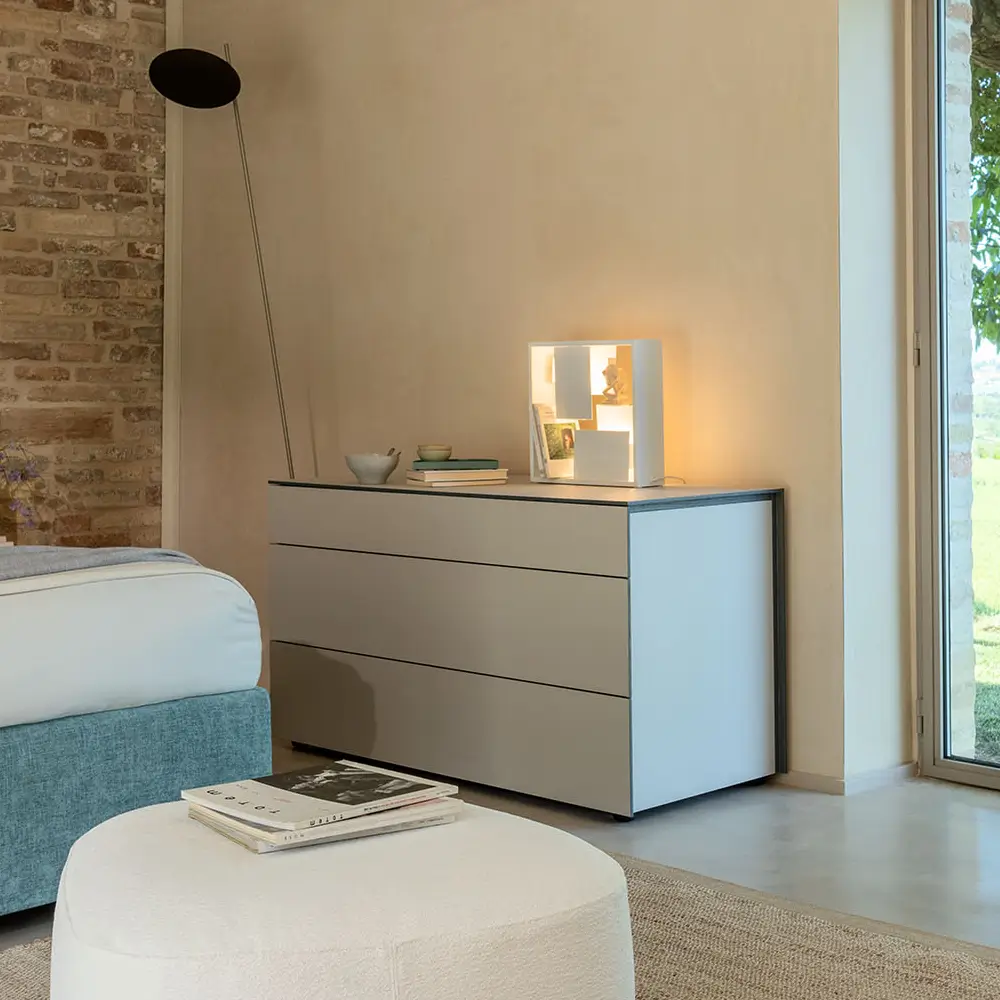
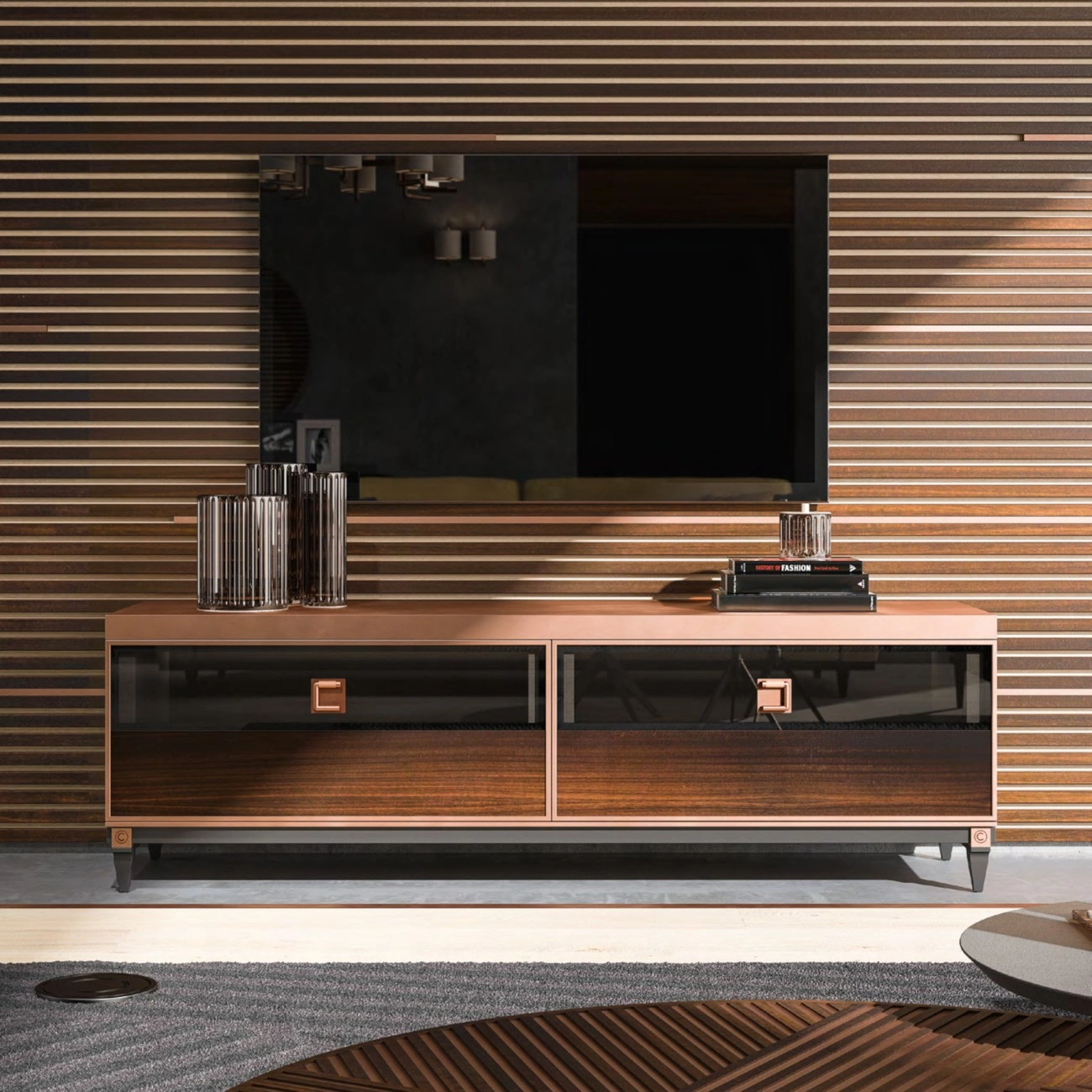
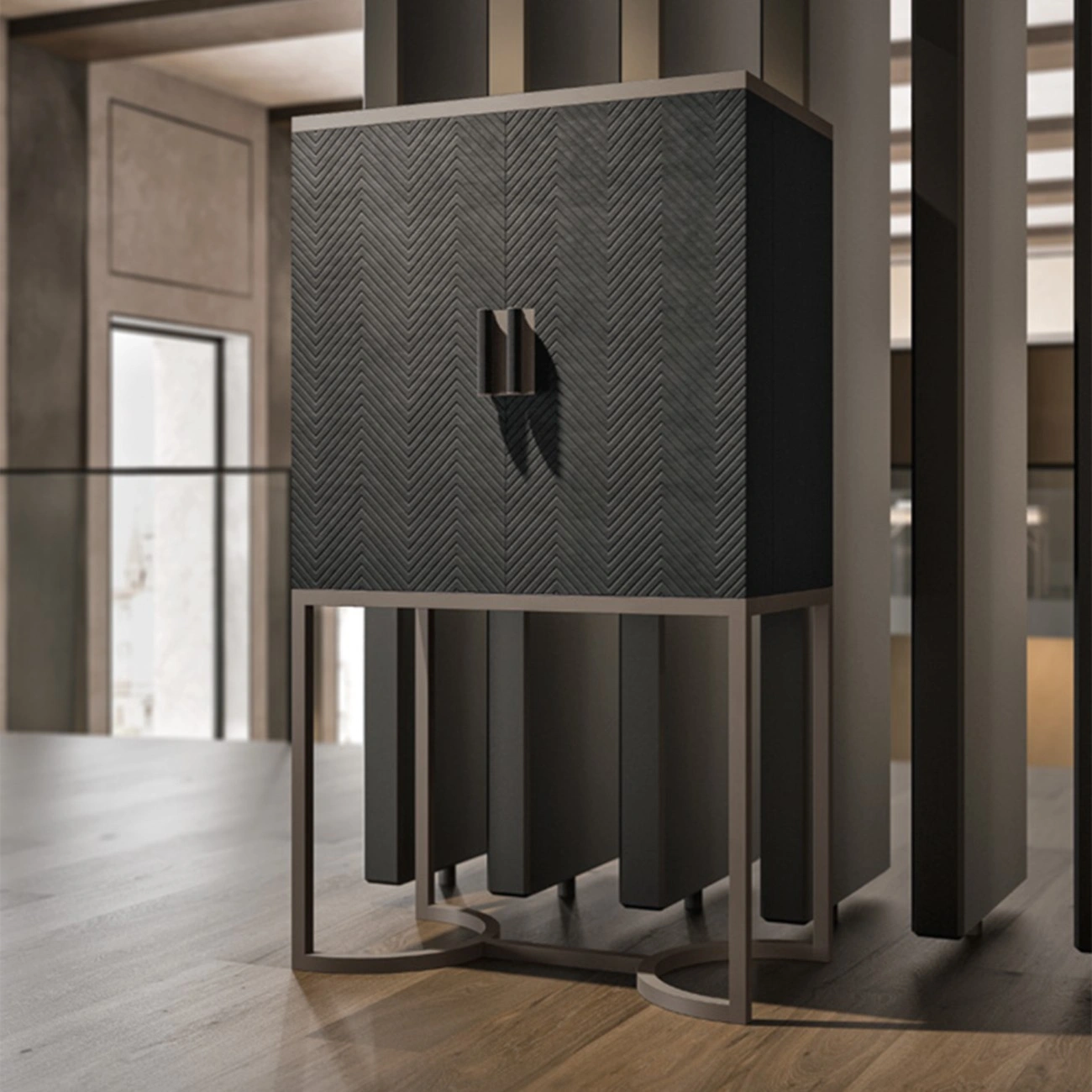

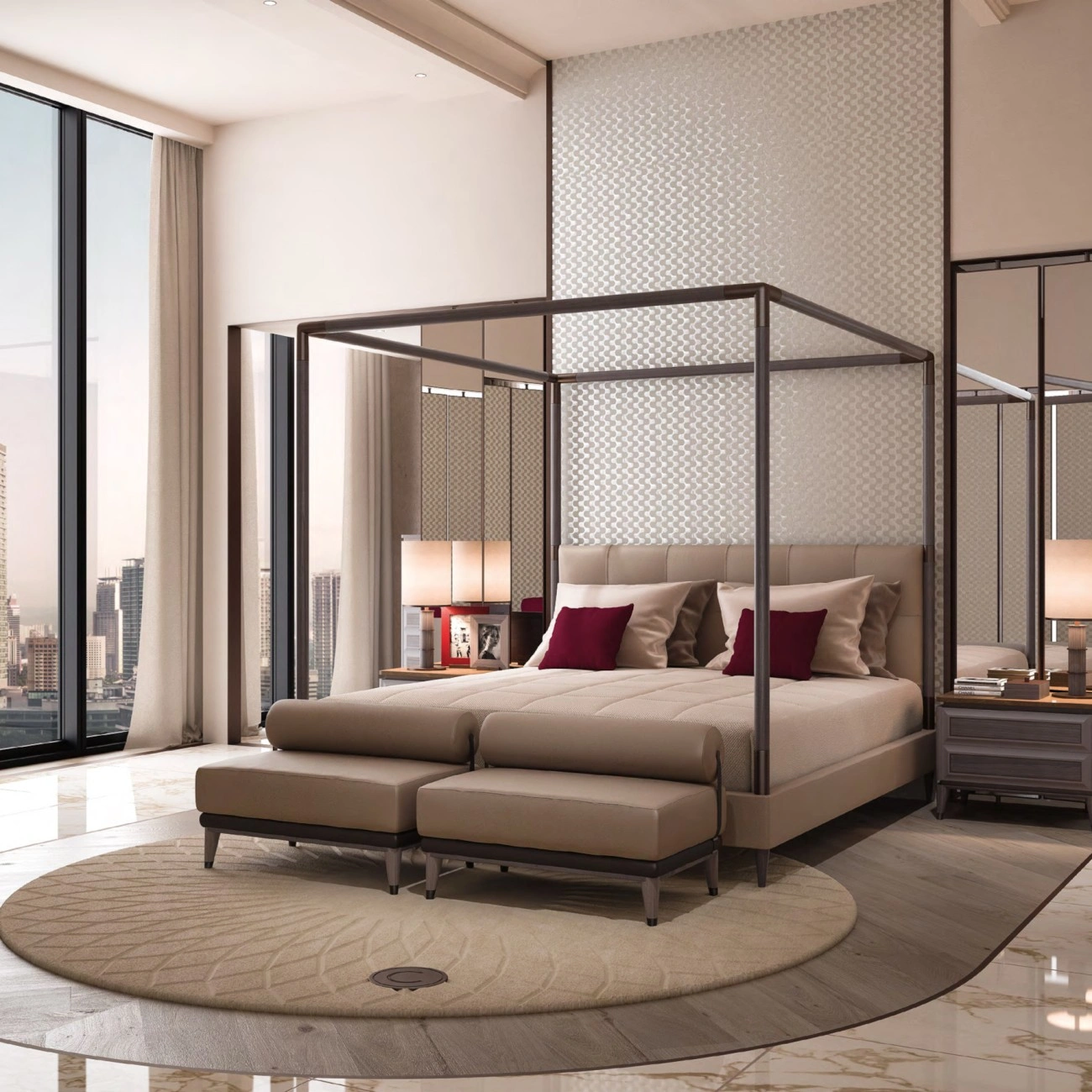
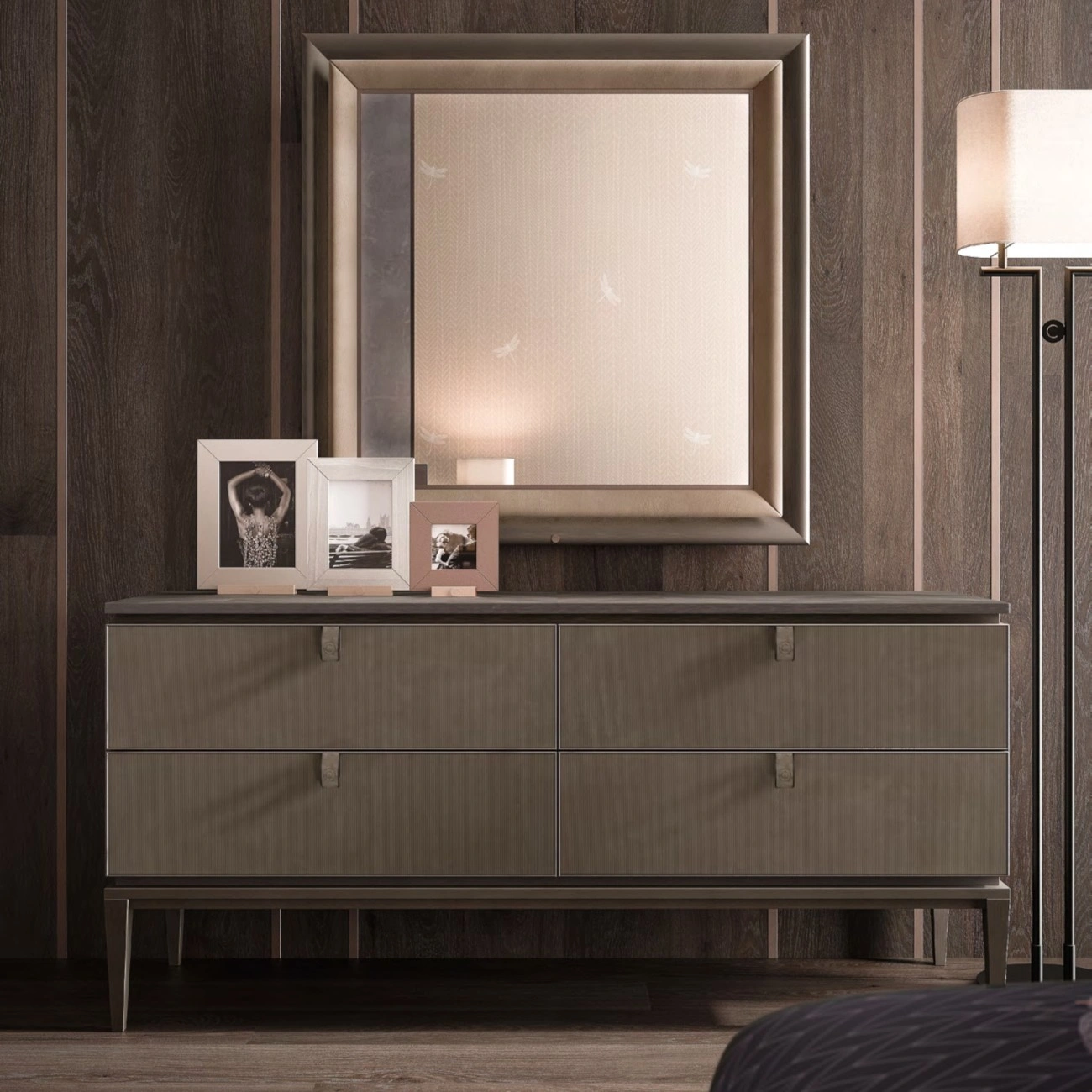

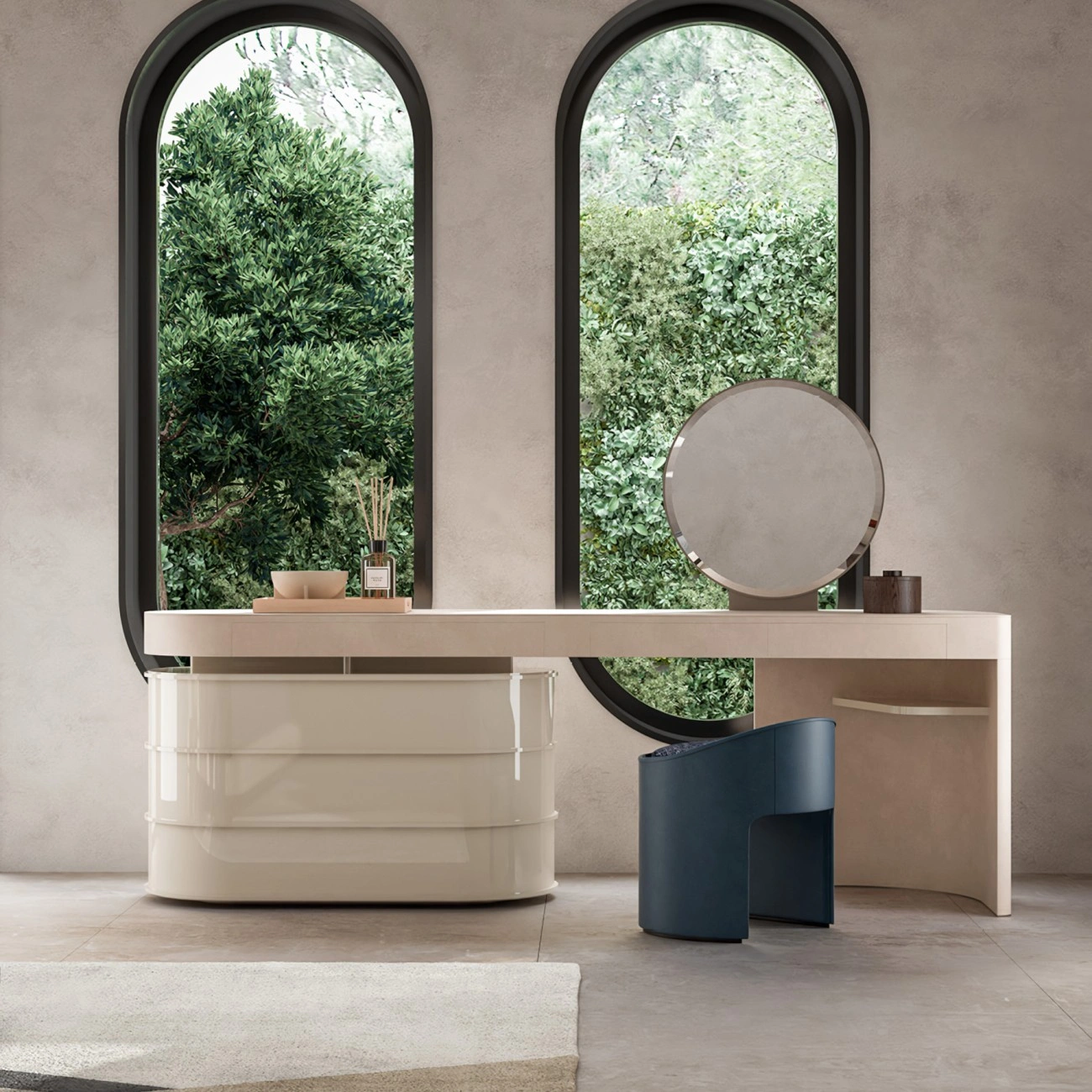
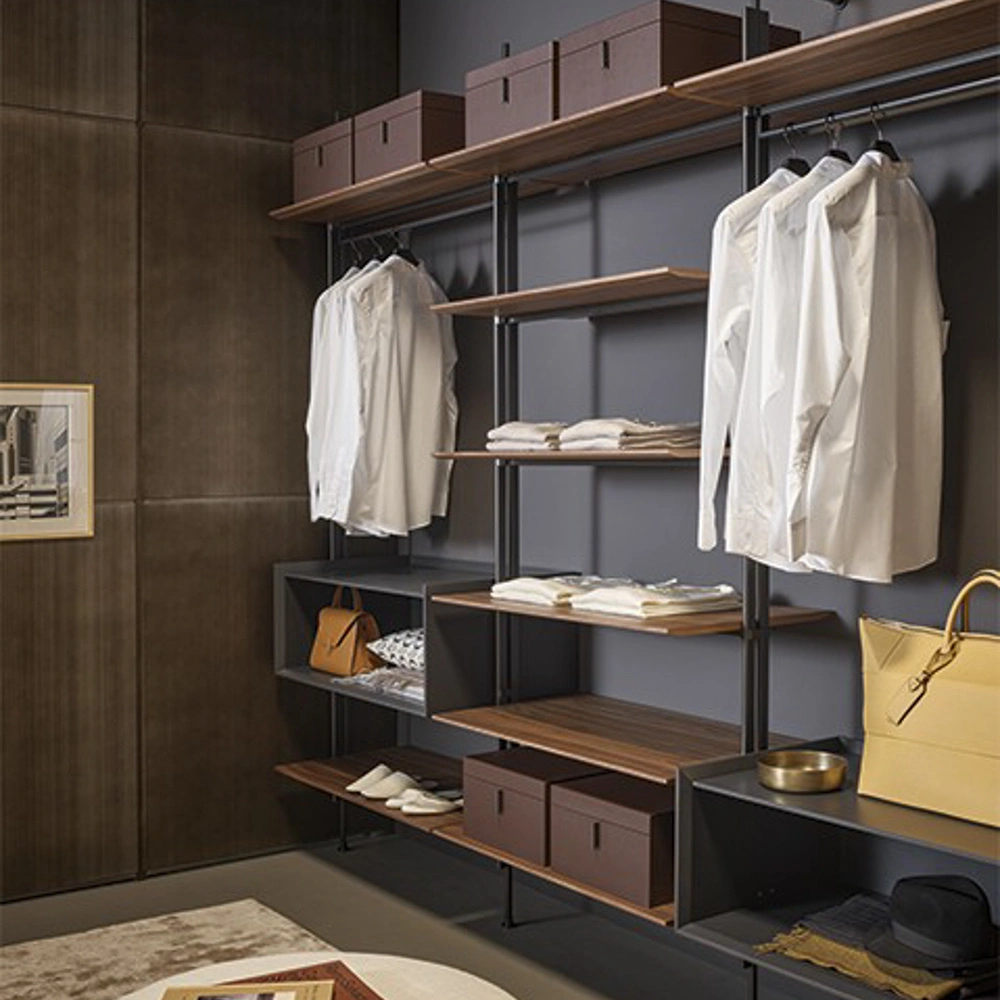
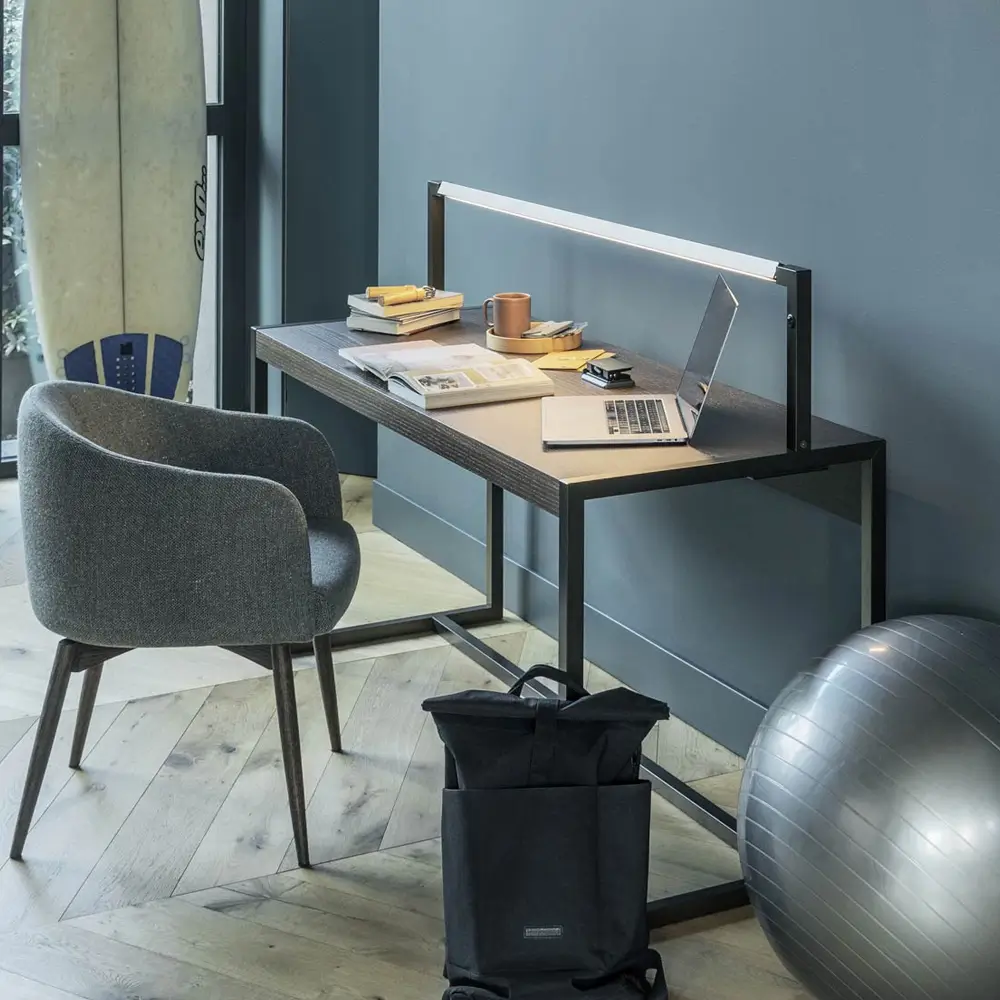






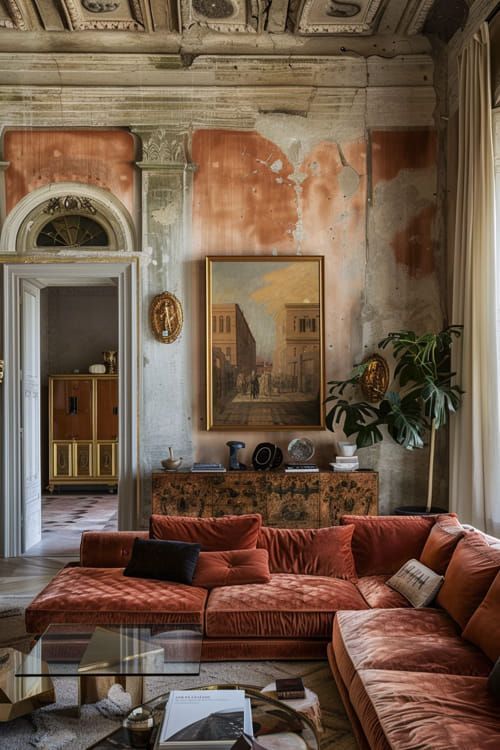
Walls. You see them every day, mostly without noticing, until they’re perfect or painfully wrong. Smooth plaster, stretched wallpaper, that perfectly applied matte paint that looks too sterile to live with. Those walls disappear, sure, but they also flatten a room. Wabi-sabi walls do the opposite. They exist. You notice them. Slight trowel marks, uneven plaster, faintly darker corners beautifully paired with custom furniture—these are not mistakes. They’re traces of human hands, traces of material life. Subtle, layered, a little unpredictable. And suddenly, a room feels like it belongs to someone, not a showroom.
It’s funny how this trend is everywhere but still quiet. You might not even notice until you’ve lived with it for a while. There’s depth in the imperfections. They create shadow and light, texture and story, without dominating the space. You almost forget it’s a wall.
Texture That Breathes
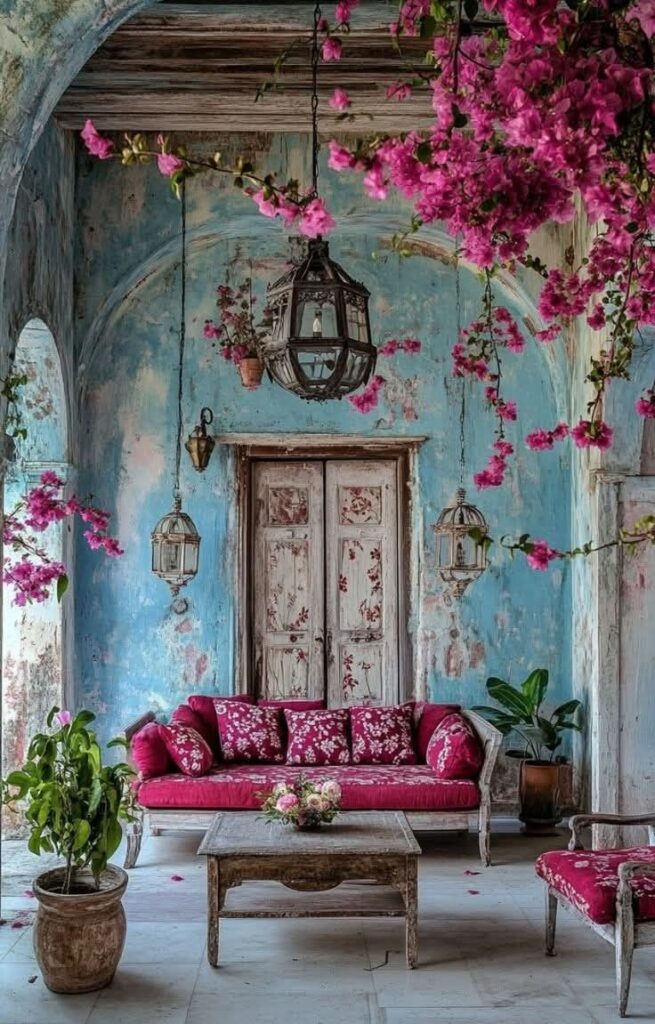
Texture is what makes wabi-sabi walls different. Smooth walls are polite, predictable. They reflect light evenly, they make the eye search for flaws that aren’t there. Wabi-sabi walls are alive in comparison. Uneven plaster, limewash, clay pigments—they move with the day. A morning sunbeam hits one patch differently than an evening glow. Shadows form in ways you don’t notice consciously but your body does. Tiny cracks, faint brush marks, small pits—they give your eyes something to follow, something to rest on.
Even raw wood panels contribute. Knots, subtle splits, irregular grain. The wall becomes part of the atmosphere rather than just background. You notice it, even when you’re not thinking about noticing.
Imperfection as Intention
The paradox is that these walls look accidental but they’re deliberate. Every variation, every brush stroke, every tonal shift is carefully chosen to feel effortless. The brain slows down. Perfect walls demand inspection; wabi-sabi walls invite lingering.
In high-end interiors, this subtlety is what signals sophistication. Homes want to feel curated but lived-in. Not sterile. Not forced. Intentional imperfection is hard to do, which is why it reads so well.
Light, Shadow, and Atmosphere
Wabi-sabi walls live with light. Uneven surfaces change as sunlight moves. A wall can feel warm and earthy in the morning, cooler and muted in the evening. Shadows shift subtly. Even artificial lighting matters. Soft sconces, indirect uplights, pendant lamps—they highlight texture instead of flattening it. The wall breathes with the room.
Over time, subtle changes—pigment softening, cracks deepening—keep the space alive. The room feels dynamic without moving a single thing.
Material Matters
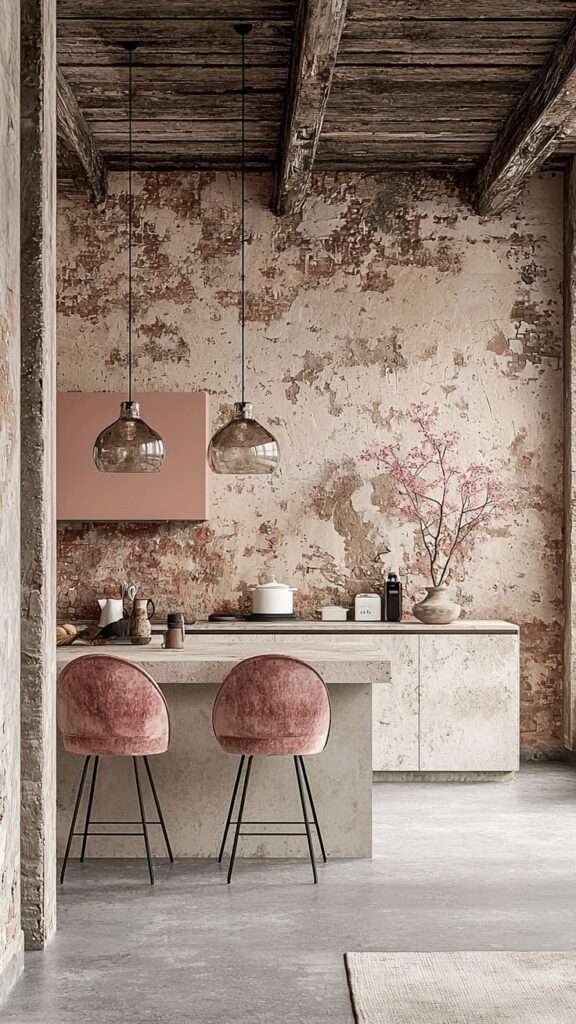
Natural materials dominate. Plaster, clay, lime, raw wood. Pigments from earth or minerals create depth synthetic paint rarely achieves. Even the tiniest variation in sheen matters: matte, eggshell, soft glaze. Reclaimed wood with knots and faint cracks adds story. History. The wall becomes a timeline, quietly carrying process and origin.
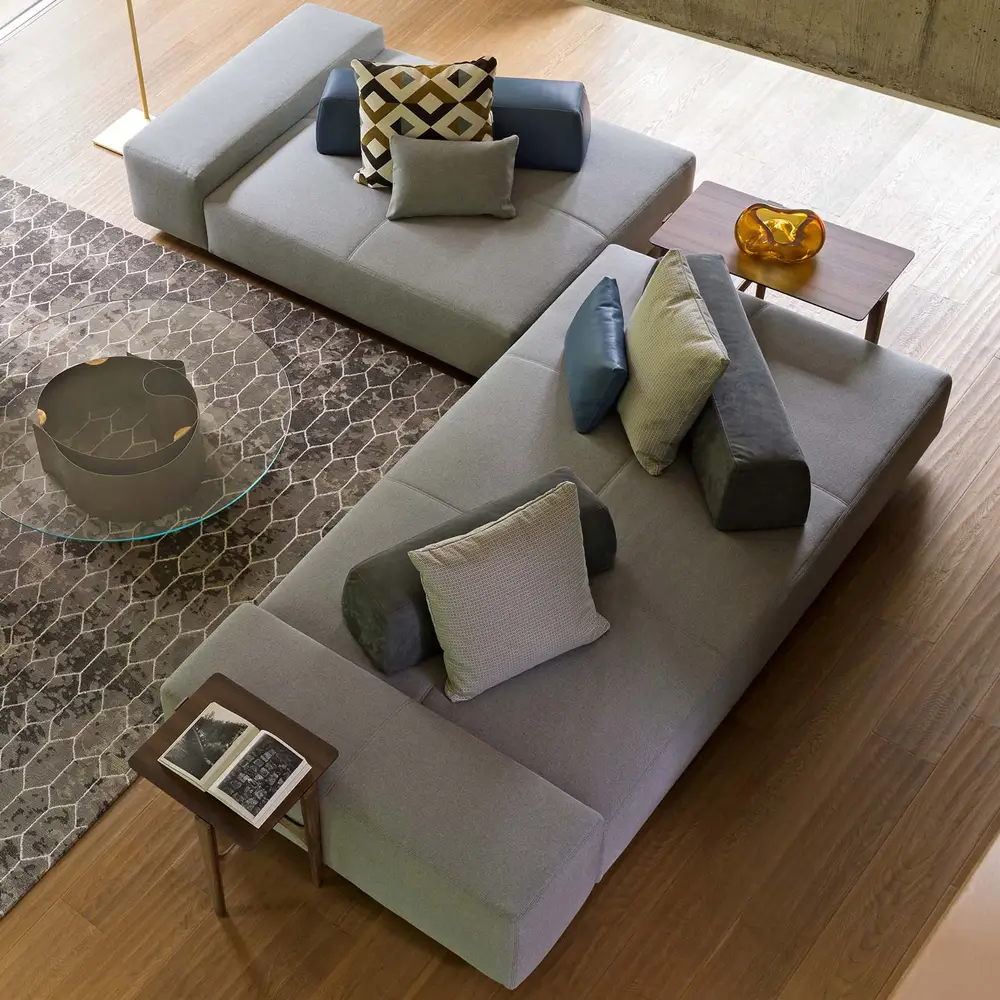
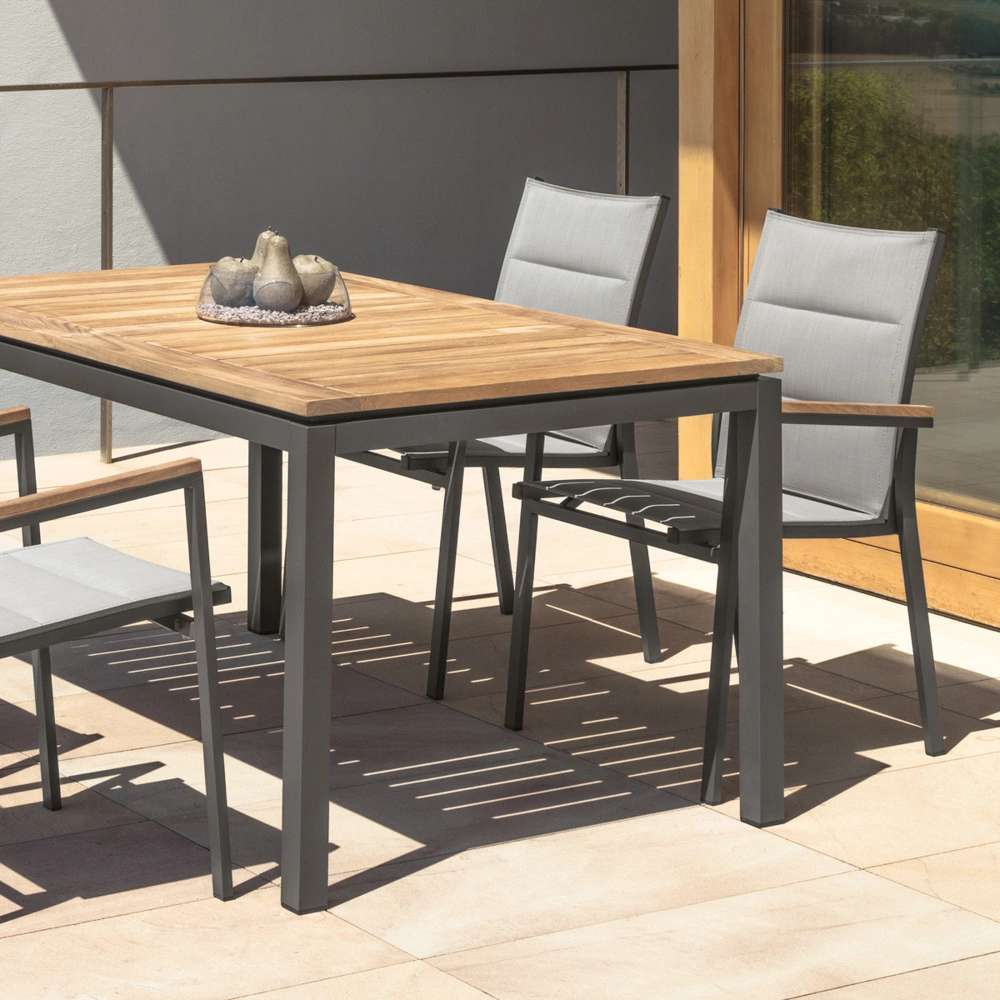
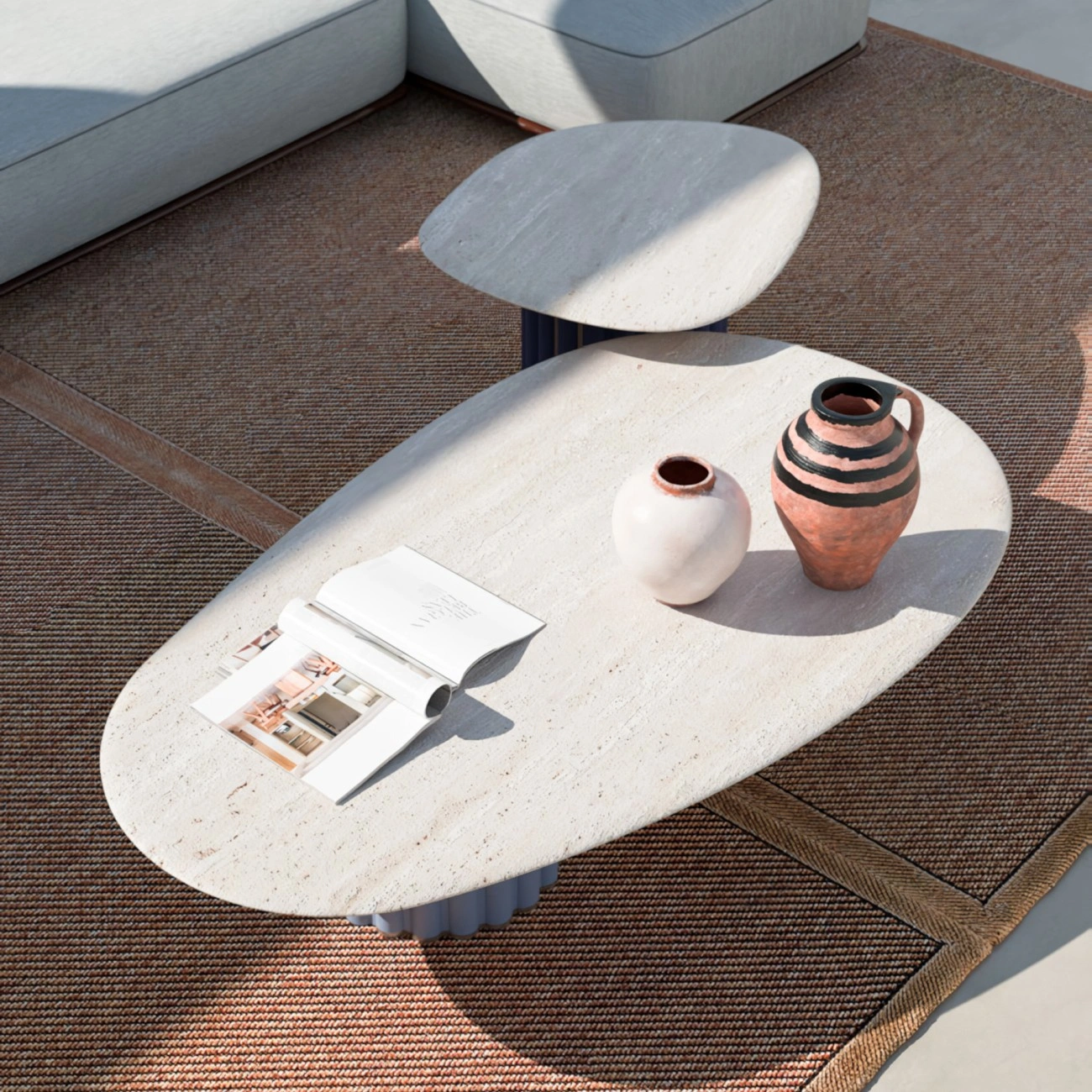
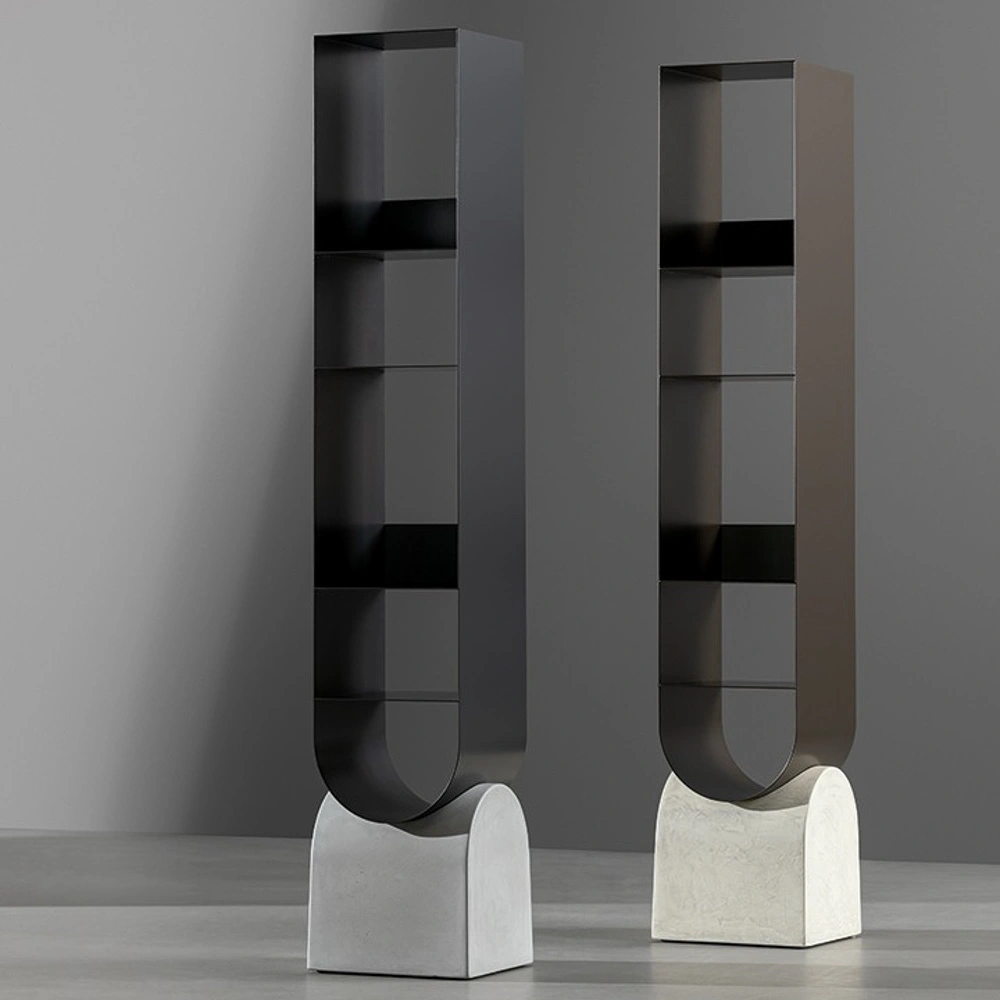
Modern interiors embrace this by pairing rough walls with smooth furniture. Sleek sofas, polished tables, streamlined metal fixtures—they contrast without competing. That tension makes spaces feel intentional but alive.
Modern Applications
Wabi-sabi walls signal restraint without shouting. A neutral sofa against textured plaster, a minimalist table beneath uneven limewash, a single piece of art on a wall that already has depth. It’s layering without fuss.
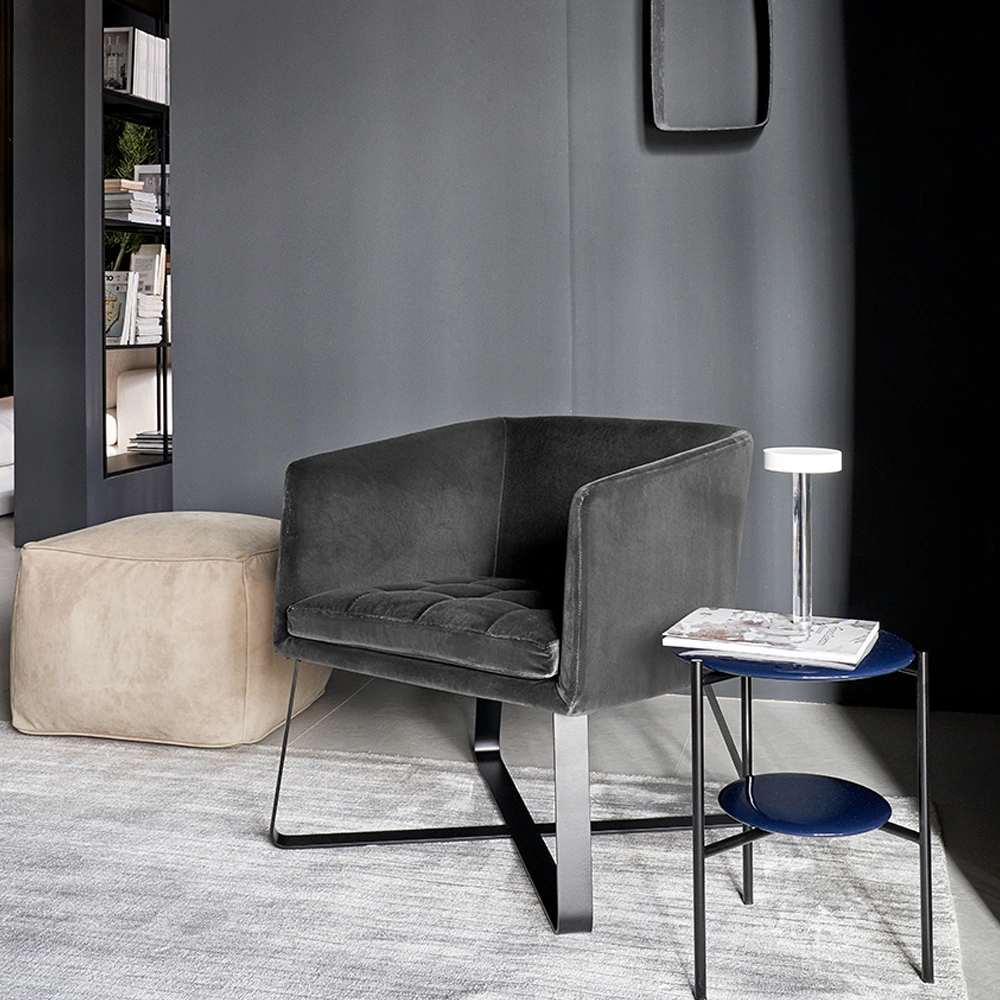
Earthy tones dominate: soft gray, pale beige, clay, muted olive. The wall remains grounding. Jewel-toned accents, brass, polished metal—they work, but they follow the wall’s lead. The wall anchors the room quietly.
Sensory Subtlety
Wabi-sabi walls engage more than the eyes. They invite touch—even if only in thought. Uneven plaster softens sound, making the room feel quieter. Wood and clay give subtle tactile cues. Even scent plays a role: natural materials have faint smells, comforting in an almost unconscious way.
Humans respond to imperfection neurologically. Perfect symmetry can feel sterile. Slight irregularities reduce cognitive load while engaging attention. A lived-in surface, even visually, can calm the brain more than a flat, flawless one.
Impermanence and Aging
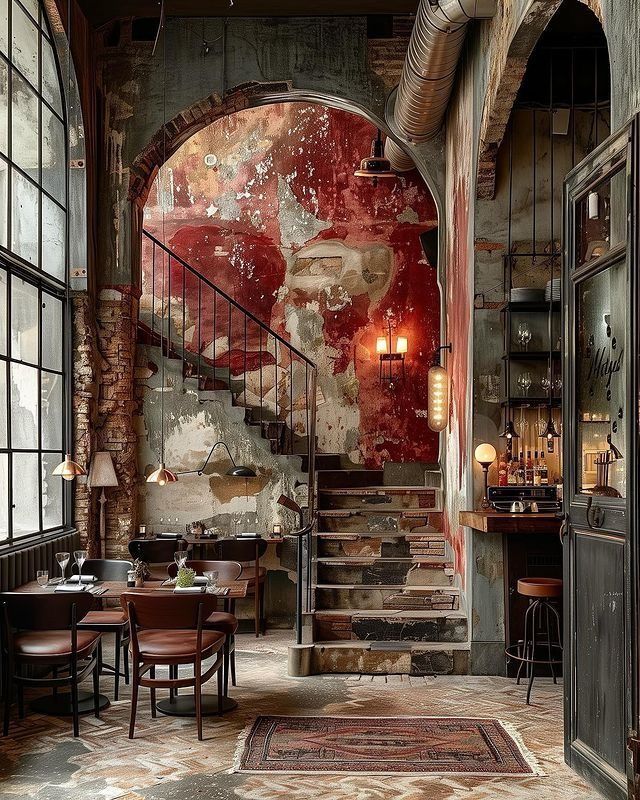
Wabi-sabi embraces time. Pigments fade, surfaces shift, cracks appear. These are features, not flaws. Walls evolve with the home. They reflect light, humidity, and presence.
You notice it subtly. Shadows move differently. A crack deepens. The wall keeps time quietly. That impermanence makes a room feel intimate. You live with it, and it lives with you.
Practicalities
Wabi-sabi walls aren’t just slapped together. Brush strokes, layering, drying time—all deliberate. Mistakes can add charm, but the overall effect is intentional. Maintenance is unconventional. Some scuffs enhance the wall, though care is needed. Imperfection isn’t neglect.
Skilled hands usually get the subtlety right. You want walls that feel raw but curated, uneven but intentional. Too rough, and it looks unfinished. Too smooth, and it’s fake. The tension is delicate, and that’s exactly the point.
Why It’s Trending
Why now? Homes have been too polished, too curated, too perfect for too long. People want texture, tactility, authenticity. Wabi-sabi walls answer that. They age, respond to light, reflect life without demanding attention. They’re quietly luxurious. Subtle, layered, sophisticated without needing to announce themselves.
The best interiors with wabi-sabi walls don’t showcase the wall. They show how the wall interacts with everything else: furniture, light, people. Imperfection becomes choreography. A room feels alive without noise.
Living With Wabi-Sabi
The proof is in daily life. Do the walls feel comfortable in sunlight, artificial light, or evening glow? Do furniture and textiles complement them without clashing? Do imperfections foster connection instead of irritation?
A wabi-sabi wall evolves. It breathes. It changes. Imperfection becomes permanence. Impermanence becomes beauty. And somehow, it works.