












Large rooms can be both a luxury and a design challenge. They give you the space to breathe, experiment, and showcase sculptural or bespoke furniture—but they also insist on a level of spatial intelligence that smaller rooms never demand. One wrong proportion and the entire room feels either vacant or visually heavy. Few pieces highlight this more clearly than the sofa. In particular, the quiet debate between curved sofas vs. straight sofas reveals exactly how shape, movement, and scale influence the architecture of a room.
Designers aren’t choosing between these silhouettes for style alone. Each one affects circulation patterns, focal points, conversational layouts, and the perceived geometry of the room. For large rooms—living spaces, lounge zones, open-concept interiors—the decision is rarely arbitrary. It becomes a study of how people move, how light falls, and how scale can be used to make a grand space feel intentional.
What follows is a deep look at how both forms behave in expansive interiors, how they shape ambience, and when each one becomes the superior choice.
The Role of Shape in Expansive Interiors
Scale in large rooms requires a guiding principle. Straight-lined sofas rely on linearity and structure. Curved sofas rely on movement and softness. Both alter the architectural energy of an interior:
- A straight sofa reinforces the grid of the room—it runs parallel to a wall, aligns with a rug, or defines the boundaries of a seating area.
- A curved sofa breaks that grid, introducing a sense of flow and inviting people in rather than directing them along rigid lines.
In small rooms, curved shapes can feel indulgent or intrusive.
In large rooms, they become sculpture. And that distinction is what makes the conversation interesting.
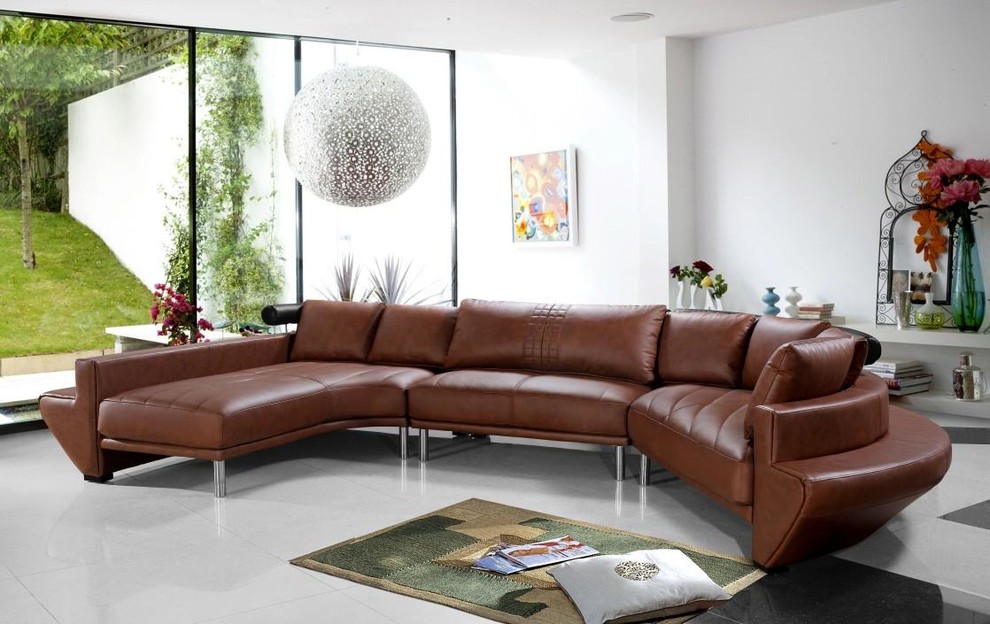
Curved Sofas: The Case for Flow and Soft Grandeur
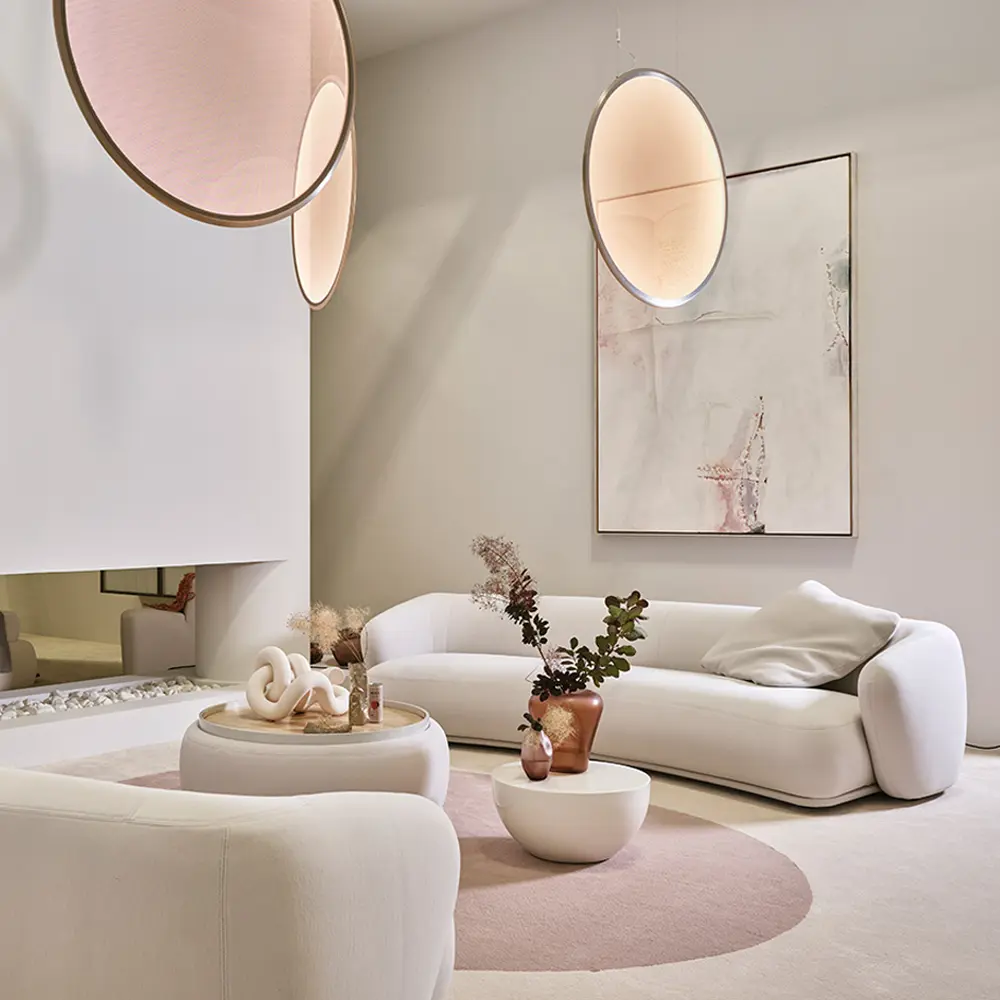
Curved sofas thrive in large spaces because they consume space gracefully. Instead of filling a room, they shape it.
1. They Create Natural Movement
Large rooms often need guidance. Without it, people wander through them without a sense of direction or purpose. A curved sofa provides that sense of choreography. Its shape encourages circulation around its edges and draws guests into a central point.
In open-concept homes, this is especially valuable—curved silhouettes can subtly divide zones without erecting physical barriers.
2. They Anchor Conversation
Straight sofas can create a conversational setup, but they do so by forming corners or lines. A curved sofa does it inherently. The internal arc places everyone in visual proximity, allowing a more comfortable and organic gathering.
In large rooms that host gatherings, events, or lounges, this makes an immediate difference in how people interact.
3. They Soften Architectural Rigor
Large rooms with high ceilings, rectangular proportions, and angular architecture can feel austere. A curved sofa counterbalances that sharpness with radius and volume. It offers a counterpoint that feels warm yet sophisticated—not whimsical, but sculptural in a mature way.
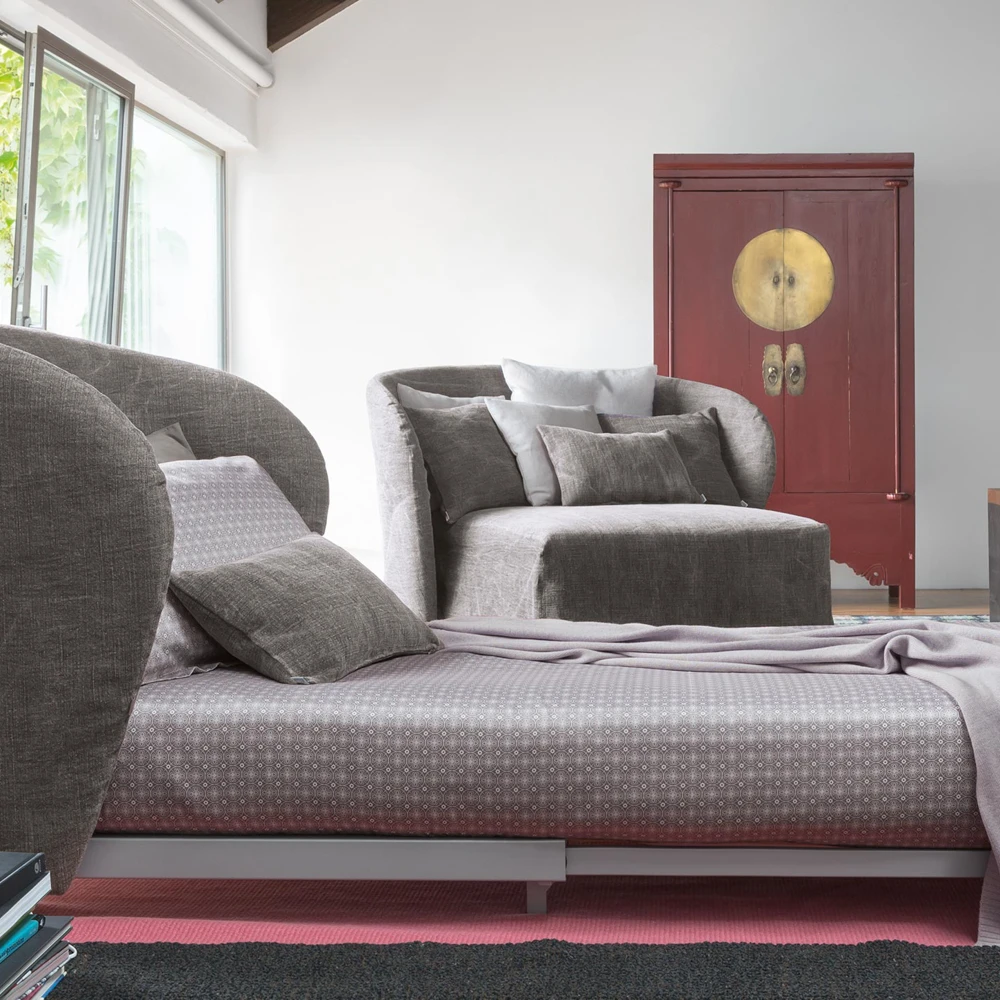
Think of the Flou “Pierre” sofa or the Gervasoni platforms—rounded forms that treat upholstery as architectural sculpture. These silhouettes work best when they aren’t fighting for breathing room. Large rooms give them exactly the freedom they need.
4. They Stand Alone as Statement Pieces
A curved sofa never hides. Even if it’s upholstered in a quiet, textured fabric, the silhouette itself is enough to create a centerpiece. In large rooms where visual weight needs to be distributed thoughtfully, a curved piece can act as an anchor without overwhelming the space.
Rather than forcing symmetry, curved forms invite balance—a more elevated approach to composition.
Straight Sofas: The Case for Structure and Precision
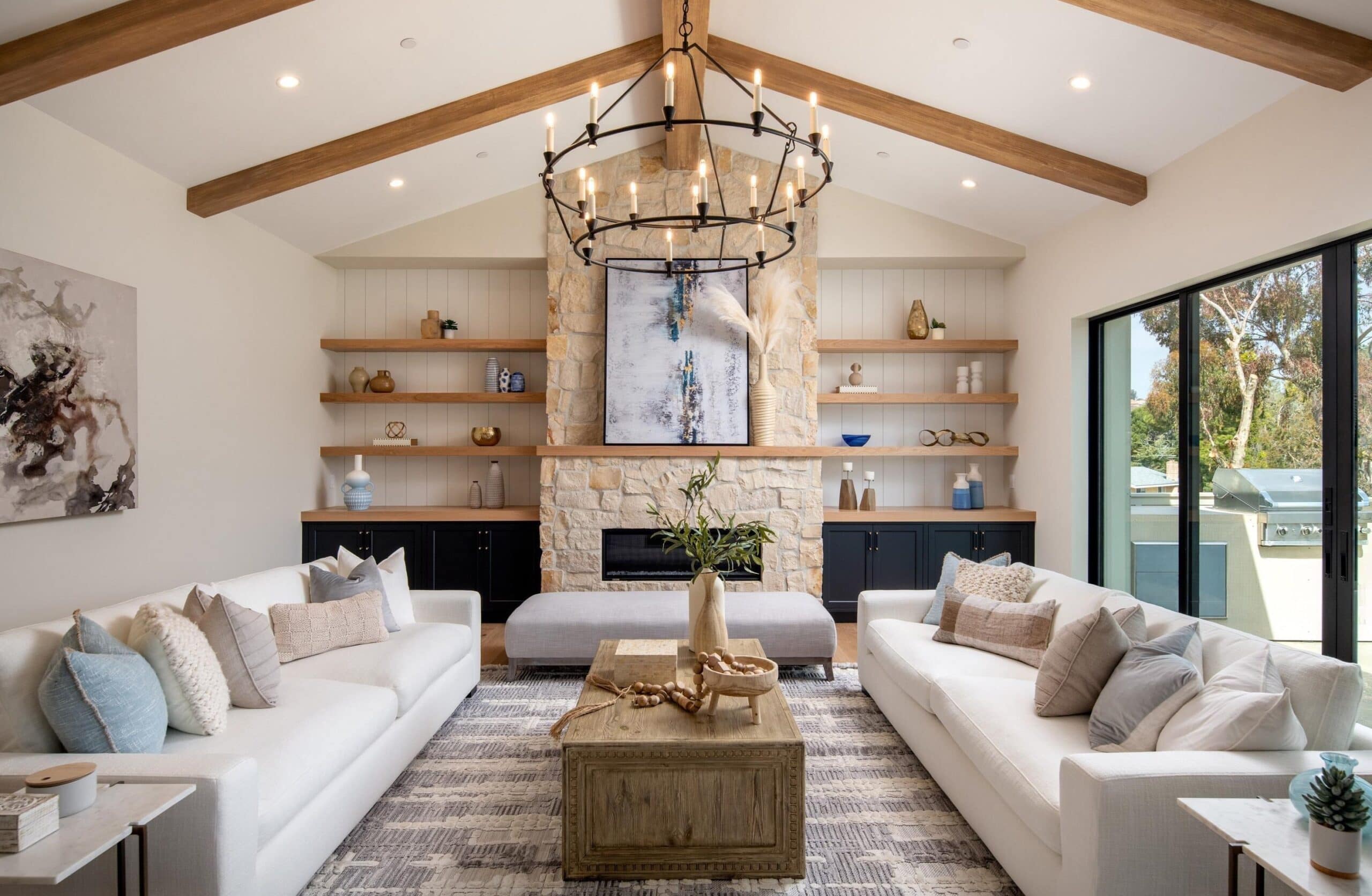
Straight sofas are the backbone of modern living spaces. Their geometry translates well across modern interior styles, and in large rooms, they offer a kind of precision that curved sofas simply can’t replicate.
1. They Define Space More Clearly
Large rooms demand boundaries. A straight sofa can create them instantly. Its linearity easily frames a rug, anchors a media wall, or delineates a seating zone from a dining or office area.
For designers who prefer clean architectural delineation, straight sofas are often essential.
2. They Scale Up Easily
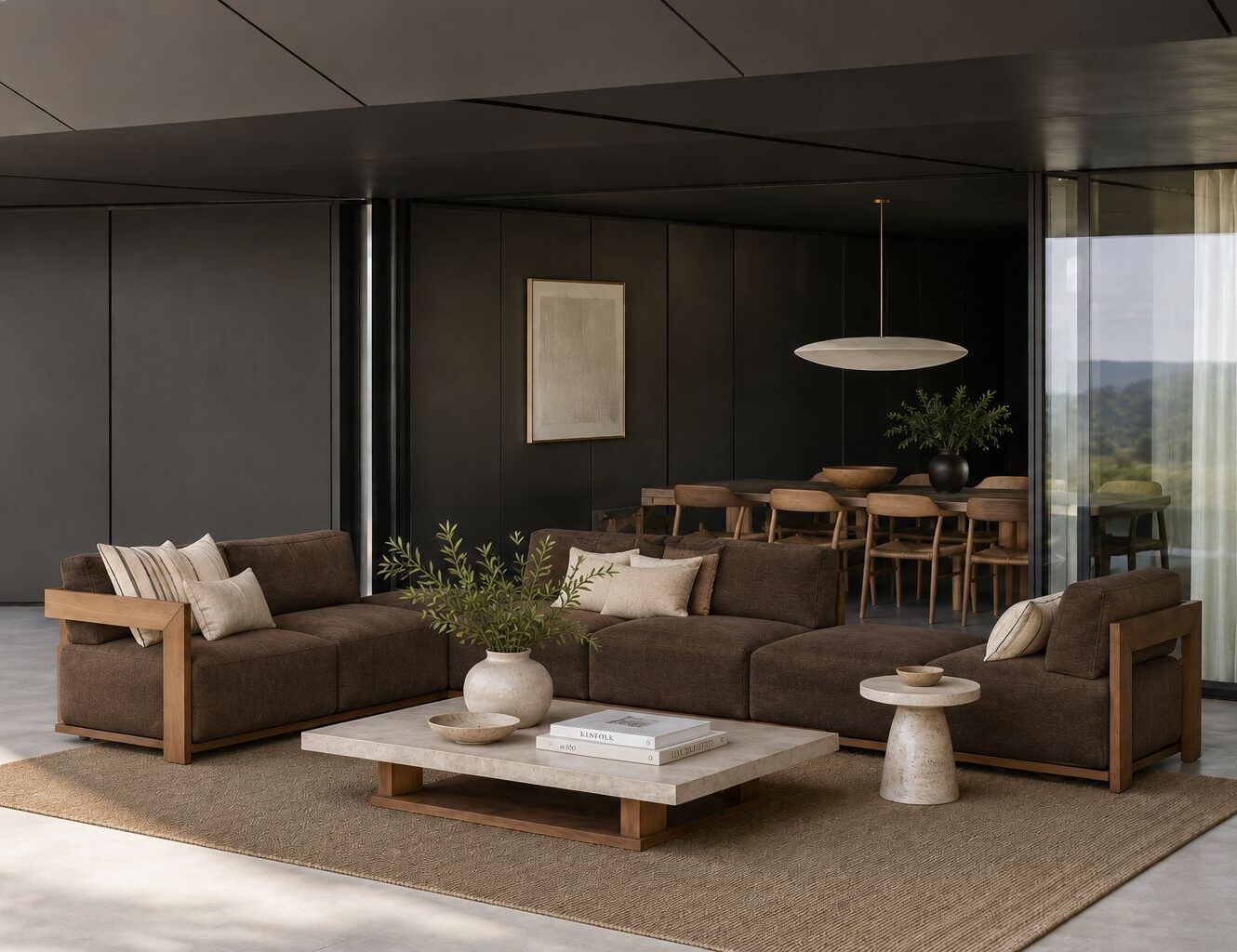
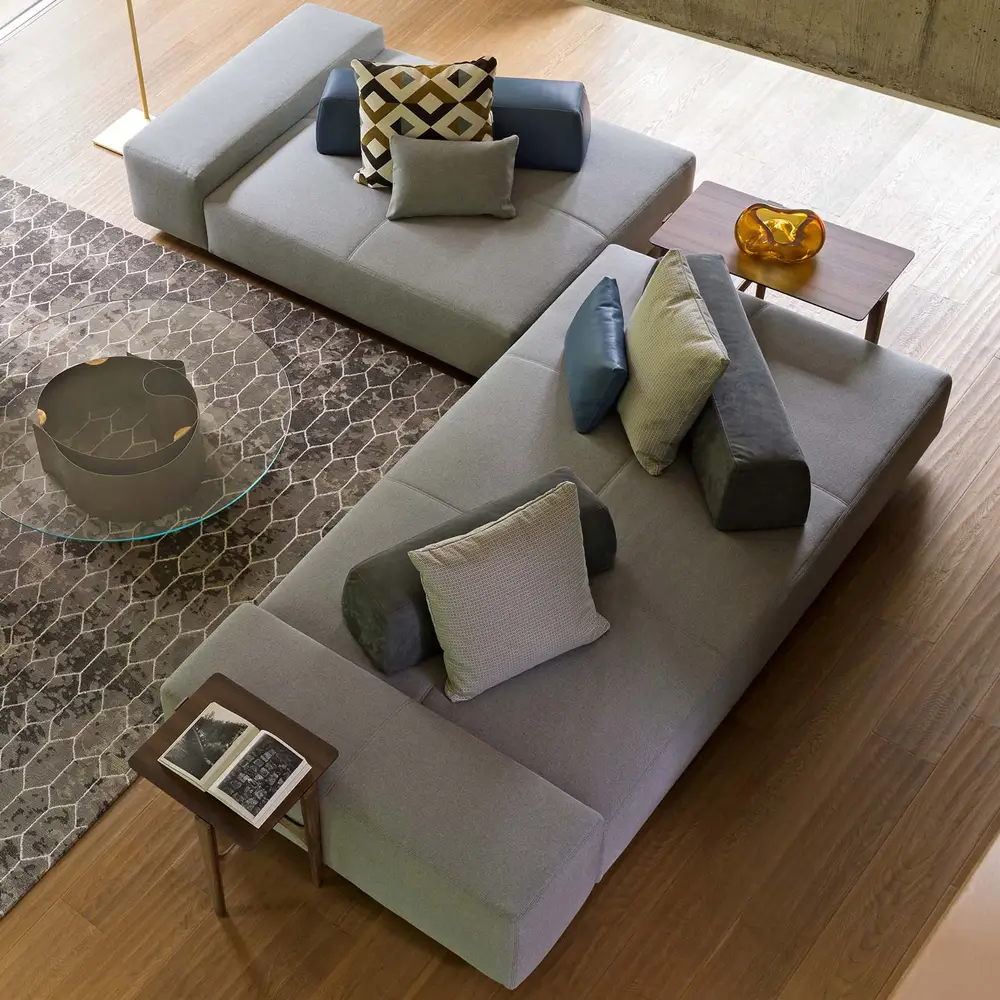
Oversized linear sofas—think 3-meter, 4-meter, or modular compositions—perform exceptionally well in large rooms. They create a panoramic seating area without breaking visual continuity.
In ultra-wide rooms, a straight sofa brings a sense of order that grounds the eye.
3. They Support Architectural Symmetry
Many large rooms rely on symmetry, especially in classical or transitional homes. A straight sofa respects that symmetry—pair it with two armchairs, a centered coffee table, and architectural lighting, and you get a composition that feels harmonious from any angle.
4. They Adapt to Modular Layouts
Some large rooms need flexibility—spaces where seating shifts between everyday lounging and entertaining. Modular straight sofas excel here, allowing expansion, contraction, and reconfiguration depending on the mood or event.
Curved sofas, while dramatic, rarely offer this level of modular adaptability.
Which Works Better in a Large Room? The Real Answer: It Depends on the Room’s Architecture
Choosing between curved and straight sofas isn’t about preference—it’s about understanding the architecture of the room and the behavior of the people using it.
Let’s break down the determining factors.
1. Room Shape: Rectangular vs. Open vs. Circular
Rectangular Rooms
Straight sofas often win here. Their geometry aligns with the structure of the room and provides clean directional flow. A curved sofa can still work, but it must be placed thoughtfully—typically centered, floating, or angled.
Open-Concept Spaces
Curved sofas shine in open layouts. They create zones without walls and provide gentle transitions between living, dining, and entertaining areas.
Rooms With Architectural Curves
If the home already features arched windows, circular staircases, or organically shaped architecture, a curved sofa amplifies that language beautifully.
2. Height and Volume of the Space
Large rooms with significant ceiling height benefit from a curved sofa’s sculptural volume. It fills negative space without looking rigid.
If the ceilings are high but the room is extremely wide, long straight sofas (even dual facing sofas) tend to ground the room more effectively.
3. Focal Points and Sightlines
If the focal point is a fireplace or media wall:
A straight sofa reinforces direction.
If the room has multiple view lines (landscape windows, art displays, open architecture):
A curved sofa enhances panoramic flow.
4. The Purpose of the Room
Entertaining & Hosting
Curved sofas create the best social geometry.
Lounging & Everyday Living
Straight sofas, especially deep modulars, are more practical.
Showpiece Rooms
Curved silhouettes create unforgettable statements in large formal living rooms.
Multi-purpose family spaces
Straight sofas offer better functionality and flexibility.
5. Placement Options in Large Rooms
Floating the Sofa
Curved sofas look effortless floated in the middle of a room. Their back profiles tend to be more sculptural, making them beautiful from every angle.
Straight sofas can float as well, but they often need companion chairs or a console table to avoid feeling like furniture placed in limbo.
Against a Wall
Straight sofas dominate here. Curved sofas against a wall lose their drama.
In a Conversation Circle
Curved sofas win without competition.
When Curved Sofas Win (Summary)
- You need a sculptural centerpiece
- The room feels too angular or austere
- The sofa will float in the middle of the room
- You want a luxurious, gallery-like interior
- The room is used heavily for entertaining
- You’re designing around panoramic sightlines
When Straight Sofas Win (Summary)
- You want simple, architectural structure
- The space is rectangular and linear
- You need modularity or scale flexibility
- The sofa will sit against a wall
- The layout must anchor to a focal point
- You want a more classic or minimal composition
Designers’ Secret: Many Large Rooms Benefit from Both
The most compelling interiors often mix the two silhouettes.
For example:
- A straight modular sofa paired with a curved accent sofa
- A curved sofa forming the central gathering area with straight loungers on the perimeter
- A straight sofa as the anchor, with curved ottomans or curved chaise extensions creating movement
Large rooms welcome contrast. The trick is knowing where to add softness and where to add structure.
Lighting, Rugs, and Proportion: The Elements That Make Either Choice Work
Regardless of the silhouette you choose, the supporting elements can make or break the composition.
A Properly Sized Rug
In large rooms, the rug must be expansive—not hovering under the coffee table, but reaching beneath all seating. A curved sofa particularly needs this to avoid looking adrift.
Layered Lighting
Curved sofas love ambient lighting: arc lamps, sculptural pendants, diffused wall lighting. Straight sofas pair well with symmetric sconces or grid-aligned ceiling lights.
Art & Accessories
Curved sofas call for organic sculptures, soft-line centerpieces, and natural textures. Straight sofas welcome bold, angular art, oversized canvases, and structured accessories.
Final Verdict: Which Works Better?
There is no universal winner—only a correct match for each architectural environment.
But if we distill the expertise:
- Curved sofas elevate large rooms that feel too rigid, empty, or architecturally cold. They introduce movement, create intimacy, and give the room a sculptural anchor.
- Straight sofas bring clarity and structure to rooms that need grounding, direction, or modular flexibility. They work beautifully with symmetry, scale, and architectural lines.
Large rooms are the playgrounds of luxury design. The real advantage isn’t choosing a curved or straight sofa—it’s understanding how each one shapes space. When selected with intention, both silhouettes have the power to turn an oversized room into a deeply refined, artful environment with presence and purpose.