
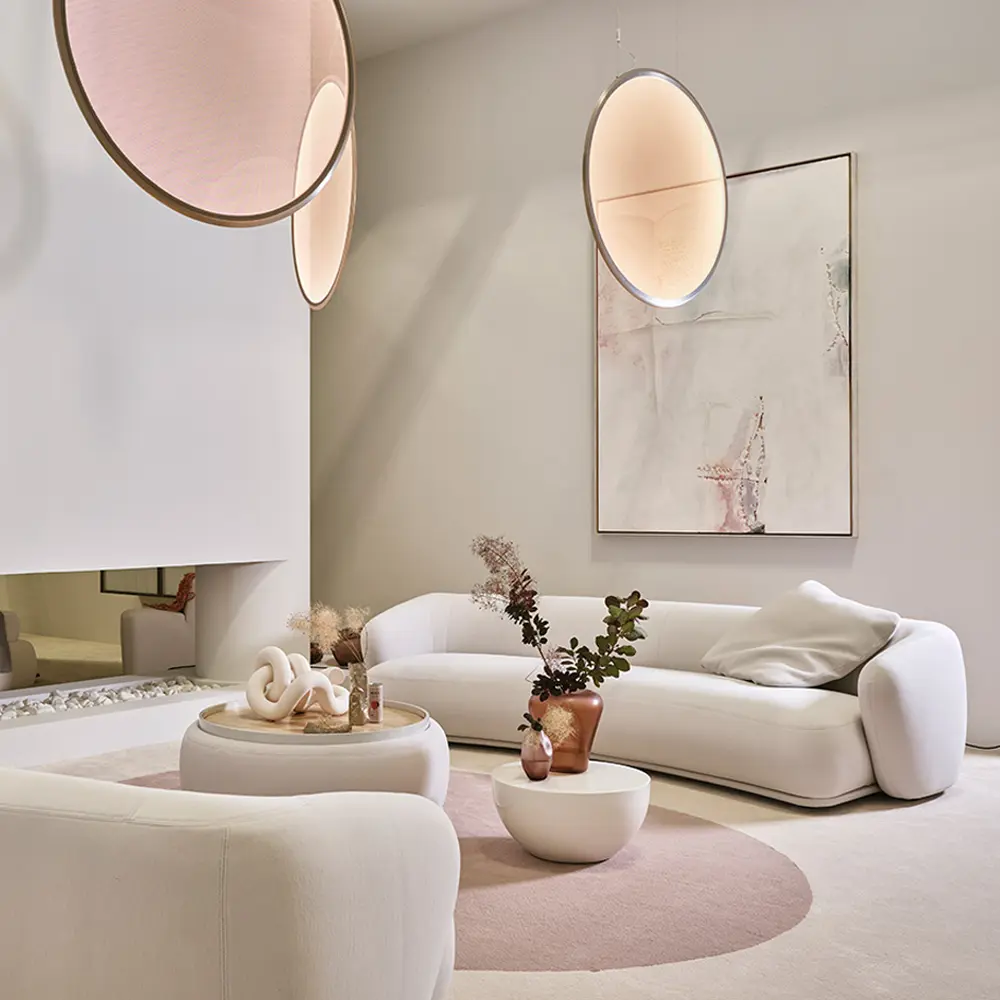
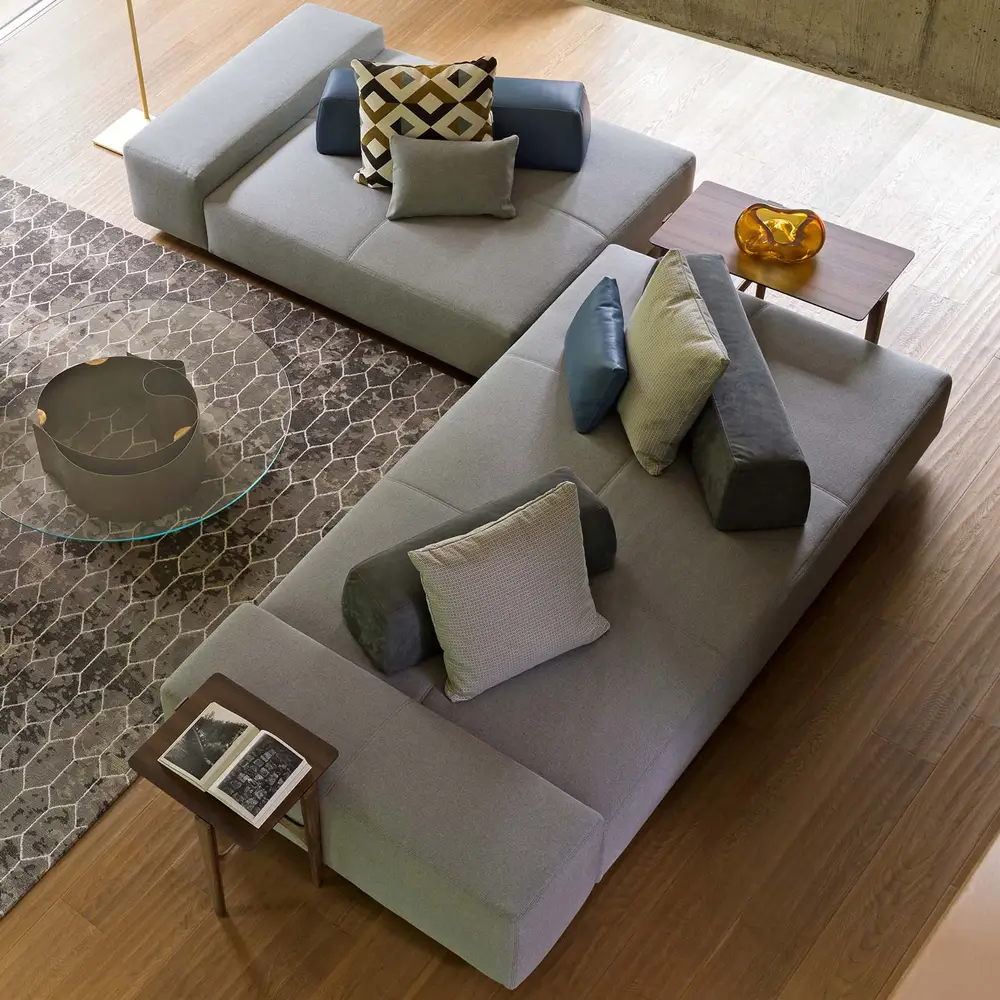
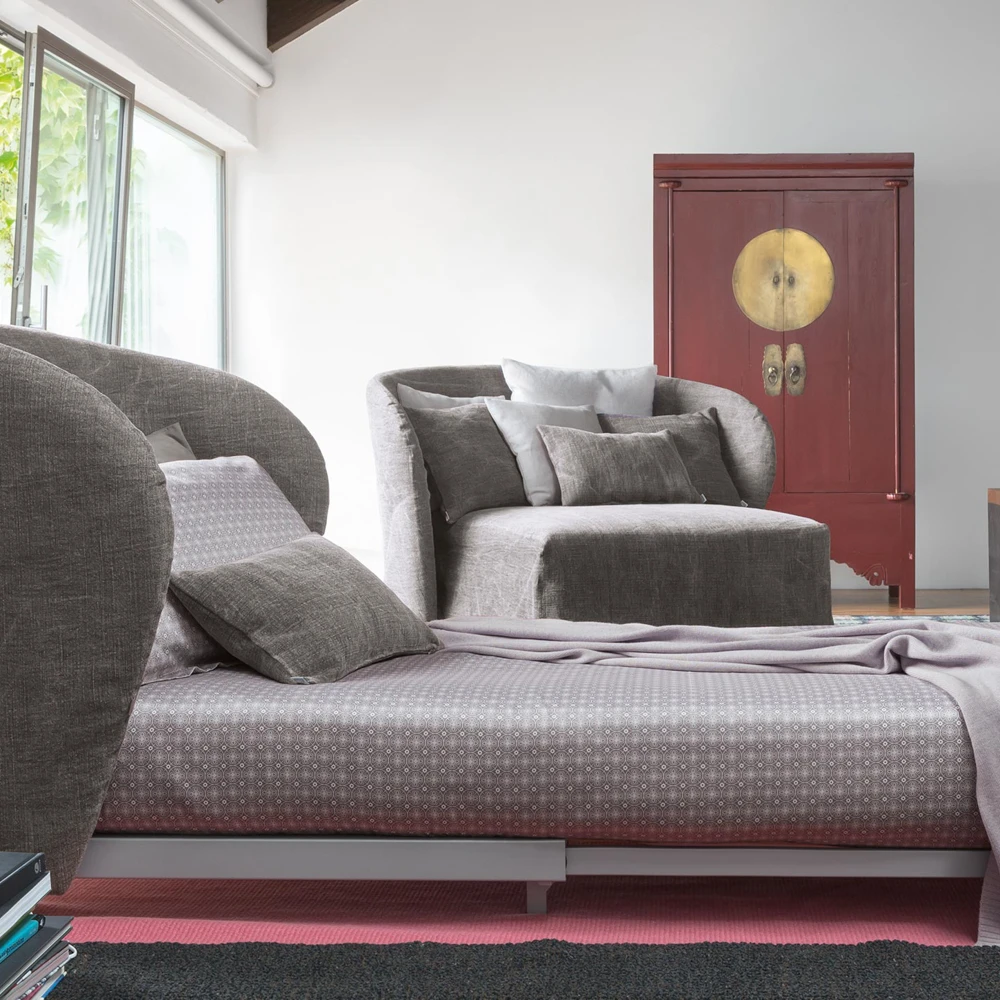
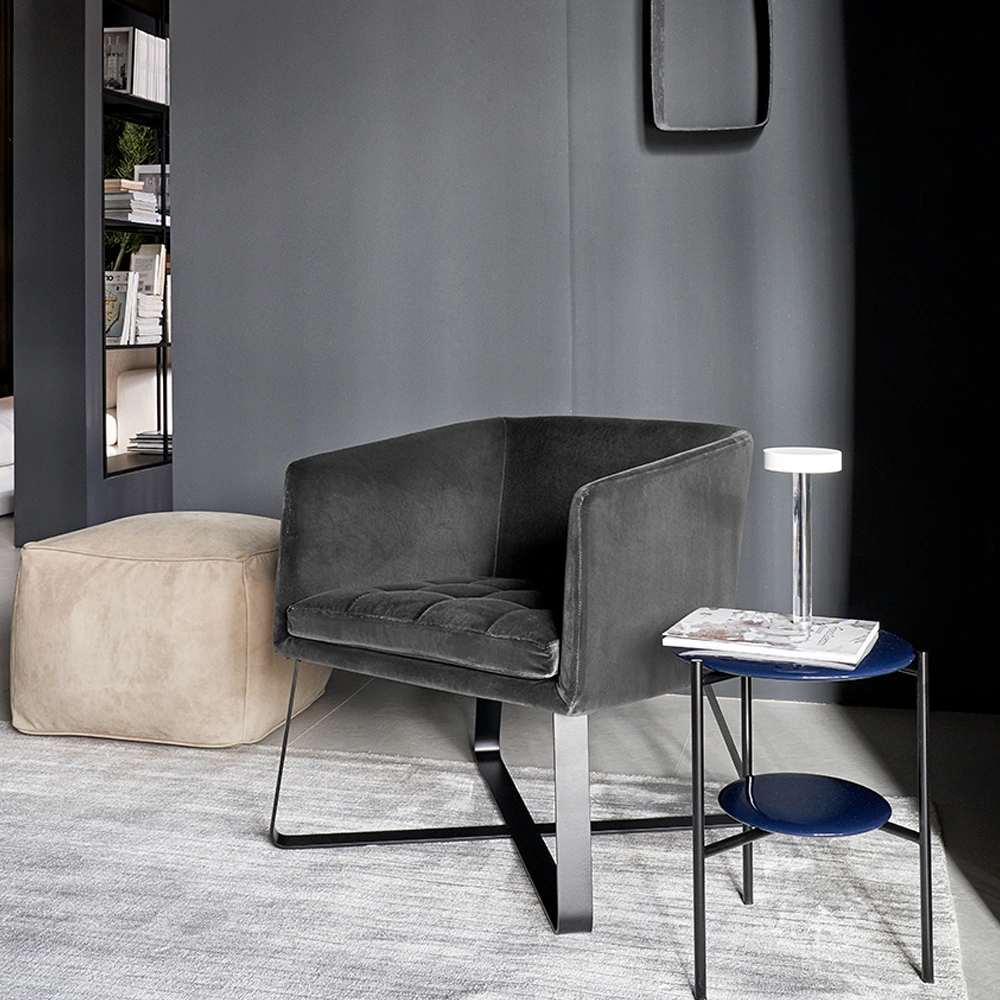












I’ve spent a good portion of my life around furniture design studios, trade shows in Milan, old workshops where you can still smell the dust baked into the timber, and the polished showrooms where everything looks a little too perfect. There are pieces you study because they’re important, and then there are pieces you remember because they make you feel something. Luxury rocking chair falls into the second camp, though it’s earned its place in the first as well. It’s an odd duality. Designers will argue about proportion and joinery and curvature, but the truth is, a rocking chair succeeds because it does something to the human body that’s older than language.

Most people don’t realize luxury rocking chairs have a fairly messy lineage. They weren’t invented in a moment of brilliance. They probably emerged when someone, likely a farmer or craftsman, attached curved runners to a regular chair to calm a restless child or to ease their own aching back at the end of the day. The earliest confirmed examples in North America date to the early 1700s. No designer signatures, no manifesto behind them. Just necessity and intuition. And honestly, that’s fitting, because the modern science explaining why they work was centuries away.


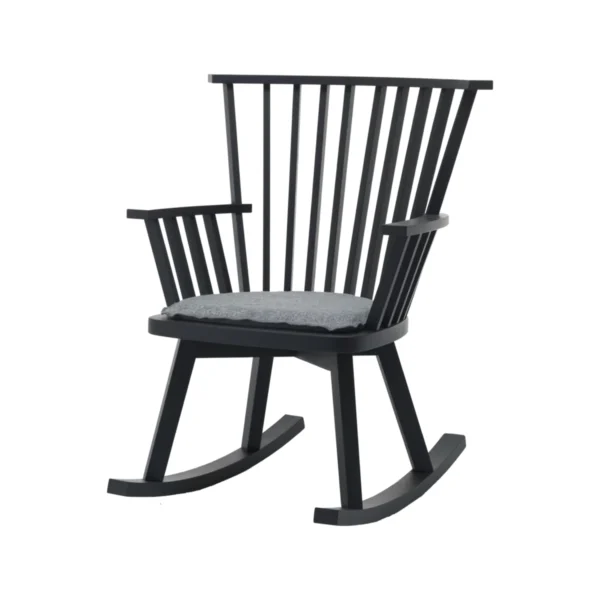
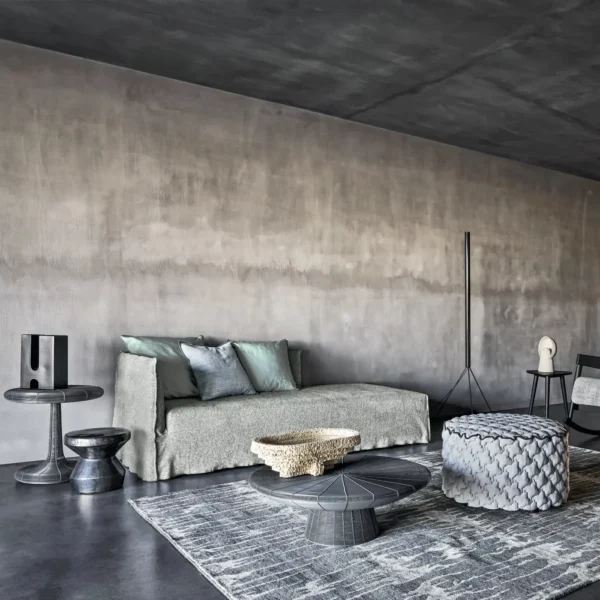
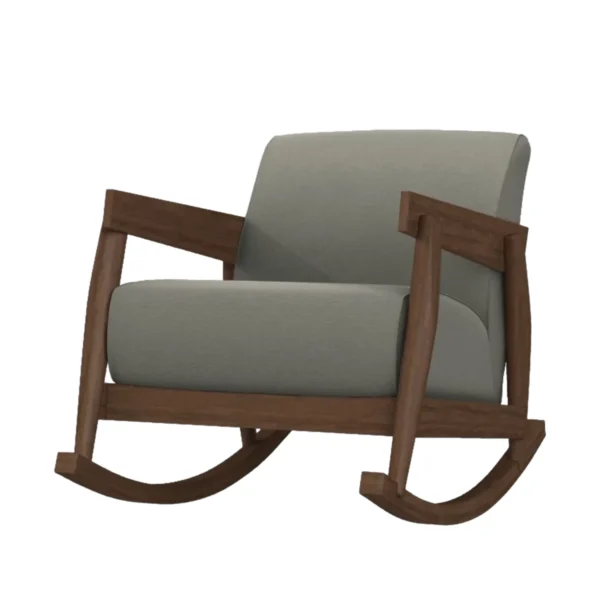
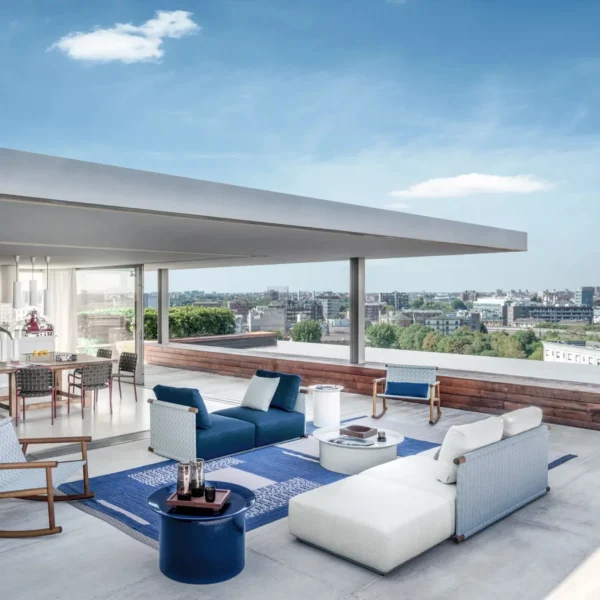
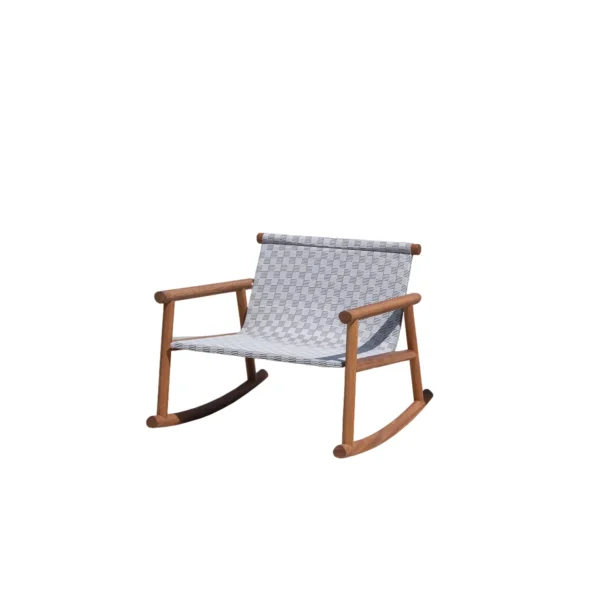
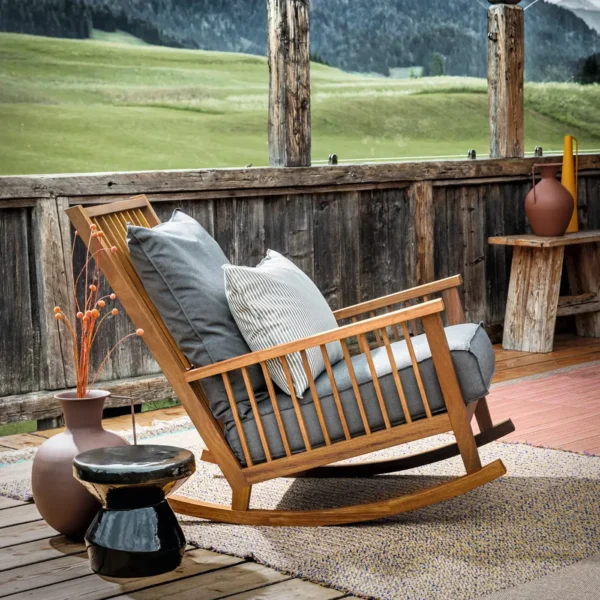
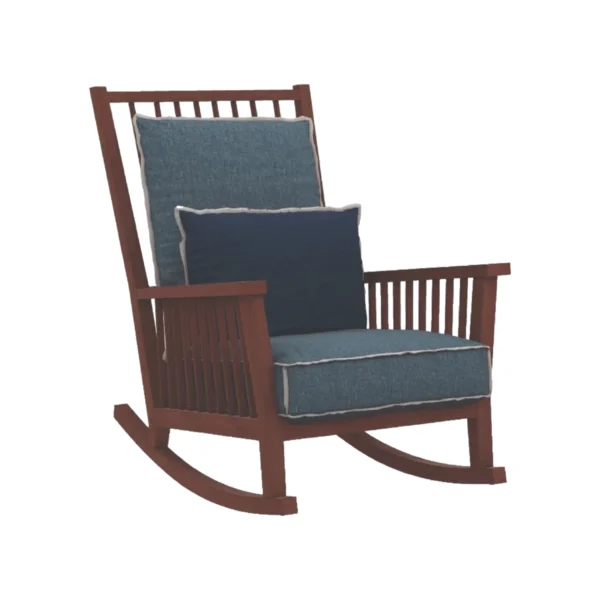
Rocking taps into the vestibular system, the inner-ear mechanism that keeps us balanced and strangely enough, modulates a surprising share of emotional regulation. There’s a Swiss neurology study that found adults fall asleep faster and reach deeper phases of sleep when exposed to slow rocking. The motion influences the thalamus, which is the part of the brain that filters sensory input. It’s not relaxation in the abstract sense; it’s physiological. You feel calmer because your brain, quite literally, quiets the noise.
If you’ve ever rocked a baby, you already know this intuitively. Babies aren’t responding to sentiment; they’re responding to neural wiring. What’s surprising is that adults respond the same way. We just forget.
I once visited a retirement home in northern Italy during a research trip for outdoor seating ergonomics. Several residents used rocking chairs as part of their physical therapy routine. The therapist explained that rocking reduces muscle guarding and improves hip mobility in seniors with arthritis. It encourages subtle muscle engagement without strain, almost like passive exercise. That stuck with me, not because it was novel, but because it confirmed something that designers have quietly known for decades: people move better in furniture that moves with them.
It’s also worth remembering that rocking chairs have played different cultural roles. The Shakers produced some of the purest examples, straight-grain maple and cherry, impossibly clean joinery, proportions that feel almost moral in their discipline. Thonet’s bentwood rocker in the 19th century, No. 1, is still one of the most successful furniture designs ever produced. That sweeping loop of steam-bent beech is nearly impossible to replicate today with the same finesse. And if you pick up an original, even just run your hand along the inside of the curve, you feel something modern manufacturing rarely captures: tension, intention, and a certain humility of material.
The mid-century designers approached luxury rocking chairs from another angle altogether. Hans Wegner’s J16 rocker is a masterclass in restraint, paper cord seat, oak frame, a natural lean that feels inevitable. Sam Maloof’s rocker from the 1950s is a different creature: sculptural, almost alive, shaped by hand and perfected by eye. You can tell he spent time sitting in his pieces rather than only drafting them. It’s the kind of furniture that remembers the body.
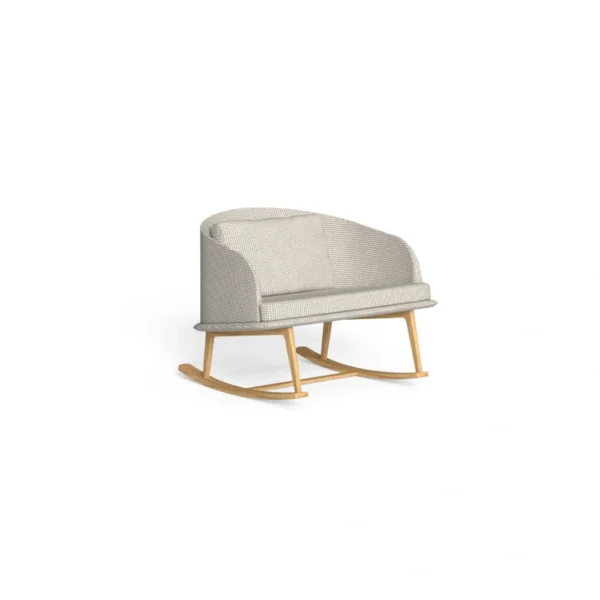
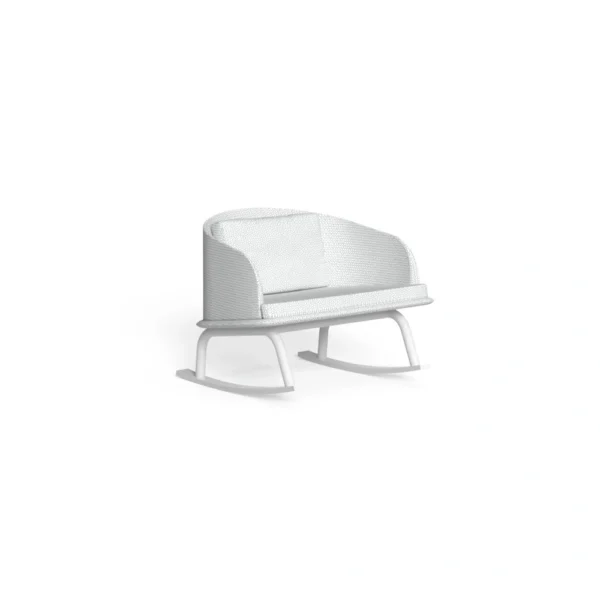
But the conversation today isn’t about history; it’s about why rocking chairs are making their way back into contemporary homes, especially high-end ones. There’s a reason luxury outdoor brands now produce rockers in handwoven rope and powder-coated aluminum, engineered to withstand coastal sun and moisture while still feeling surprisingly soft. Designers are rediscovering movement. Static furniture can be exhausting in its own way. A chair that lets you shift weight without having to rethink your posture is a gift.
When I consult clients on layout, I often place a rocker where you’d least expect it: near a bedroom window, in a quiet corner of a living room, or on a terrace that catches late afternoon light. Almost without fail, people end up gravitating toward it more than the sofa. There’s something about having a piece of furniture that allows you to unwind without collapsing. A rocker gives you a kind of alert relaxation. Your hands stay free. Your body stays engaged. Your mind settles.
There’s also an emotional truth: rocking invites slowness. Even if you aren’t consciously trying to relax, your body edges toward it. And in a home where everything is designed for efficiency, open layouts, integrated lighting, built-in storage, seamless switches, a bit of analog movement feels almost luxurious. It’s as if the chair gives you permission to drift for a few minutes.
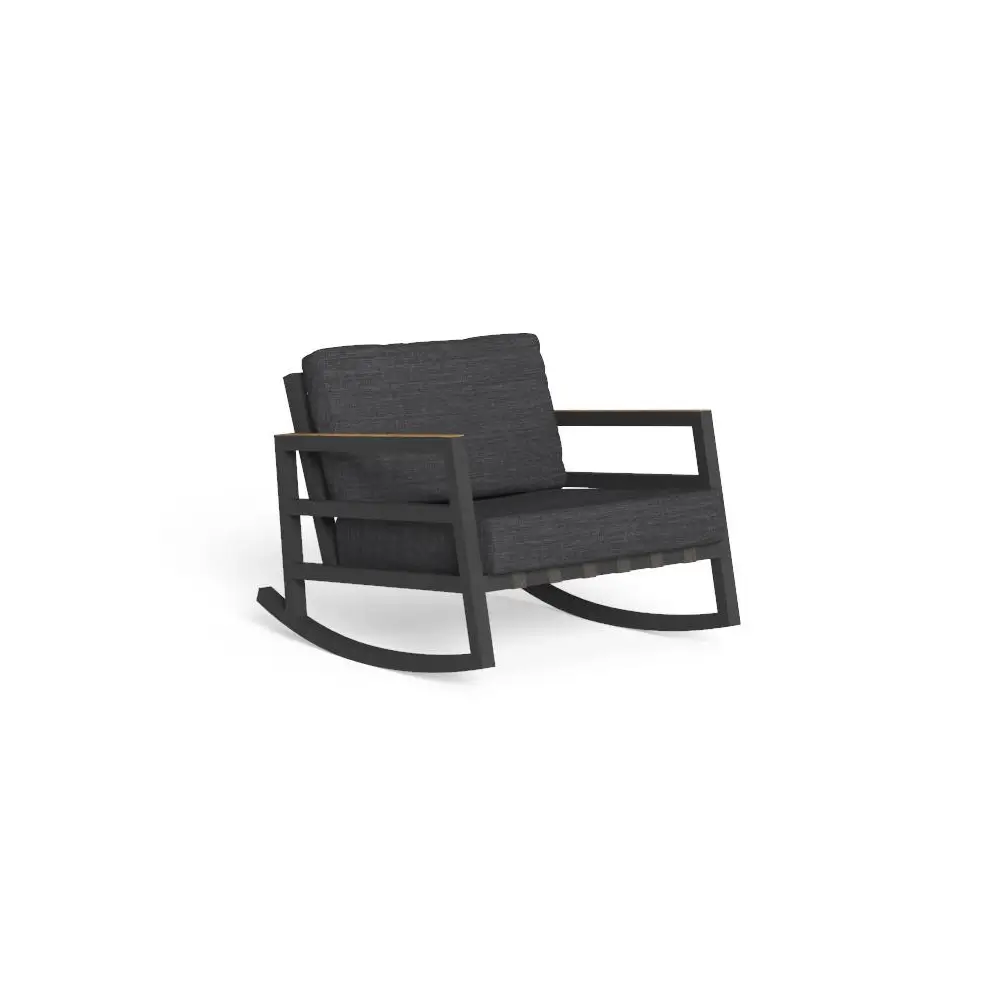
Luxury rocking chairs play well with different styles too, though not in the “it goes with everything” cliché. They simply adapt. A teak rocker with a thick linen cushion feels like it belongs on a Mediterranean terrace. A dark-stained walnut rocker becomes a centerpiece in a study. A rope-woven rocker feels breezy, a little coastal, especially with a low-slung profile. A sleek aluminum one can live comfortably in a penthouse without apologizing for its origins. And of course, the nursery still claims one of the purest use cases. If you’ve ever done 3 a.m. laps with a fussy baby, you understand how critical that motion becomes.
The outdoor versions are getting better every year. Marine-grade powder coatings, UV-resistant ropes, solution-dyed acrylic fabrics, and open-cell quick-dry foams have turned outdoor rockers into legitimate investment pieces. The engineering behind them is more sophisticated than most people realize: torsion testing for the runners, sag-resistance mapping for woven rope, weathering cycles that mimic five years of coastal exposure. It’s the kind of detail a buyer never sees but benefits from every day.
If there’s one misconception about rocking chairs, it’s that they belong to a specific demographic, grandparents, parents, porch-sitters. The modern versions really don’t. They’ve become artifacts of wellness in a way other furniture categories haven’t. Maybe because the benefits aren’t theoretical. You feel them immediately.
But here’s the thing a lot of glossy magazines won’t admit: a rocking chair can be a deeply personal object. People project memories onto them. They become heirlooms, often unintentionally. I’ve watched people sit in a chair for the first time and instantly connect it with someone from their past, a parent, a grandparent, a teacher, an old porch somewhere they can’t quite recall. Few furniture pieces carry that emotional resonance.
And maybe that’s the real reason they’re resurfacing in modern luxury design. Not because they’re trendy or sculptural or “wellness-oriented,” though all of that helps, but because they remind us that homes are supposed to feel human. Imperfect. Lived in. A little slower than the world outside.
A rocking chair is a simple object, but not a simplistic one. And in a house full of objects designed to perform, it’s refreshing to have one designed simply to soothe.