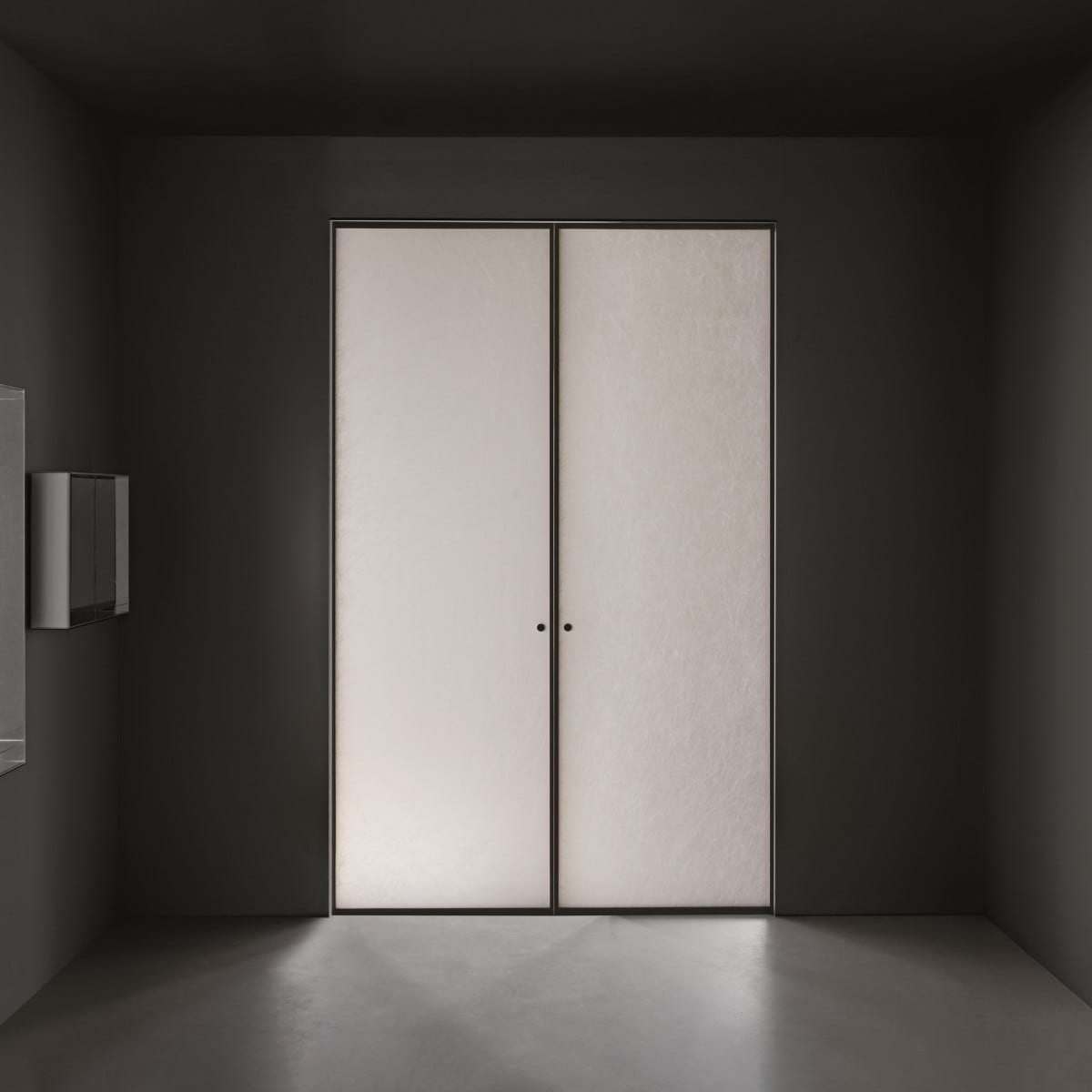
About Aladin Pocket Duo
Design
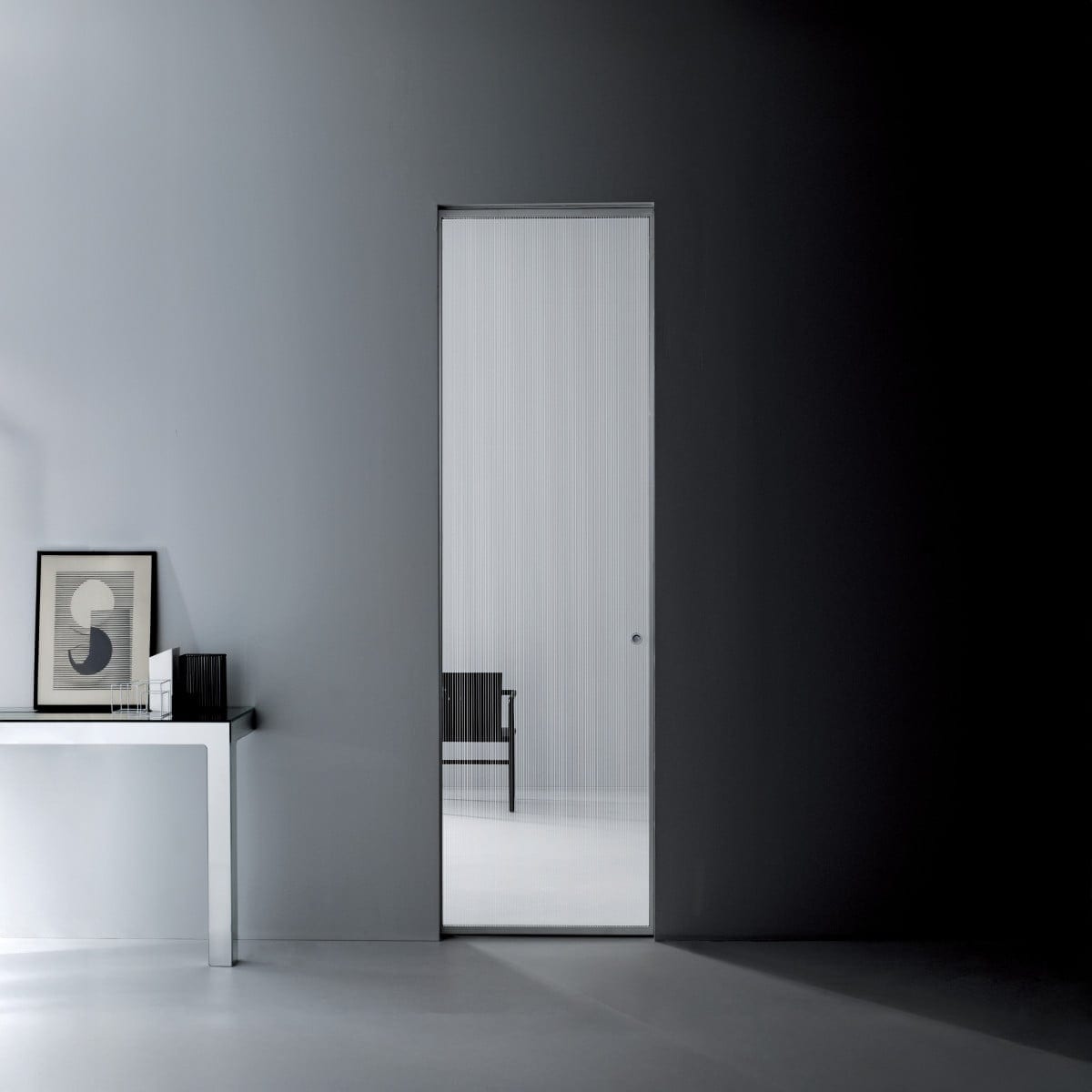
Aladin Pocket Duo is a sliding pocket door conceived for clean architecture and quiet transitions between rooms. Designed by Piero Lissoni, it keeps the lines spare and lets the glass do the talking. And because it disappears into the wall, the door never interrupts the space the way a hinged leaf can.
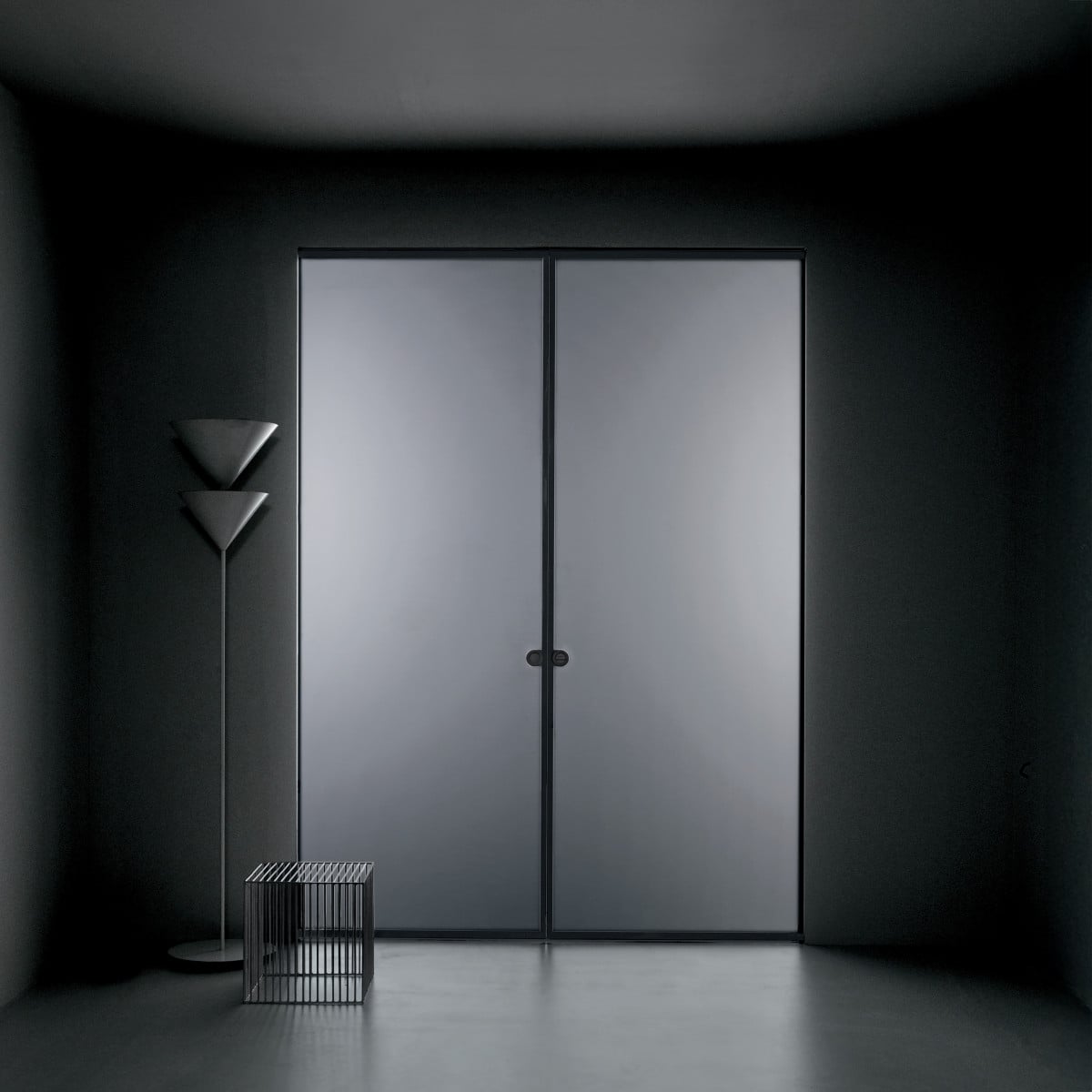
It is offered as a single door or as a double door, depending on how wide an opening needs to feel. The look stays consistent across both versions: slim, precise, and intentionally understated.
Materials & build
The structure is aluminium, fitted with tempered glass on both faces. Each glass panel is about 0.16 inches thick, applied to create a defined volume with an internal air chamber. The effect is light visually, but it reads as solid up close.
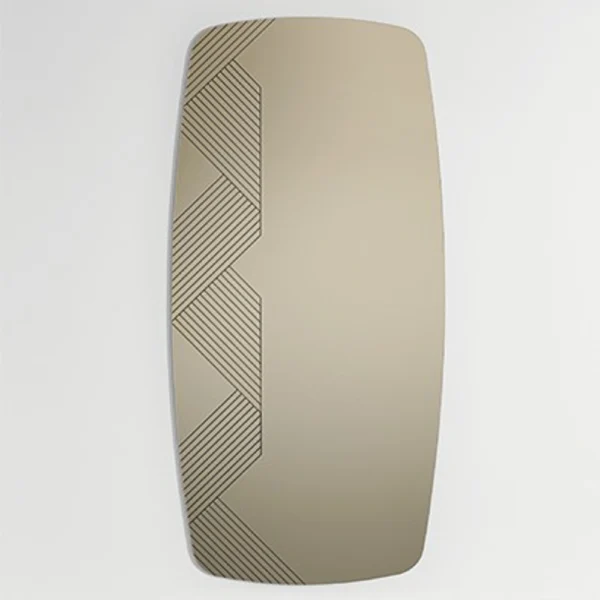
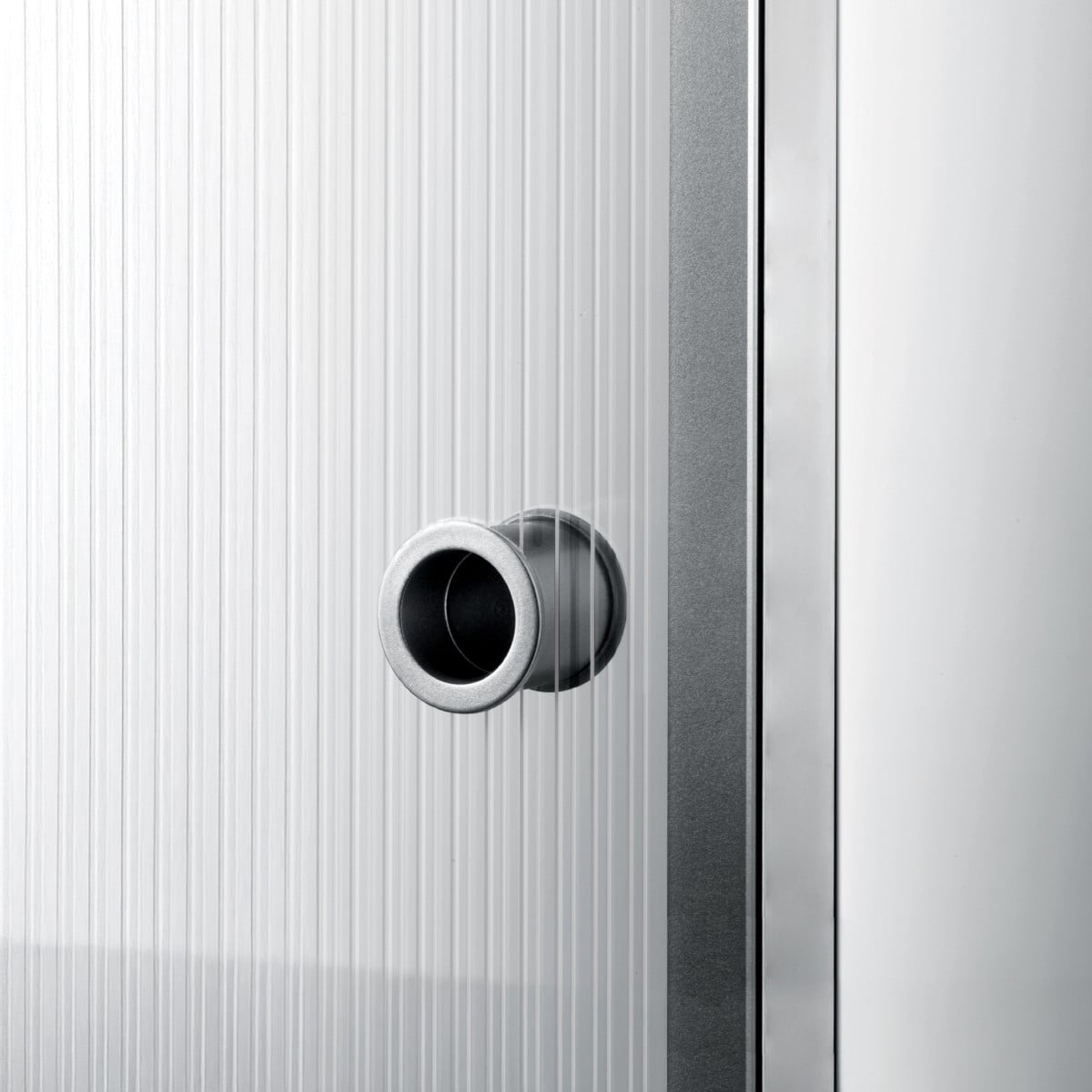
A wide range of glass finishes is available, from acid-etched options to glossy, opaque, reflective lacquered versions, as well as reflecting transparent glass, patterned acid-etched glass, extra-light, fumé, bronzo, mirror, and flutes. Finish availability can vary by size, so it’s worth checking the price list before finalizing selections.
Comfort in daily use
Because it’s made to integrate with common frameless sliding pocket door systems, the movement is meant to feel familiar and controlled. Aladin Pocket Duo can be set up to work with systems such as Scrigno Essential® sliding and Eclisse® Syntesis Line, helping it fit into projects where those tracks and wall solutions are already planned.
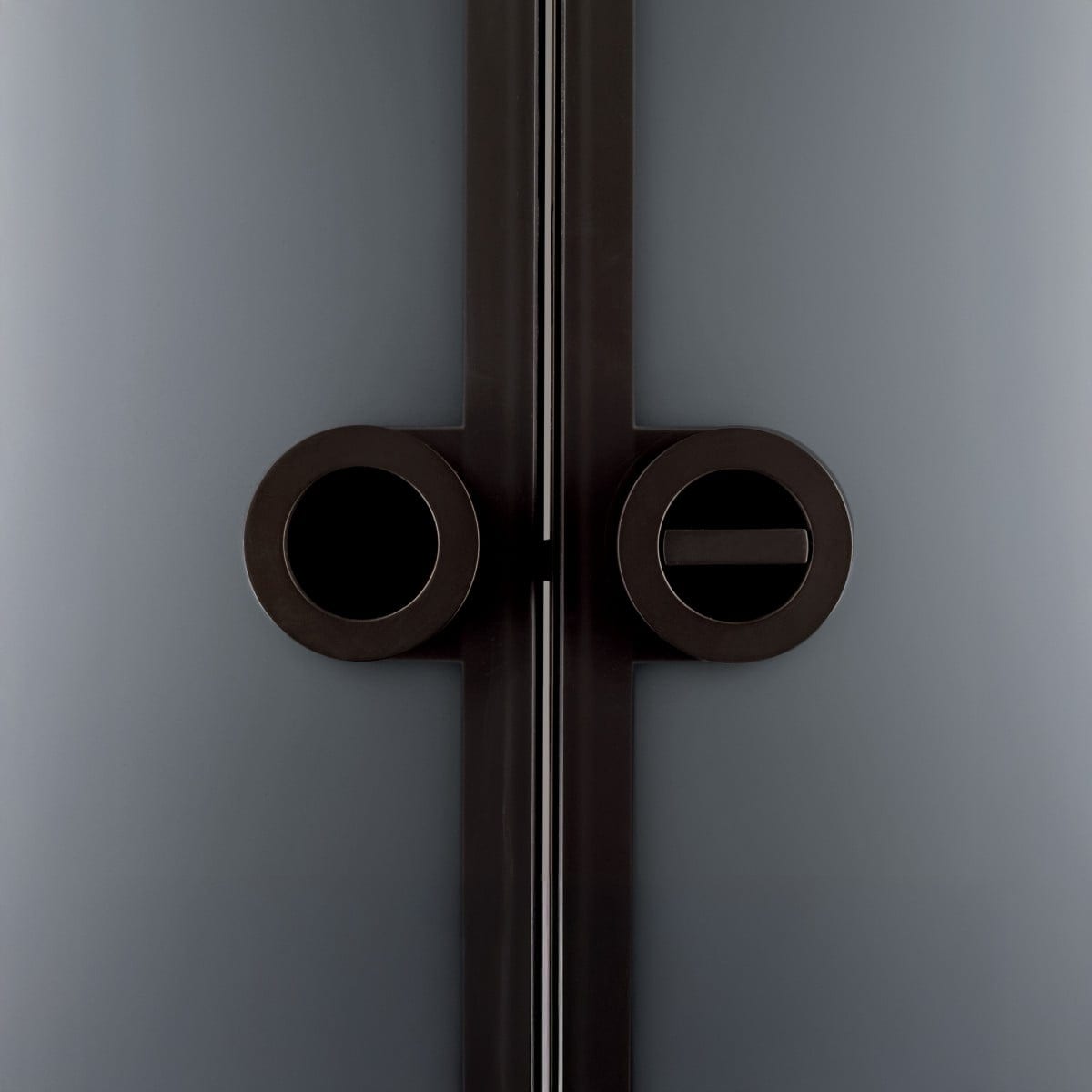
A lock can be specified or omitted, depending on how private the room needs to be. And that choice keeps the door flexible: it can act as a soft divider, or it can close off a space more decisively.
Placement & lifestyle
This door is best suited to interiors that want light to travel, even when rooms are separated. It works well for home offices, dressing rooms, kitchens that open to living areas, or any layout where swing clearance is a constant compromise. But it also suits hospitality and retail settings that prefer transitions to feel seamless.
Subframes for plasterboard or brick walls can be provided on request, supporting different construction needs without changing the visual outcome. glasitalia keeps the focus on the door surface and the way it sits within the wall plane.
Longevity & compliance
The tempered glass is certified to ANSI Z97.1 and UNI EN12150 safety regulations. That matters in daily life, especially in high-traffic areas where a door is handled frequently.
In practice, the strength comes from the combination of aluminium frame and tempered glass faces. It is a straightforward, resilient build intended to stay looking sharp over years of use, with finishes selected to match the tone of the space rather than compete with it.