Design
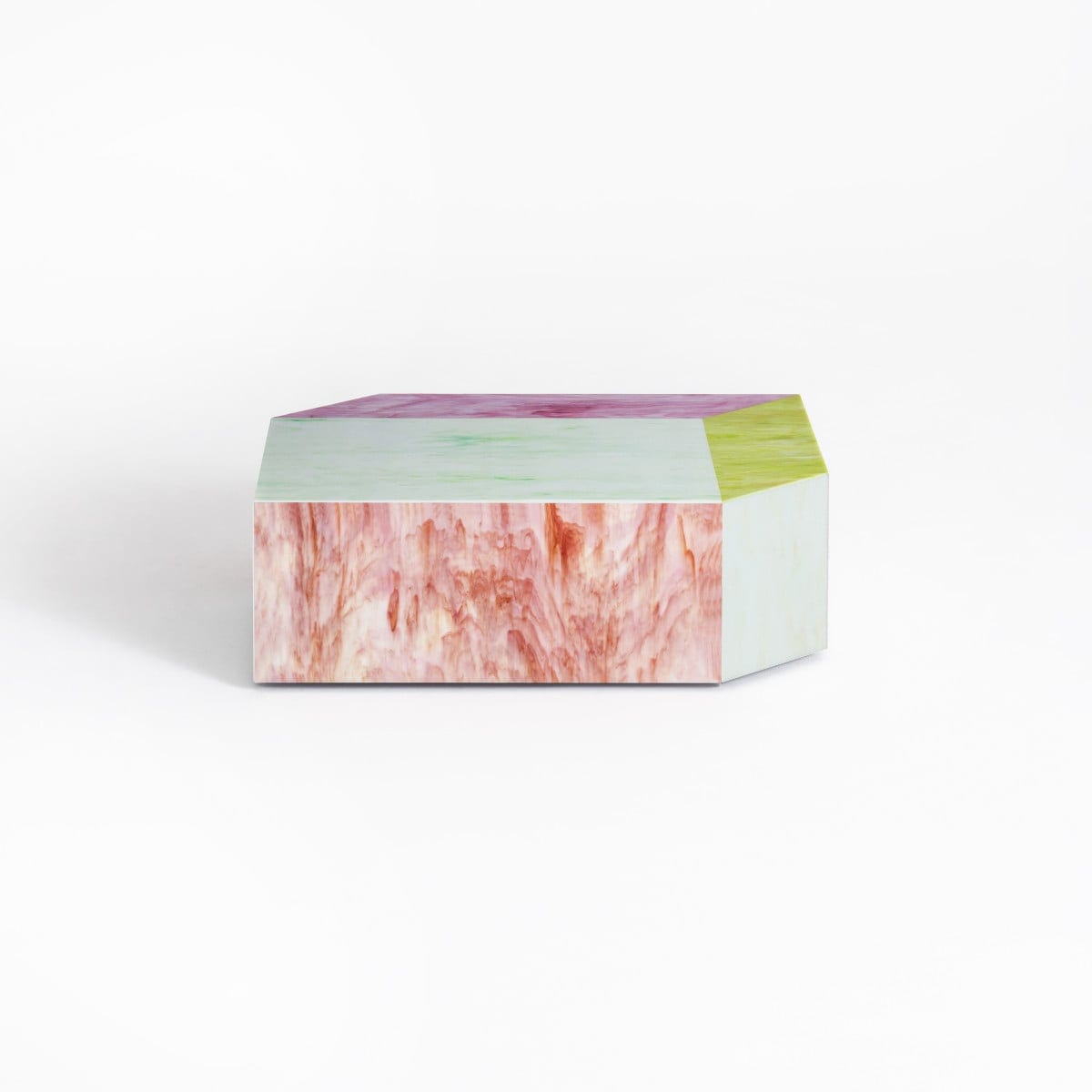
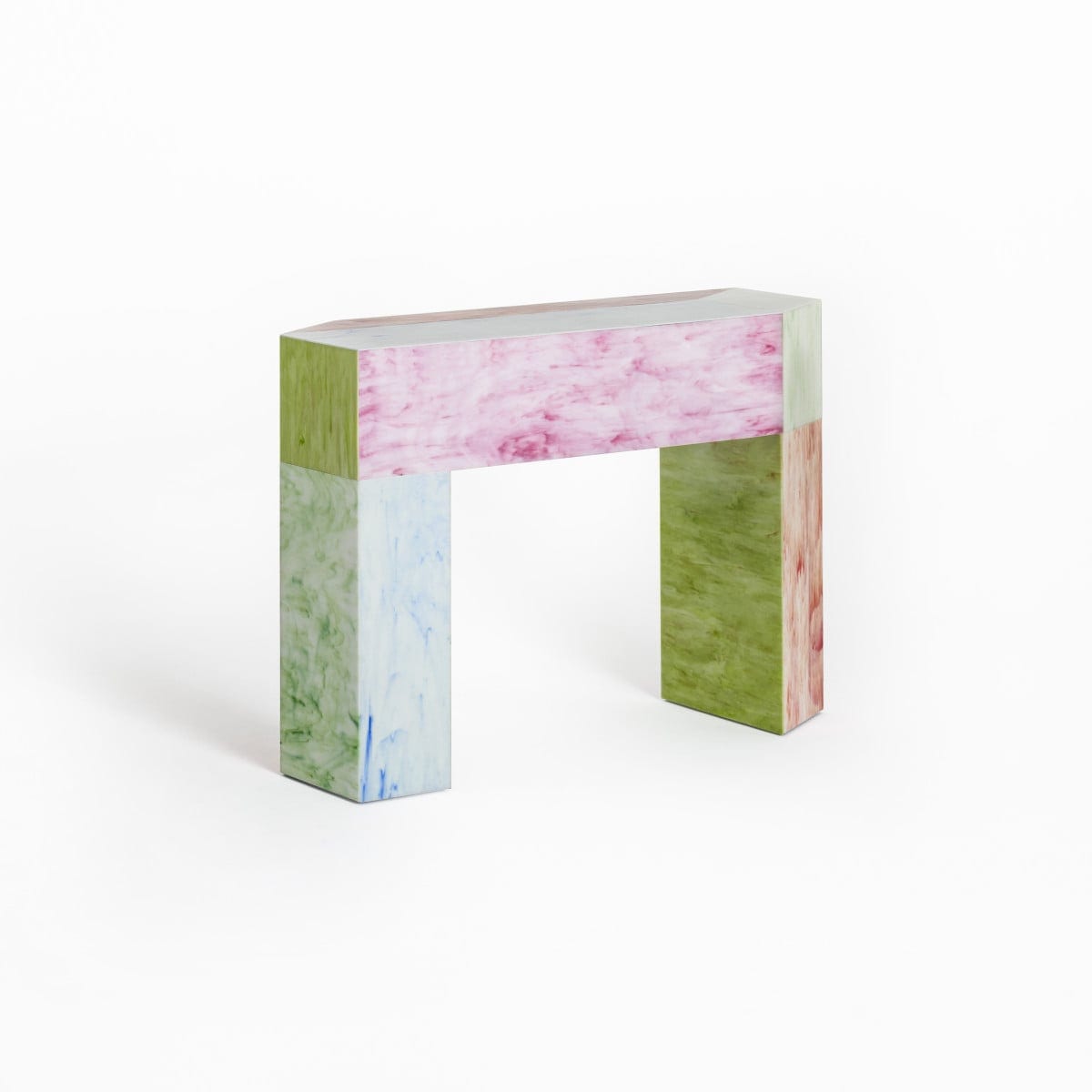
Remis is a collection by Patricia Urquiola that reads as geometry, color, and restraint all at once. The surface is composed to resemble an axonometric projection of a single parallelepiped element, so it has a graphic, almost architectural presence. And yet it doesn’t feel rigid. The pattern shifts as the light moves, and the random mix of tones keeps it from looking overly designed.
The collection includes a low table and a console, each with the same strong outline and clean volume. The look is sculpted but not showy, with edges that stay crisp and a top that invites a closer look.
Materials & build
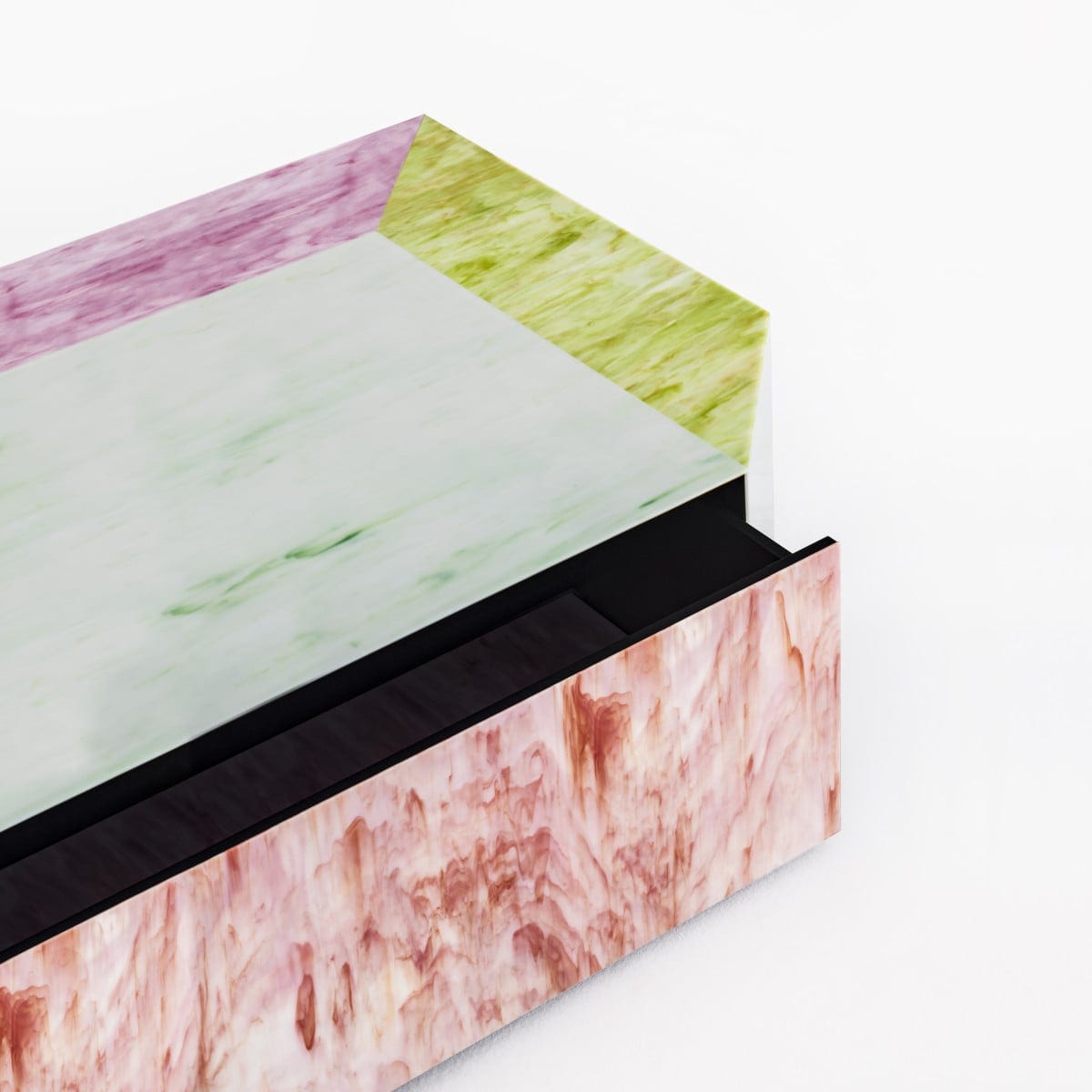
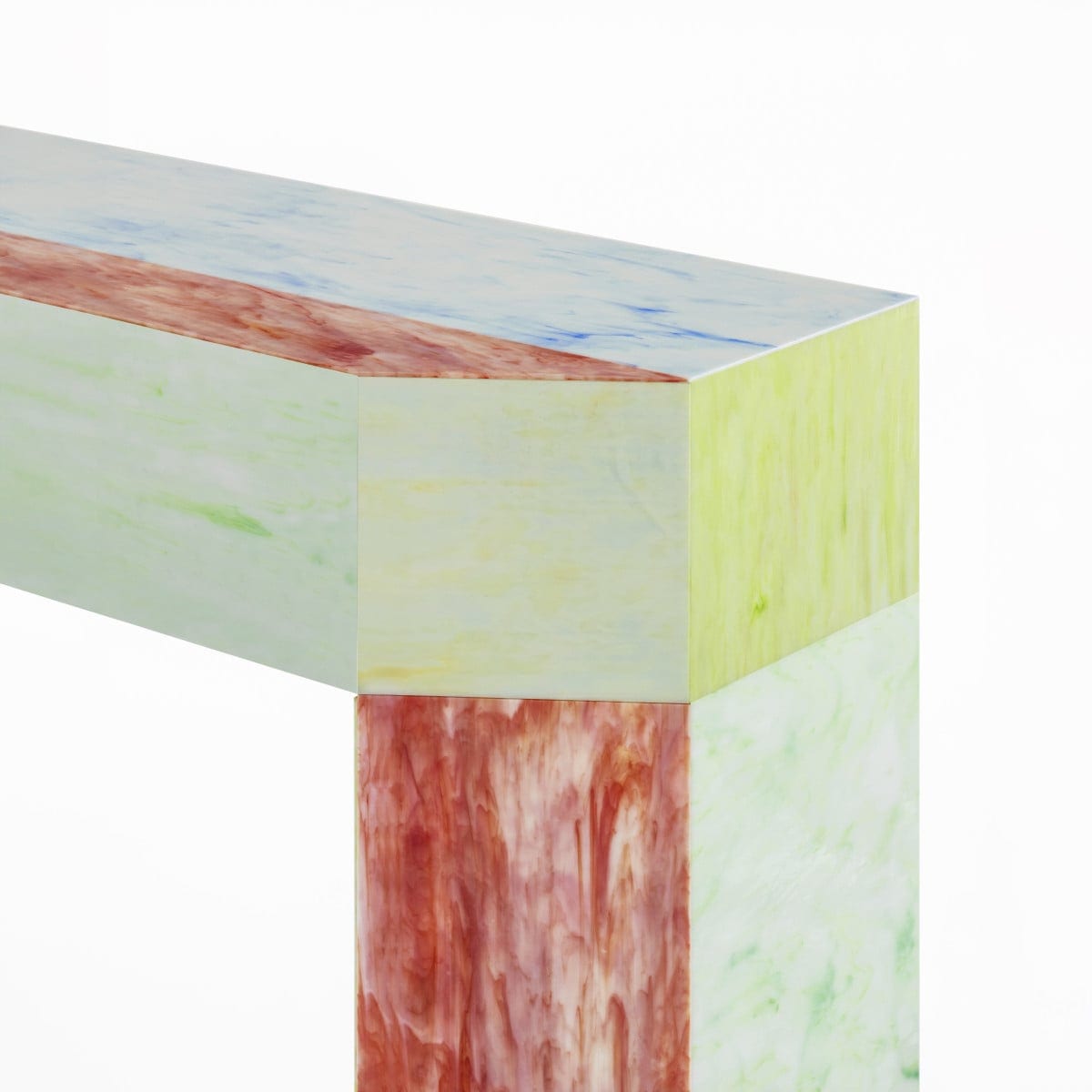
At the core is a wooden structure, fully covered in a mosaic of cast glass tiles. Each tile is shaped and set to build the illusion of depth and planes, more like a constructed surface than a simple finish. Color is intentionally varied and random, which gives the piece its character and keeps it from feeling flat.
There are also functional drawers built in, designed to disappear into the form. The opening is push-pull, so nothing interrupts the surface. Remis is not available custom made, and that’s part of the point: the composition is already specific and complete.
Comfort, in the way it works
This is not a soft piece, but it is an easy one to live with. The drawers are there when needed and invisible when not, which keeps the silhouette calm. But the surface still holds attention. It’s the kind of table that makes everyday objects look intentional, even when they’re not.
Placement & lifestyle
The low table version (about 39.4 inches long, 31.5 inches wide, 12.6 inches high) sits naturally in a living space where it can be seen from multiple angles. The console (about 47.2 inches long, 17.3 inches wide, 33.5 inches high) works well in an entry or along a wall, where its depth stays tidy and its finish can catch ambient light.
Remis from glasitalia has enough presence to stand alone, but it also layers well with quieter upholstery and clean-lined seating. And because the color is varied, it tends to pick up on what’s around it without trying too hard.
Longevity & the nature of glass
The tabletops in poured glass show evident irregularities, along with structural and chromatic differences. These are intrinsic to the material and should be expected, not treated as defects. Over time, those variations become part of the piece’s identity, not something to correct.
Remis is made to be used, noticed, and kept. The build is straightforward, the details are resolved, and the surface is unapologetically itself.