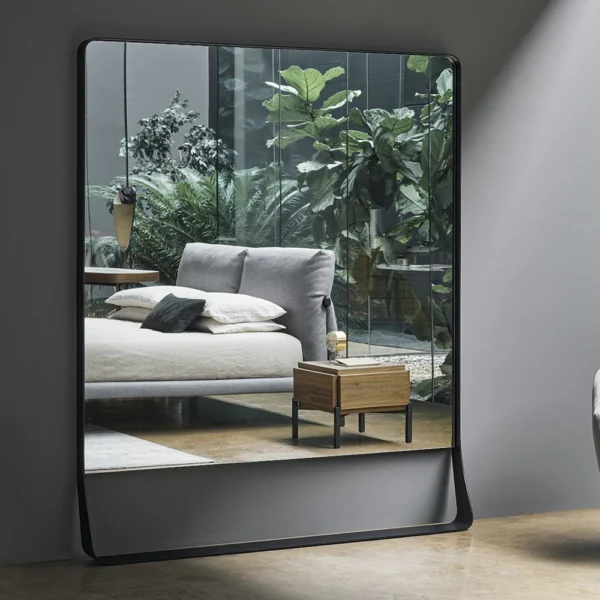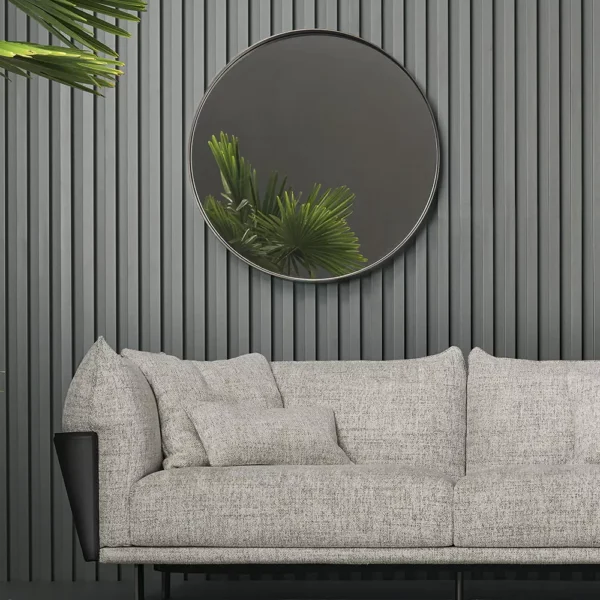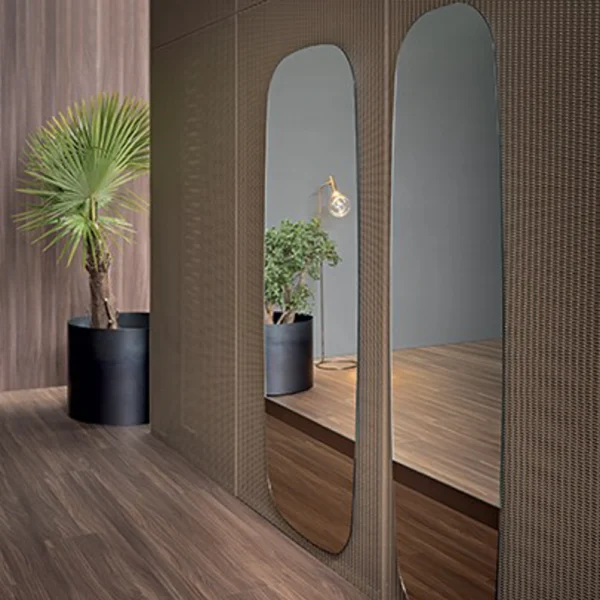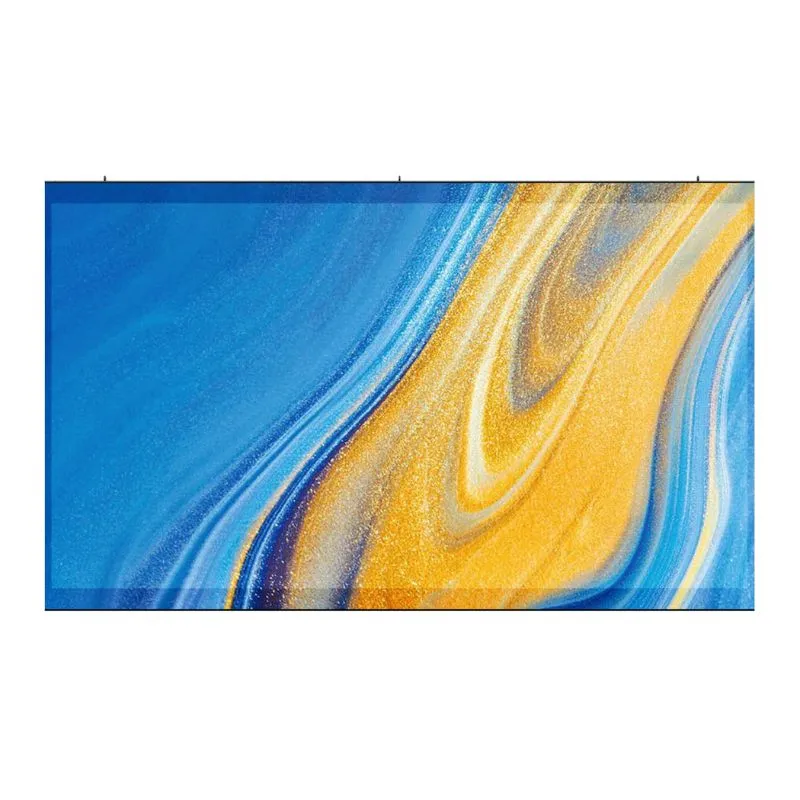
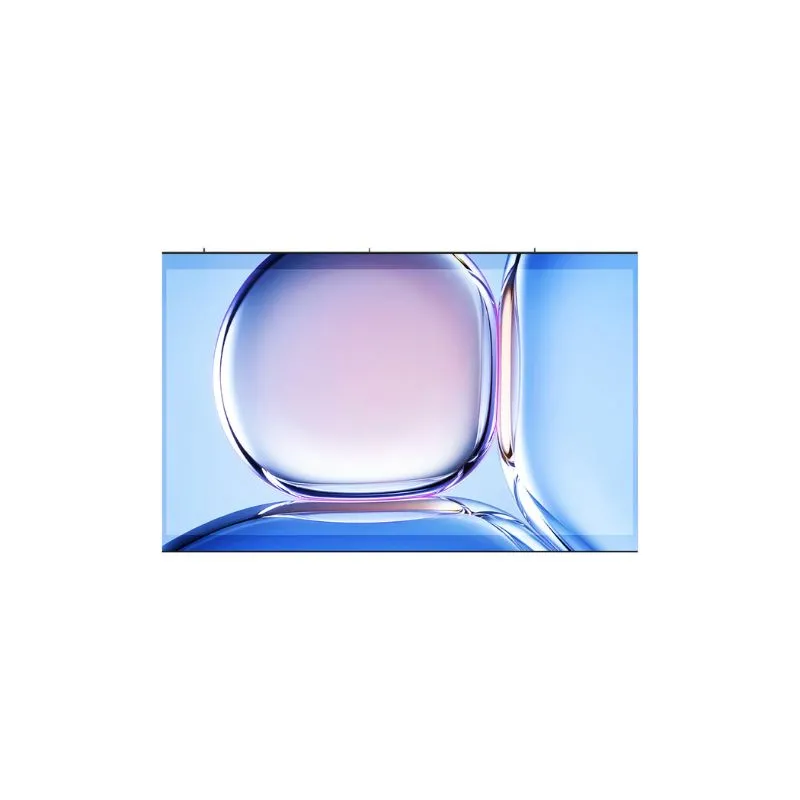
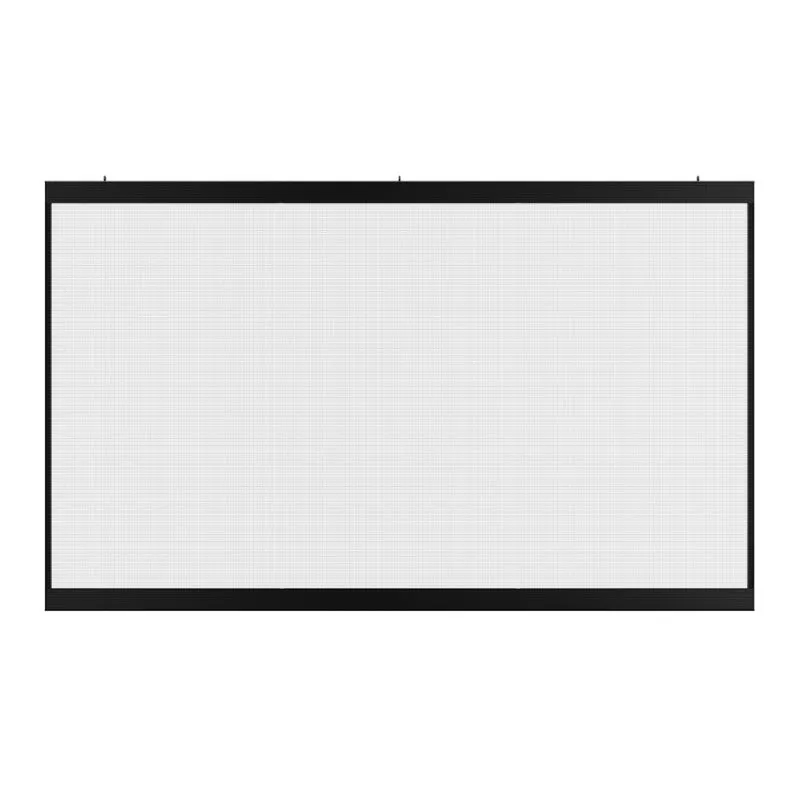
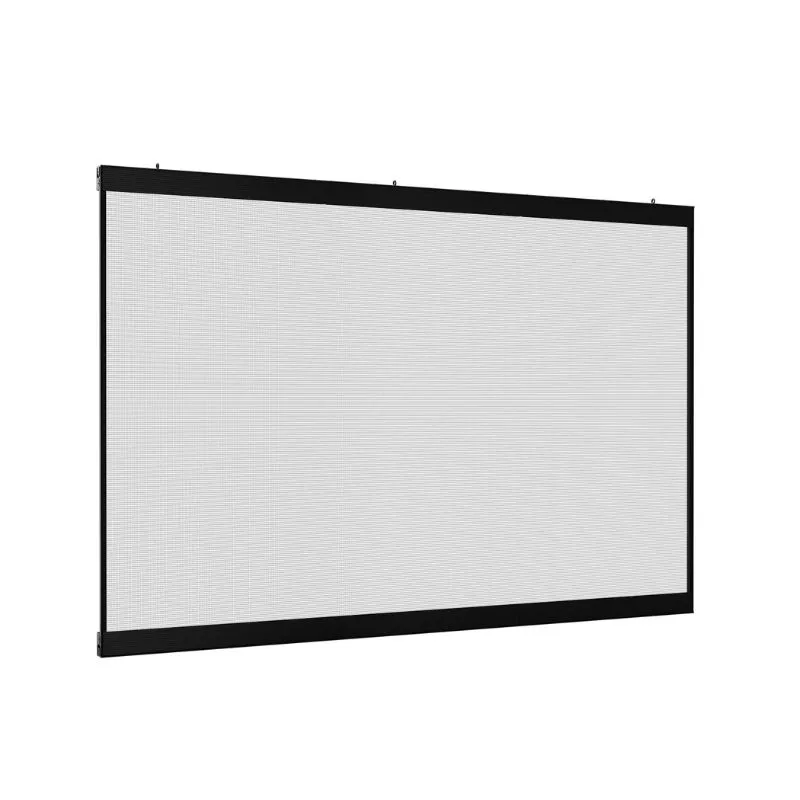
SeeThruDisplays joins Melaaura with a simple premise: digital layers should behave like materials, not billboards. Our work pairs two complementary tools—transparent media-mesh for glass and gallery-grade LED walls for interiors—so motion, light, and narrative integrate with architecture instead of overwhelming it. When content plays, the space performs; when it pauses, the hardware recedes and sightlines stay open.
Transparency LED Mesh Screen without the trade-offs
Our mesh is built on needle-thin carriers with a millimeter-scale profile, so the support structure all but disappears. No chunky bars, no ladder-grid clutter—just a diaphanous layer that preserves daylight, merchandising views, and the rhythm of mullions. From the street you read crisp motion graphics; from inside you still feel depth, natural light, and the room’s original intent.
Specified to the site, not a brochure
We start with the physics of the location: glazing type, sun path, reflections, viewing distance, and what a camera will see during events. Pixel pitch is chosen against human proximity; brightness is tuned to ambient light rather than maxing everything out. The goal is legibility without glare, presence without visual noise. We also shape content guidelines—contrast, typography weight, motion cadence—so the imagery reads cleanly through a transparent substrate.
Mounting that looks native
Slim rails align to your facade logic, tensioned catenaries span bays cleanly, and film-like variants can bond directly to glass when the brief demands maximum subtlety. The result reads as part of the envelope, not an afterthought bolted on top. Serviceability is baked in: modular segments, addressable strips, and sensible access keep upkeep quick and predictable.
When the brief wants a canvas, not a window
For galleries, lobbies, and immersive rooms, we pivot to seamless LED walls—flat or gently curved, wall-mounted, ground-supported, or flown. Priorities shift to uniform color, high refresh, and invisible joins so gradients stay smooth and typography stays taut even at close range. We spec pitch to real viewing distances, manage power and heat with headroom, and calibrate on site so the canvas looks intentional to the eye and to the lens—no moiré, no flicker.
Architecture first, always
Retail uses transparent mesh to animate windows without blocking product. Hotels use it to turn atriums into living atmospheres that evolve from day to night. Cultural spaces deploy gallery-grade walls for site-specific works that demand nuance over spectacle. In each case, we write the spec like a lighting designer writes a plot: pitch versus distance, luminance versus daylight, palette versus reflectivity, structure versus service access.
Process that de-risks delivery
Discovery and concept → technical survey and mock-ups → facade/MEP coordination → power & data routing → content templates → installation → calibration and training. We plan maintenance from day one, choosing serviceable modules and access paths that respect the building and the people operating it.
SeeThruDisplays at Melaaura is technology that behaves like material—minimal footprint, maximum presence. Architecture remains the protagonist; media enters on cue.