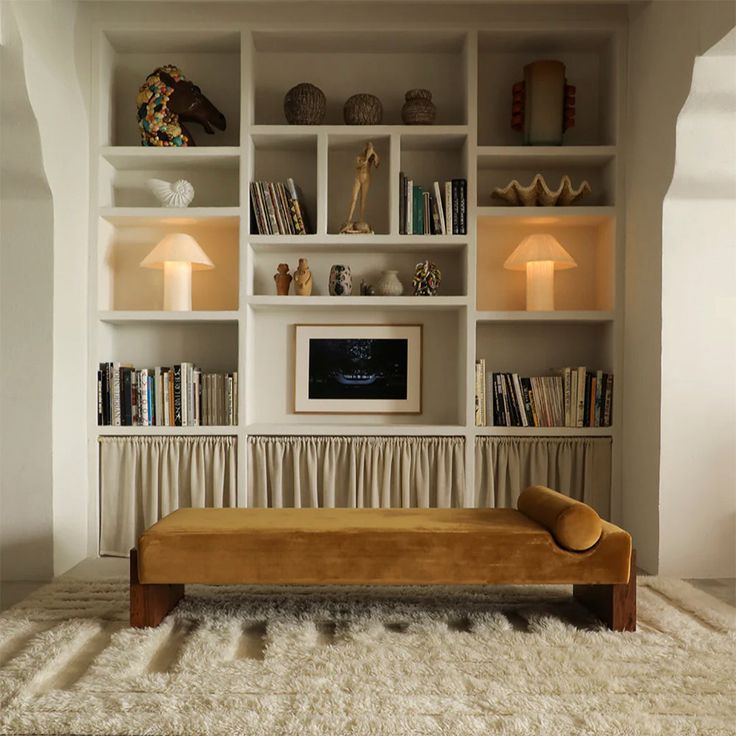
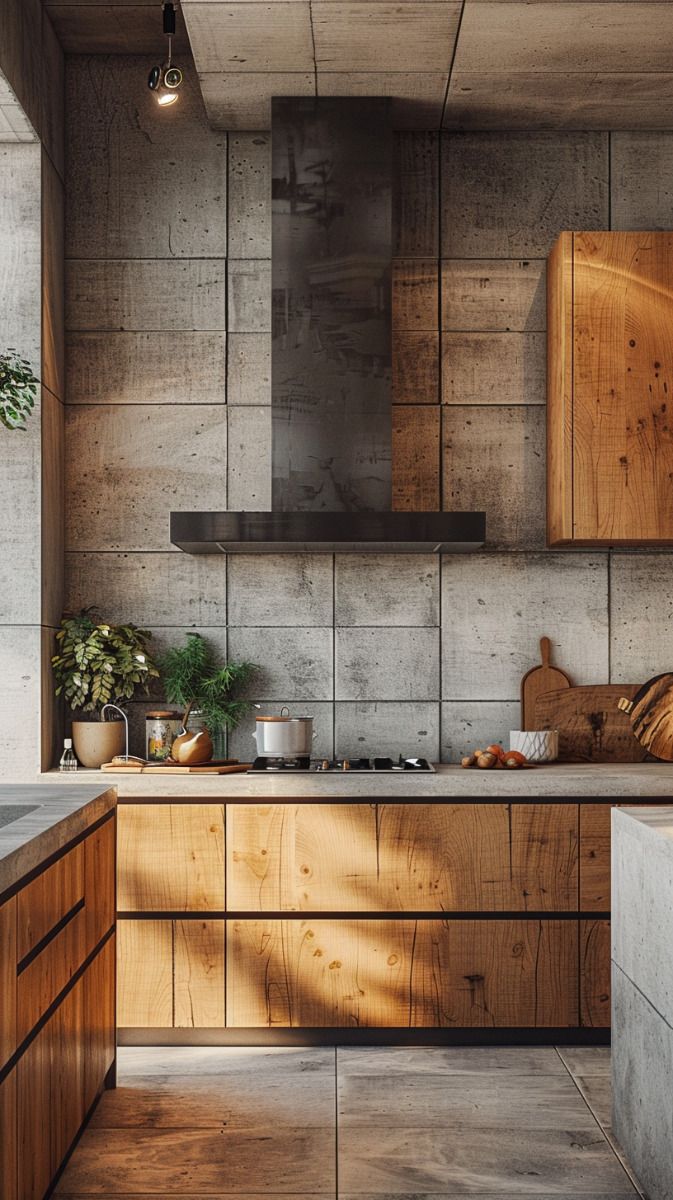
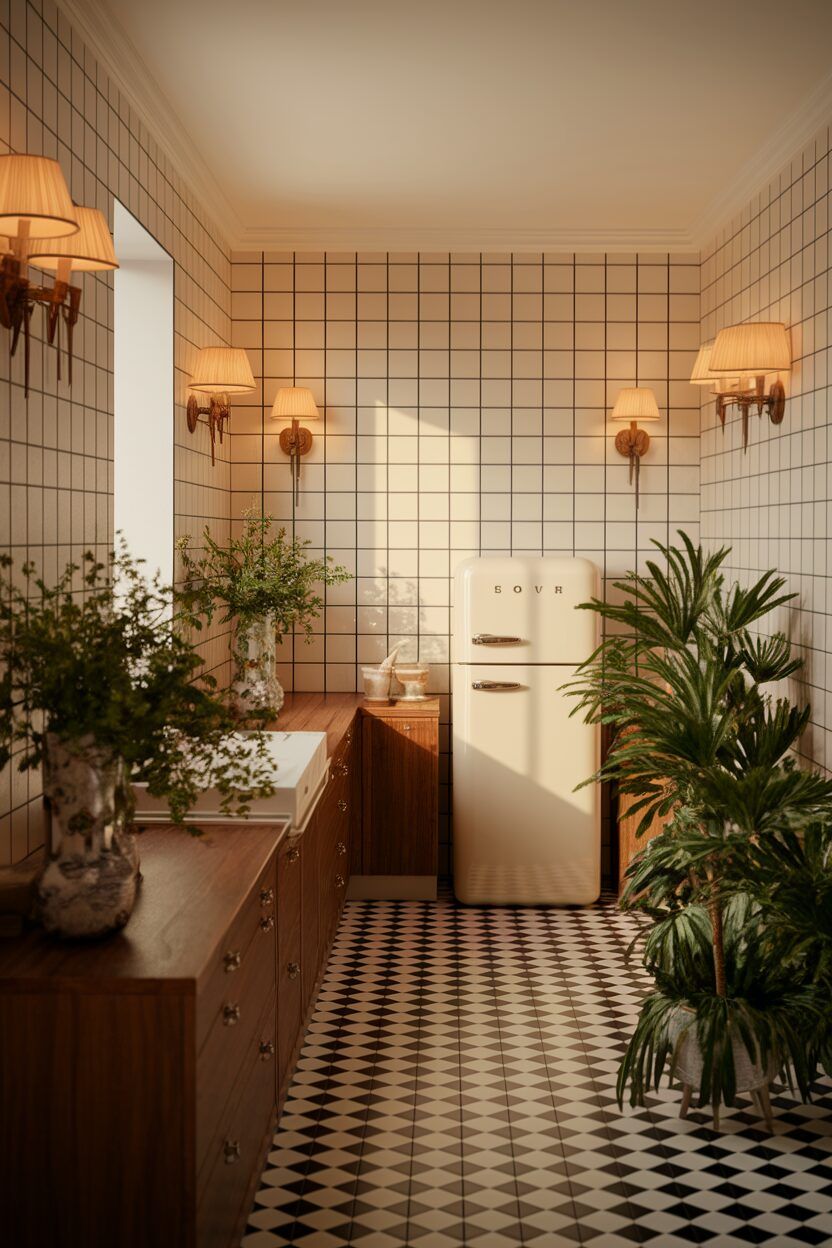
There’s always been a nostalgic strand in design — a longing for forms and motifs that feel familiar. But what’s happening in 2026 feels different. Call it retro-futurism in 2026 but don’t reduce it to pastel neon or 1980s sci‑fi kitsch. At Maison & Objet Paris 2026, designers seemed genuinely excited about how the past can inform the future, not as an ironic wink but as a meaningful, soulful dialogue.
The dominant theme circulating among designers wasn’t merely “old meets new,” but the idea that objects — antiques, heirlooms, or rooted cultural forms — gain new life when they’re reinterpreted through contemporary craft and technology. This is design that doesn’t reject history, but invites it to evolve. It’s not about making something look vintage; it’s about making it meaningfully relevant.
The Soul Behind the Style
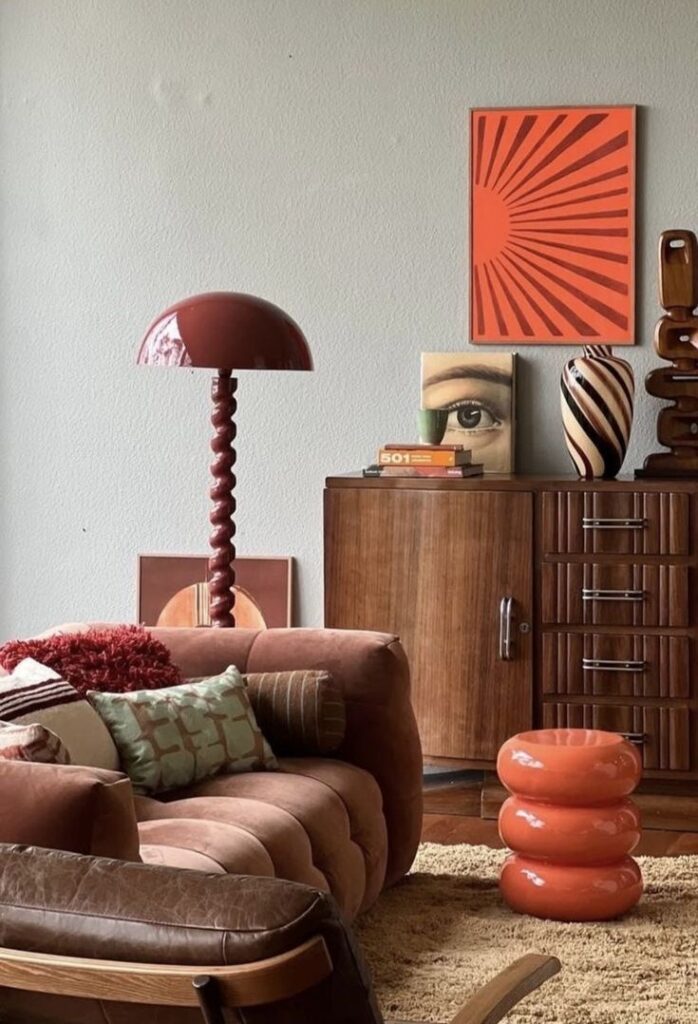
There’s a curious energy in retro‑futurism in 2026 that avoids pure nostalgia. It’s not “let’s wallpaper the room in avocado green and call it a day.” It’s more like: what did designers of the past imagine the future would look like, and what would that design look like today? The result is weirdly comforting and odd all at once — a world where a bamboo furniture could sit comfortably beside a biomaterial‑crafted lamp, both layered into a modern living room without feeling like relics or props.
This blend of eras shows up in how pieces are rendered: curved silhouettes reminiscent of mid‑century optimism but made from bio‑resins and 3D‑printed composites; lighting fixtures that reference Sputnik chandeliers but use integrated LED strips in pastel gradients; geometric motifs that could be at home in an ‘80s billboard yet are laser‑etched into hand‑finished ceramics.
Designers talk about “the soul of an object” these days — meaning not just its aesthetic but its narrative. Retro‑futurism satisfies this hunger. It lets an object wear its lineage proudly — mid‑20th century optimism, early digital era dreams — and still point forward.
Why Retro‑Futurism Resonates Now
You can see why this hits a nerve. The world feels a bit unpredictable. Technology races ahead, climate anxieties persist, and many of us are juggling rapid digital innovation with a craving for reality that feels tangible, textured, and human. Retro‑futurism in 2026 speaks to that dissonance. It’s a design language that acknowledges past visions of the future — smooth lines, optimistic forms, space‑age curves — but tempers them with materials and methods grounded in the present.
There’s a psychological comfort in that blend. Instead of presenting a cold, minimalist future, or an unanchored past, retro‑futurism bridges both. It gives you chrome and curvature, but with warmth and intention. It invites you to inhabit spaces that feel both familiar and surprising — like the future your grandfather once imagined, but recalibrated for modern life. Designers aren’t just reviving shapes; they’re reconciling two contradictory impulses: optimism and authenticity.
Materiality Matters
Unlike some ephemeral trends, retro‑futurism in interiors isn’t just about flashy finishes. The LinkedIn coverage of Paris M&O 2026 made this clear: bio‑materials and craft memory were front and center. Bio‑resins and digitally engineered composites share space with upcycled wood and hand‑worked metal. The DNA of the piece — where it came from, who touched it, how it was made — matters.
That mix means interiors don’t feel coldly futuristic. Smooth, reflective surfaces might sit alongside textured materials, like clay, wood grain, or woven fibers, giving the space a tactile quality. You could root a dining oak table — complete with uneven edges and tool marks — under a geometric light fixture that seems plucked from a 1970s vision of tomorrow. The juxtaposition reads intentional, not confused.
This play between material histories gives retro‑futurism its depth: it is futuristic in form but deeply anchored in craft.
Shapes That Speak
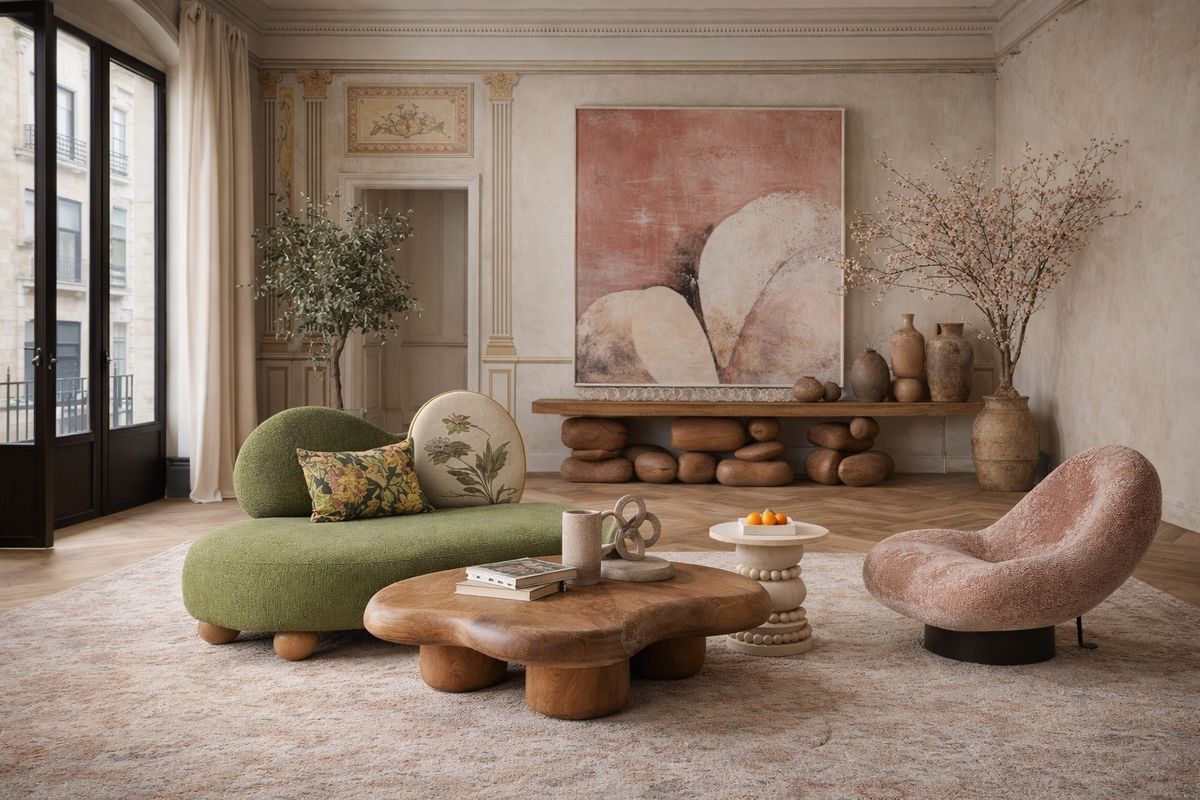
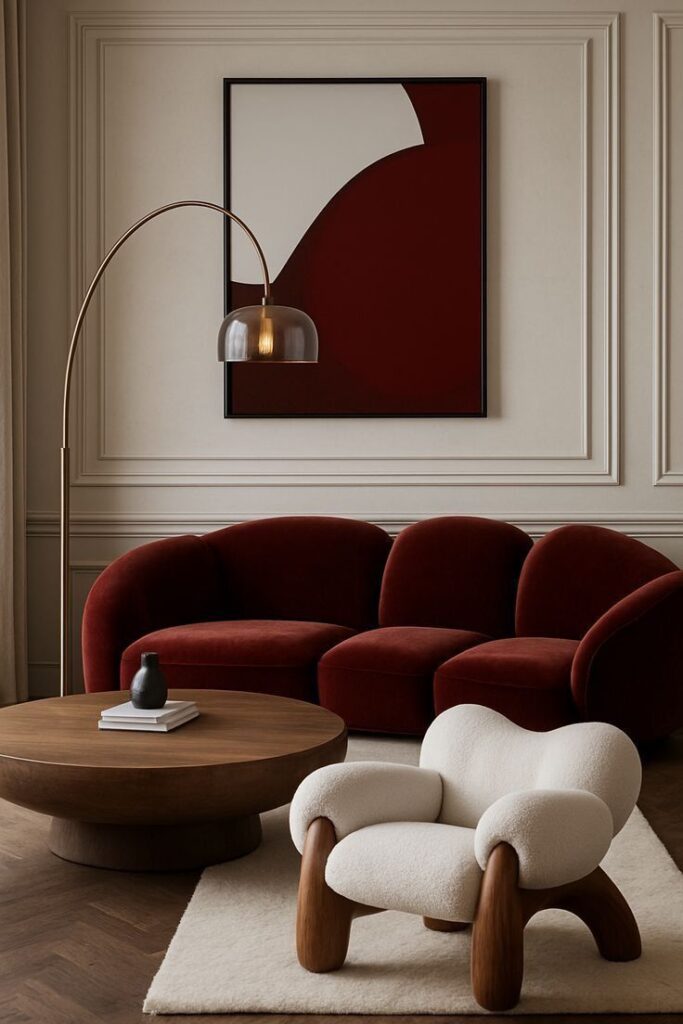
Look at the silhouettes that dominate the conversation this year: rounded couches without corners, lamps that feel like planetary rings, tables that seem poised for a sci‑fi lounge — all with familiar curves borrowed from mid‑century design yet executed with precision manufacturing. They feel like they were always meant to exist, even if you’ve never seen them before.
These forms aren’t decorative afterthoughts. They become the language of a space. They influence how a room feels — playful but authoritative, optimistic yet grounded. In many ways, this is maximalism’s smarter cousin: it has presence without chaos, personality without excess.
Color as Time Travel
Retro‑futurism’s palette tends to sit somewhere between yesterday’s optimism and tomorrow’s vision. Muted neon, soft metallics, dusty pastels recall the analog idea of the future — think Scifi movie posters from the 1970s and early ’80s — but they’re tempered here with earthy tones or matte finishes. This isn’t Y2K bright; it’s future‑nostalgia.
And that’s exactly the nuance that’s easy to miss if you’re not there, in the room, watching the light shift across the surface: these colors don’t compete. They echo. They respond to each other. A chrome‑edged lamp feels totally different next to a softly hued sofa. The interplay feels more like a mood than a palette.
Retro- Futurism in 2026: Orchestrating the Paradox
In the past, designers have flirted with mid‑century revival or ultra‑modern minimalism. Retro‑futurism is a bit like mixing bourbon and champagne — it shouldn’t work, but somehow it does. When done right, it feels like a thoughtful remix rather than a mashup.
The challenge lies in meaningful juxtaposition. A pod chair in a corner isn’t a statement piece for its own sake; it’s about how the curve interacts with the light, the ceiling height, the texture of the rug, the height of the coffee table, and even how people sit in it. It’s not enough to pair a metallic side table with a plush velvet seat. The space has to justify the dialogue between the two, let them breathe, let them stake claims and quietly agree on terms.
That’s why some retro‑futurist interiors feel authentic and others feel like set pieces. The latter is just aesthetics; the former feels like habitation — like someone considered how life actually happens there.
Beyond the Gimmick
If you look at how designers talked about the show in Paris, there was a repeated phrase: soulful design. It rings truer than any trend buzzword. They weren’t gassing over arbitrary throwbacks, but over the idea of objects that feel alive — that have intention, texture, narrative.
That’s what separates retro‑futurism from a tired revival. It’s not about nostalgia for nostalgia’s sake. It’s about weaving the past and the future into a new language. One where objects can be whimsical without feeling childish, futuristic without being cold, and sentimental without being kitschy.
Human‑Scaled Future
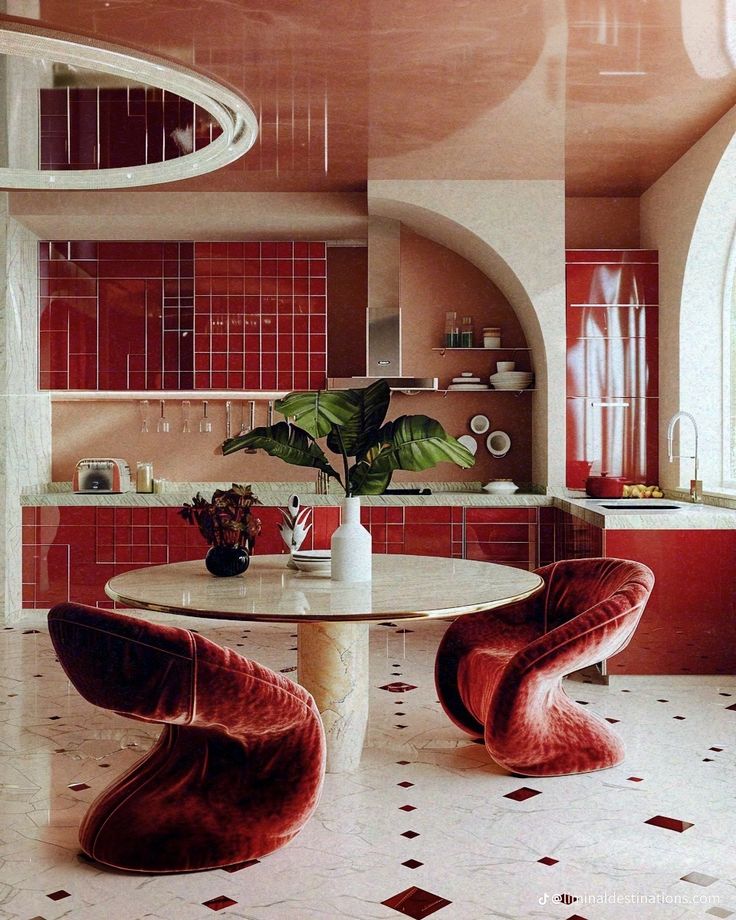
There’s another thing about retro‑futurism that resonates: it feels human. It acknowledges the digital age — the way technology shapes us — but without abandoning tactility. Surfaces invite touch; shadows fall differently across curved forms; corners ask you to sit, to linger, to feel.
Future rooms, in this view, aren’t sterile. They aren’t chrome boxes with gadgets. They are spaces where craftsmanship and imagination co‑exist. A sofa isn’t just a sofa; it’s a sculptural object shaped by lineage and technique. A lamp isn’t just a light source; it’s a micro‑story about projection, optimism, and time.
When Retro Meets Tomorrow
The attraction of retro‑futurism feels like a collective desire to feel design rather than simply look at it. In a world dominated by screens, endless feeds, and algorithmic predictability, spaces that feel a little analog, a little sci‑fi, and entirely human offer relief. They promise warmth without cliché, novelty without emptiness.
Perhaps that’s why 2026’s design weather vane is pointing this way. Not because it’s new, but because it feels whole — like design that has taken stock of where we’ve been and decided not to abandon the possibility of where we might go. There’s a weird joy in walking into a room that feels optimistic about the future but doesn’t forget how we got here.
It’s not just about looking back or forward. It’s about feeling between both.