Rattan furniture has always had a reputation. Casual. Breezy. Something you find in sunrooms, porches, maybe the odd coastal cottage. But 2026 has shifted that idea. It isn’t casual anymore. It’s deliberate, sculptural, layered, and tactile. Designers aren’t sneaking it in as a secondary piece; they’re letting it speak.
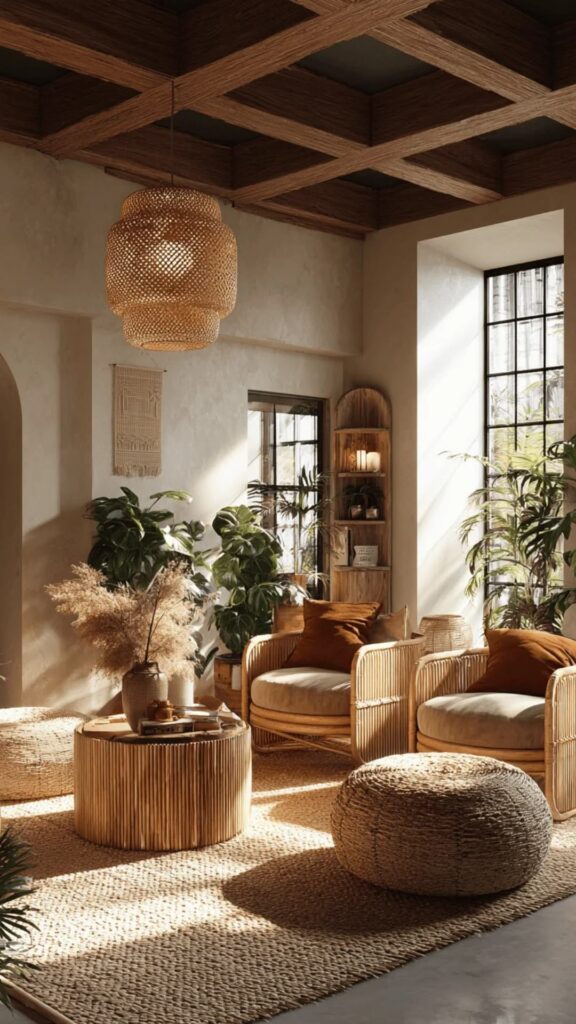
Step into a contemporary living room and a custom rattan chair or side table doesn’t just sit there. It occupies space differently. The weave catches light throws shadows across the rug, and shifts under weight. It’s quiet but alive. Even synthetic strands seem alive. They bend slightly under a hand, give a sense of scale, of presence. You notice it.
Scale That Surprises
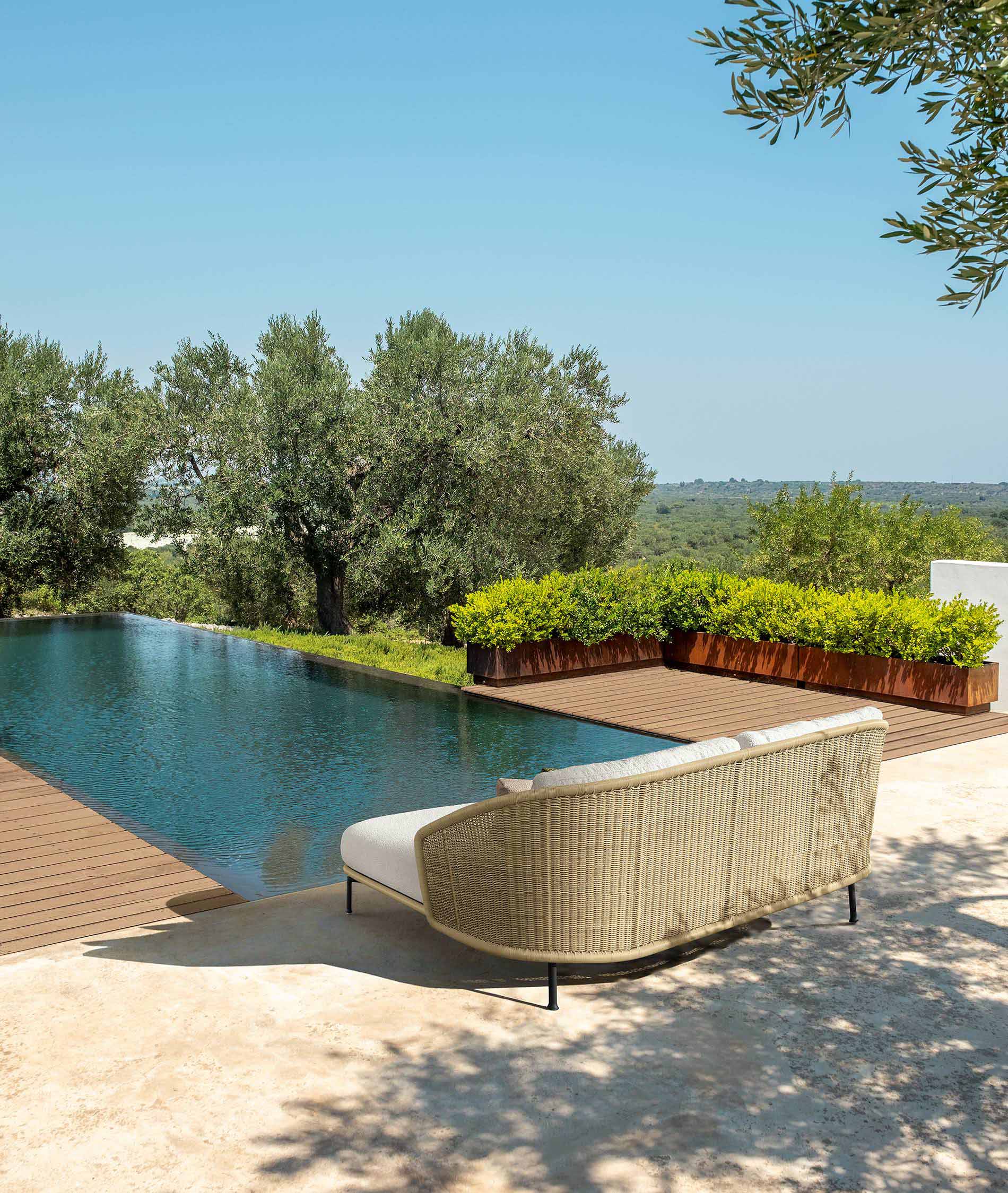
The rattan of 2026 isn’t delicate. Lounge chairs are oversized, sectionals curve, headboards rise in bold silhouettes. Rattan furniture can anchor a corner, define a living space, and still feel light. And it’s forgiving. Slight irregularities in the weave, curves that aren’t mathematically exact—they become part of the rhythm. They make it feel alive. Maybe even a little imperfect, but in the right way.
Layered and Textural
Rattan isn’t about a single piece anymore. It’s about layering. A lounge chair, a side table, a woven screen behind a sofa, a coffee table in matching strands. Shadows animate the space. It interacts with rugs, upholstery, and lighting. The weave guides the eye, creates a little rhythm.
It’s tactile, too. Unlike lacquered surfaces or plastics, you want to touch it. Hands follow the weave. Fingers rest on edges. That engagement is rare. Interiors have spent years favoring visual polish over touch. In 2026, touch matters.
Material Evolution
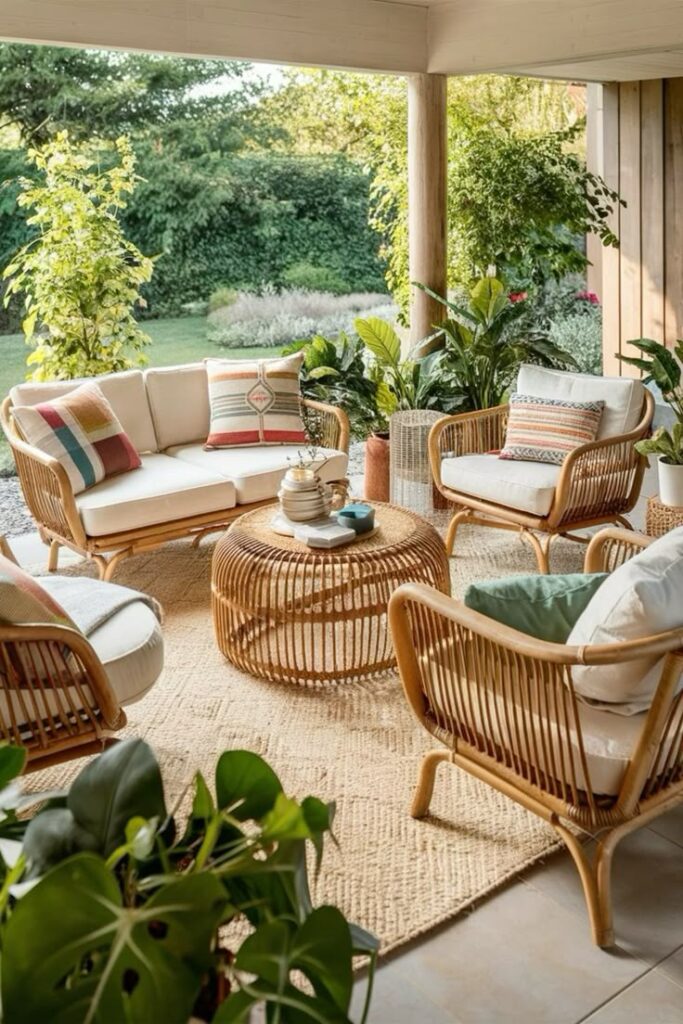
It’s not just natural rattan furniture anymore. Synthetic strands and hybrid frames allow for bigger curves, longer sectionals, indoor-outdoor flexibility. Steel or aluminum gives structure while keeping the tactile softness of the weave. Furniture can be used confidently in living rooms, sunrooms, terraces—even when the climate isn’t ideal.
Indoors, rattan interacts beautifully with harder surfaces. Marble, terrazzo, polished metal—they gain depth next to the warmth of the strands. The contrast is both visual and tactile. It’s subtle, but you feel it.
Color and Finishes
Traditional honey tones are still around, but darker weaves appear—black, smoky brown, muted greys. Cushions can be neutral, terracotta, olive, even jewel tones. Matte, hand-brushed, slightly weathered finishes make it feel artisanal. The furniture sits in a room without demanding attention, but it also doesn’t vanish.
Custom and High-End
Custom rattan has become a thing. Sculptural armchairs, modular sectionals, exaggerated woven screens. High-end pieces give rooms weight and personality. A single chair can guide rhythm. A bespoke coffee table might echo the curves of a sofa or wall screen. Custom doesn’t mean ostentatious. It just works.
Modularity and Movement
Modular designs are key. Loungers and ottomans can be rearranged. A corner for two becomes a space for six, then a lounge for cocktails. Tables move. Chairs shift. Open weaves let light and shadow dance across the room. The furniture participates. It doesn’t dominate.
Emotional Impact
Rattan invites interaction. People linger. Fingers trace strands. Children play. It shapes behavior. A lounge chair encourages leaning back. A sectional encourages conversation. It’s approachable but refined. That duality matters. Interiors should look composed but feel alive, not just staged.
Integration into 2026 Trends
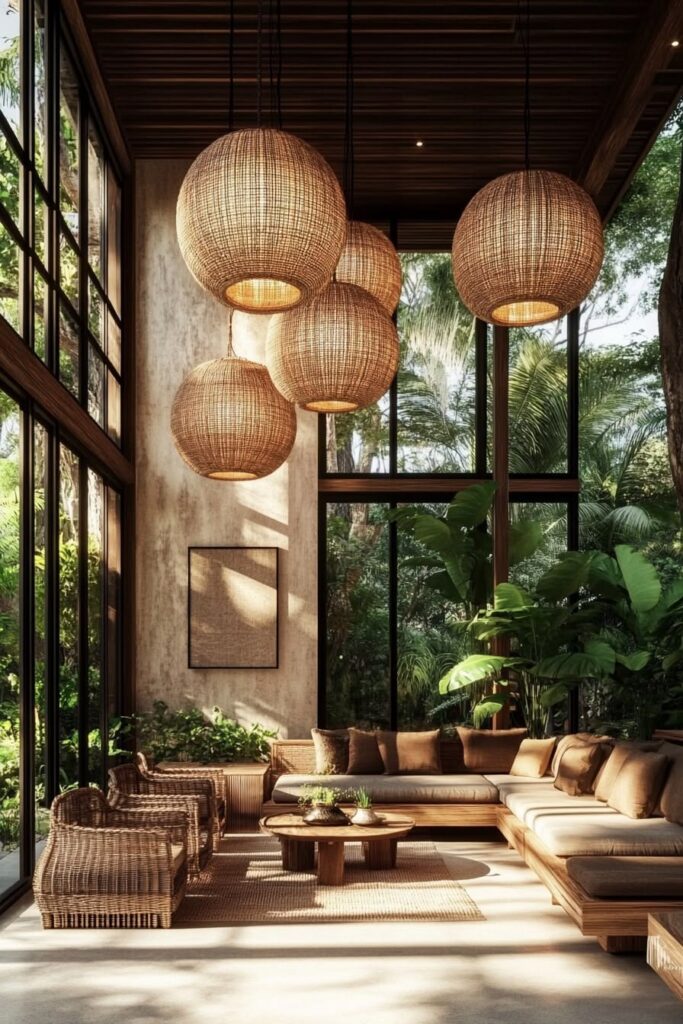
Rattan aligns with big trends. Personal expression over resale-neutrality. Layering, texture, tactility. Eclectic combinations—marble, velvet, wood, metal—work best when anchored by rattan. It’s a unifying element with warmth, craft, and presence.
Even minimal spaces benefit. One rattan chair can punctuate a neutral room. Shadows, texture, and light create depth. It can act as a bridge to outdoor living too. Continuity without copying the terrace.
Why It Works
Rattan works because it’s human. It curves to the body, invites touch, breathes with light. Accommodates scale and movement while staying grounded. In a world dominated by precision, flat surfaces, and perfect finishes, that’s rare.
This isn’t nostalgia. It’s presence, tactility, adaptability. It participates in a room’s narrative, structures experience, and engages more than just the eyes. Interiors with rattan in 2026 feel curated, lived-in, intentional but approachable.
Rattan furniture is no longer a supporting act. It’s shaping interiors in 2026: confident, organic, tactile, and yes—slightly imperfect, in a way that makes spaces feel alive.