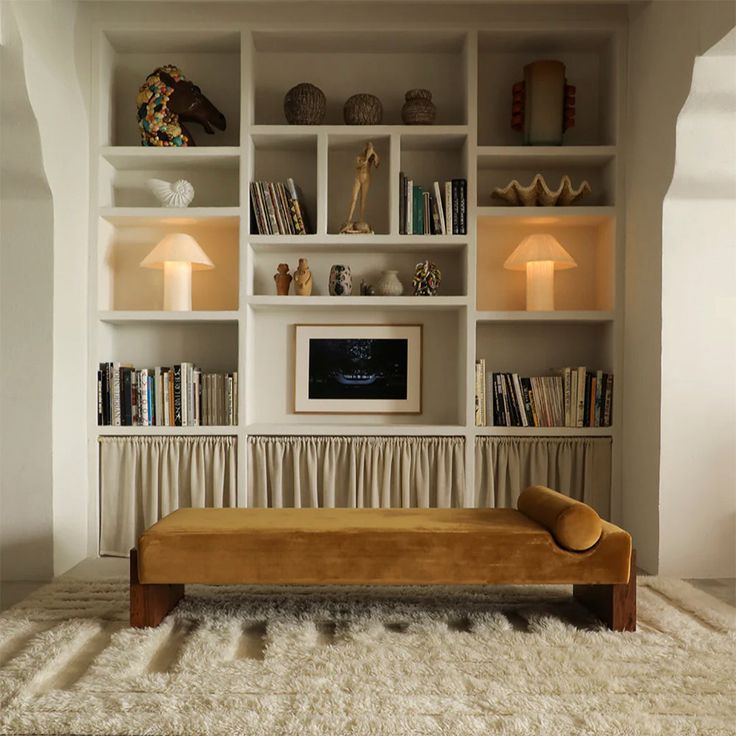
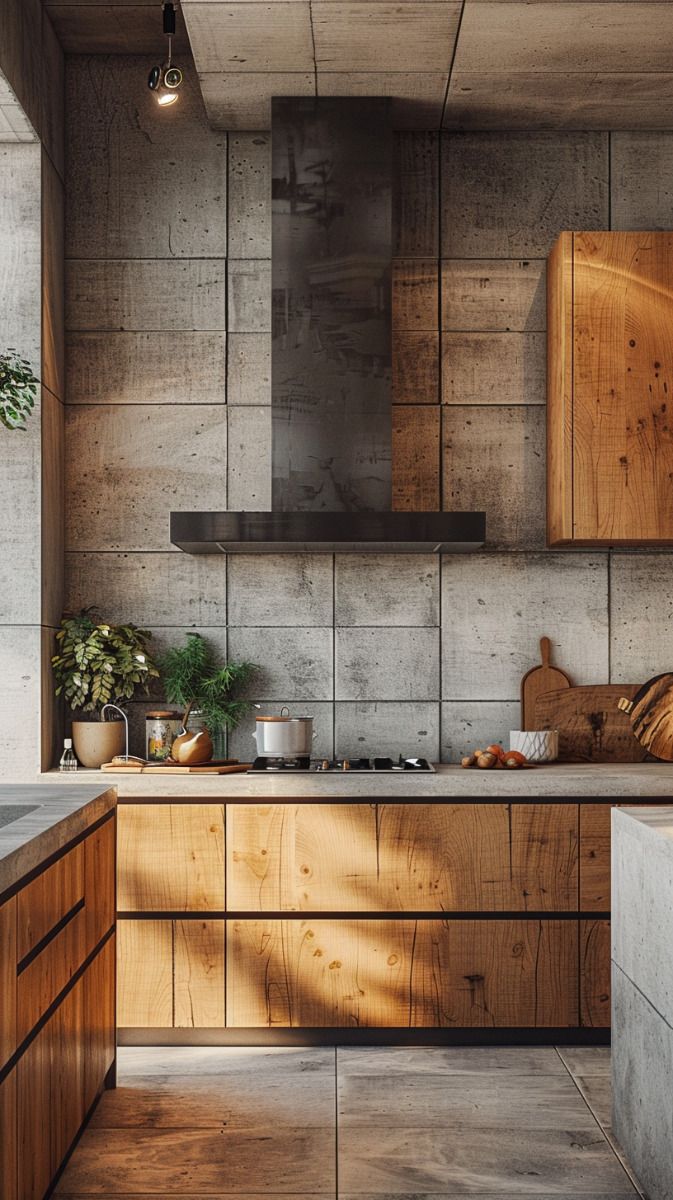
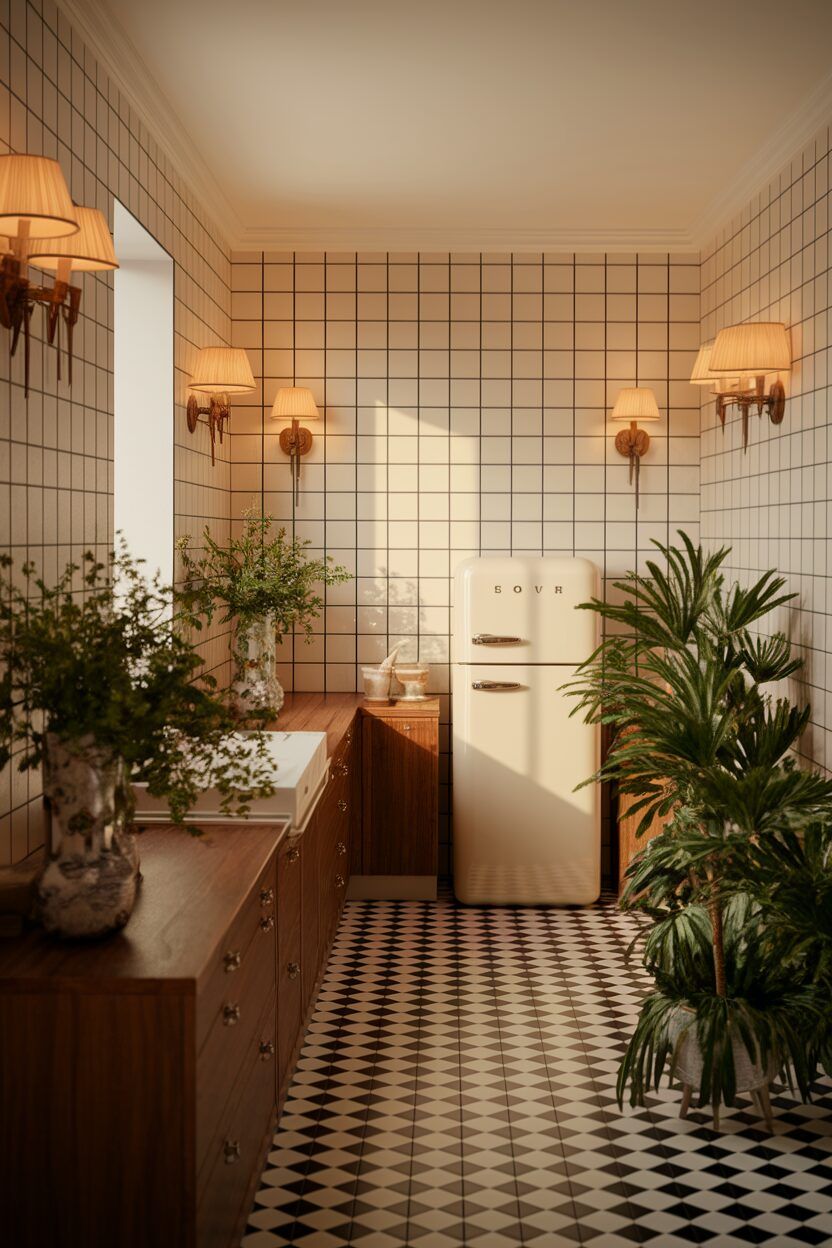
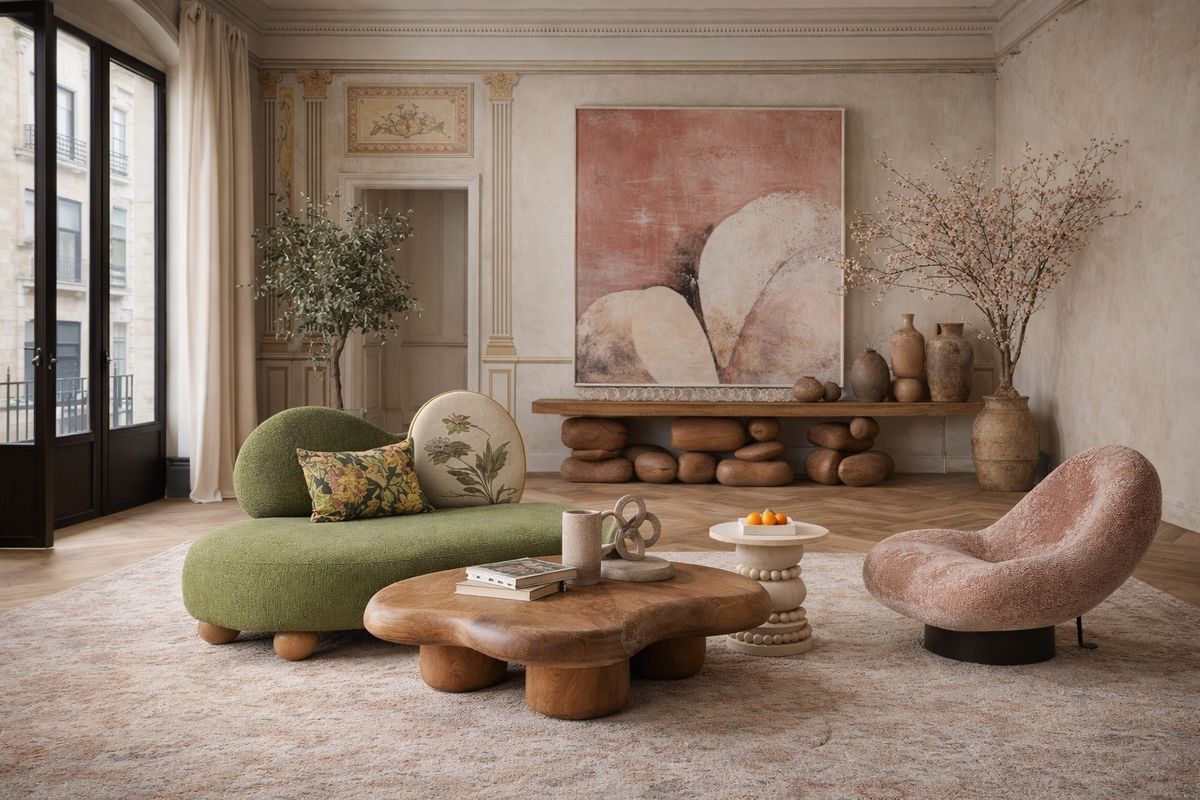
There’s a tension in rooms that mix modern and vintage furniture. It’s subtle, almost imperceptible, but it gives a space a pulse, a sense that it has both history and relevance. Modern furniture carries clean lines, polished surfaces, and intentional simplicity. Vintage furniture carries memory, wear, and a patina that no replication can achieve. When these two collide, the result can either feel curated or chaotic, and the difference often comes down to attention—or the lack of it.
Mixing modern and vintage is not about balance in the literal sense. It’s not a 50/50 split, or alternating every item like a chessboard. The trick is hierarchy. One piece claims presence while the other supports it. Sometimes that custom indoor modern sofa with impossibly low arms anchors a living room, and the vintage chairs bend around it, their curves softening its rigor. Other times, a vintage credenza with deep wood tones becomes the gravity point, and the modern side tables and lamps exist to reflect it without competing. The room becomes a negotiation between eras.
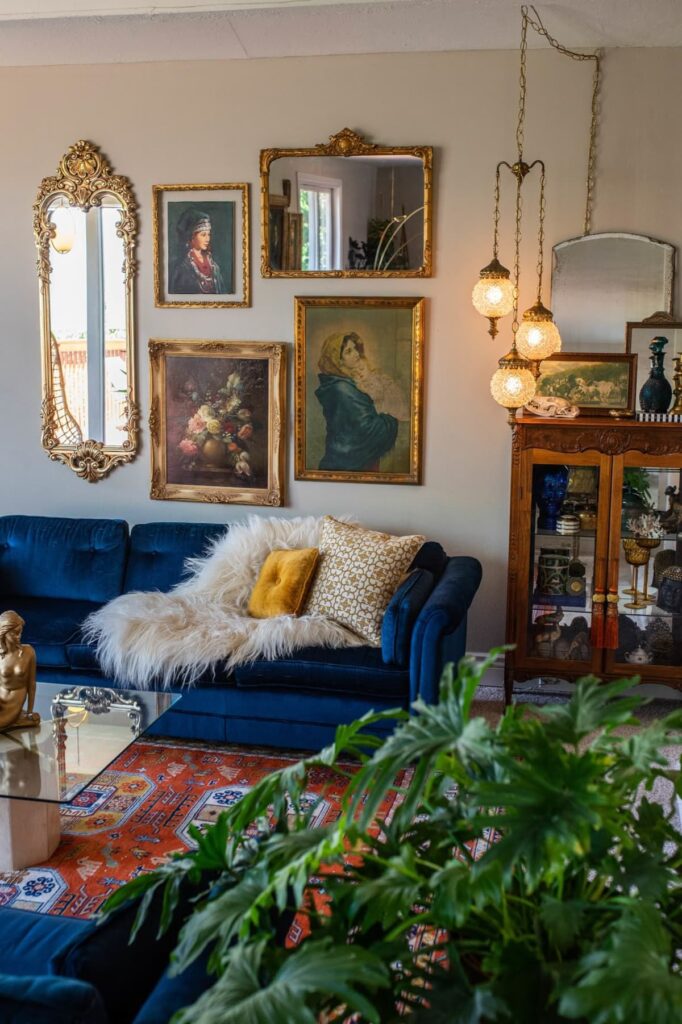
Let the Pieces Speak
A mistake often made is treating modern and vintage as interchangeable aesthetics rather than voices. Modern furniture tends to announce itself clearly: geometric, minimal, intentional. Vintage objects speak more quietly, with texture, nuance, and the subtleties of age. Their differences are not a problem—they are an opportunity. A mid-century armchair, faded but structurally elegant, next to a steel-legged, glass-topped coffee table doesn’t clash if their roles are understood. One defines space; the other adds narrative.
Textural contrast is crucial. A sleek lacquered table next to a worn wooden chair highlights both pieces’ unique qualities. Velvet cushions paired with brushed metal legs, woven rugs with minimalistic seating—these juxtapositions create visual tension without friction. The eye rests on surfaces that contrast without fighting. There’s no need to artificially match eras; the room’s rhythm comes from letting differences coexist purposefully.
Color as a Mediator
Color is often the bridge between modern and vintage. A neutral palette can quiet the conversation between eras, allowing the forms to assert themselves without competing. Warm browns, muted greens, charcoal grays, or off-whites create a common language. In a living room dominated by vintage wood tones, a modern sofa in a muted gray or beige provides relief and clarity. Conversely, if the modern furniture is bright or stark, a vintage rug or upholstered chair can warm the space and prevent it from feeling sterile.
Accent colors should be minimal and deliberate. A single pop of mustard on a modern armchair can reflect tones found in a vintage rug. Metallic elements, especially brass or matte black, can connect both aesthetics. The goal is not exact matching—it’s resonance. A shared undertone unifies the room without erasing history or design intent.
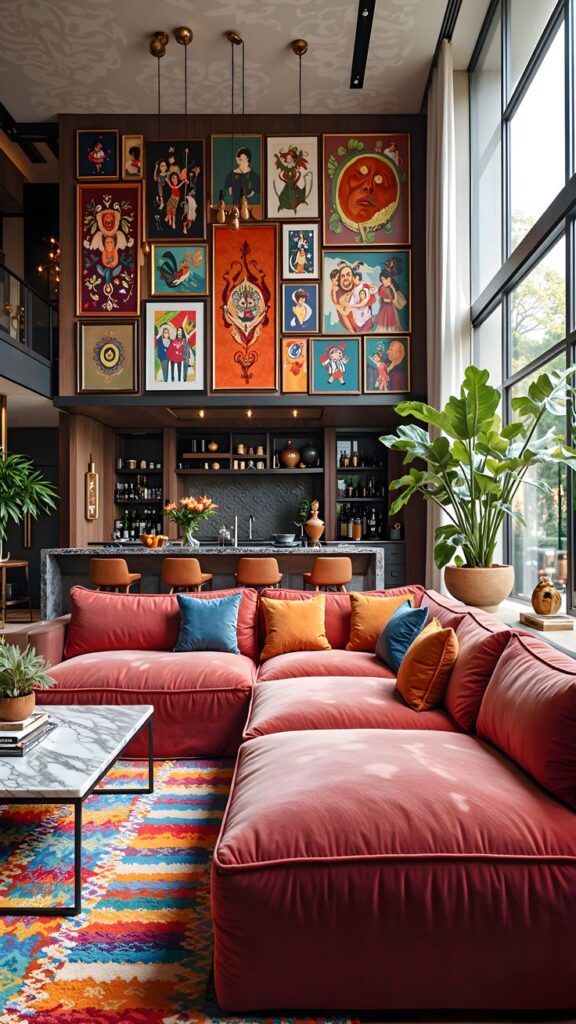
Scale and Proportion
One of the hardest things to get right when mixing modern and vintage furniture is scale. Modern furniture often reads larger, more architectural, while vintage pieces may be compact, curvy, or asymmetrical. If a modern sectional overwhelms delicate mid-century chairs, the vintage furniture loses impact. Conversely, a massive vintage armoire can dwarf a minimalist sofa.
The solution is awareness. Each piece must occupy space deliberately. Smaller vintage pieces act as punctuation in rooms with expansive modern forms. A single modern coffee table can unify an eclectic collection of side tables or stools. Scale is about conversation—nothing should whisper while another shouts.
Material Dialogue
Mixing eras is more tactile than visual. Wood, metal, glass, leather, and textiles can complement or conflict, depending on their finish and weight. Glossy, lacquered modern surfaces can feel jarring next to raw or distressed wood. But pairing them thoughtfully can create a push-and-pull that elevates both. Brushed metal with polished wood, leather with linen, velvet with glass—the contrasts must feel intentional, not accidental.
Patina is a superpower. Vintage furniture carries a history of touch—slight dents, soft edges, fading—that modern pieces usually lack. Using patina as an accent makes modern elements feel more human and less sterile. A modern sofa doesn’t need to be cold; it simply needs space to let the vintage textures breathe around it.
Rhythm Over Symmetry
Symmetry is a trap in mixed-era styling. Modern furniture often craves order, clean lines, and repetition. Vintage furniture rarely conforms. Trying to force symmetry—pairing identical chairs or matching wood tones too literally—can make a room feel staged. Instead, rhythm matters. One large modern piece, two vintage objects of different heights, and a small accessory that nods to both can create a natural cadence.
Negative space is just as important. Rooms with too many objects, or attempts to “balance” eras, lose their energy. Let a vintage lamp sit alone on a modern console. Allow a mid-century side chair to face a geometric rug. The room will feel curated, alive, and layered without screaming “look at me, I tried to match everything.”
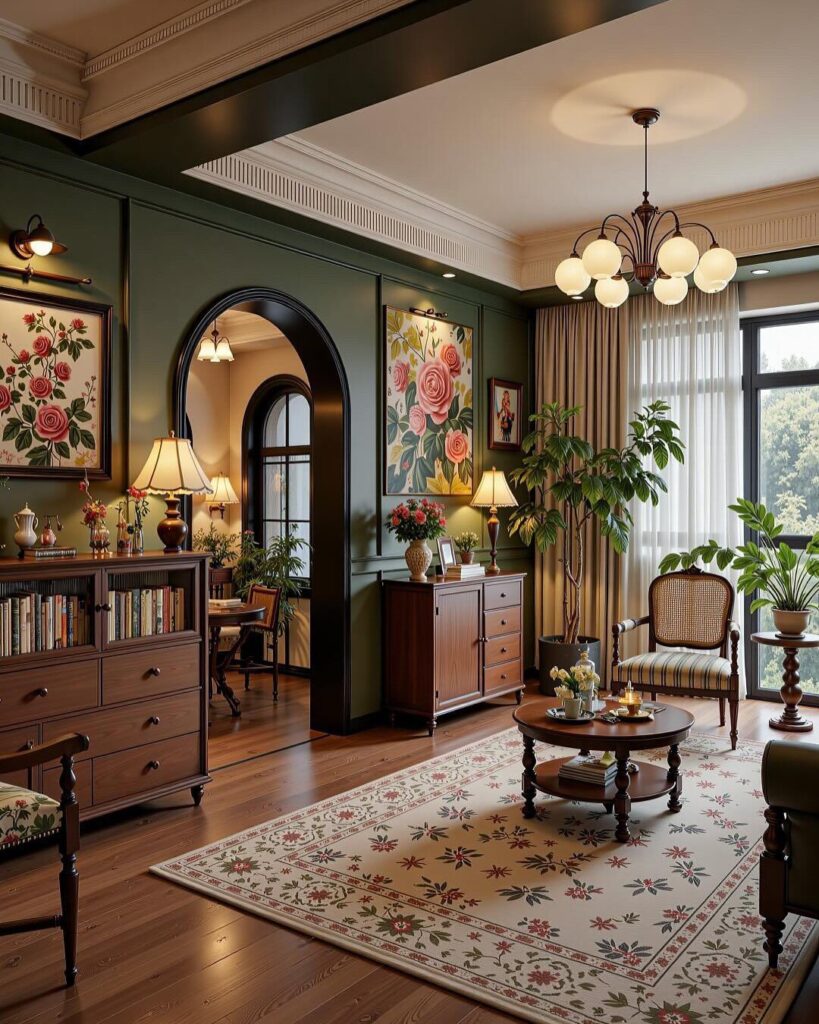
Lighting Bridges Time
Lighting plays a subtle but essential role. A modern floor lamp can highlight the grain in a vintage credenza. A vintage chandelier can soften a room filled with stark modern furniture. Shadows, reflection, and warmth become tools to connect eras. In practice, one light source can highlight multiple textures and finishes, letting the room’s dialogue emerge naturally.
Natural light is particularly powerful. Sunlight across both polished modern surfaces and worn vintage materials emphasizes their differences while unifying the space. The room should feel like it has been lived in, not assembled for Instagram.
Personality Trumps Purity
One of the most exciting aspects of mixing modern and vintage furniture is that it gives a room personality. It’s less about following trends and more about revealing taste, narrative, and curiosity. A Scandinavian lounge chair from the 1950s next to a bold contemporary sofa tells a story of history meeting now. A rustic sideboard alongside a minimalist coffee table suggests intentional contrast rather than coincidence.
The best rooms don’t hide imperfection. Vintage furniture with slight dents, scratches, or fading adds authenticity. Modern furniture with precision edges brings clarity. Together, they create spaces that feel lived in and aspirational simultaneously.
Start Small, Let Layers Emerge
Mixing modern and vintage furniture rarely works by throwing everything together at once. Start with one anchor piece—modern or vintage—and layer around it. A vintage sofa can guide the choice of a modern rug, lamp, or side table. A bold modern dining table can create space for vintage chairs with character. The room evolves gradually, with each piece chosen to dialogue with what already exists, not to compete.
Accessories can bridge eras subtly. Books, ceramics, textiles, or artwork can reflect tones and textures found in both modern and vintage furniture, creating cohesion without overthinking. Sometimes, restraint is more effective than addition.
The Magic Is in Contrast
The real beauty of mixing modern and vintage furniture is contrast. The eye notices differences, the mind registers history, and the space gains rhythm. It’s a design strategy that feels intuitive once the rules of hierarchy, texture, and scale are understood—but those rules are flexible. Modern and vintage don’t need to fight; they only need to coexist with awareness.
Ultimately, the room should feel alive, not forced. Each piece matters, but none overshadows the story. The modern furniture provides clarity, structure, and functionality. The vintage pieces offer warmth, texture, and history. Together, they create a narrative that neither could achieve alone.