A well-chosen luxury daybed has a certain quiet confidence. It doesn’t shout for attention, nor does it exist as an afterthought. Instead, it occupies a rare intersection in design: architectural presence paired with everyday utility. In many ways, the daybed is the most underestimated piece in a curated home—part sculpture, part escape, and part spare bedroom waiting patiently in the wings. When transitioned to an exterior setting, its versatility truly shines, especially when paired with a sculptural outdoor parasol umbrella to create a private, shaded sanctuary.
Together, these elements transform a simple patio into a sophisticated lounge, proving that true luxury lies in the intentional pairing of comfort and protection from the elements.
Across centuries and cultures, the daybed has held a near-mythical status. Ancient Greeks reclined on them during symposia. Mid-century designers reinterpreted them with razor-sharp simplicity. Today, luxury outdoor brands craft floating, canopy-draped silhouettes that turn a terrace into a resort-level sanctuary. Regardless of era, the purpose remains the same: a place to pause, to breathe, to read, to disappear for a moment.
In the world of contemporary interior design, the daybed has evolved far beyond “an extra place to crash.” It has become a signature gesture—something you choose when you’re curating not only function but atmosphere. And that’s where its power lies.
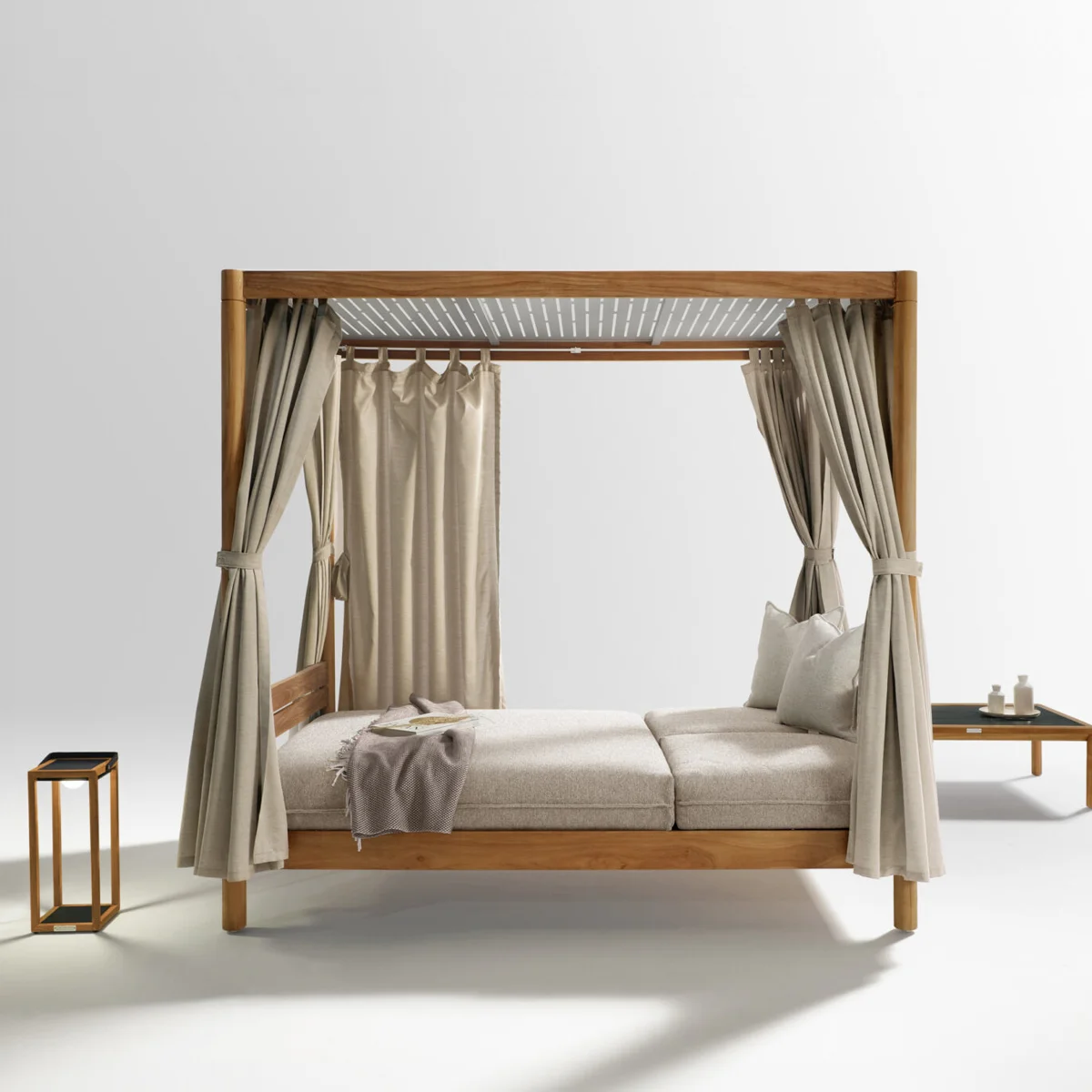
Why Daybeds Endure: The Luxury of Duality
Great design always comes back to duality. A lighting fixture should be a sculpture when off. A table should host a dinner party and still look purposeful at 7 a.m. A daybed, when executed well, delivers two experiences without compromising either one.
By day, it’s a chaise; an invitation for conversation, lounging, laptops, afternoon sunbathing, or slow mornings with coffee.
By night, it becomes a full-fledged sleeping space—comfortable enough for everyday use, elevated enough to belong in a designer home.
This flexibility is partially why daybeds remain a staple among architects and interior designers. In homes where every square meter must justify its presence, multifunctional luxury pieces become assets—not compromises.
Choosing the Right Daybed: The Anatomy of a Smart Investment
If you’re selecting a luxury daybed for your home—indoor or outdoor—think of the process the way a designer thinks of specifying a signature piece for a client. The goal isn’t just to fill space. It’s to create ambience.
Below are the considerations that truly matter.
1. Scale, Proportion, and Placement
Daybeds look deceptively simple, but like sofas, they require proportion that suits the room. Too small and they appear insignificant. Too large and they swallow the environment.
Ask yourself:
- Is this daybed meant to anchor a room or create a quiet vignette?
- Does it float in open space or nestle against a wall?
- Will it function as a primary seating element or a secondary lounge zone?
For open-concept spaces, a luxury daybed can act as a visual divider—cleaner and more sculptural than a sofa back obstructing views. For bedrooms decoration, it becomes a transition piece between activity and rest, ideal near windows, fireplaces, or foot-of-bed scenarios.
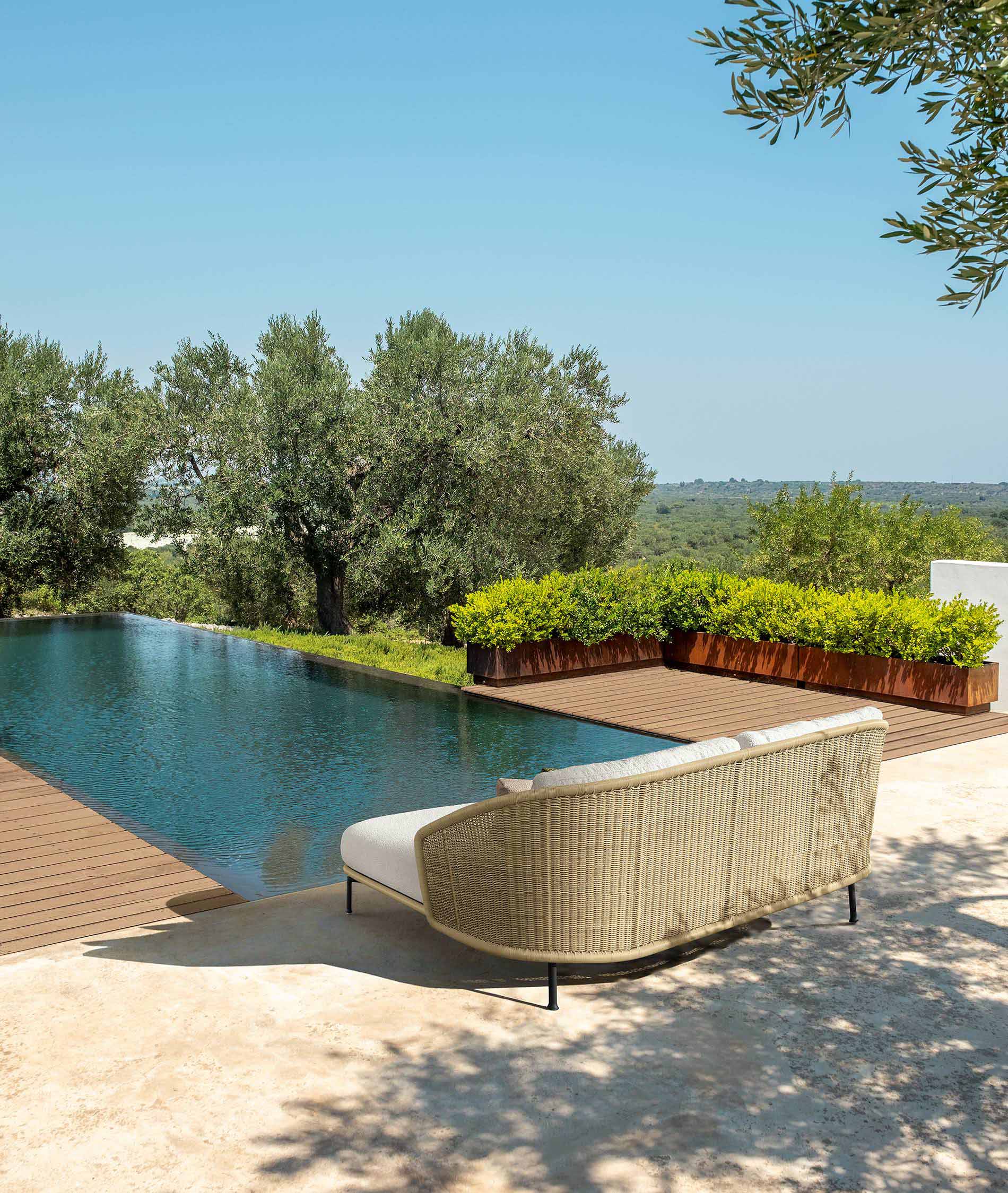
Outdoor spaces demand even more intentional placement. On a terrace or pool deck, a daybed becomes the gravitational center—shaping how people move, socialize, and unwind around it.
2. Materials: The Silent Storytellers
Luxury isn’t just about how something looks. It’s about how it holds up—season after season.
Indoor Materials
- Solid wood frames offer warmth and longevity. Oak, walnut, and ash deliver architectural gravitas.
- Upholstered frames introduce softness and hotel-suite intimacy.
High-end brands use premium foams, down blends, and performance textiles for durability. - Metal bases (brushed bronze, powder-coated steel, polished stainless) deliver a contemporary sharpness.
Outdoor Materials
This is where expertise matters. Outdoor daybeds are only as good as the materials protecting them.
Premium outdoor collections use:
- Marine-grade stainless steel
- High-tensile aluminum
- Handwoven nautical rope
- Solution-dyed acrylic fabrics (UV-resistant, mold-resistant, easy to maintain)
- Quick-dry foams engineered for open-cell breathability
If a brand is using anything less, the daybed is a season or two away from fading, molding, or sagging.
3. Comfort: Engineering the Experience
A luxury daybed is not just a design choice—it’s a tactile one.
For Sleeping
- Look for a sturdy hardwood or reinforced metal frame.
- A twin or full mattress typically works best (depending on the frame).
- Ideal mattress height: 17–18 inches total, creating effortless seating ergonomics and an elegant silhouette.
For Lounging
The difference between an “okay” daybed and a luxury daybed is often in the cushion engineering:
- Multi-density foam layers
- Down-wrapped toppers
- Edge roll support
- Upholstery tension that retains shape over time
Luxury daybed never feel hollow, over-stuffed, or bouncy. They feel supportive—almost tailored.
4. Aesthetic Identity: The Style That Defines You
A daybed becomes a design statement the moment you place it in a room. And every aesthetic speaks differently:
Contemporary Minimalism
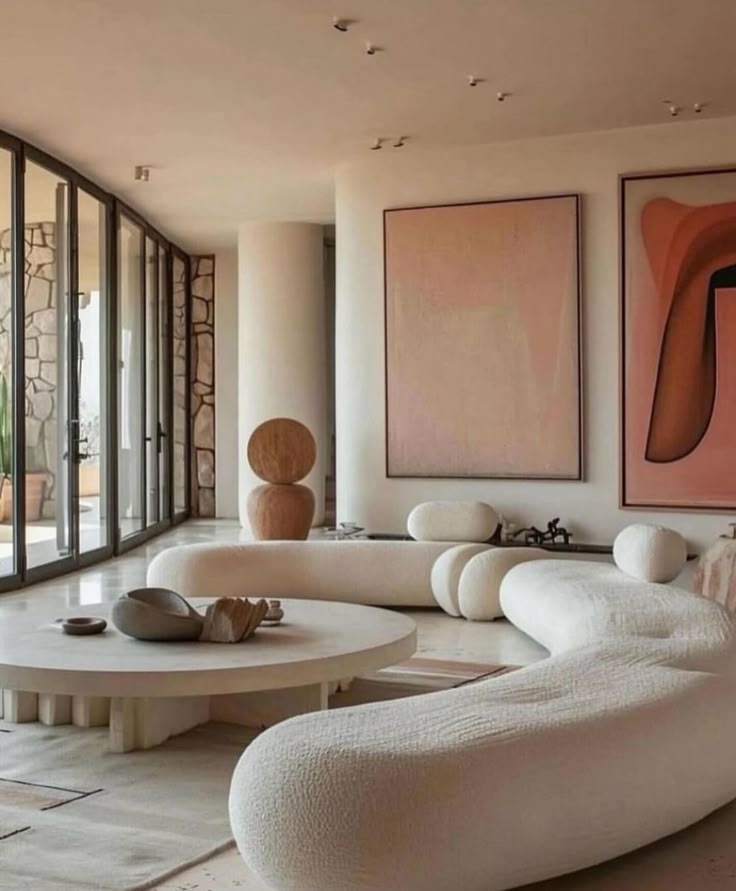
Low profiles, clean lines, matte finishes. Perfect for modern penthouses and airy coastal spaces.
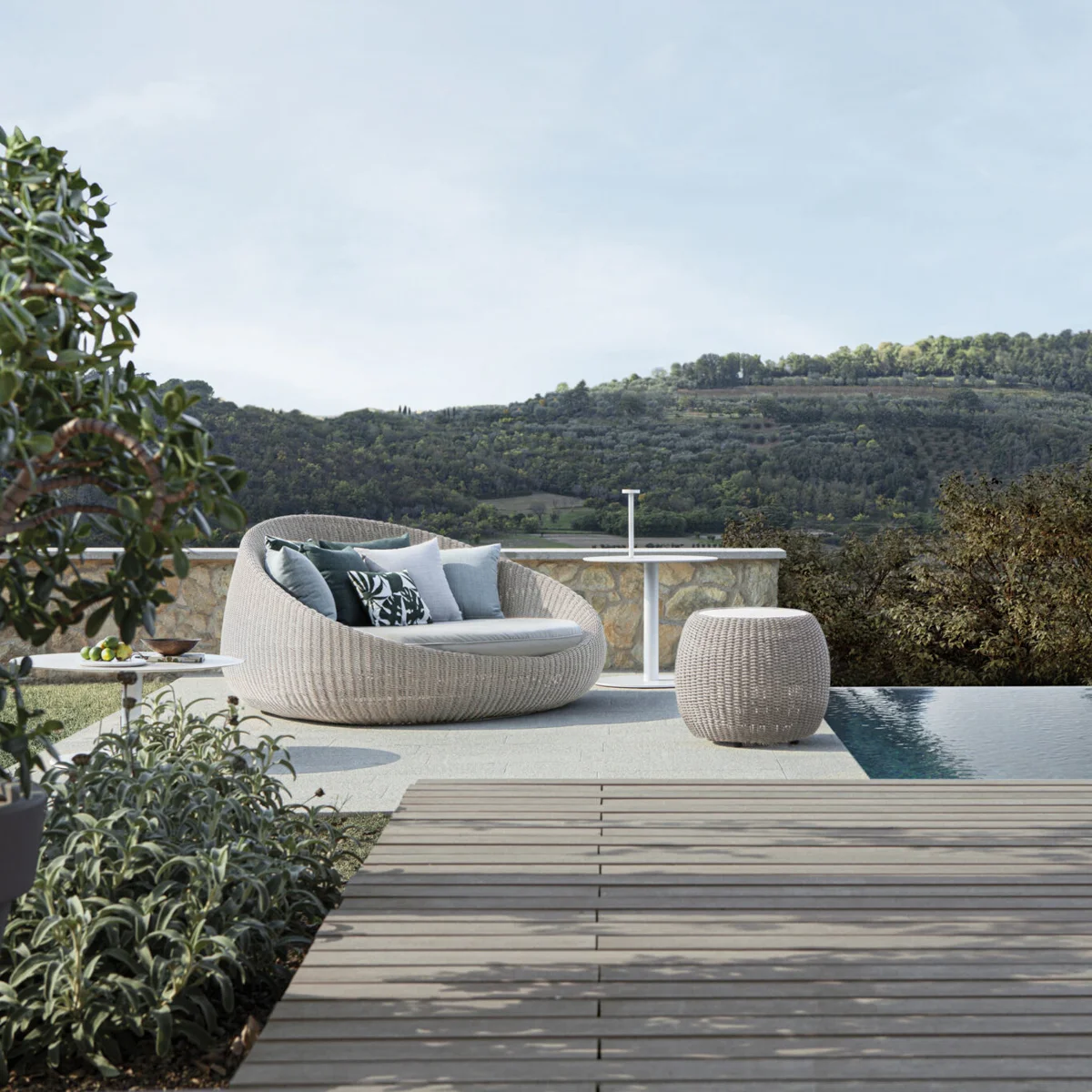
Organic Mediterranean
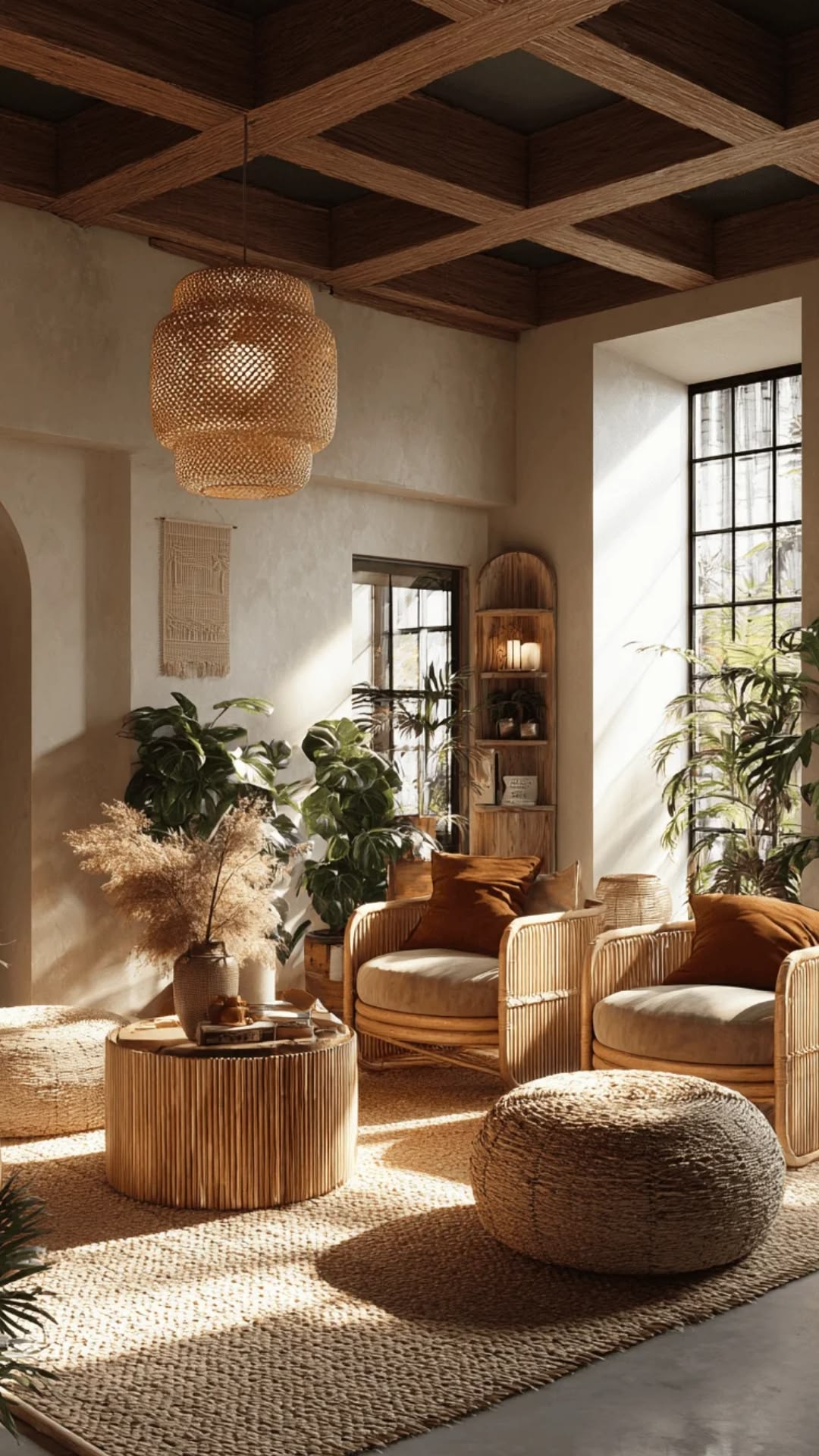
Woven rope, teak, rounded silhouettes. A natural, resort-level warmth.
Architectural Modernism
Sculptural frames, geometric forms, tensioned upholstery. Think gallery-level presence.
Classic Elegance
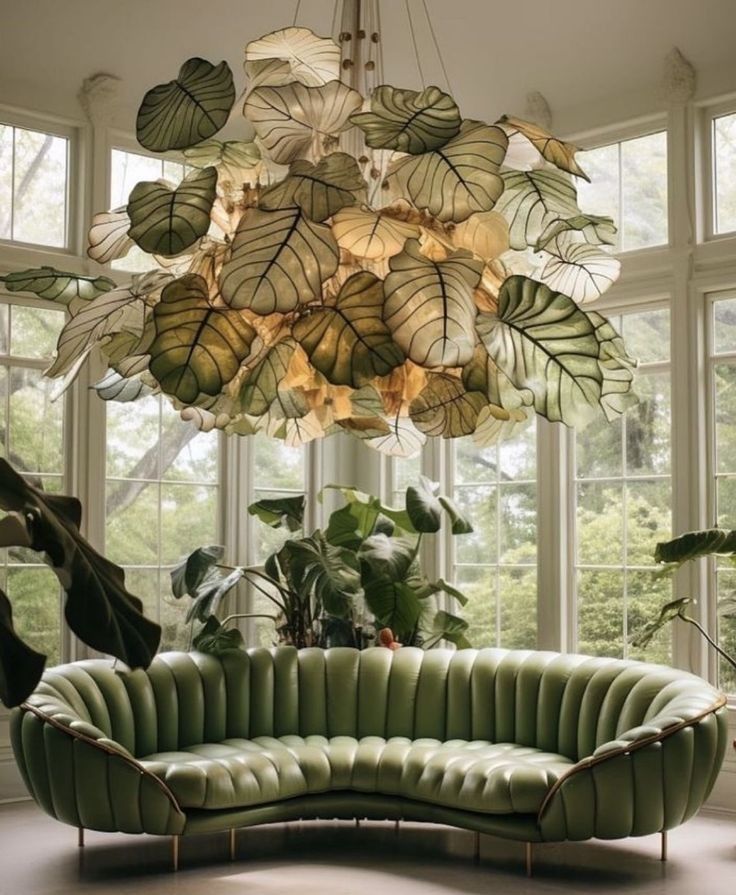
Curved woodwork, upholstered backs, tailored piping. A timeless, quiet luxury feel.
Outdoor Resort Luxury
Canopies, draped layers, wide proportions. Designed for basking, entertaining, and escaping.
Whatever direction you choose, your daybed shouldn’t look like a compromise. It should look intentional—part of the home’s architecture.
5. Types of Daybeds: A Luxury Breakdown
Beyond the basic “indoor vs outdoor” distinction, each type has its own purpose.
Traditional Daybed
The classic silhouette—ideal for guest rooms, libraries, and bedrooms.
Trundle Daybed
A hidden second bed. Perfect for city homes, kids’ rooms, or multipurpose spaces.
Platform Daybed
No box spring, clean modern lines, ideal for minimalist design.
Outdoor Daybed or Lounge Bed
Often oversized, often circular or canopy-framed. The signature of a luxury terrace or pool deck.
Modular Daybed
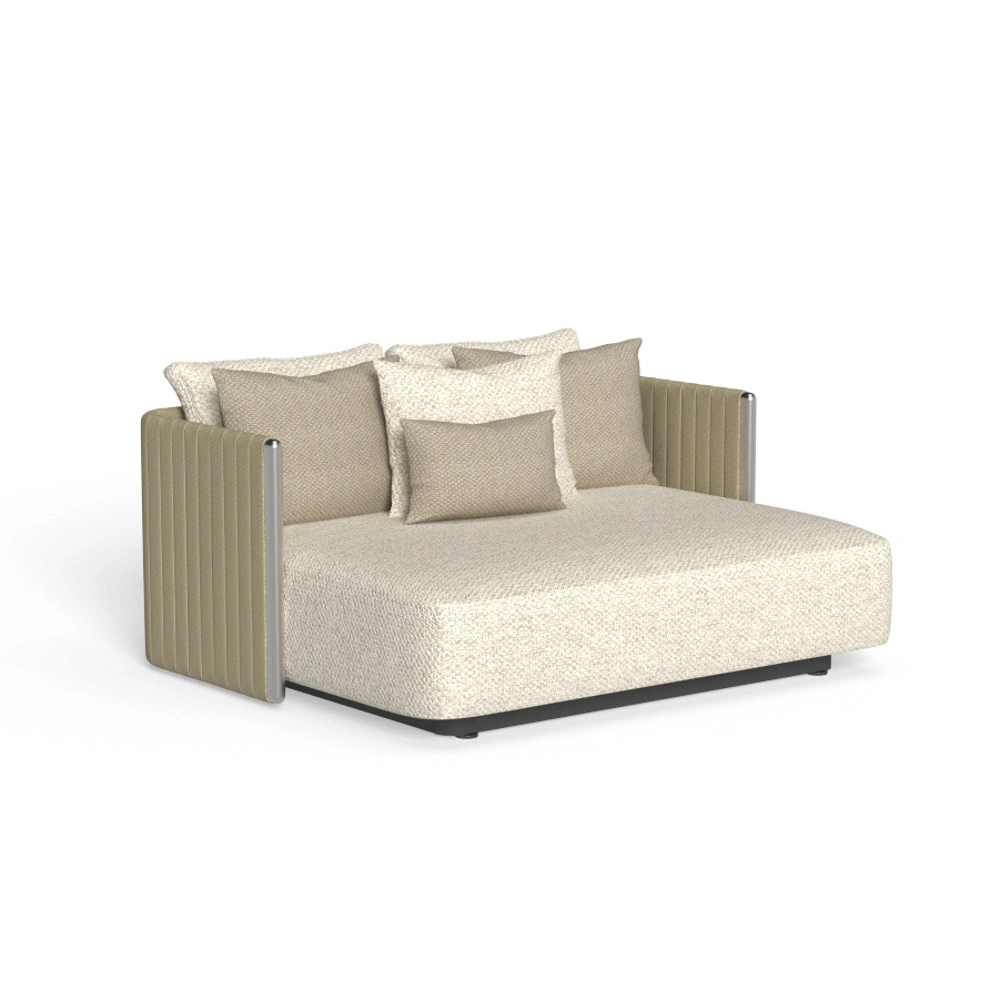
Allows reconfiguration—part sofa, part bed, part lounge system.
High-end furniture brands increasingly view daybeds as lifestyle pieces: the embodiment of slow living, architectural clarity, and wellness-centered design.
6. Everyday Living: Real vs. Myth
Let’s answer the things people actually wonder.
Can a daybed be used as a daily bed?
Yes—if the mattress and frame are quality. Many interior designers use them as primary beds in lofts, studios, and guest suites.
Can two people sleep on a daybed?
Not comfortably on a twin, but full-size and queen-size daybeds are intentionally built for two.
Should you use regular bedding?
Absolutely. Twin or full bedding works, but curated throws and oversized pillows make the piece feel more like a lounge than a bed.
How do you make it look more like seating?
Layer textures.
Think bouclé bolsters, linen-blend throws, oversized square pillows in tonal gradients.
The styling transforms it from “spare bed” to “high-end lounge.”
Wood vs metal?
Wood for warmth.
Metal for minimalism.
Both for durability—just choose based on the room’s character.
7. Outdoor Daybeds: The Pinnacle of Leisure
If indoor daybeds are versatile, outdoor daybeds are a full sensory experience. They’re the furniture equivalent of a luxury resort passport. The right one can turn a simple terrace into a wellness retreat.
What separates premium outdoor daybeds from mass-market versions?
Superior Rope Weaving
High-tensile, UV-resistant rope—hand-woven with tension precision.
This gives structure, comfort, and sculptural beauty.
All-Weather Fabrics
Performance fabrics that survive years of sun, heat, salt, and rain without fading.
Architectural Presence
Rounded silhouettes, canopy frames, sculptural bases… outdoor daybeds are meant to be seen.
Deep Cushions + Quick-Dry Foam
Comfort should never be sacrificed outdoors. Premium engineering keeps the lounge experience elevated.
In luxury furniture design, outdoor daybeds are often considered the “showpiece”—the furniture that defines the lifestyle of the home.
8. Maintenance: Luxury Doesn’t Mean High Maintenance
The best daybeds require surprisingly little upkeep.
Indoor
- Vacuum upholstery and crevices periodically.
- Spot clean spills quickly.
- Rotate cushions occasionally to maintain shape.
Outdoor
- Brush off dust or pollen weekly.
- Rinse rope or aluminum frames occasionally.
- Cover during storms or prolonged winter months.
- Clean performance fabrics with mild soap when needed.
Luxury outdoor brands engineer their pieces for ease—because high-end living should never feel burdensome.
Why a Daybed is Worth the Investment
A luxury daybed is more than spare seating. It’s an atmosphere maker.
It signals a lifestyle: unhurried, refined, curated with intention.
Placed in the right location—a living room window, a garden deck, a master suite corner—it invites a different pace of living. It becomes the home’s quiet center of gravity.
Designers specify daybeds when they want a space to feel effortless… as if the home is designed around moments, not objects.
A well-crafted daybed lasts for years. Often decades. It ages gracefully. It adapts to the way you live. It becomes a signature detail guests always comment on—even if they can’t articulate why.
And that’s the essence of luxury: not loud, not ostentatious, but quietly unforgettable.
Final Thought: Choosing With Intention
Whether you’re curating a tranquil reading nook, enhancing your outdoor sanctuary, or furnishing a multifunctional space, choose a daybed the way you’d choose art: with patience, clarity, and an understanding of how you want the piece to make you feel.
A luxury daybed doesn’t compete with a room.
It completes it.