There’s something slightly defiant about a visible brushstroke.
For years, interiors have been obsessed with control. Flat paint finishes. Seamless joinery. Perfectly aligned tile. Surfaces so smooth they almost repel touch. The goal was refinement, precision, polish. If a human hand had been involved, it wasn’t meant to show.
Freehand artistry disrupts that entire mood.
Walls now carry gestures instead of perfect coats. Fabrics reveal irregular motifs that look as though they were sketched directly onto the weave. Ceramics display brush marks that thicken, drag, and taper off unpredictably. The paint sits differently every time—heavy in one corner, whisper-thin in another. You can trace the motion of the wrist in the line. You know exactly where the brush hesitated.
And suddenly, that feels more compelling than perfection.
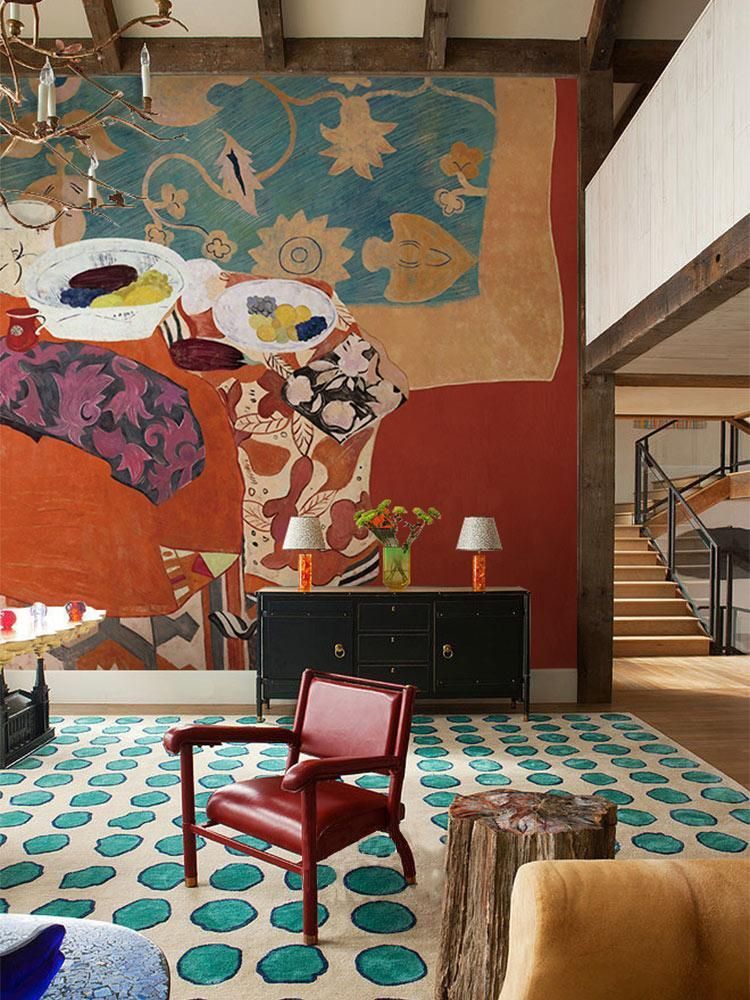
Imperfection as Evidence
Freehand artistry, as the name suggests, is about freedom. It’s about surfaces that move like handwriting—loose, personal, expressive. Not mechanical. Not repeated into submission.
In practice, it shows up in oversized florals across plaster walls. Abstract swaths of pigment wrapping around a hallway corner. A dining chair upholstered in fabric where the pattern doesn’t quite align because it was never meant to. The charm lies in the irregularity. The slight wobble in a line. The uneven saturation.
After years of tight geometry and algorithm-friendly symmetry, interiors are making room for the kind of marks a hand actually leaves. That shift is more radical than it first appears. It signals a loosening of control.
And control has dominated design for a while.
The Texture of Gesture
There’s a physicality to freehand work that manufactured pattern can’t replicate. When paint is applied with a loaded brush, it carries weight. It drags across plaster differently depending on pressure. The bristles leave faint ridges. Light catches on those ridges at certain hours of the day.
You’ll want to touch most of it. Not out of novelty, but because the surface invites it.
In a room where everything else is measured and resolved, a freehand mural introduces tension. It refuses to be perfectly centered. It might drift slightly upward or taper unexpectedly. But that’s the point. It reads as an action, not just an application.
Designers who lean into this aren’t trying to make rooms feel messy. The best examples are carefully considered in placement and scale. The spontaneity is aesthetic, not careless. There’s discipline behind the looseness.
That’s what keeps it from feeling like a trend plucked from an art school studio.
Walls That Feel Alive
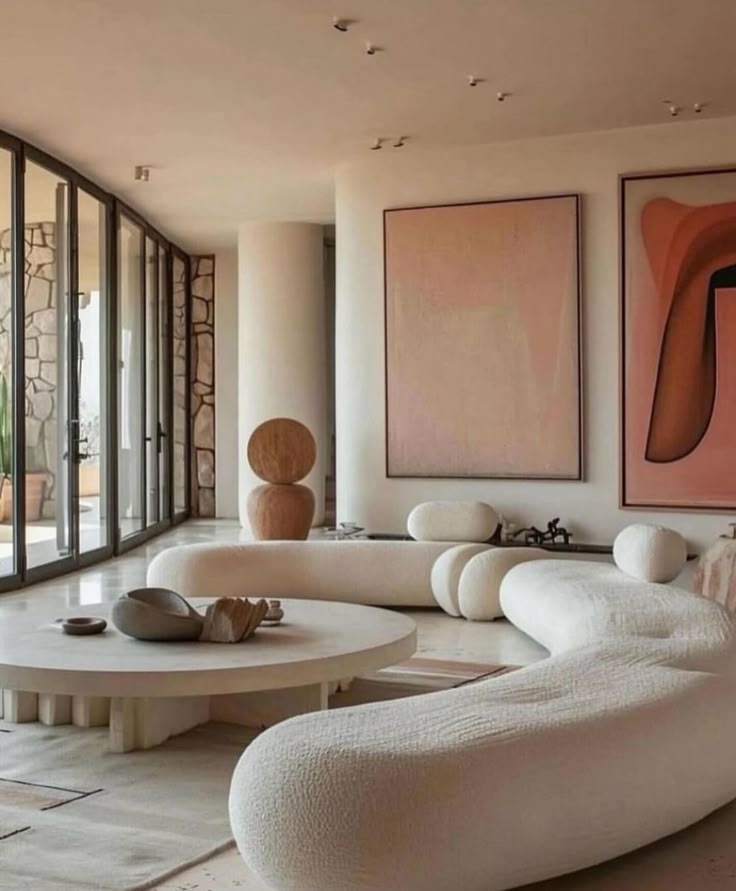
A blank wall, once a symbol of restraint, now looks like an opportunity. Instead of wallpaper or a gallery grid, some designers are commissioning artists to paint directly onto plaster. Not murals in the traditional sense. More like gestures—sweeping arcs, botanical impressions, linear marks that stretch across corners.
These aren’t illustrations. They’re movements.
The scale matters. A small, tight motif would undermine the intent. Freehand artistry thrives on confidence. A brushstroke that travels eight feet across a wall has conviction. It’s not timid. It doesn’t apologize for occupying space.
In larger rooms, these marks introduce intimacy. In smaller ones, they inject character without adding clutter. The wall becomes both backdrop and focal point at once.
It’s less about decoration, more about atmosphere.
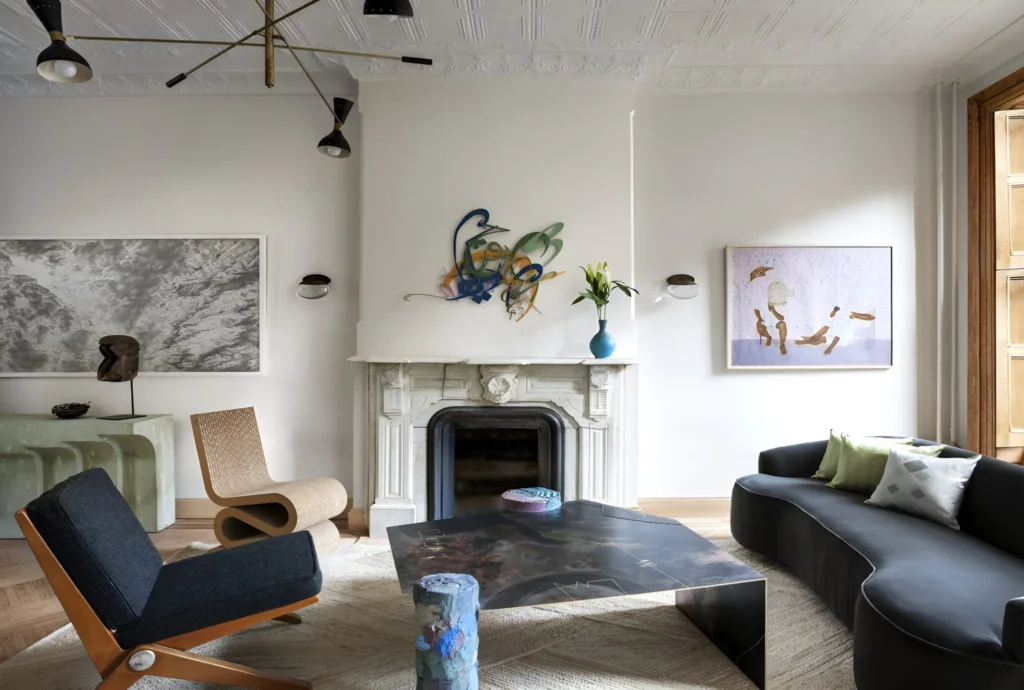
Fabric With a Pulse
Textiles are carrying this sensibility too. Upholstery printed with painterly motifs feels entirely different from digitally crisp repeats. The dye bleeds slightly at the edges. The line weight varies. There’s a sense that someone stood over the fabric and made decisions in real time.
On curtains, this movement reads almost like wind. On a headboard, it softens structure. On a simple bench, it adds dimension without layering additional objects.
The interesting tension appears when freehand fabric meets architectural precision. A perfectly tailored sofa in a pattern that looks almost sketched. Clean-lined drapery in a print that wanders. The juxtaposition keeps the room from sliding into sentimentality.
It’s expressive, but not nostalgic.
Ceramics and the Human Trace
Perhaps nowhere does this trend feel more natural than in ceramics. Bowls glazed with uneven bands. Plates brushed with wide, gestural stripes. Vases where pigment pools near the base because gravity intervened.
These pieces remind us that glaze moves in the kiln. That hands shape clay. That variation is inherent, not flawed.
Placed on a streamlined stone countertop or a minimalist shelf, a hand-painted ceramic object disrupts the smoothness just enough. It introduces a rhythm that factory-perfect pieces can’t mimic.
There’s a subtle emotional response here. Humans recognize other humans in marks. Even unconsciously.
A Reaction to Digital Life
It would be easy to reduce freehand artistry to a rebellion against minimalism, but it feels more nuanced than that. It’s also a reaction to digital life.
So much of what we consume visually now is pixel-perfect. Filters smooth skin. Apps auto-correct angles. Even our handwriting has largely been replaced by typing. The physical act of making a mark has become rare.
Bringing visible brushwork into interiors reintroduces that physical trace. It’s not nostalgic in a retro sense. It’s tactile in a contemporary one. It acknowledges that imperfection can coexist with sophistication.
Rooms that embrace freehand elements don’t abandon structure. They just loosen it slightly.
The Risk of Overdoing It
Like any expressive gesture, freehand artistry can tip into excess. When every surface competes for attention, the effect collapses into chaos. The key is restraint in placement, not in execution.
A single wall. A pair of chairs. A cluster of ceramics. Enough to introduce movement, not so much that the eye has nowhere to rest.
The most compelling spaces pair bold brushwork with quieter companions. Solid upholstery. Simple lighting. Clean-lined custom furniture that grounds the room. The contrast heightens both.
Without that counterbalance, the artistry loses its impact.
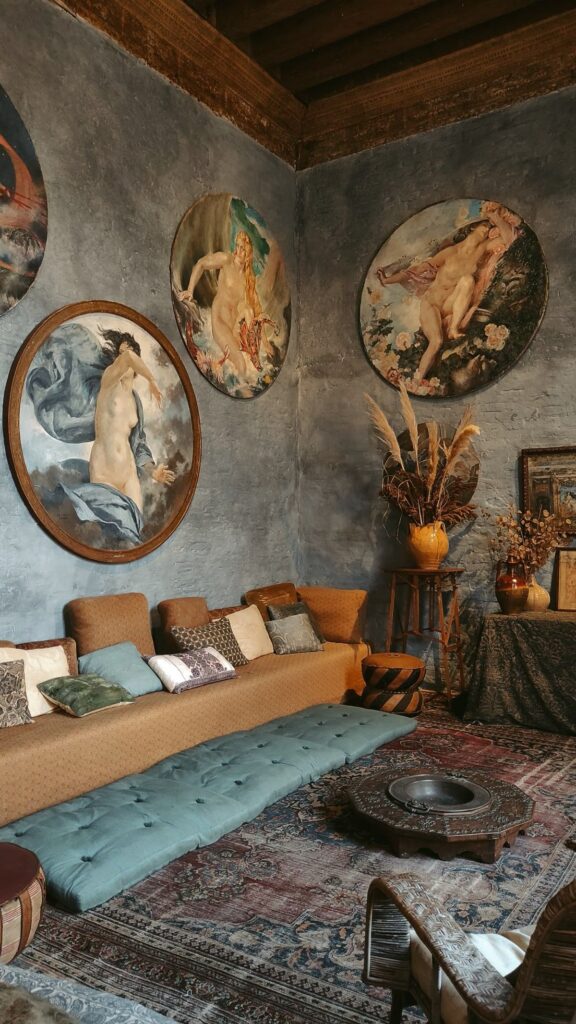
Permanence and Ephemerality
There’s also something intriguing about the permanence of a freehand wall painting. Once it’s there, it’s there. It can’t be swapped out as easily as wallpaper. That commitment changes how it’s approached.
Yet the marks themselves feel fleeting. Like a moment captured mid-gesture.
This tension—between permanence and spontaneity—adds depth. It makes the room feel less like a product and more like a process. As though it evolved through action rather than specification.
And maybe that’s what resonates most.
Rooms With a Pulse
Freehand artistry introduces pulse. A sense of motion in otherwise still environments. It interrupts predictability. It invites touch. It acknowledges the hand behind the surface.
In a design climate that has prized control for so long, that feels almost radical.
Not messy. Not careless. Just human.
The brush moves. The paint lands. The surface records it. And the room, in turn, feels less like a composition and more like something lived inside.