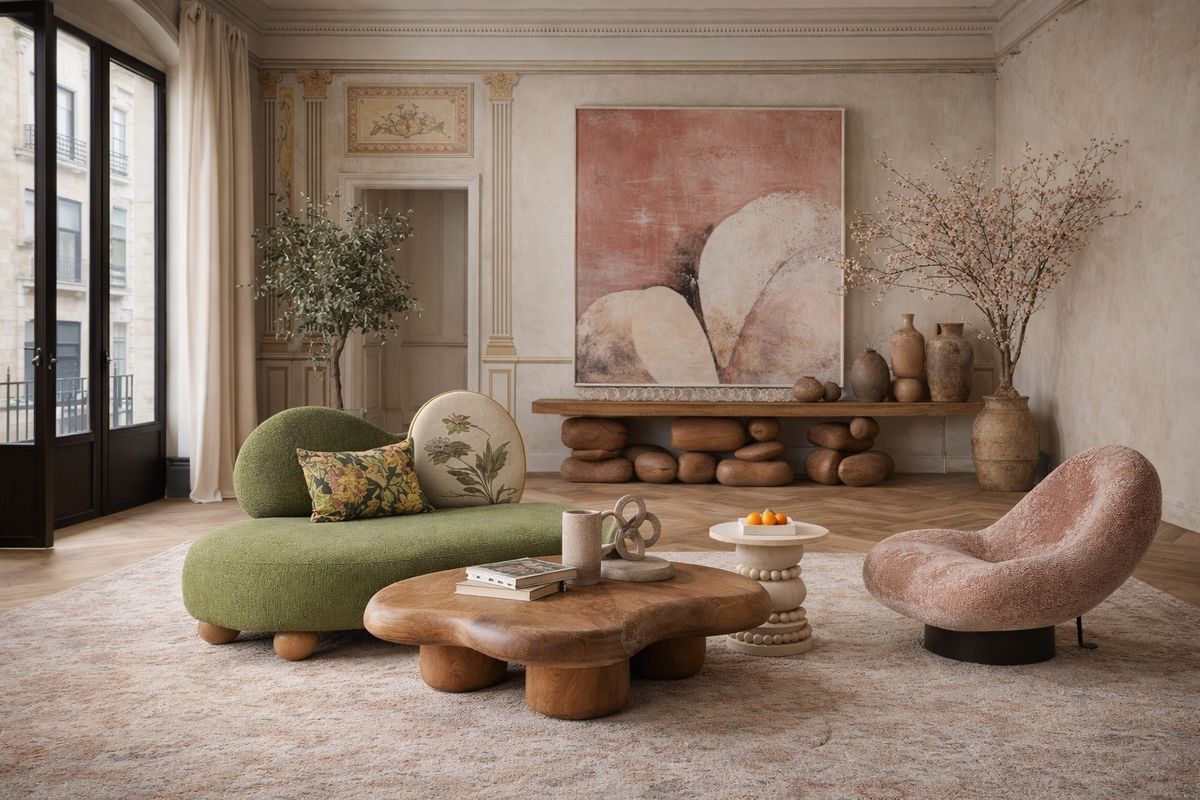
Beyond the immediate visual appeal, the shift toward curved furniture represents a deeper cultural pivot toward “Emotional Ergonomics.” In an era where our professional lives are often dominated by the cold, blue light of screens and the rigid grids of digital interfaces, the home has a newfound responsibility to provide tactile relief. This is why we are seeing a surge in “conversation-centric” floor plans that ditch the traditional TV-facing layout in favor of rounded seating groups that encourage eye contact and communal warmth. For the modern homeowner, selecting a curved piece is a conscious rejection of the industrial and a warm embrace of the artisanal. It is a design choice that says luxury isn’t just about how much a piece costs, but about how effortlessly it integrates into the flow of human life, turning a static room into a living, breathing environment.
In the ever-evolving landscape of high-end interior design, the pendulum has swung away from the clinical, sharp-edged minimalism of the early 2010s toward something far more visceral and inviting. If you look at the most influential residences from Beverly Hills to the Hollywood Hills, a distinct silhouette is emerging: the arc.
At Melaaura, we’ve watched this shift firsthand. As a Los Angeles-based furniture house, we’ve seen our clients move away from the rigid “showroom look” in favor of pieces that feel alive. But why exactly is curved furniture taking over modern homes in 2026? It isn’t just a fleeting trend; it’s a psychological and aesthetic rebellion against the digital age’s boxy constraints.
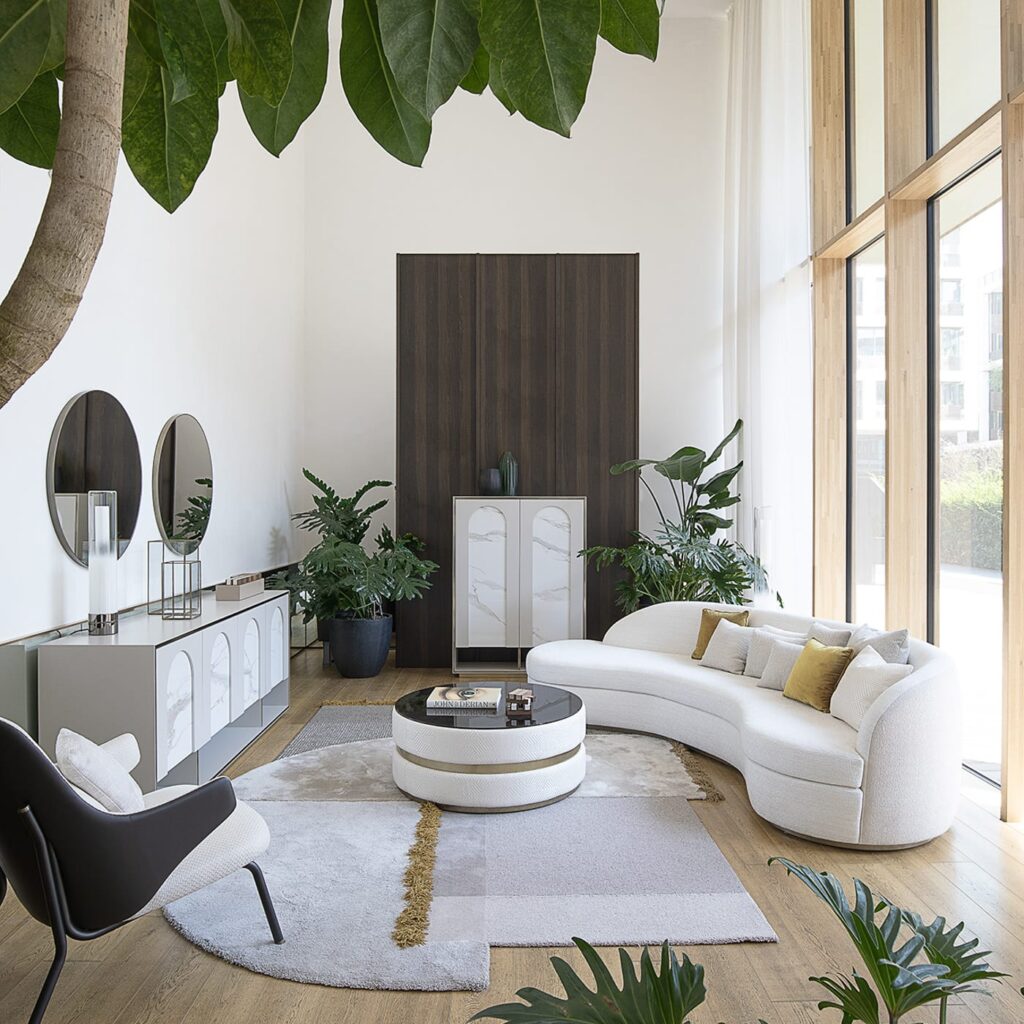
The Psychology of the Arc: Why We Feel Safer in Rounds
There is a scientific reason why your eyes linger on a crescent-shaped sofa longer than a standard rectangular one. Neuroaesthetics—the study of how design impacts the brain—suggests that humans are hardwired to prefer curves. Sharp angles often trigger a subtle “fight or flight” response in the amygdala, the part of the brain associated with fear and danger. In contrast, curved furniture mimics the organic forms found in nature, signaling safety, softness, and tranquility.
For a homeowner in a fast-paced city like Los Angeles, your living room should be a sanctuary, not a boardroom. When you incorporate curved furniture, both custom indoor pieces and custom outdoor furniture, you are literally lowering the cortisol levels in the room. A rounded armchair doesn’t just provide a seat; it offers a “hug” after a long day.
Breaking the “Box”: Improving Spatial Flow
One of the most practical reasons curved furniture is dominating modern interiors is its ability to solve the “box” problem. Most urban homes are a series of right angles—square rooms, rectangular windows, and linear hallways. Adding more straight lines only reinforces a sense of rigidity.
Curved furniture acts as a visual disruptor. A circular coffee table or a kidney-shaped sectional creates a natural “flow” in a room, guiding foot traffic in a gentle arc rather than forcing sharp turns. In open-concept LA homes, a curved sofa can act as a bridge between the living and dining areas, softening the transition without the need for heavy room dividers.
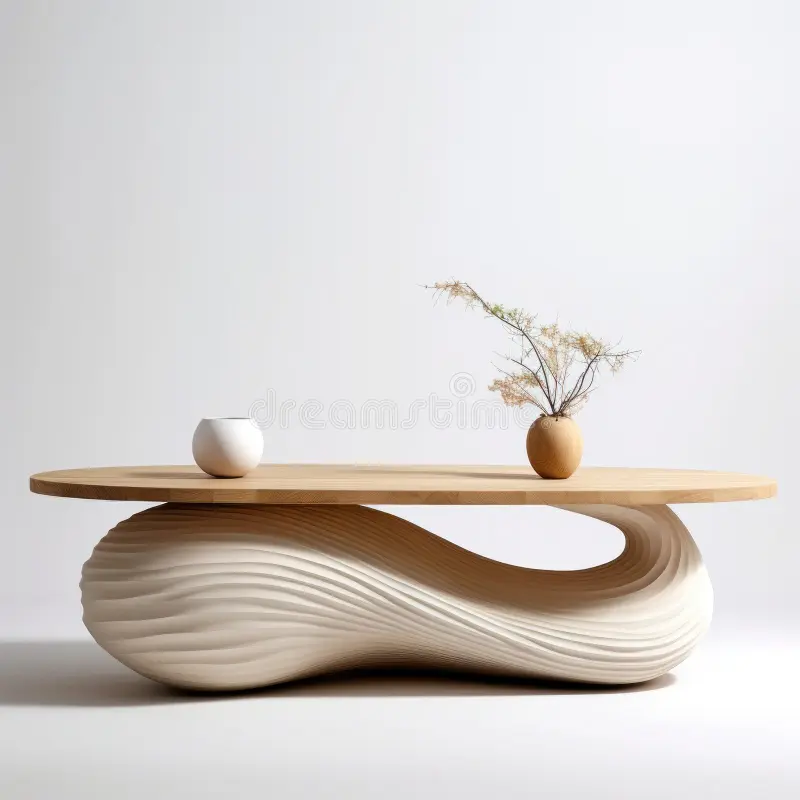
The Anatomy of the Trend: Key Pieces for 2026
| Piece | The “New” Standard | Why It Works |
| Sofa | The Kidney or Crescent Shape | Encourages conversation by facing guests toward each other. |
| Dining Table | The Pill or Oval Top | Eliminates “heads of the table,” making every meal feel intimate. |
| Accent Chairs | Sculptural, Swivel Barrels | Adds a 360-degree functional art piece to any corner. |
| Headboards | Arched or Scalloped Textiles | Softens the bedroom, turning the bed into a focal point of rest. |
A Nod to Heritage: Mid-Century Meets Modern Luxury
While it feels fresh, the current obsession with curved furniture is a sophisticated evolution of the Mid-Century Modern and Art Deco movements. Iconic designers like Vladimir Kagan and Eero Saarinen paved the way with sculptural forms that prioritized the human body’s natural contours.
Today, brands like Melaaura are taking those vintage “Groovy 70s” silhouettes and elevating them with luxury materials. Think of a deep-seated curved furniture piece upholstered in rich Italian bouclé or a dining table with a hand-carved, fluted pedestal base. It’s a marriage of nostalgia and future-proof craftsmanship.
How to Style Curves Without Losing the “Edge”
The secret to a high-end look is balance. You don’t want your home to look like a bubble; you want it to look curated. At Melaaura, we recommend the 70/30 Rule: keep about 70% of your architectural lines straight (think your rug, shelving, and windows) and let the remaining 30% be your curved furniture.
- The Focal Point: Start with one major piece, like a curved velvet sofa.
- Layering Textures: Curves shine when paired with tactile fabrics. Use shearling, velvet, or heavy linens to amplify the “soft” look.
- The Contrast: Pair a rounded marble coffee table with a linear, low-profile media console to keep the room grounded.
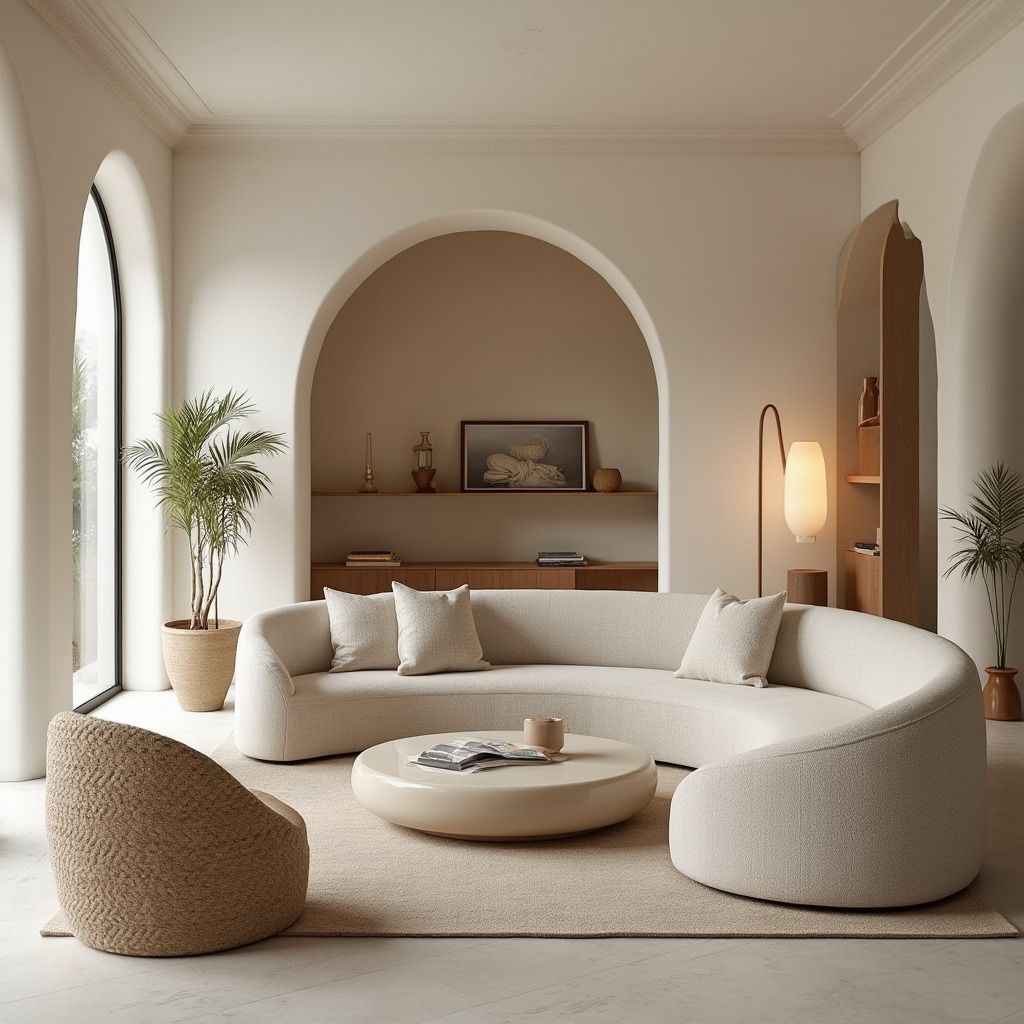
Luxury is an Experience, Not Just a Shape
At the end of the day, the rise of curved furniture in modern homes is about prioritizing the human experience. It’s about creating spaces that are as comfortable to live in as they are beautiful to look at. Whether it’s a bespoke custom piece or a curated selection from our European partners, the “curve” is Melaaura’s way of bringing a touch of Los Angeles ease into the world of high-end design.
As we move further into 2026, the home is becoming more than a status symbol—it’s a sanctuary. And in a world of hard edges, there is nothing more luxurious than a soft landing.