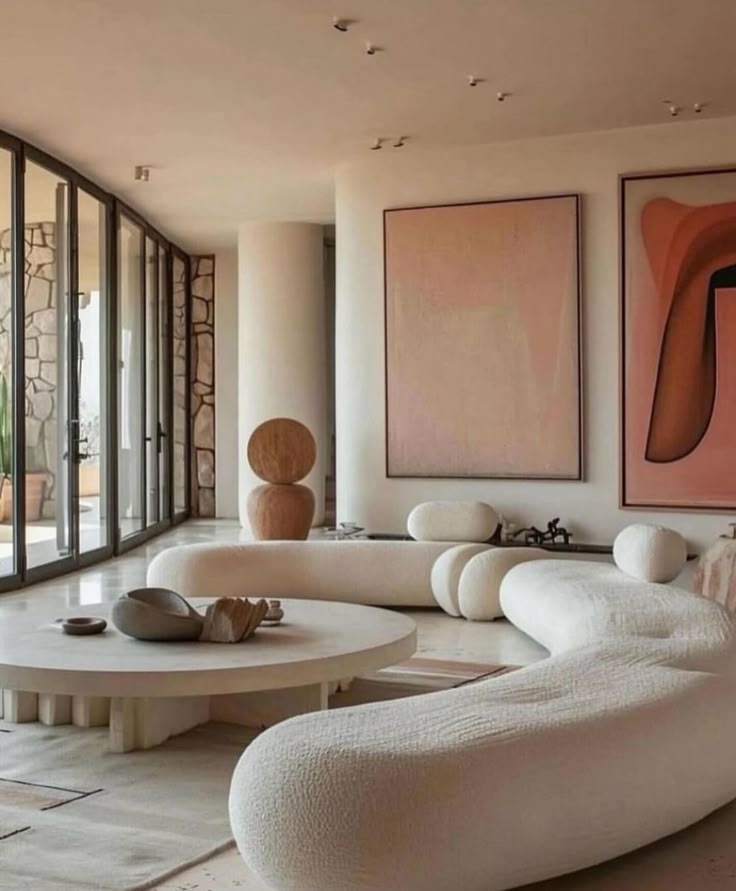
Walls are rarely just walls. People treat them like surfaces to slap paint on, hang art on, or ignore entirely. But they speak. If a room has been handled thoughtfully, you notice it through corners, transitions, shadow lines, moldings. All the stuff people call “detail” is actually the grammar of the room. Without it, architecture detailing, interiors feel incomplete. Furniture, rugs, lighting—they are loud. Detailing is the quiet intelligence that holds the rest together.
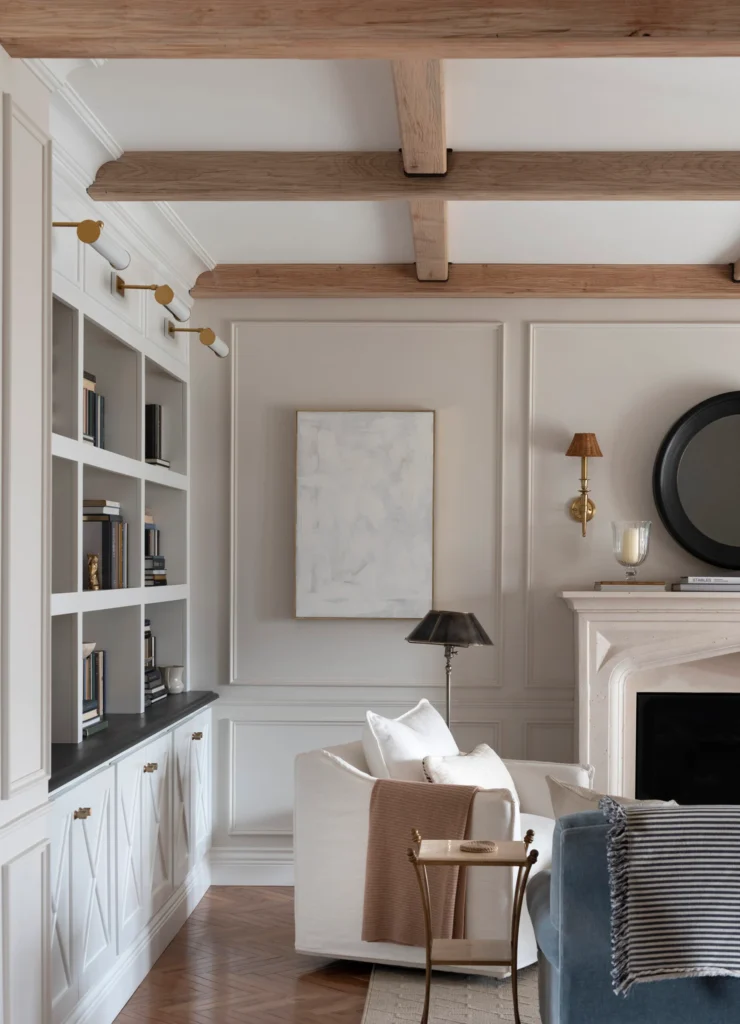
Coffered ceilings aren’t decoration alone. They introduce rhythm, scale, and light play. In a minimalist room, they punctuate the emptiness, give a pause. Without them, a big space feels suspended. Like it’s waiting for something to happen. Custom furniture often plays into this dialogue, grounding the openness below and responding to the ceiling’s geometry, so the room reads as deliberate rather than empty.
Cornices, Reveals, Shadow Lines
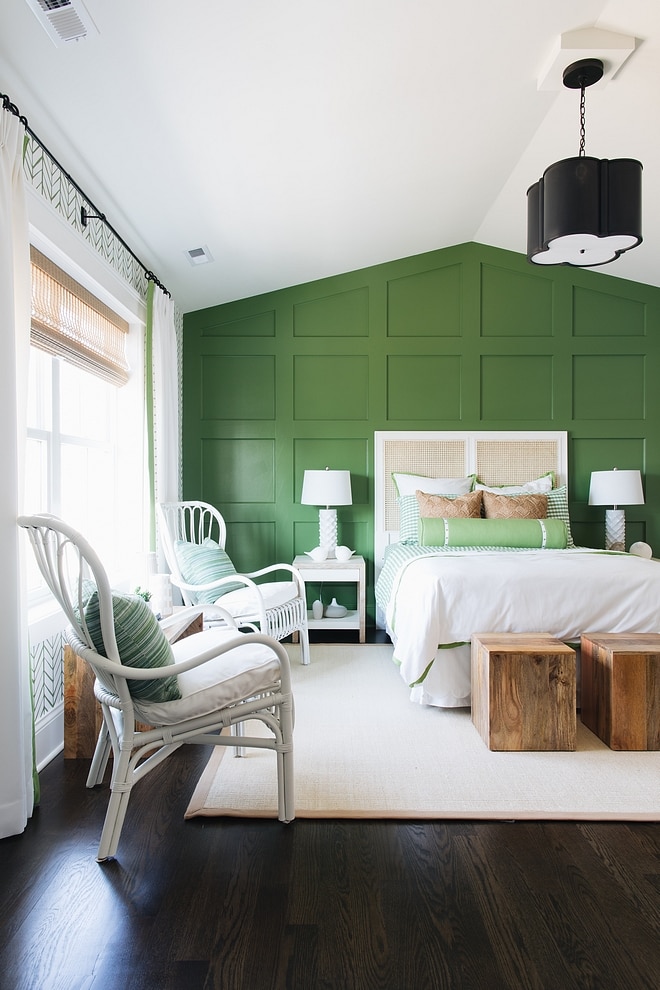
Subtlety is underrated. A narrow shadow gap, a thin reveal around a door, a delicate architrave—they quietly tell your eye what to do. People might not notice them by name, but the room feels resolved when architecture detailing is there. Deep cornices make space feel grand; narrow ones make it refined. It’s instinctual. Without this kind of thinking, a cabinet can feel tacked on, thresholds arbitrary. Detailing organizes surfaces in a way that furniture cannot.
Even tiny reveals around shelves or windows introduce hierarchy. One millimeter of shadow, a suggestion of separation, and suddenly planes are layered. The room reads. Without it, it drifts.
Restraint Is Everything
More isn’t always better. Too much detail, or the wrong kind, just feels cluttered. Precision matters more than ornament. A coffer perfectly aligned with a bay, a baseboard sized just right—this is where intelligence shows. The restraint is the point. Details shouldn’t dominate. They exist so the room feels complete.
Most interiors fail here. They pile on furniture, rugs, accessories, trying to make up for the absence of structure. The room suffers because it lacks an underlying grammar. Detailing provides that grammar. Everything else can sit comfortably because the room already makes sense.
Ceilings and Floors Matter
Ceilings and floors are often afterthoughts. But they are anchors. Beams, coffered grids, tile patterns—they give direction and scale. Even small shifts—a bevel, a chamfered edge, a threshold—change how the body senses space. You move differently in a room with thought-out floors and ceilings. Lighting interacts with them. The eye finds rhythm.
Baseboards and skirtings ground walls. Shadow gaps help planes read. A ceiling line can suggest height, a floor line can suggest flow. Architecture detailing isn’t just about looks; it’s movement, experience.

Material Talks
Detailing isn’t visual only. Materials amplify it. Matte plaster reads differently than polished wood. Metal reflects light differently than stone. A coffer painted the same color as the ceiling still registers subtly because of depth and shadow. Texture communicates without words. A room without this nuance feels flat, even if the furniture is perfect.
Tactility is part of perception. The body knows it even if the mind doesn’t. Detail is invisible until it isn’t. Then its absence is glaring.
Alignments and Proportions
Geometry matters. Lines must align, proportions must respect human scale, planes must relate to one another. Misalignment is noticeable before it’s conscious. Poorly considered architraves or cornices fracture perception. Well-executed ones create rhythm. Continuity. Harmony. The room feels complete without being flashy.
The paradox is subtlety. You notice it only when it’s missing. Then you can’t stop seeing it.
Light Changes Everything
Detailing isn’t static. Shadow gaps, reveals, coffers—they interact with light. Morning sun, tungsten, indirect glow—they all shift the way edges read. One small reveal can disappear at noon and snap into focus at dusk. Lighting and detailing are inseparable. Together they make rooms feel alive.
Even minimal spaces need this. Without it, a room is inert. With it, even a plain space breathes.
Old Meets New
Historical architecture and contemporary interventions often hinge on detailing. The right reveal or shadow gap lets an ultra-modern piece converse with a classical ceiling. A coffered ceiling doesn’t need ornament to bridge eras. Detailing is the translator. It lets everything coexist.
Minimalism suffers without it. The cleanest spaces can feel hollow if planes are unmodulated. Subtle detailing introduces scale, texture, rhythm. It organizes without announcing itself.
Function as Experience
Details aren’t decorative—they shape perception. Thresholds, reveals, cornices—they tell you where to look, how to move, how to feel. Interiors without them rely on furniture to do the work of architecture. With them, the room instructs silently. The space becomes legible. Calm. Predictable in a good way.
The most compelling interiors are those where you barely notice the details—but the moment they are absent, you feel the room is unfinished.
Mastery in Subtlety
Details are most powerful when invisible. Too many, too loud, and they break harmony. Precision, proportion, alignment—that’s mastery. You never see the skill directly, but you feel it. A room with thoughtful detailing reads as complete, considered, intentional. Objects exist naturally because the architecture already sets the stage.
Subtlety is hard. It demands scale, proportion, and attention to light. But without it, interiors can’t achieve a quiet authority. They become curated, staged, incomplete.
Interiors That Speak
At their best, interiors and architecture detailing are inseparable. Color, furniture, lighting—they all respond to planes, junctions, and edges. Detailing is the silent logic that makes objects belong, spaces legible, experiences intuitive. A room without it is object-driven. With it, the space itself communicates.
Even small moves—a shadow gap here, a coffer there, a reveal across the ceiling—can anchor perception. Interiors start to speak. They don’t need furniture to tell the story. They communicate rhythm, proportion, scale, and mood without words. And yet, in many projects, this is the first thing cut or ignored.
Detailing is invisible until it isn’t. Then the room either succeeds or fails in the quietest, most essential way.