Design
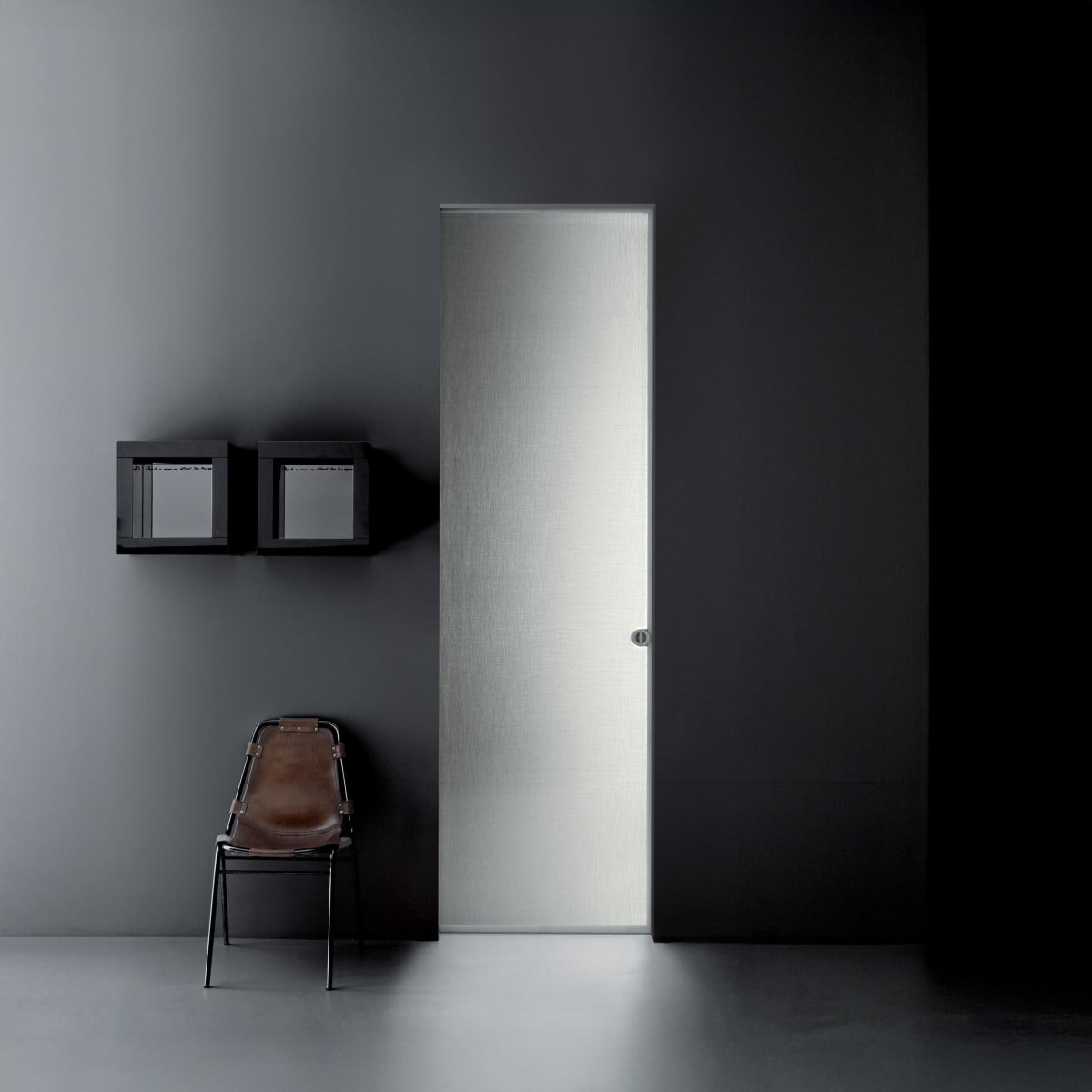
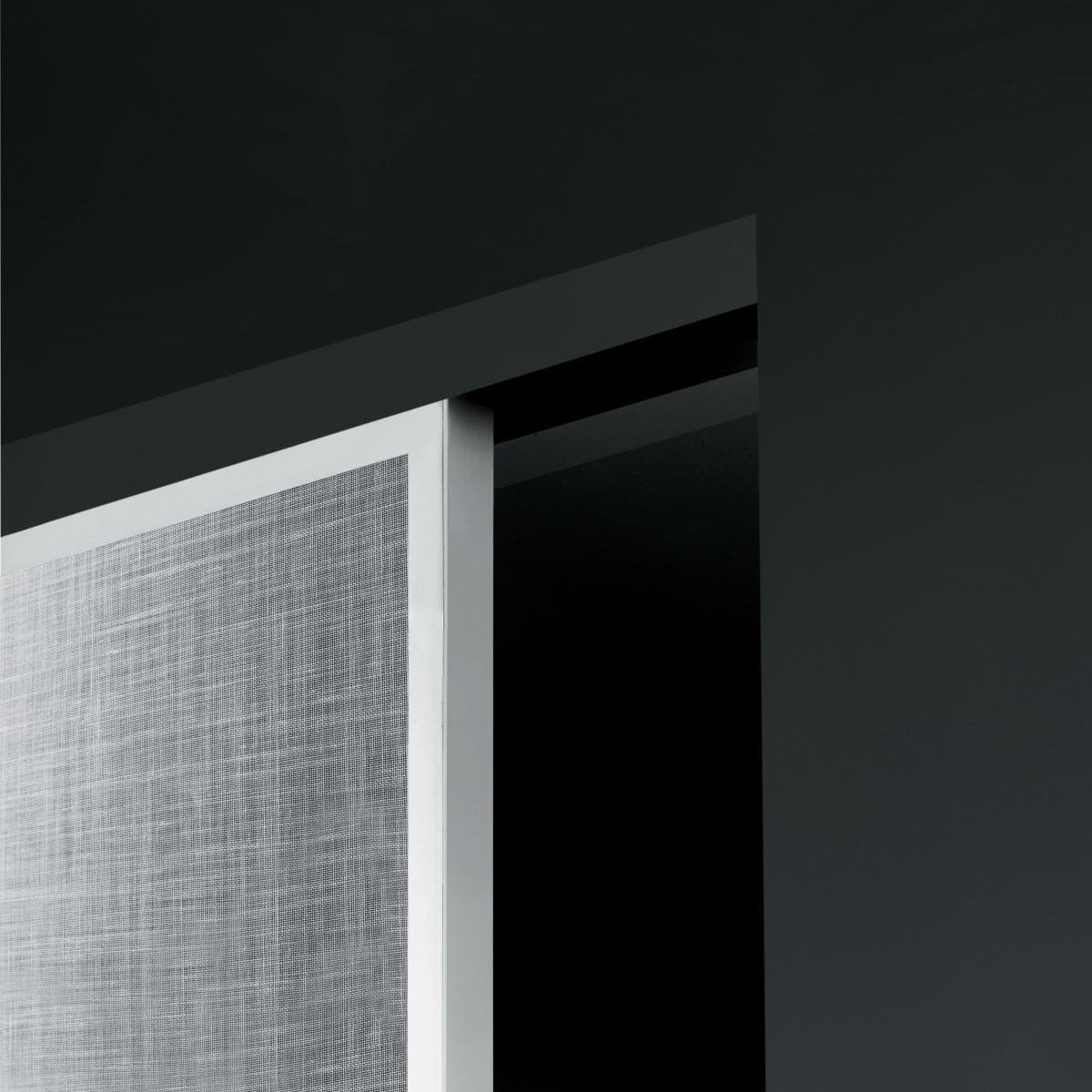
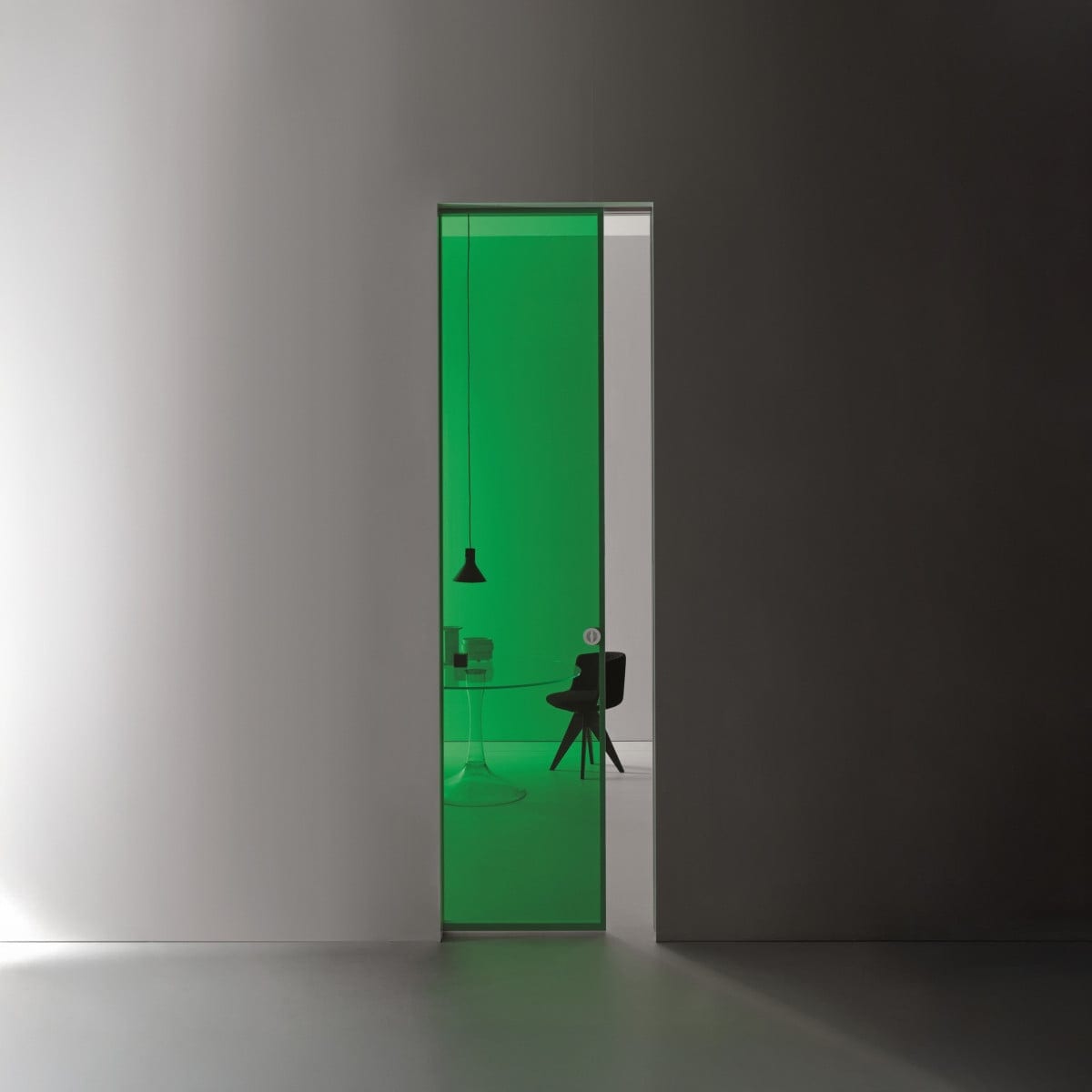
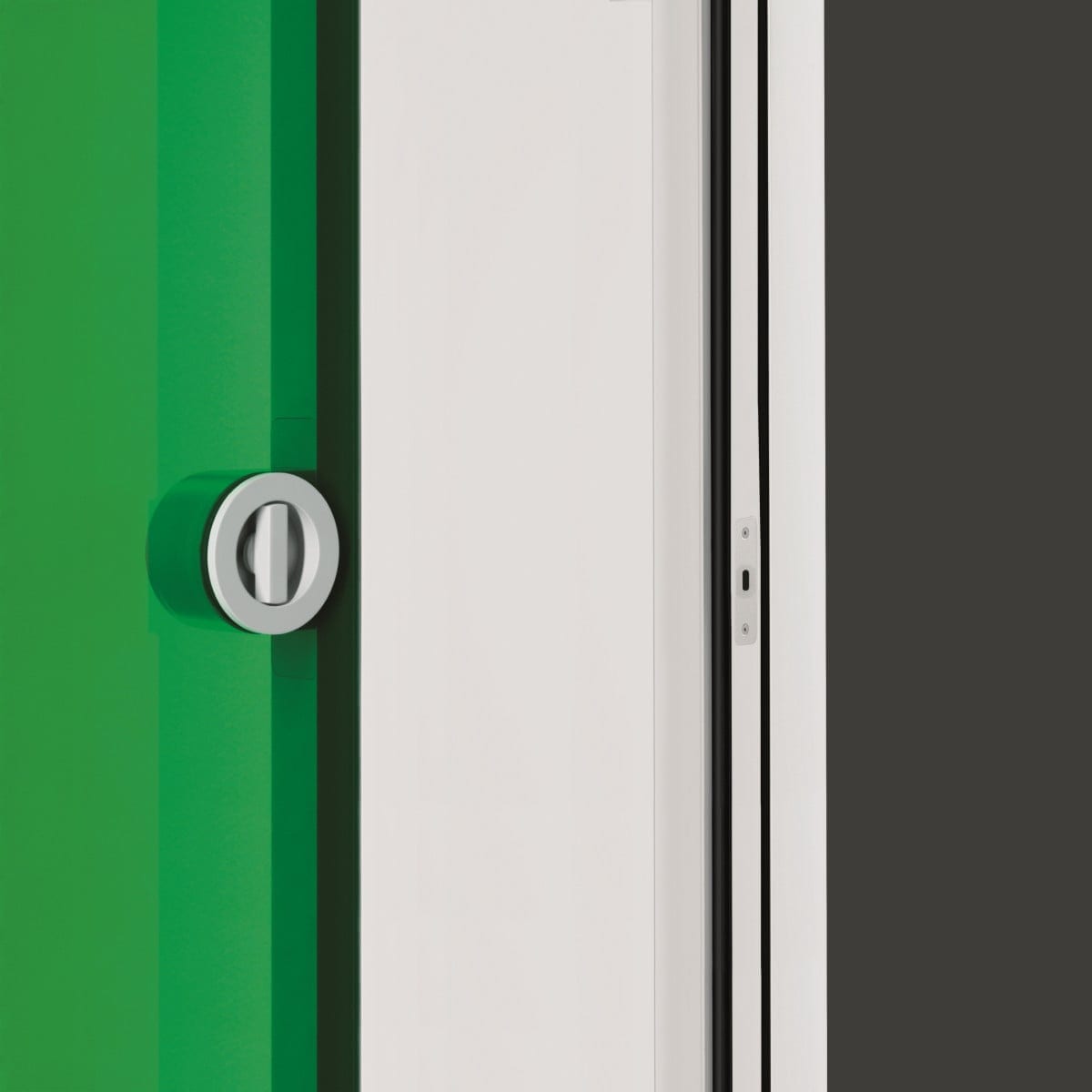
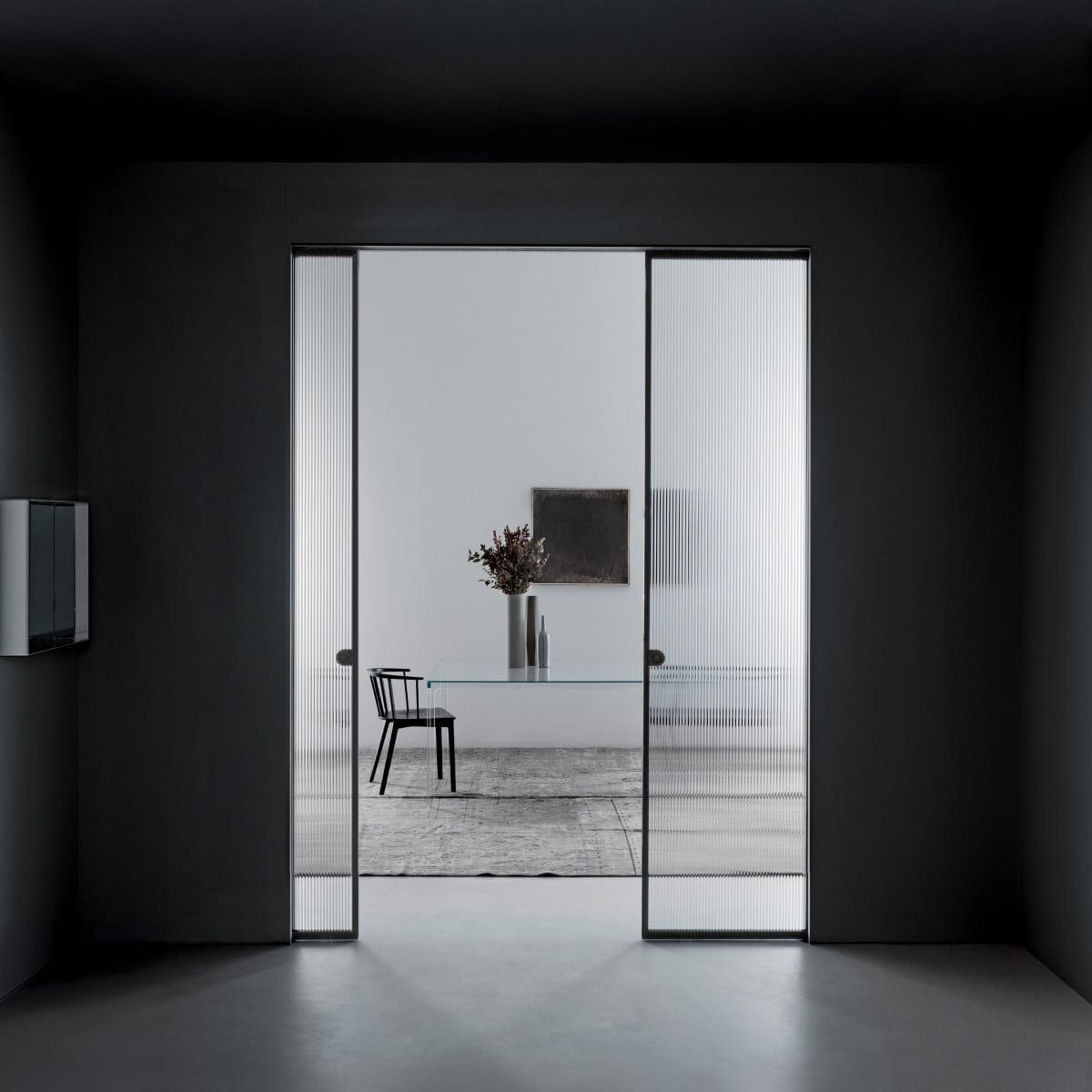
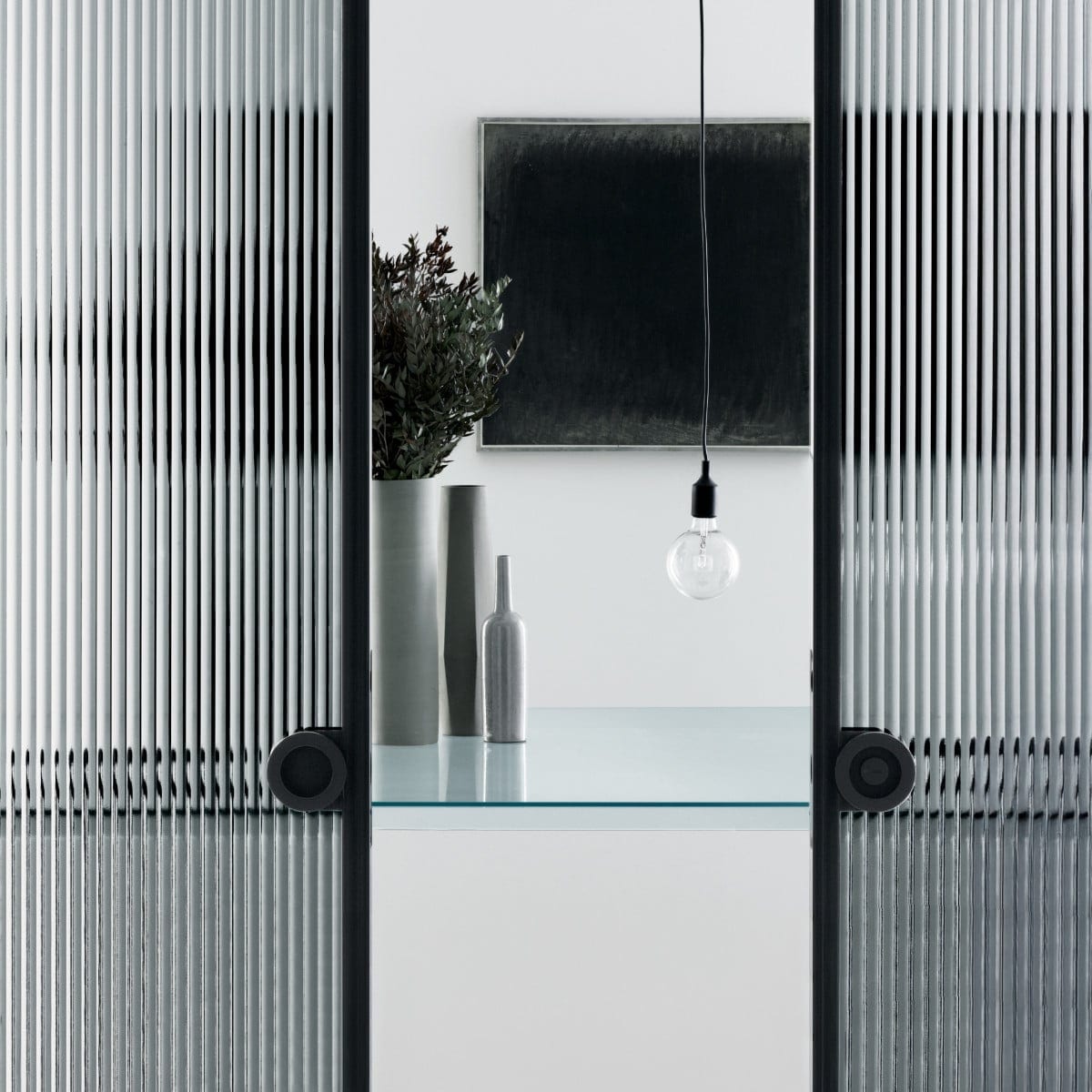
Aladin Pocket Mono is a glass pocket door by glasitalia, designed by Piero Lissoni. It’s made to disappear into the wall the way a pocket door should, while still reading as a precise architectural element when closed. The look is clean and quiet, with the glass applied on one side of the aluminum frame so one face sits flush and the other is subtly set back.
That small change in depth gives the door a clear front and back, which can matter in a hallway or a tight opening. And because it’s custom-made, it can be specified to suit the opening and the overall rhythm of the space, without forcing a one-size-fits-all solution.
Materials & Build
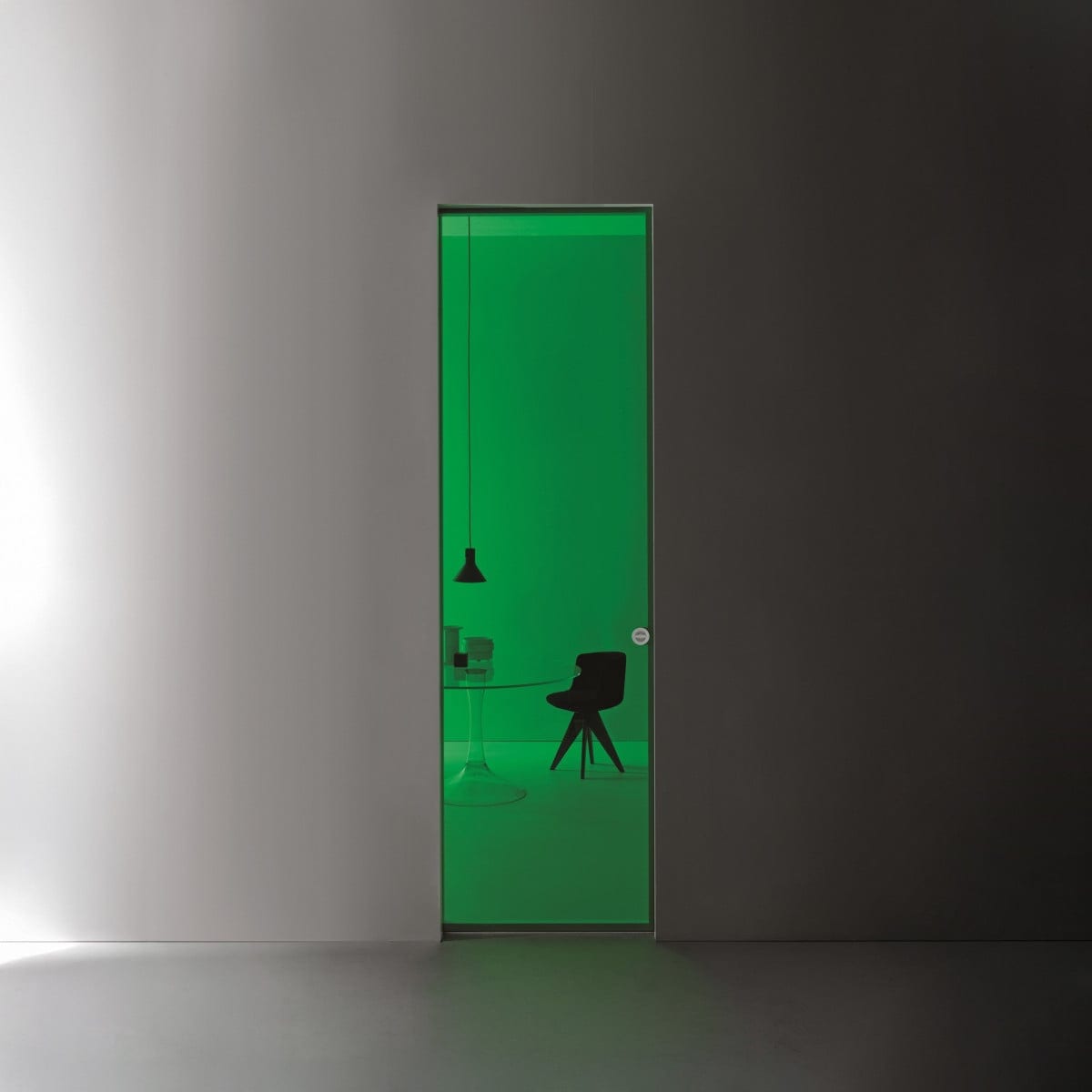
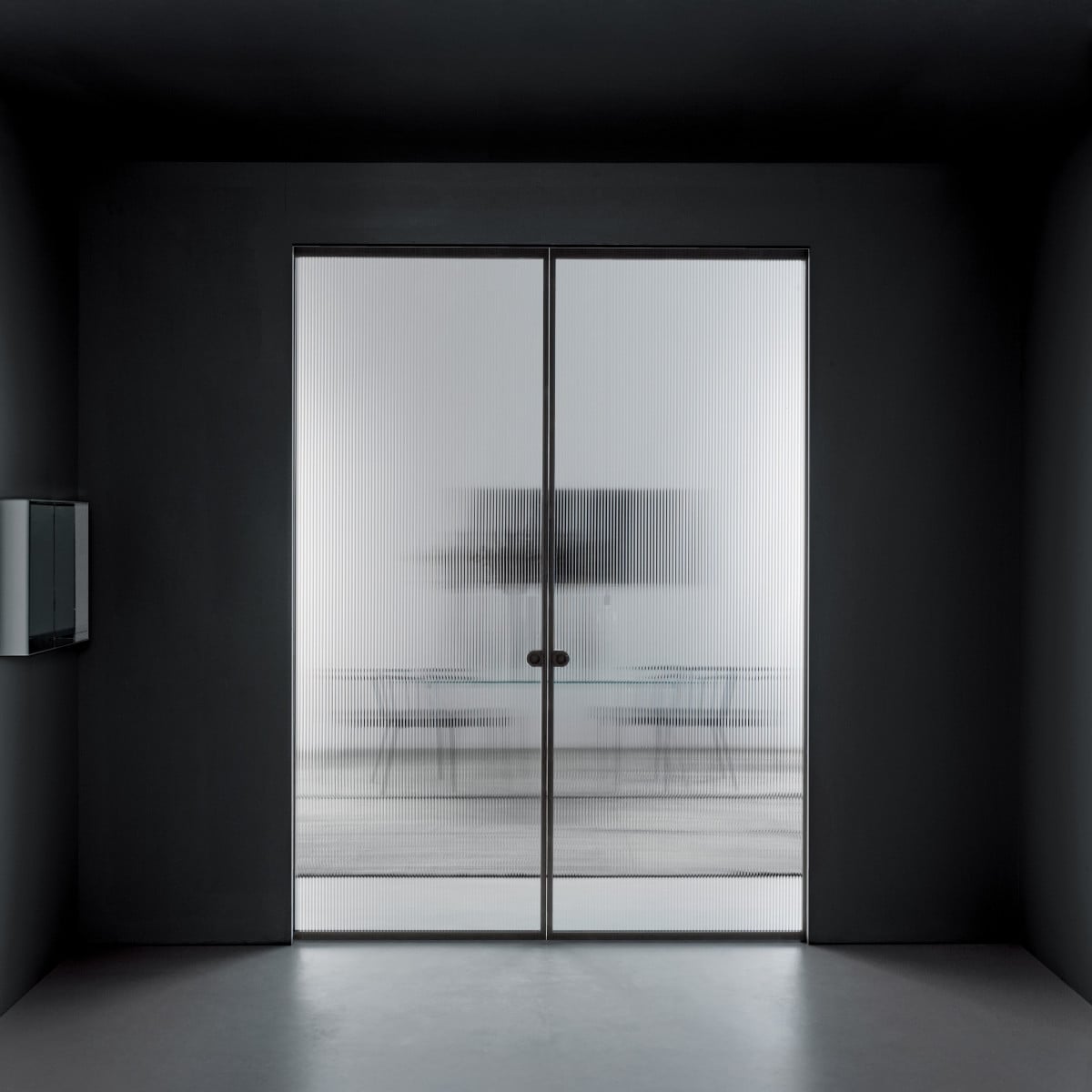
The structure is aluminum paired with safety glass, offered in a wide range of finishes. Options include acid-etched surfaces, transparent or colored glass, patterned versions, and lacquered finishes, from glossy to opaque. Some finishes are more reflective, others more muted. The point is flexibility without losing the clarity of the original design.
The glass can be monolithic tempered at 0.24 inches thick (6 mm) or laminated at 0.12 + 0.12 inches (3+3 mm). All glass is certified to ANSI Z97.1 and UNI EN12150 safety standards. That reassurance matters, especially when the door is used every day and often by more than one person.
Comfort in Use
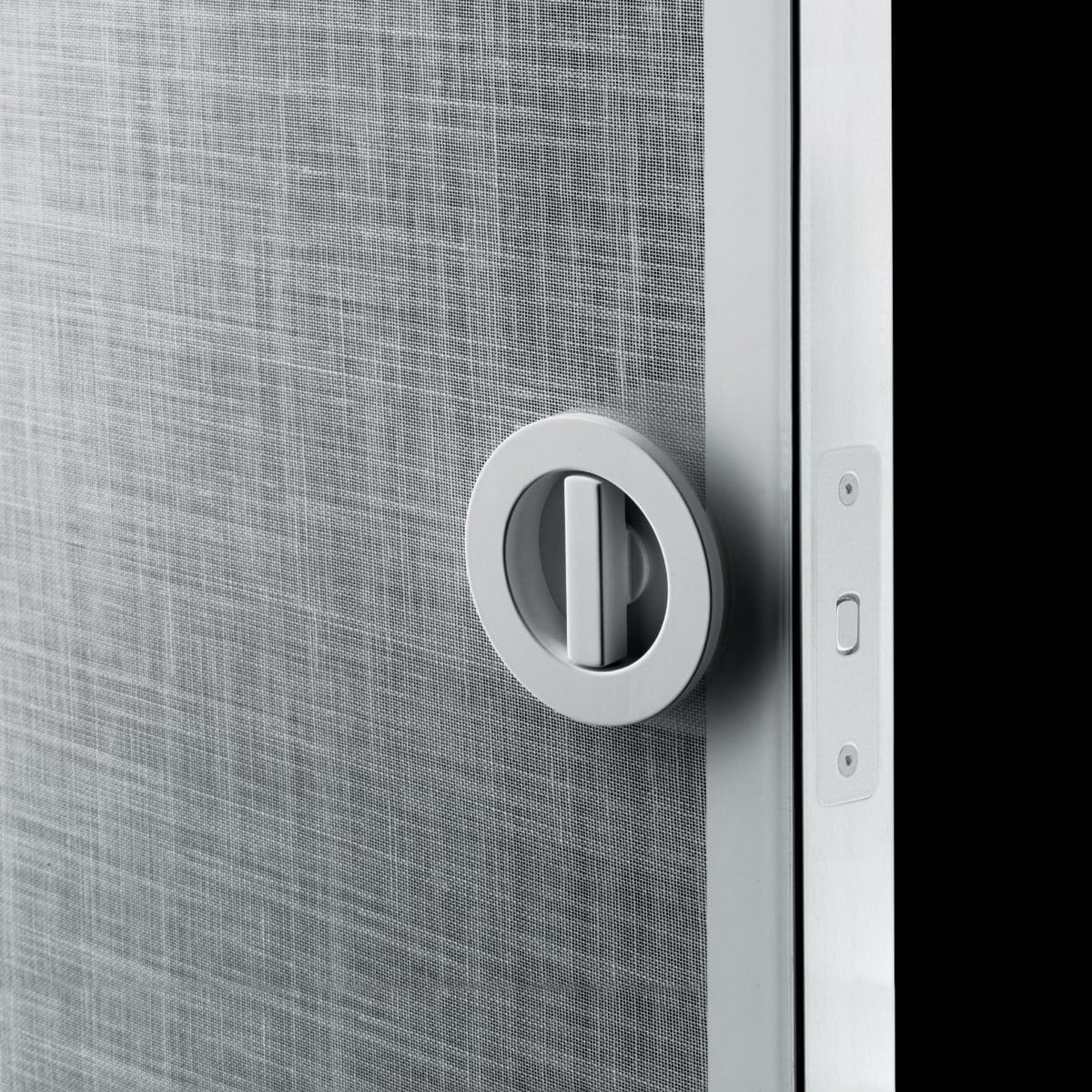
This is a door that’s meant to feel easy. It integrates into common frameless sliding pocket door systems such as Scrigno Essential and Eclisse Syntesis Line, keeping the movement and alignment familiar for installers and comfortable for users. The flush face gives a clean touch point, while the rebated side makes the frame presence more defined where needed.
Single and double door versions are available, with the option of adding a lock or keeping the surface uninterrupted. But it never turns into hardware-first design. The glass stays in charge.
Placement & Lifestyle
Aladin Pocket Mono fits naturally anywhere a swinging door would waste space. It works in transitions between public and private zones, or in interiors where light is part of the layout. Clear or extra-clear glass can keep rooms connected, while acid-etched and colored options add privacy without shutting the space down.
Longevity
Because it’s built around aluminum and certified safety glass, the door is set up for long-term daily use. Subframes for plasterboard or brick walls can be provided on request, keeping the installation aligned with the wall build and helping the final result feel deliberate, not improvised.