2026 interior design trends are not chasing novelty for its own sake. It’s returning to principles that have endured—proportion, texture, silhouette, quality—but viewed through a sharper, more edited lens. The incoming aesthetic is heritage-forward: elegant, layered, and grounded in craftsmanship. The details feel familiar, but never stagnant. Instead of quick trends built on temporary enthusiasm, these directions suggest continuity. The spaces coming into focus have personality without spectacle, and luxury without noise.
Silver: The Return of Cool Metals in Sophisticated Form
Metal finishes have always cycled between warm and cool tones, but 2026 interior design trends mark a visible shift toward silver in multiple expressions. What matters is true silver character, not cold chrome. Designers are revisiting antique silver, pewter, and patina-washed finishes that show depth rather than shine alone. This shift is especially visible in designer lighting fixtures, where aged silver and softly patinated finishes introduce atmosphere without overpowering a space. Instead of replacing brass entirely, silver is being layered thoughtfully as accent: picture frames, trays, serving pieces, lighting details, collected objects, and sculptural hardware.
The most refined implementations avoid monotone. A space does not suddenly become “silver” everywhere; rather, the metal is introduced through curated objects and lighting that temper overly warm environments. The combination of unlacquered brass alongside aged silver can be surprisingly harmonious, because both finishes carry visible history. The eye reads subtle tarnish, texture, and aging as authenticity.
Pattern on Pattern: Traditional Layering Instead of Minimal Repeats
Pattern has never left the design conversation. What changes in 2026 interior design trends is the confidence with which prints are layered. This is not about a single accent pillow against a neutral field. The look is fully immersive: wallpaper paired with upholstered seating, drapery, cushions, and accessories in coordinated yet distinct motifs. At the center of these layered rooms are luxury upholstered sofas that anchor pattern, texture, and comfort while maintaining a refined silhouette.
Floral prints lead the movement—not quaint botanical illustrations, but robust heritage florals that hold presence in a room. The layering succeeds when patterns are related in color tone rather than identical in scale. One might combine a large repeating botanical wallpaper with a smaller floral upholstery and a stitched pillow pattern, all in one palette. Instead of busy, it reads as intentional and collected.
This approach is rooted in classic European interiors from centuries past, where textiles documented history, culture, and craft. The modern interpretation uses contemporary printing quality and durable materials, but the sensibility remains traditional.
Blue: A Resurgence with Range, Depth, and Architectural Quiet
Blue is never “new,” but it is decidedly returning with conviction. The interior color landscape the past few years favored green—sage, olive, forest, and mineral green interpretations. Now blue is moving back into prominence across every shade: airy powder blues, saturated navy, porcelain blue, and washed denim tones.

Where this becomes forward-thinking is the movement from accent to architectural placement. Cabinets in light blue bring serenity to craft spaces, laundry rooms, or home offices. Blue-and-white ceramic combinations, particularly in timeless jar forms, are resurging. Tented rooms—spaces where ceiling and walls are wrapped in a continuous textile pattern—are gaining traction again, showcasing blue as immersive environment, not isolated moment.
Blue, when deployed across a home, gains dimension by varying texture more than hue. Painted millwork, glazed ceramic, linen upholstery, and printed wallpaper can each express the same tonal family without monotony. The effect is collected, understated, and stately.
Monogramming and Embroidery: Personalization Without Excess
As interiors reclaim classical codes, monogramming and embroidery are emerging naturally. These details carry quiet personality, not obvious branding. Fine embroidery on textiles—bedding, napkins, edge stitching, small decorative linens—adds tactile depth. The stitching reveals manual work, which provides authenticity that mass production cannot match.
The most compelling use of monograms in 2026 is subtle: tone-on-tone thread, small-scale lettering, refined placement rather than oversized personalization. It functions as a marker of ownership, memory, and domestic identity. Embroidered edges around table linens and decorative pillows introduce texture without adding another pattern, creating interest within restrained palettes.
These elements reinforce the broader theme: craftsmanship matters. The home tells a story through what is made, not what is bought quickly.
Revival of Formal Tablescapes
Formal dining culture is returning, not as ceremony, but as domestic ritual. Vintage silverware, eyelet-trim linens, embroidered napkins, and detail-driven place settings represent an intentional shift toward slowing down. The look is not limited to antique heirloom collections—high-quality, new pieces inspired by heritage motifs achieve similar impact.
Key in 2026: formality is layered over casual foundations, not against them. A rustic wood dining table may carry hand-stitched linen napkins and antique silver flatware. This renewed focus on ritual has brought solid wood dining tables back into prominence as lasting centerpieces rather than temporary trend items. Porcelain plates may pair with woven placemats. Ribbon-edged textiles create soft, unexpected contrast. Instead of stiff perfection, the style suggests time invested, thought extended, and connection emphasized.
Design is functioning again as social language.
Dark Wood Stains: Depth, Warmth, and Architectural Weight
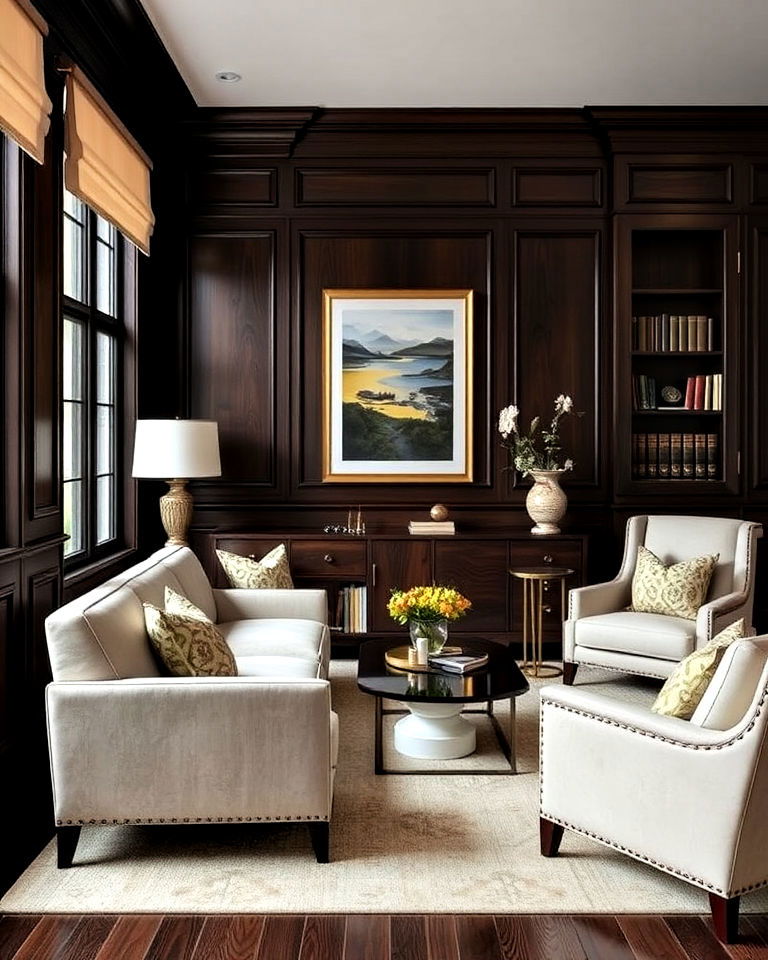
White oak, while still popular, is no longer the universal default. The richness of darker wood stains is returning—English oak, deep chestnut, walnut tones, and heritage brown finishes. What matters is grain clarity and finish integrity. Dark woods bring visual gravity to vertical surfaces and cabinetry, particularly in secondary rooms, libraries, hallways, and dining areas.
The resurgence of darker stains establishes counterbalance against pale walls and light fabrics. These woods age beautifully, collecting patina rather than looking worn. Designers prefer matte or satin finishes over lacquered high-gloss looks, allowing subtle variation and texture to remain visible.
This direction also aligns with the movement toward pieces that appear collected rather than brand-new. Rooms dominated by pale woods can feel contemporary but fleeting; darker stains read architectural and timeless.
Solid Area Rugs: Color as Foundation, Not Pattern
Textile flooring is undergoing a shift. Whereas patterned area rugs have been design staples, 2026 will see more solid rugs in sophisticated tones. The key is material quality. Solid rugs in low-grade fibers flatten quickly and show wear; solid rugs in premium wool or performance blends maintain density and visual elegance.
Texture becomes the differentiator: looped weaves, heathered fibers, and tonal variations create the depth that pattern would otherwise deliver. Solid rugs allow statement upholstery, patterned drapery, or decorative prints to remain uncluttered, avoiding visual competition across the room.
This precision works best when used surgically—one solid rug in a home among patterned ones, rather than a blanket rule everywhere.
Hollywood Cottage: A Defined 2026 Mood
The unifying trend expression is a style that could be described as Hollywood Cottage—an interplay between relaxed comfort and elevated detail. It synthesizes:
- Seagrass and natural fiber rugs
- Slipcovered seating
- Linen window treatments
- Traditional floral prints
- Silver accents
- Dark wood
- Blue and white ceramics
The result is neither rural cottage nor Hollywood glam. Instead, it achieves the balance of breezy ease and refined, curated layers. Rooms feel lived-in without looking undone. Comfort sits beside craftsmanship.
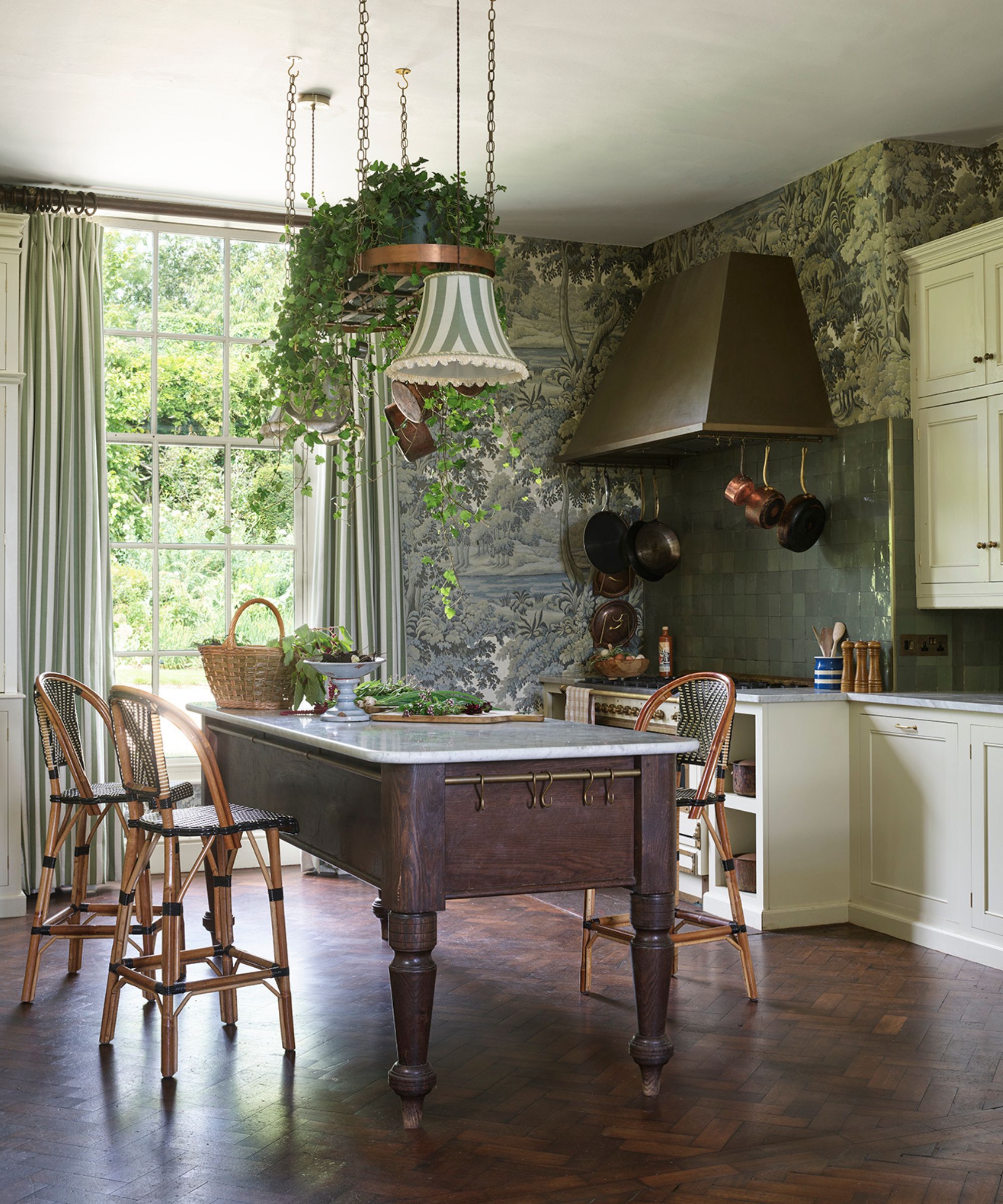
Hollywood Cottage hints at 20th-century American residential tradition filtered through 2026 sensibilities: soft, edited, nostalgic without imitation.
A Broader Conclusion: Trends as Return, Not Departure
What distinguishes upcoming design directions is their continuity. None of these styles are “new,” and that is exactly the point. Interior design is shifting away from disposable fast aesthetics and back toward slow decisions, thoughtful sourcing, and details that convey heritage.
Homes are becoming repositories of tactile presence: metal that tarnishes, wood that deepens, textiles that soften, and objects that tell a story because they were collected, not simply purchased online.
Design in 2026 champions tradition applied with intention, creating environments that feel enduring rather than momentary.